
If you are missing one or more teeth, dental implants offer the most reliable, long-lasting replacement available in modern dentistry. But not every implant is the same. From conventional endosteal posts to advanced zygomatic solutions, the right choice depends on your jawbone health, the number of teeth you need to replace, and your overall treatment goals. In this guide, the board-certified oral surgeons at Park Avenue Oral Surgery in New York City break down every major implant type so you can make a confident, informed decision.
What Are Dental Implants?
A dental implant is a biocompatible titanium or zirconia post that is surgically placed into the jaw to serve as an artificial tooth root. Once integrated with the bone through a process called osseointegration, it provides a permanent foundation for crowns, bridges, or full-arch prosthetics. According to the American Dental Association, implants are the closest option to natural teeth because they integrate directly with bone and help prevent further bone loss.
At Park Avenue Oral Surgery's implant center, our dual-degree, fellowship-trained surgeons use CT-guided implant placement and virtual surgical planning to ensure precision with every case.
Endosteal Implants: The Gold Standard
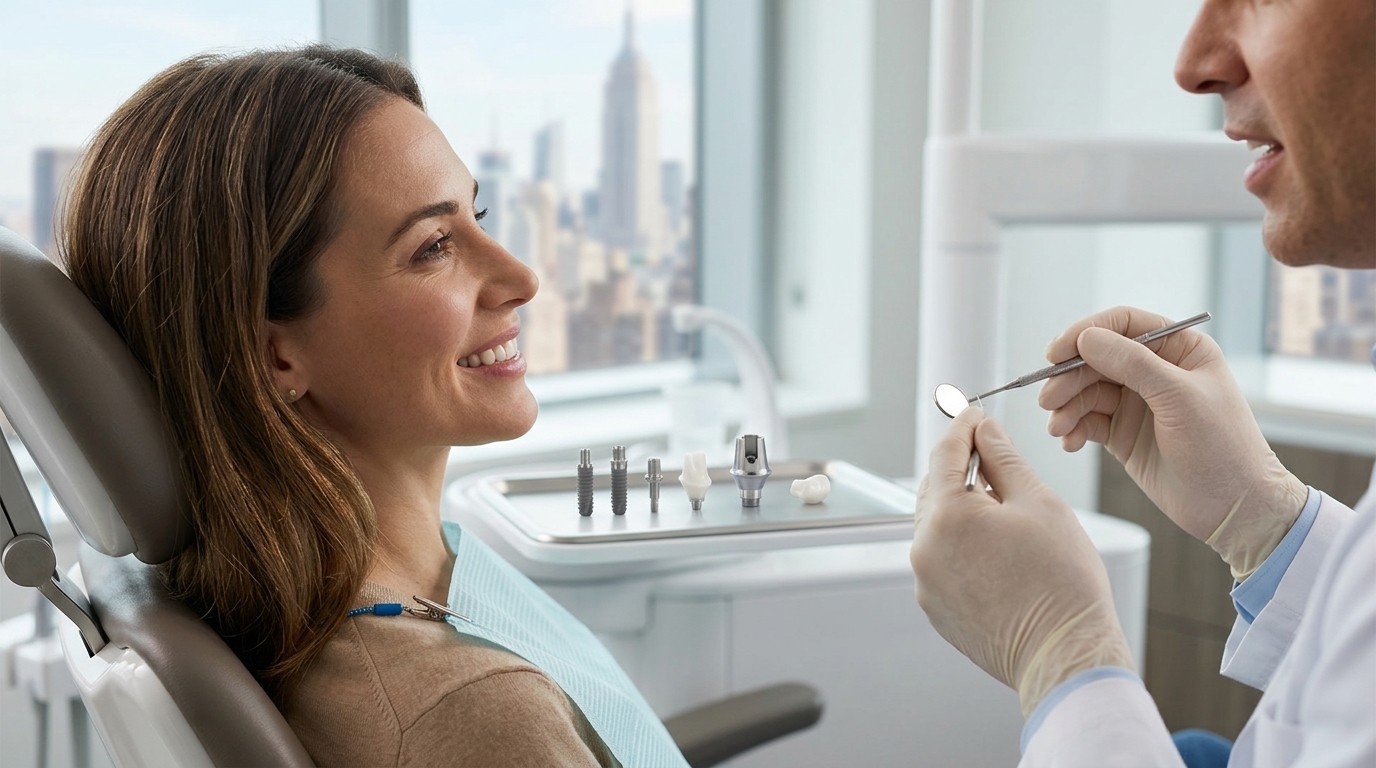
An endosteal implant is a screw-shaped titanium post placed directly into the jawbone. It is the most common type of dental implant, accounting for over 90 percent of all implant procedures performed worldwide. The implant consists of three parts: the implant body (artificial root), an abutment (connector), and a crown (visible tooth).
Who Is a Candidate?
Endosteal implants work best for patients who have healthy jawbone with sufficient width and density. If bone volume is lacking, a bone grafting procedure or sinus lift may be recommended before implant placement.
Success Rate
Endosteal implants carry a long-term success rate exceeding 95 percent when placed by a qualified oral surgeon and maintained with proper hygiene. They look, feel, and function like natural teeth, making them ideal for single-tooth or multi-tooth replacement.
Subperiosteal Implants
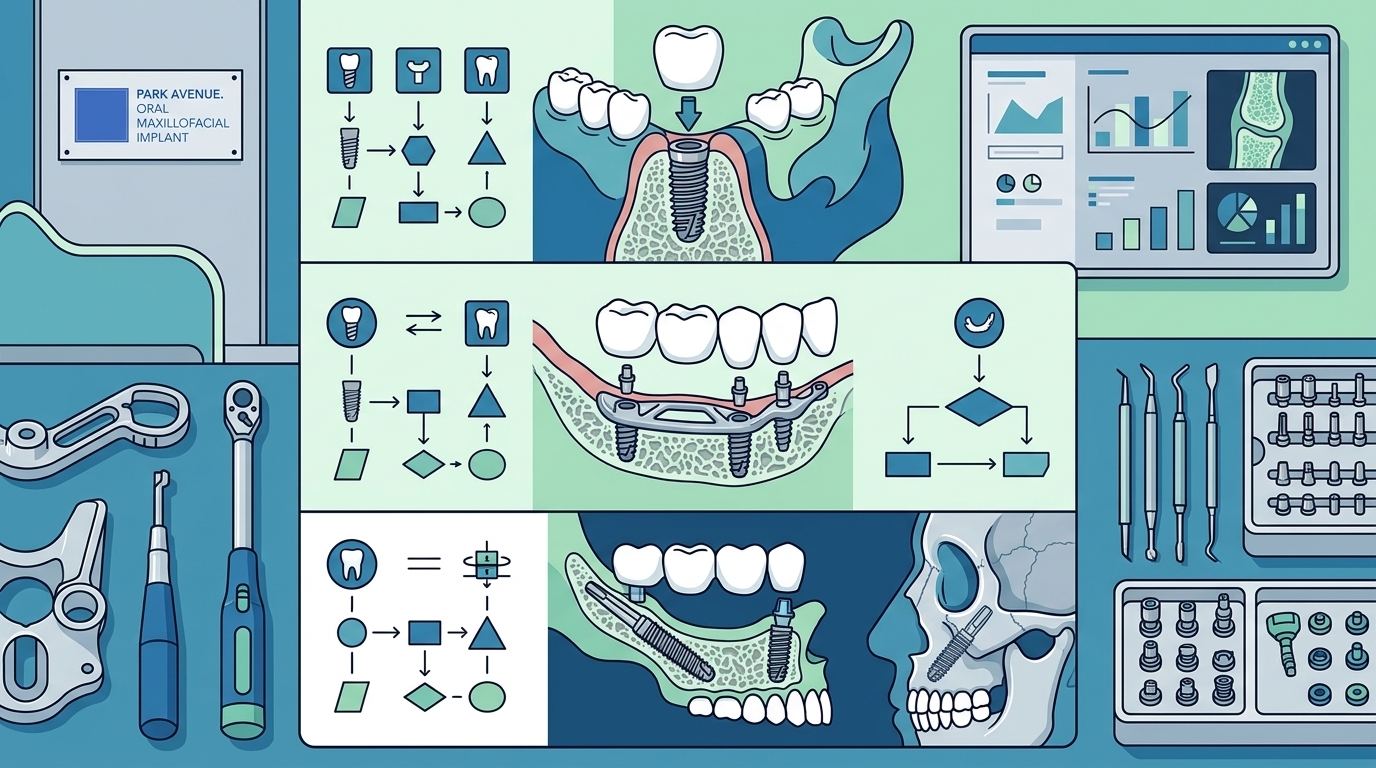
A subperiosteal implant is a custom metal framework placed on top of the jawbone but beneath the gum tissue. Rather than being drilled into bone, the frame sits on the bone surface and is held in place as the gums heal around it. Posts extend through the gum to support artificial teeth.
When Are They Used?
Subperiosteal implants are designed for patients who lack sufficient bone height for endosteal implants and who cannot or prefer not to undergo bone grafting surgery. They represent roughly five percent of implant procedures today and are less common due to advances in grafting techniques.
Zygomatic and Pterygoid Implants
Zygomatic implants are longer titanium posts anchored into the cheekbone (zygoma) instead of the upper jawbone. Because the cheekbone does not atrophy the way alveolar bone does, it provides a reliable anchor even for patients with severe upper-jaw bone loss. Park Avenue Oral Surgery offers dedicated zygoma and pterygoid implant services for these complex cases.
Key Advantages
Zygomatic implants eliminate or reduce the need for bone grafting, shorten overall treatment timelines, and provide immediate stability for full-arch restorations. However, they require advanced surgical skill and are typically performed only by board-certified oral and maxillofacial surgeons.
All-on-X Full-Arch Implants
All-on-X is a full-arch restoration technique that uses four or more strategically placed implant posts to support an entire set of fixed replacement teeth. It is a popular solution for patients who are edentulous (completely missing teeth in one or both arches) or facing full-mouth extractions. Learn more about the All-on-X implant approach offered at our Park Avenue office.
Because the posterior implants are angled to maximize contact with available bone, many patients can avoid grafting altogether and receive a provisional set of teeth on the same day as surgery.
Implant Type Comparison Table
| Feature | Endosteal | Subperiosteal | Zygomatic | All-on-X |
|---|---|---|---|---|
| Placement site | Jawbone | On top of jawbone | Cheekbone (zygoma) | Jawbone (angled) |
| Bone grafting needed? | Sometimes | No | No | Rarely |
| Ideal for | Single or multiple teeth | Patients with low bone | Severe upper-jaw bone loss | Full-arch replacement |
| Success rate | 95%+ | ~90% | 95%+ | 95%+ |
| Recovery time | 3 to 6 months | 3 to 6 months | Varies | Same-day provisional |
| Relative cost | Moderate | Moderate to high | Higher | Higher (full arch) |
How to Choose the Right Implant Type
Selecting the best dental implant depends on several patient-specific factors:
- Jawbone density and health: Strong bone supports endosteal implants, while significant bone loss may require subperiosteal or zygomatic solutions.
- Number of missing teeth: Single gaps are typically restored with one endosteal implant; full arches may call for All-on-X.
- Medical history: Conditions such as uncontrolled diabetes, osteoporosis, or smoking can affect healing and implant selection.
- Budget and timeline: Same-day options like All-on-X reduce visits, while staged approaches spread costs over time.
A thorough consultation that includes a CBCT scan and clinical exam is the best starting point. At Park Avenue Oral Surgery, our surgeons use virtual surgical planning to map your anatomy and recommend the most predictable path forward.
Key Takeaways
- Endosteal implants are the most common type, placed directly into healthy jawbone with a success rate above 95 percent.
- Subperiosteal implants sit on top of the bone and are suited for patients who lack sufficient bone for conventional implants.
- Zygomatic implants anchor into the cheekbone and eliminate the need for bone grafting in severe bone-loss cases.
- All-on-X provides a fixed full-arch restoration using as few as four implant posts, often with same-day teeth.
- Bone grafting and sinus lifts can expand candidacy for patients who would otherwise not qualify for endosteal implants.
- Advanced imaging such as CBCT and virtual surgical planning improves precision and outcomes.
- Choosing the right implant type requires a personalized consultation with a board-certified oral surgeon.
Frequently Asked Questions
What is the most common type of dental implant?
Endosteal implants are the most frequently used type, accounting for more than 90 percent of all implant procedures. They are placed directly into the jawbone and offer the highest long-term success rate.
Can I get dental implants if I have bone loss?
Yes. Options include bone grafting to rebuild the jaw, subperiosteal implants that rest on top of the bone, or zygomatic implants that anchor into the cheekbone. Your oral surgeon will determine the best approach after imaging.
What are zygomatic implants?
A zygomatic implant is a longer titanium post anchored into the cheekbone rather than the jawbone. It is designed for patients with severe upper-jaw bone loss who want to avoid bone grafting.
How long do dental implants last?
With proper care, dental implants can last a lifetime. The titanium post integrates permanently with the bone, and the crown or prosthetic typically lasts 10 to 15 years before needing replacement.
What is the All-on-X procedure?
All-on-X is a technique that uses four or more implants to support an entire arch of fixed teeth. It is designed for patients who are missing all teeth in one or both jaws and often allows same-day placement of a provisional prosthesis.
Are dental implants covered by insurance?
Many major PPO dental and medical insurance plans cover a portion of implant treatment. Park Avenue Oral Surgery accepts major PPO insurances and offers flexible payment options. Visit our financial information page for details.
Does getting a dental implant hurt?
Most patients report minimal discomfort. Procedures are performed under local anesthesia or IV sedation, and advanced pain-management options like Exparel provide extended post-operative relief.
How do I know which implant type is right for me?
The best way to find out is through a comprehensive consultation that includes a clinical exam, CBCT scan, and discussion of your health history and goals. A board-certified oral surgeon can then recommend the most effective and predictable treatment plan.
Ready to Restore Your Smile?
The board-certified oral surgeons at Park Avenue Oral Surgery in New York City specialize in every type of dental implant, from single-tooth restorations to complex full-arch and zygomatic cases. Book your consultation today and take the first step toward a confident, permanent smile.