

How to Choose the Best Oral Surgeon in NYC: 7 Essential Criteria
Selecting an oral surgeon is one of the most important healthcare decisions you will make. Whether you need wisdom teeth removal, dental implants, or corrective jaw surgery, the surgeon you choose directly influences your safety, comfort, and long-term results. In a city like New York, where options are plentiful, knowing what to look for can feel overwhelming. This guide walks you through seven evidence-based criteria so you can confidently identify the right oral and maxillofacial surgeon for your specific treatment needs.
1. Verify Board Certification
Board certification is the single most important credential to confirm before scheduling any procedure. Board certification is an independent, nationally recognized benchmark proving a surgeon has met the highest standards of training, testing, and ongoing professional development. According to the American Board of Oral and Maxillofacial Surgery (ABOMS), it is widely considered the highest credential in the specialty because diplomates undergo rigorous written and oral examinations plus ongoing peer review.
Always verify that a surgeon is certified specifically by ABOMS, as this is the only recognized U.S. certifying board for the oral and maxillofacial surgery specialty. You can search the ABOMS online directory by name or location to confirm a surgeon's status.
2. Evaluate Training and Credentials
Beyond board certification, examine the depth of a surgeon's educational background. An oral and maxillofacial surgeon is a dental specialist who has completed dental school plus a minimum of four to six years of hospital-based surgical residency training. Some surgeons go further by earning a dual degree (both MD and DMD), completing fellowship training, or achieving Fellow of the American College of Surgeons (FACS) status.
Why Dual-Degree Surgeons Stand Out
A dual-degree surgeon holds both Doctor of Medicine and Doctor of Dental Medicine degrees, providing a broader medical foundation for complex cases. For example, Dr. James Choi, MD, DMD, FACS at Park Avenue Oral Surgery completed his MD and DMD at the University of Pennsylvania and a fellowship in minimally invasive surgery at the University of Munich, Germany. This combination of Ivy League medical training and international fellowship experience represents the upper tier of surgeon qualifications.
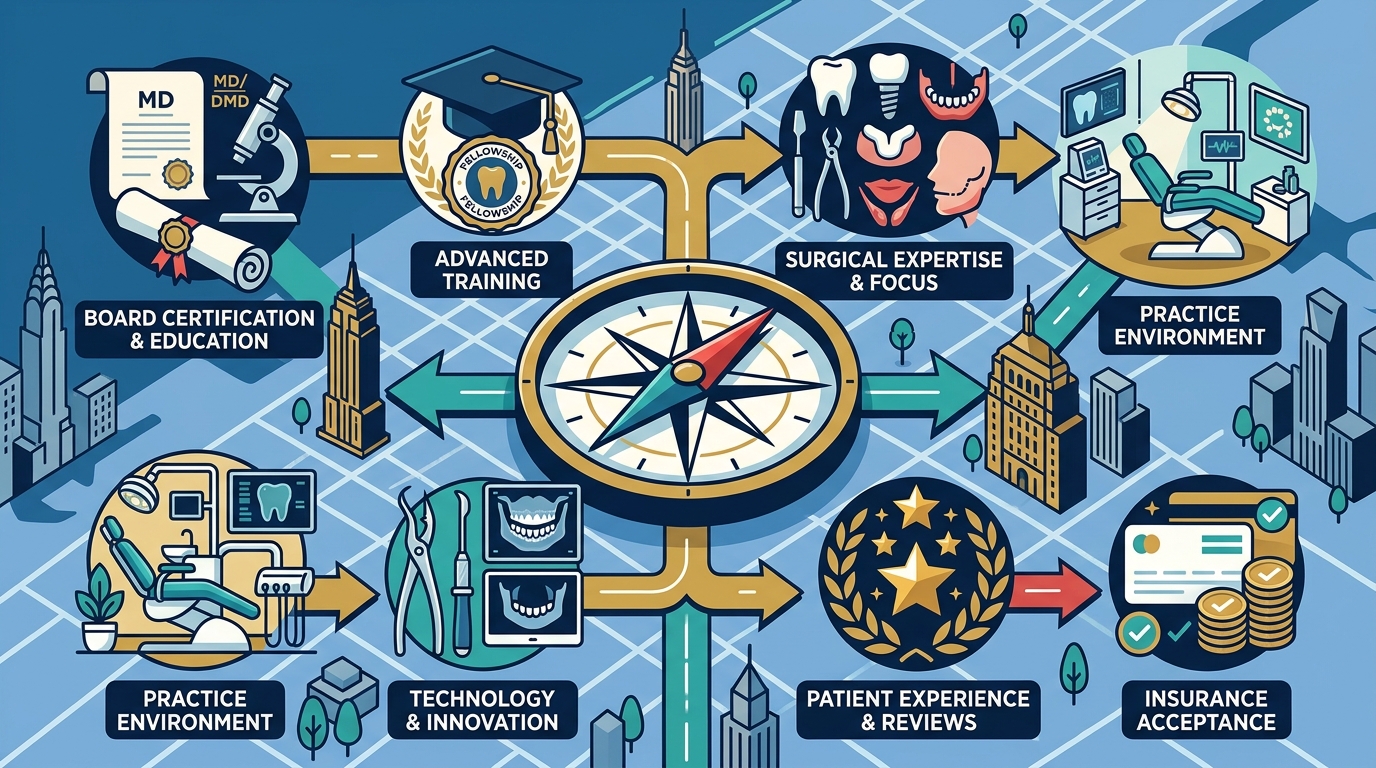
3. Assess Technology and Techniques
Advanced technology translates directly to better precision, shorter procedures, and faster recovery. When evaluating a practice, ask about the specific tools they use.
Key Technologies to Look For
Modern oral surgery practices should offer capabilities such as 3D CT-guided imaging, Virtual Surgical Planning (VSP) for jaw surgeries, and piezoelectric surgery instruments that cut bone with ultrasonic vibrations while leaving soft tissues unharmed. Non-opioid pain management options like Exparel, a long-acting local anesthetic that provides up to three days of relief, further demonstrate a practice's commitment to patient comfort and reduced reliance on opioid medications.
4. Confirm Anesthesia Safety Standards
Anesthesia safety is a non-negotiable criterion. Your surgeon's office should be fully licensed and inspected by the State of New York to administer anesthesia. The surgeon should hold current certifications including Advanced Cardiovascular Life Support (ACLS) and Pediatric Advanced Life Support (PALS) from the American Heart Association.
A qualified oral surgeon will offer a full spectrum of anesthesia options, from local anesthesia and nitrous oxide to IV sedation and general anesthesia, and will tailor the approach to your medical history and procedure type. Unlike general dentists, oral and maxillofacial surgeons receive extensive hospital-based anesthesia training during residency.
5. Check Hospital Affiliations and Privileges
Hospital privileges are an often-overlooked indicator of a surgeon's competence. Hospitals conduct their own rigorous credentialing process before granting surgical privileges. A surgeon with attending privileges at respected institutions demonstrates that independent review boards have validated their skills.
Dr. Choi, for instance, maintains attending surgeon privileges at both Lenox Hill Hospital (Northwell Health) and NYU Langone Hospital, where he takes facial trauma call and teaches the next generation of oral surgeons. This level of institutional trust signals clinical excellence and provides patients with after-hours emergency access.
6. Consider the Patient Experience
Clinical expertise must be paired with a patient-centered approach. During your initial consultation, pay attention to whether the surgeon listens to your concerns, explains treatment options clearly, and sets realistic expectations. The office should offer same-day imaging and consultation, streamlined registration, and transparent insurance and financial information.
Insurance and Accessibility
Confirm that the practice accepts your insurance plan. Look for offices that work with major PPO insurances such as MetLife, Guardian, and Cigna. Practices that are in-network reduce your out-of-pocket costs and administrative burden.
7. Quick Comparison: What to Look For
| Criterion | Minimum Standard | Gold Standard |
|---|---|---|
| Board Certification | State-licensed OMS | ABOMS Diplomate with active maintenance |
| Education | DMD/DDS + 4-yr residency | Dual-degree MD/DMD + fellowship training + FACS |
| Technology | Standard digital X-rays | 3D CT, VSP, piezoelectric surgery, Exparel |
| Anesthesia | Local anesthesia only | Full-spectrum sedation; ACLS/PALS certified |
| Hospital Affiliation | None required | Attending privileges at major hospitals |
| Patient Experience | Basic consultation | Same-day imaging, personalized care plan, after-hours access |
| Insurance | Out-of-network only | In-network with major PPO plans |
Key Takeaways
- Board certification by ABOMS is the single most reliable indicator of an oral surgeon's qualifications and commitment to ongoing excellence.
- Dual-degree surgeons (MD and DMD) bring a deeper medical foundation to complex procedures.
- Advanced technology like Virtual Surgical Planning and piezoelectric surgery improves accuracy and speeds recovery.
- Full-spectrum anesthesia options with proper certifications (ACLS, PALS) ensure your safety during any procedure.
- Hospital privileges at respected institutions provide an independent validation of surgical competence.
- A patient-centered practice offers transparent communication, same-day diagnostics, and in-network insurance options.
- Schedule an in-person consultation to evaluate rapport, communication style, and the overall office environment.
Frequently Asked Questions
What is a board-certified oral surgeon?
A board-certified oral surgeon is a specialist who has passed rigorous written and oral examinations administered by the American Board of Oral and Maxillofacial Surgery (ABOMS) and maintains certification through ongoing peer review and continuing education.
Why does dual-degree training matter?
A dual-degree (MD and DMD) surgeon has completed both medical school and dental school, giving them comprehensive knowledge of the entire body. This is especially important for patients with complex medical histories or those needing procedures like corrective jaw surgery.
How can I verify a surgeon's board certification?
Visit the ABOMS website and use their online directory to search by name or location. You can also ask the surgeon's office directly for proof of current certification.
What should I expect during my first consultation?
A thorough first visit typically includes diagnostic imaging such as a 3D CT scan, a comprehensive review of your medical history, and a detailed discussion of treatment options, risks, and expected recovery timelines.
Does insurance cover oral surgery in NYC?
Many oral surgery procedures are covered by major PPO dental and medical insurance plans. Coverage varies by plan and employer, so it is important to verify your specific benefits. Practices like Park Avenue Oral Surgery work with insurers including MetLife, Guardian, and Cigna to maximize your coverage. Visit the financial information page for details.
What is the difference between an oral surgeon and a general dentist?
An oral and maxillofacial surgeon completes four to six additional years of hospital-based surgical residency beyond dental school, including rotations in general surgery, anesthesia, and emergency medicine. General dentists do not receive this level of surgical or medical training.
How important is the technology a surgeon uses?
Very important. Technologies like CT-guided implant placement and Virtual Surgical Planning allow for pre-surgical simulation that improves accuracy, shortens operating time, and leads to better outcomes. Ask any prospective surgeon about the specific tools and techniques they use.
What questions should I ask during a consultation?
Ask about board certification status, years of experience with your specific procedure, anesthesia options, complication rates, hospital affiliations, and the expected recovery process. A confident, transparent surgeon will welcome these questions.
Ready to Find Your Oral Surgeon?
Choosing the right oral surgeon is an investment in your health, safety, and confidence. If you are searching for a board-certified, dual-degree, fellowship-trained oral surgeon in New York City, schedule a consultation with Park Avenue Oral Surgery today. Located on Park Avenue in Manhattan, our practice combines advanced technology, comprehensive anesthesia options, and a patient-first philosophy to deliver the exceptional care you deserve.