
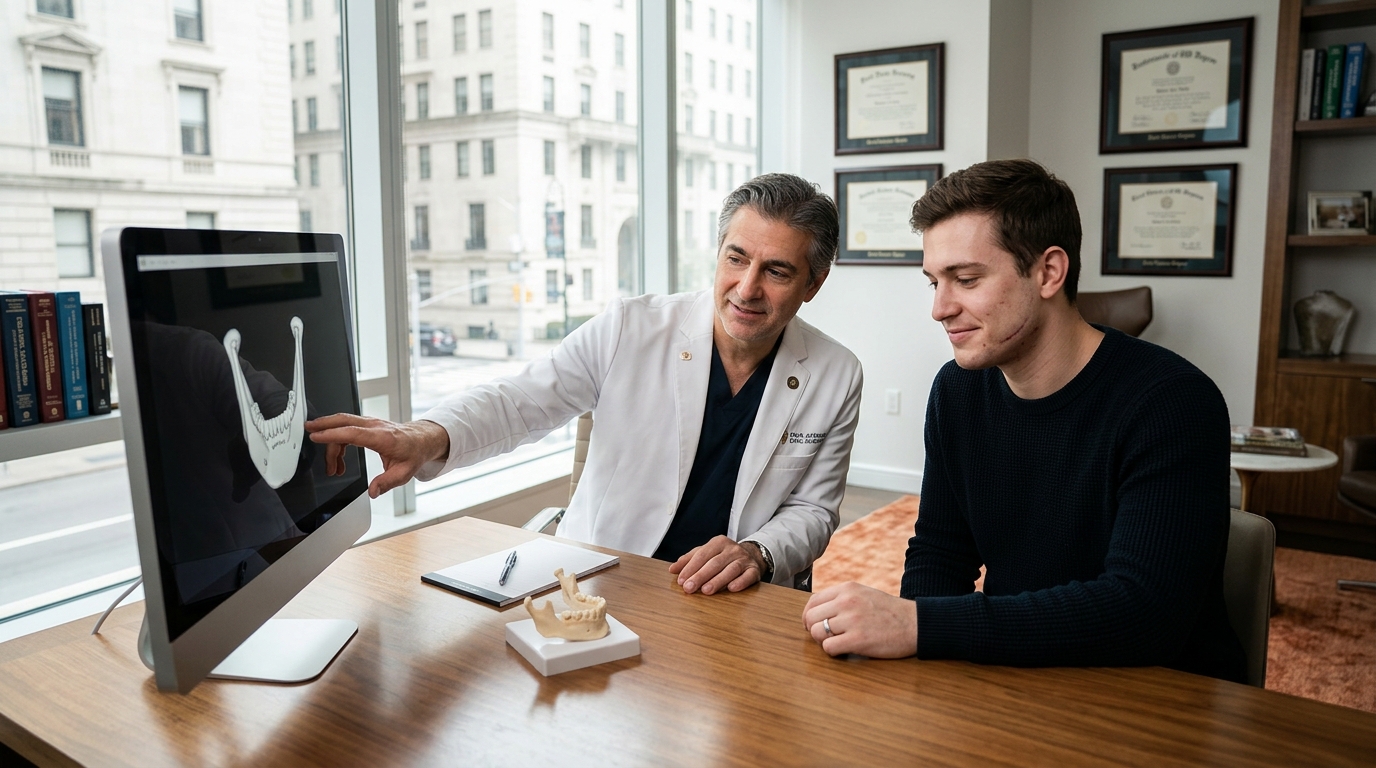
Facial Reconstruction After a Jaw Injury: Best Options for Restoring Form and Function
A jaw injury can affect far more than your appearance. Fractures from accidents, falls, or sports trauma can compromise your ability to chew, speak, and breathe. Facial reconstruction surgery is the process of restoring the structural integrity and aesthetics of the face after damage caused by trauma, disease, or congenital conditions. Understanding your surgical options is the first step toward recovery. This guide covers the leading approaches to facial reconstruction after a jaw injury, what to expect during recovery, and how board-certified oral and maxillofacial surgeons in New York City can help you regain confidence and function.
Understanding Jaw Injuries and When Surgery Is Needed
Jaw injuries range from minor hairline fractures to severe comminuted breaks where the bone is crushed into multiple fragments. Common causes include motor vehicle accidents, sports collisions, workplace incidents, and falls. When a fracture displaces bone segments or compromises the airway, surgical intervention becomes essential.
According to Penn Medicine, facial trauma repair may involve realigning broken bones using specialized hardware like plates and screws while also addressing damage to surrounding soft tissues. Prompt treatment is critical because delayed repair increases the risk of permanent complications to delicate facial structures.
If you have experienced facial trauma, a thorough evaluation by a qualified oral and maxillofacial surgeon will determine whether conservative management or surgical reconstruction is the best path forward.
Best Surgical Options for Jaw Reconstruction
Several proven procedures address different types and severities of jaw injuries. Your surgeon will recommend one or a combination based on the location and extent of the damage.
Open Reduction and Internal Fixation (ORIF)
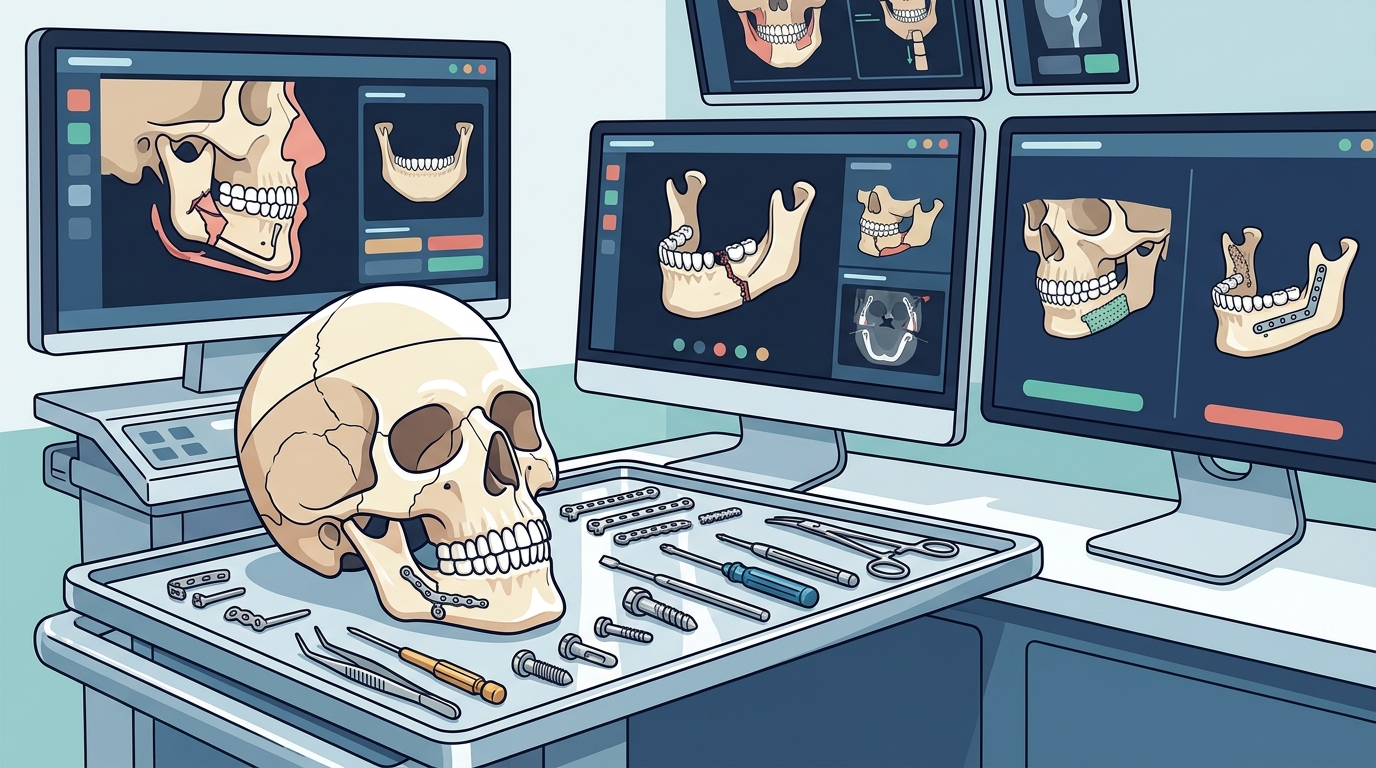
Open reduction and internal fixation is a procedure in which a surgeon realigns fractured bone segments and secures them with titanium plates and screws. This is the gold standard for displaced jaw fractures and restores both structural integrity and occlusion (how your teeth fit together).
Orthognathic (Corrective Jaw) Surgery
Orthognathic surgery is a procedure that repositions the upper jaw, lower jaw, or both to correct alignment problems. When trauma leaves the jaw in a misaligned position, corrective jaw surgery can restore proper bite function and facial balance. According to the Mayo Clinic, this surgery corrects crooked jawbones to improve function and create a more balanced facial appearance.
Jaw Implants and Genioplasty
For injuries that result in bone loss or a weakened chin projection, jawline implants or chin surgery (genioplasty) can rebuild contour and symmetry. The Cleveland Clinic notes that jaw implants can reconstruct a damaged jaw after a traumatic injury such as a broken jaw or other facial fracture.
The Role of Advanced Technology in Reconstruction
Modern facial reconstruction relies heavily on digital planning tools. Virtual surgical planning (VSP) uses 3D imaging and computer modeling to map out precise bone cuts and plate placements before the surgeon enters the operating room. This reduces operative time and improves accuracy.
Piezoelectric instruments, such as the Medtronic piezoelectric saw, use ultrasonic vibrations to cut bone with minimal damage to surrounding soft tissue and nerves. These advances translate directly into less swelling, faster healing, and better outcomes for patients recovering from jaw injuries.
| Procedure | Best For | Typical Recovery | Hardware Used |
|---|---|---|---|
| Open Reduction & Internal Fixation | Displaced fractures | 6 to 8 weeks | Titanium plates and screws |
| Orthognathic Surgery | Jaw misalignment post-trauma | 6 weeks initial; 9 to 12 months full | Plates, screws, possible orthodontics |
| Jawline Implant | Bone loss or contour deficiency | 2 to 4 weeks | Silicone or custom implant |
| Genioplasty | Chin repositioning | 4 to 6 weeks | Plates and screws on chin bone |
| Bone Grafting | Significant bone defects | 3 to 6 months graft maturation | Autogenous or synthetic bone graft |
Dental Implants and Bone Grafting After Jaw Trauma
Severe jaw injuries often result in tooth loss. Once the jaw has healed and bone volume is adequate, dental implants offer a permanent solution for replacing missing teeth. In cases where trauma has destroyed a section of bone, a bone graft is performed first to rebuild the foundation.
Bone grafting is a surgical procedure that transplants bone tissue (from the patient's own body, a donor, or a synthetic source) to fill defects and stimulate new bone growth. After the graft integrates over three to six months, implants can be placed securely.
Recovery Timeline and What to Expect
Recovery from jaw reconstruction varies by procedure. According to the Cleveland Clinic, patients are typically on a liquid diet for about a month and should elevate their head to reduce swelling. Initial healing from corrective jaw surgery generally takes about six weeks, with full bone healing requiring nine to twelve months.
Key recovery tips include:
- Follow a liquid or soft-food diet as directed by your surgeon.
- Apply ice packs in 20-minute intervals during the first 24 to 48 hours.
- Take all prescribed medications, including antibiotics and pain management.
- Attend every follow-up appointment to monitor healing progress.
- Avoid contact sports and strenuous activity for at least eight weeks.
Review the post-operative instructions provided by your surgical team before your procedure date.
Choosing the Right Oral and Maxillofacial Surgeon
The outcome of facial reconstruction depends significantly on surgeon expertise. Look for a provider who is board-certified, fellowship-trained, and experienced in both the functional and aesthetic aspects of jaw surgery. A dual-degree background in medicine (MD) and dentistry (DMD) provides the comprehensive training needed to manage complex jaw injuries.
At Park Avenue Oral Maxillofacial & Implant Surgery, our surgeons bring exactly this combination of credentials. Located on Park Avenue in the heart of New York City, our practice offers advanced jaw surgery, facial trauma repair, dental implants, and TMJ treatment in a patient-centered environment backed by safe anesthesia protocols.
Key Takeaways
- Jaw injuries may require surgical reconstruction to restore proper bite, speech, and facial symmetry.
- Open reduction with internal fixation is the standard approach for displaced jaw fractures.
- Orthognathic surgery corrects post-trauma jaw misalignment and improves long-term function.
- Jawline implants and genioplasty address bone loss and contour irregularities after injury.
- Bone grafting rebuilds the foundation for dental implants when trauma causes significant bone defects.
- Virtual surgical planning and piezoelectric tools improve precision and reduce recovery time.
- A board-certified, dual-degree oral and maxillofacial surgeon is the best-qualified specialist for these procedures.
Frequently Asked Questions
What is facial reconstruction surgery?
Facial reconstruction surgery is a set of procedures designed to restore the form and function of facial structures damaged by trauma, disease, or congenital conditions. It can include bone realignment, grafting, implants, and soft tissue repair.
How long does recovery from jaw reconstruction take?
Initial healing typically takes about six weeks. Full bone healing and functional recovery can require nine to twelve months, depending on the procedure and individual factors.
Will I need dental implants after a jaw fracture?
Not always. If teeth were lost or damaged beyond repair during the injury, dental implants are the most reliable long-term replacement option. Your surgeon will assess this during the treatment planning phase.
Is jaw reconstruction covered by insurance?
Reconstructive surgery for trauma is generally covered by medical insurance, unlike purely cosmetic procedures. Coverage varies by plan, so confirm details with your provider and your surgeon's office.
What is the difference between orthognathic surgery and ORIF?
ORIF repairs a broken bone by realigning and stabilizing it with hardware. Orthognathic surgery intentionally repositions the jaw to correct alignment issues. After a jaw injury, a patient may need one or both procedures depending on the nature of the damage.
Can jaw reconstruction improve my appearance?
Yes. Restoring proper jaw alignment and bone structure directly improves facial symmetry and balance. Many patients report significant aesthetic improvements in addition to functional benefits.
How do I know if I need jaw surgery after an injury?
Signs that surgery may be necessary include a visibly misaligned bite, difficulty opening or closing your mouth, numbness in the lower lip or chin, and persistent pain. A consultation with an oral and maxillofacial surgeon that includes imaging is the best way to get a definitive answer.
Schedule Your Consultation Today
If you or a loved one has suffered a jaw injury, early evaluation is key to the best outcome. Book an appointment with our board-certified oral and maxillofacial surgeons at Park Avenue Oral Maxillofacial & Implant Surgery in New York City. We will develop a personalized reconstruction plan to restore your function, comfort, and confidence.