

Temporomandibular joint (TMJ) disorders affect the jaw joint and surrounding muscles, causing pain, clicking, locking, and difficulty chewing. While many cases respond to conservative care, a subset of patients with severe or structural problems benefit significantly from jaw surgery. Orthognathic surgery is a corrective procedure that repositions the jaws to restore proper alignment, function, and comfort. In this guide, the board-certified oral surgeons at Park Avenue Oral Maxillofacial & Implant Surgery break down the key benefits, candidacy criteria, surgical options, and what to expect from TMJ-related jaw surgery in New York City.
What Is a TMJ Disorder?
A TMJ disorder is a condition that affects the temporomandibular joint, the hinge connecting your lower jaw to your skull. Symptoms include jaw pain, clicking or popping sounds, headaches, earaches, and limited mouth opening. According to research, TMJ disorders are "surprisingly common, affecting nearly a third of adults and more than 11% of children and adolescents" (Oral & Facial Surgery of Mississippi). Common causes include facial trauma, jaw misalignment, chronic teeth grinding, arthritis, and genetics.
When Is Jaw Surgery Recommended for TMJ?
Jaw surgery is not the first line of treatment. The American Society of Maxillofacial Surgeons recommends a conservative, non-surgical approach first, and only about 20% of patients ultimately need surgery. Your surgeon may recommend surgery when:
- Conservative therapies such as splints, physical therapy, and medication have failed to provide lasting relief
- Structural abnormalities like disc displacement, ankylosis, or severe jaw misalignment are confirmed on imaging
- Pain is persistent and progressively worsening
- Jaw function is significantly limited, affecting eating, speaking, or breathing
At Park Avenue Oral Surgery, every patient undergoes a thorough evaluation, including advanced CT imaging, before any surgical recommendation is made.
Top Benefits of Jaw Surgery for TMJ
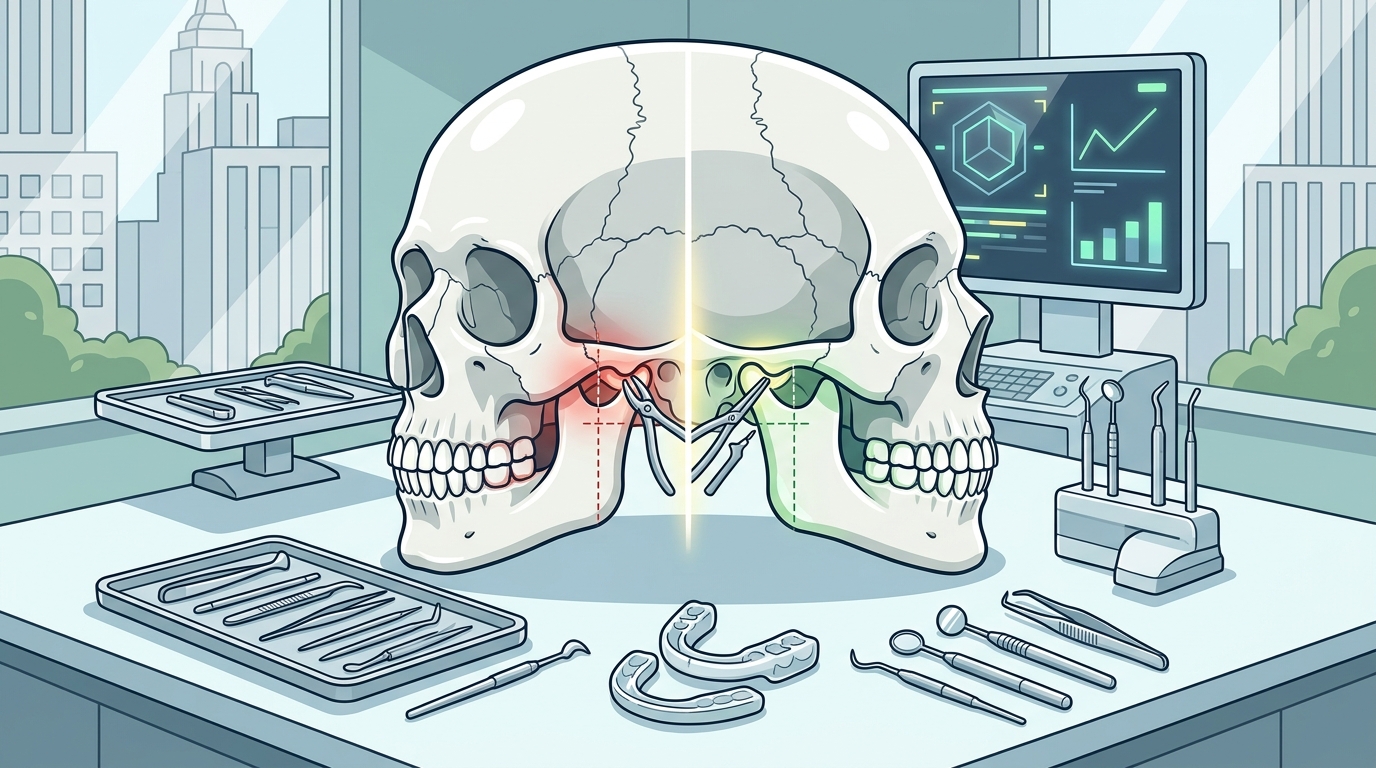
1. Significant Pain Relief
Chronic jaw pain, headaches, and earaches are among the most debilitating TMJ symptoms. Research published in PMC shows that TMJ replacement surgery achieves "pain reductions range from 75 to 87%" (PMC, 2025). Corrective jaw surgery addresses the root structural cause rather than masking symptoms with medication.
2. Restored Jaw Mobility and Function
Jaw surgery can dramatically improve mouth opening, chewing ability, and speech. Studies report that combined TMJ and orthognathic surgery achieves a 91.4% success rate based on improved mouth opening and reduced pain (Liv Hospital). Corrective jaw surgery repositions your jaw and teeth to a more balanced, functional location.
3. Improved Quality of Life
Beyond pain and function, jaw surgery can resolve sleep-related breathing issues like snoring and sleep apnea, correct facial asymmetry, and restore confidence. A 2025 systematic review confirms that total TMJ replacement "consistently results in significant improvements in pain relief, mandibular function, and overall quality of life" (PMC). Learn more about how corrective jaw surgery at Park Avenue can help you.
Types of Jaw Surgery for TMJ Disorders
There are several surgical approaches depending on the severity and nature of the TMJ disorder. Your oral surgeon will recommend the most appropriate option after a comprehensive evaluation at our TMJ treatment center.
| Procedure | Description | Invasiveness | Typical Recovery |
|---|---|---|---|
| Arthrocentesis | Joint lavage using needles to flush out debris and reduce inflammation | Minimally invasive | 2-3 days |
| Arthroscopy | Small camera-guided surgery to remove scar tissue, reposition disc, or smooth bone | Minimally invasive | Several days to 1 week |
| Open-Joint Surgery (Arthrotomy) | Direct access to joint for disc repair, removal, or bony restructuring | More invasive | Several weeks |
| Orthognathic Surgery | Repositioning of the upper jaw, lower jaw, or both to correct misalignment | Major surgery | 6-8 weeks |
| Total Joint Replacement | Replacement of damaged joint with prosthetic components | Major surgery | 6-12 weeks |
Park Avenue Oral Surgery uses virtual surgical planning and piezoelectric instrumentation to maximize precision and minimize tissue trauma during these procedures.
Conservative Treatment vs. Jaw Surgery
Not every TMJ disorder requires surgery. Conservative treatments are the recommended starting point and are effective for the majority of patients. A 2024 systematic review in PMC found that NSAIDs, physical therapy, splint therapy, and mandibular exercises led to significant improvements in pain and jaw function for many TMJ conditions (PMC, 2024). However, when structural damage, disc displacement, or ankylosis is present, surgery often delivers outcomes that conservative methods cannot match.
| Factor | Conservative Treatment | Jaw Surgery |
|---|---|---|
| Best for | Mild to moderate TMJ symptoms | Severe, structural, or refractory cases |
| Pain relief | Moderate, symptom-focused | 75-87% reduction (per research) |
| Recovery time | Minimal | Days to weeks depending on procedure |
| Success rate | Variable | Up to 91.4% for combined approaches |
| Addresses root cause | Not always | Yes, corrects structural issues |
What to Expect: Before, During, and After Surgery
Before Surgery
Your surgeon will conduct a full clinical and radiographic evaluation. At Park Avenue, we use advanced technology including 3D CT scans and virtual surgical planning to map out your procedure with precision. You will receive detailed pre-operative instructions and a review of your medical history.
During Surgery
TMJ procedures are performed under general anesthesia or IV sedation, depending on the complexity. Our practice prioritizes safe anesthesia protocols and minimally invasive techniques whenever possible. Arthrocentesis may take under 30 minutes, while open-joint or orthognathic procedures can take several hours.
After Surgery
Recovery varies by procedure. You will follow a soft diet, jaw exercise program, and pain management plan. Most arthrocentesis patients return to normal activity within a few days. Orthognathic surgery patients should expect a recovery period of six to eight weeks. Detailed guidance is provided on our post-operative instructions page.
Key Takeaways
- TMJ disorders affect jaw function, cause chronic pain, and can significantly reduce quality of life.
- Conservative treatments like splints, physical therapy, and medication work for most patients and should be tried first.
- Jaw surgery is recommended when conservative care fails or structural problems are identified on imaging.
- Surgical options range from minimally invasive arthrocentesis to total joint replacement, tailored to the severity of the condition.
- Research shows pain reductions of 75-87% and success rates above 91% for combined surgical approaches.
- Board-certified oral and maxillofacial surgeons with fellowship training are best equipped to evaluate and treat complex TMJ cases.
- Advanced technology like CT-guided planning and virtual surgical planning improves surgical precision and patient outcomes.
Frequently Asked Questions
What is the success rate of jaw surgery for TMJ disorders?
Studies show that combined TMJ and orthognathic surgery achieves a success rate of approximately 91.4%, measured by improved mouth opening and pain reduction. Individual outcomes depend on the specific condition and surgical approach.
How do I know if I need jaw surgery for TMJ?
Surgery is typically recommended after conservative treatments like splints, physical therapy, and medication fail to provide lasting relief. Your oral surgeon will use clinical examination and imaging such as MRI or CT scans to determine if structural issues require surgical correction.
What types of jaw surgery treat TMJ disorders?
The main types include arthrocentesis (joint lavage), arthroscopy (camera-guided surgery), open-joint surgery (arthrotomy), orthognathic surgery (jaw repositioning), and total joint replacement. Your surgeon selects the approach based on your diagnosis.
Is jaw surgery for TMJ covered by insurance?
Many medical and dental PPO insurance plans cover jaw surgery when it is deemed medically necessary. Park Avenue Oral Surgery accepts major PPO insurances and can help verify your coverage. Visit our financial information page for details.
How long is recovery after TMJ jaw surgery?
Recovery depends on the procedure. Arthrocentesis patients often resume normal activity in two to three days. Arthroscopy recovery takes about a week. Orthognathic or joint replacement surgery may require six to twelve weeks of recovery.
Can jaw surgery fix TMJ clicking and locking?
Yes. Surgical procedures like arthroscopy and open-joint surgery can address disc displacement and remove adhesions that cause clicking, popping, and jaw locking.
What are the risks of TMJ jaw surgery?
As with any surgery, risks include infection, nerve injury, bleeding, and the possibility that symptoms may not fully resolve. Choosing a board-certified, fellowship-trained oral surgeon minimizes these risks significantly.
Why choose Park Avenue Oral Surgery for TMJ treatment?
Our surgeons are board-certified, dual-degreed (MD and DMD), and fellowship-trained. We use advanced technology including virtual surgical planning and CT-guided techniques. Voted New York Times Magazine SuperDoctors, we provide personalized care on Park Avenue in New York City.
Schedule Your TMJ Consultation
If TMJ pain is affecting your daily life, take the next step toward relief. Book a consultation with our board-certified oral surgeons at Park Avenue Oral Maxillofacial & Implant Surgery. We will evaluate your condition, discuss all treatment options, and create a personalized plan to restore your jaw function and comfort.