

If you are searching for a jaw surgery specialist who can improve both the function and appearance of your face, New York City offers some of the most qualified oral and maxillofacial surgeons in the country. Orthognathic surgery is a corrective jaw procedure designed to address structural abnormalities such as overbites, underbites, crossbites, and asymmetrical jaw growth. Beyond fixing bite problems, corrective jaw surgery is widely recognized as one of the most powerful tools for enhancing facial harmony, symmetry, and profile balance. This guide covers everything NYC patients need to know before choosing a specialist.
What Is Orthognathic Surgery?
Orthognathic surgery is a specialized surgical procedure designed to correct irregularities in the alignment of the jaw and facial bones. The term comes from the Greek words for "straight jaw," and the procedure repositions the upper jaw (maxilla), lower jaw (mandible), or both to restore proper skeletal relationships.
According to Wikipedia, it is estimated that nearly 5% of the U.S. population presents with dentofacial deformities that are not amenable to orthodontic treatment alone and may require orthognathic surgery. The procedure is typically performed by an oral and maxillofacial surgeon working closely with an orthodontist to ensure optimal outcomes.
Common Procedures
The most frequently performed jaw osteotomies include the Le Fort I maxillary osteotomy and the bilateral sagittal split mandibular osteotomy. Genioplasty, or chin surgery, is often combined with jaw repositioning to further refine the facial profile. At Park Avenue Oral Surgery, our surgeons also offer facial contouring and jawline implant procedures for patients who want additional definition.
Aesthetic Benefits of Jaw Surgery
Corrective jaw surgery can produce dramatic improvements in facial appearance. By repositioning the jaws, the surgery brings balance to the face, resulting in a more proportionate and attractive appearance. Patients with a receding chin, protruding jaw, or visible facial asymmetry often see transformative changes.
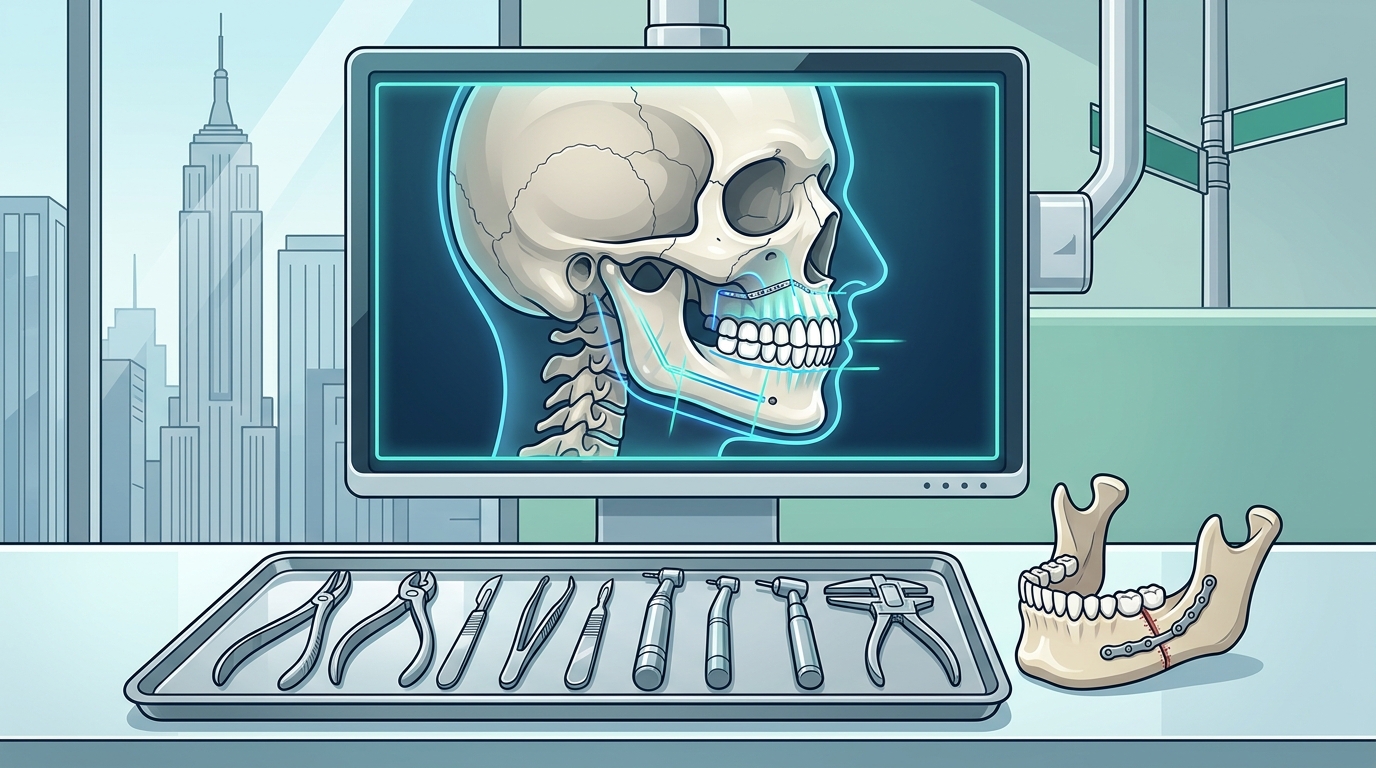
Facial Symmetry and Profile Improvement
Facial symmetry is a key factor in perceived attractiveness. When jaw misalignment disrupts facial harmony, orthognathic surgery can restore symmetry by properly aligning the upper and lower jaws. A weak or recessed chin can be advanced, while an overly prominent jaw can be set back, creating a more sculpted look.
Chin and Jawline Definition
Many patients seek jaw surgery specifically for jawline enhancement. The surgery can reposition the lower jaw and chin, producing results that rival or exceed what implants alone can achieve. For patients interested in non-implant jawline enhancement, our jaw surgery page outlines available techniques.
Functional Benefits Beyond Appearance
While the aesthetic results are significant, the functional improvements are equally important. Jaw misalignment can affect biting, chewing, speaking, and even breathing.
| Benefit Category | Before Surgery | After Surgery |
|---|---|---|
| Bite Function | Difficulty chewing, uneven wear | Proper occlusion, even tooth contact |
| TMJ Pain | Chronic jaw pain, headaches | Reduced or eliminated pain |
| Breathing | Airway obstruction, sleep apnea risk | Improved airway, better sleep |
| Speech | Impaired articulation | Clearer speech |
| Facial Aesthetics | Asymmetry, imbalanced profile | Harmonious, balanced appearance |
Patients dealing with TMJ disorders often find that corrective jaw surgery provides permanent pain relief by addressing the root skeletal cause rather than just managing symptoms.
Who Is a Candidate for Jaw Surgery?
Candidacy for orthognathic surgery depends on several factors. The ideal candidate has completed facial growth (typically age 16 to 18 for females and 18 to 21 for males), has a jaw discrepancy that cannot be corrected with braces alone, and is in good overall health.
Common conditions that may qualify a patient include:
- Severe overbite, underbite, or crossbite
- Open bite that does not respond to orthodontics
- Facial asymmetry caused by uneven jaw growth
- Obstructive sleep apnea related to jaw positioning
- TMJ dysfunction linked to skeletal misalignment
- Receding chin or protruding lower jaw affecting appearance
A thorough evaluation using X-rays, 3D virtual surgical planning, and dental impressions helps determine the precise treatment plan for each patient.
What to Expect: Planning Through Recovery
Pre-Surgical Orthodontics
In most cases, orthodontic treatment with braces or clear aligners is necessary before surgery to align the teeth so they fit correctly after the jaws are repositioned. This phase typically lasts 6 to 18 months.
The Procedure
Jaw surgery is performed under general anesthesia, usually in a hospital or accredited surgical center. Incisions are made inside the mouth to minimize visible scarring. Depending on the complexity, the procedure can take two to four hours. Park Avenue Oral Surgery uses advanced tools like the Medtronic piezoelectric saw for precision bone cutting with minimal tissue damage.
Recovery Timeline
Initial healing takes approximately two to four weeks, during which a soft diet is required. Swelling and mild discomfort are normal but manageable with prescribed medications. Most patients return to work or school within two to three weeks. Final results become fully visible within three to six months as swelling resolves and bone healing completes.
Why Choose a Board-Certified Oral Surgeon in NYC
Not all surgeons have equal training in orthognathic procedures. A board-certified oral and maxillofacial surgeon is a provider who has completed both medical (MD) and dental (DMD or DDS) degrees, plus additional years of surgical residency and fellowship training. This dual-degree training is critical for jaw surgery because it requires deep knowledge of both skeletal anatomy and dental occlusion.
At Park Avenue Oral Surgery, our surgeons are board-certified, dual-degreed, and fellowship-trained. Located on Park Avenue in Manhattan, the practice has been voted a New York Times Magazine Super Doctors selection and has been featured on national television. We accept major PPO insurances and offer comprehensive consultations that include 3D imaging and virtual surgical planning.
Choosing a specialist who routinely performs corrective jaw surgery, chin surgery, and facial contouring ensures your treatment plan addresses both function and aesthetics with the highest level of precision.
Key Takeaways
- Orthognathic surgery corrects jaw misalignment while dramatically improving facial aesthetics, symmetry, and profile.
- The procedure addresses functional issues including bite problems, TMJ pain, breathing difficulties, and speech impairment.
- Ideal candidates have completed facial growth and have skeletal discrepancies beyond what braces can fix.
- Recovery typically takes two to four weeks for initial healing, with final results visible in three to six months.
- Board-certified, dual-degree oral and maxillofacial surgeons offer the highest standard of care for jaw surgery.
- 3D virtual surgical planning and piezoelectric technology improve precision and reduce recovery time.
- Many insurance plans cover orthognathic surgery when it is deemed medically necessary.
Frequently Asked Questions
What is orthognathic surgery?
Orthognathic surgery is a corrective procedure that repositions the upper jaw, lower jaw, or both to fix structural abnormalities. It improves bite function, alleviates TMJ pain, and enhances facial aesthetics.
How does jaw surgery improve facial aesthetics?
By repositioning the jaws and chin, the surgery restores facial symmetry, improves jawline definition, and creates a more balanced profile. It can correct a receding chin, protruding jaw, or uneven facial proportions.
Is jaw surgery painful?
The procedure is performed under general anesthesia, so patients feel nothing during surgery. Post-operative discomfort is managed with prescribed pain medication and typically subsides within one to two weeks.
How long is recovery from jaw surgery?
Most patients return to normal activities within two to three weeks. A soft diet is required for approximately four to six weeks. Full bone healing and final aesthetic results are typically achieved in three to six months.
Does insurance cover jaw surgery in NYC?
Many PPO insurance plans cover orthognathic surgery when it is deemed medically necessary. Park Avenue Oral Surgery accepts major PPO insurances and can help verify your coverage during your consultation. Visit our financial information page for details.
What qualifications should a jaw surgery specialist have?
Look for a board-certified oral and maxillofacial surgeon with dual MD and DMD/DDS degrees and fellowship training. This combination ensures expertise in both skeletal surgery and dental occlusion.
Can jaw surgery be combined with chin surgery?
Yes. Genioplasty (chin surgery) is frequently performed alongside orthognathic surgery to further refine the chin projection and lower facial balance. Park Avenue Oral Surgery offers both procedures.
How do I know if I need jaw surgery or just braces?
If your bite problem stems from the position of the jawbones rather than the teeth alone, braces will not fully correct it. A consultation with an oral and maxillofacial surgeon, including 3D imaging, can determine whether surgery is necessary.
Schedule Your Consultation Today
If you are considering jaw surgery for improved facial aesthetics and function, the board-certified surgeons at Park Avenue Oral Surgery are here to help. Our Park Avenue, Manhattan office offers comprehensive evaluations with 3D virtual surgical planning to create a treatment plan tailored to your goals. Book your consultation online or call our office to take the first step toward a more balanced, confident you.