
Dental implants are widely considered the gold standard for replacing missing teeth, with long-term success rates between 95% and 98%. But like any surgical procedure, implant placement carries potential risks and complications that you should understand before committing to treatment. At Park Avenue Oral, Maxillofacial & Implant Surgery in New York City, our board-certified, dual-degreed oral surgeon Dr. James Choi, MD, DMD, FACS uses minimally invasive techniques and advanced technology to reduce these risks and deliver optimal outcomes. Here is what the research says about dental implant complications and how to minimize them.
What Are Dental Implants?
A dental implant is a small titanium post surgically placed into the jawbone to act as an artificial tooth root. Over three to six months, the implant fuses with the bone through a process called osseointegration, creating a stable foundation for a crown, bridge, or full-arch prosthesis.
Implants offer significant advantages over dentures and bridges. They help prevent bone loss, restore normal chewing and speaking, and prevent neighboring teeth from shifting. Understanding the risks involved helps you make a fully informed decision about your care.
Common Risks and Complications of Dental Implant Surgery
While the majority of patients experience no complications, it is important to know what can occur. Complications fall into two categories: short-term (surgical) and long-term (post-healing).
Short-Term Complications
Infection is the most frequently reported short-term complication. A 2024 study in the Journal of Pharmacy and Bioallied Sciences found that infection accounted for 15.3% of cases in a review of 150 implant patients. Swelling, mild bleeding, and bruising are common in the first one to two weeks and typically resolve on their own.
Long-Term Complications
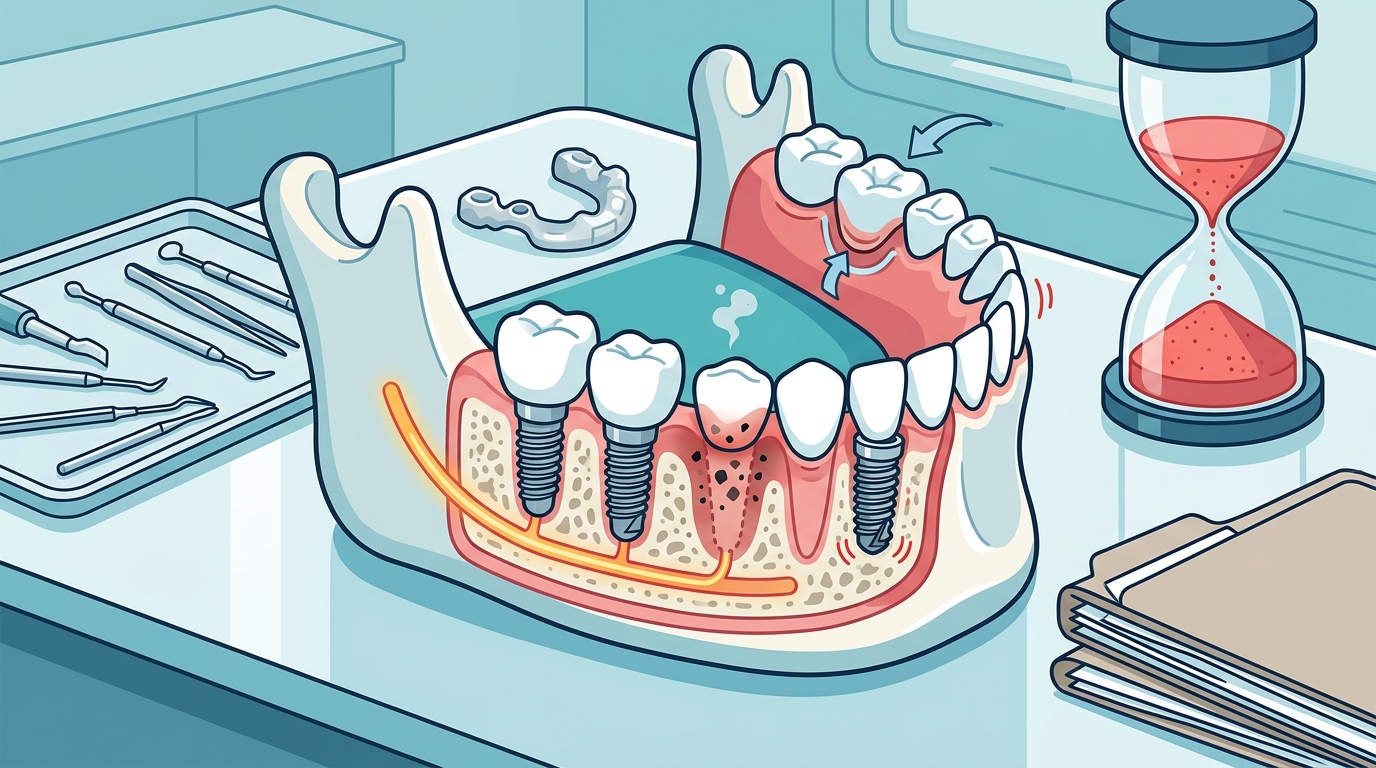
Peri-implantitis is a chronic inflammatory condition affecting the tissues surrounding a dental implant. The same study reported peri-implantitis in 12% of cases. If left untreated, it can lead to progressive bone loss and eventual implant failure. Nerve injury, sinus complications, and prosthetic failure are less frequent, each occurring in fewer than 6% of cases.
Implant Failure
Implant failure is the loss of an implant due to failed osseointegration, infection, or mechanical overload. The study cited above found an 8% failure rate, while other research reports overall failure rates closer to 2% to 3%. A six-year retrospective survey of 376 implants found an overall failure rate of 3.11%.
Who Is at Higher Risk?
Not every patient faces the same level of risk. Several factors can increase the likelihood of complications:
- Smoking: Smokers face approximately three times the failure risk compared to non-smokers. Tobacco disrupts osseointegration and increases susceptibility to infection and peri-implantitis.
- Uncontrolled diabetes: Patients with poorly managed diabetes may have up to 40% higher complication rates due to impaired healing.
- Low bone density: Patients with Type III or IV bone density have a higher failure rate. The six-year retrospective study found 75% of failed implants were in low-density bone.
- Prior sinus lift surgery: Failure rates associated with sinus lift procedures can reach 4% to 5.6%, higher than implants placed in native bone.
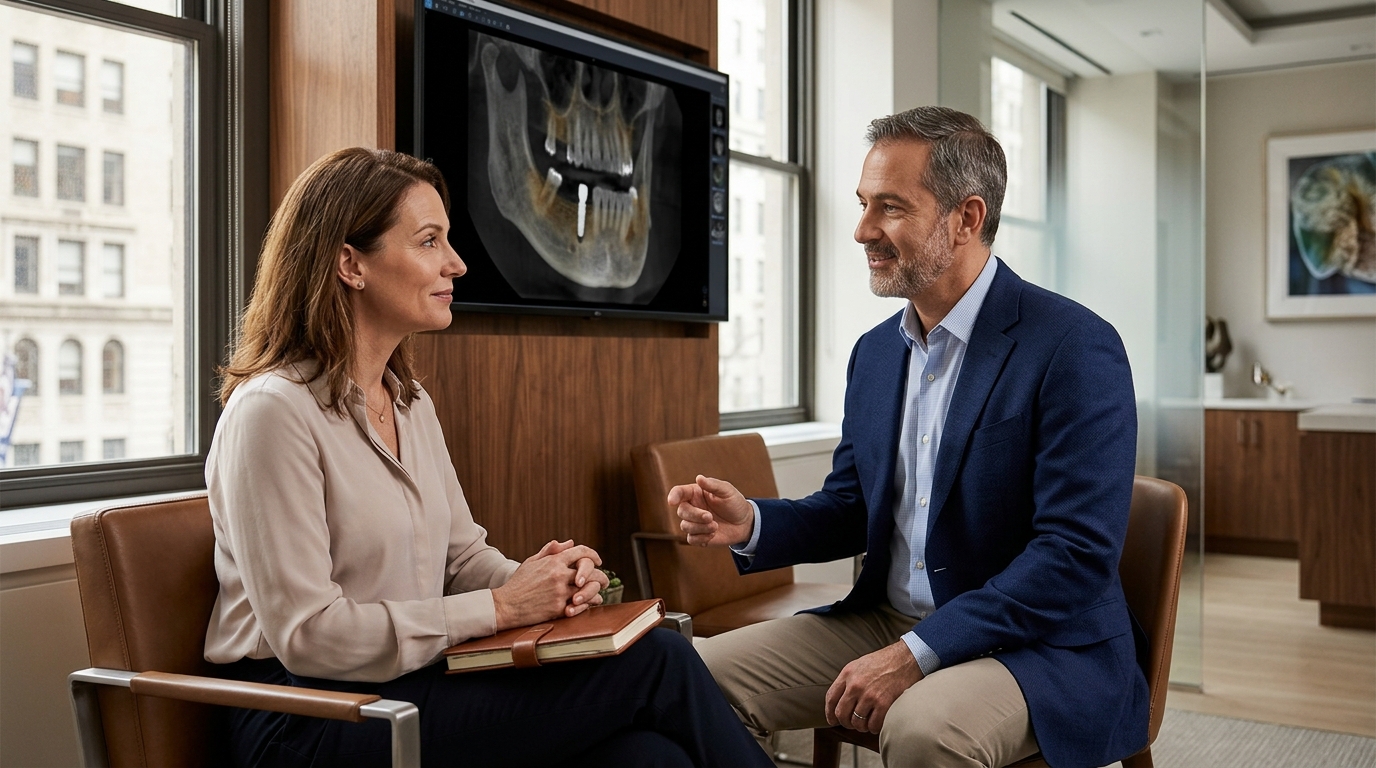
A thorough medical evaluation and honest discussion about your health history is essential. At Park Avenue Oral Surgery, every patient receives a 3D CT scan to evaluate bone quality and plan the safest approach.
Complication Rates by Type: A Data Summary
| Complication | Reported Incidence | Severity |
|---|---|---|
| Infection | 10% - 15.3% | Mild to Moderate |
| Peri-implantitis | 10% - 12% | Moderate to Severe |
| Implant Failure | 2% - 8% | Severe |
| Nerve Injury | < 6% | Moderate to Severe |
| Sinus Complications | < 6% | Mild to Moderate |
| Prosthetic Failure | < 6% | Moderate |
| No Complications | ~66.7% | N/A |
Sources: Journal of Pharmacy and Bioallied Sciences (2024); Journal of Oral Medicine and Oral Surgery (2022)
How Modern Technology Minimizes Implant Risks
Advances in surgical planning and technique have significantly reduced complication rates over the past decade. Here is how a practice like Park Avenue Oral Surgery keeps risk to a minimum.
CT-Guided Implant Placement
CT-guided implant placement uses a detailed 3D scan of your jaws to map bone density, nerve locations, and sinus proximity before surgery begins. This allows the surgeon to plan the exact position, angle, and depth of each implant, reducing the risk of nerve injury and sinus perforation.
Bone Grafting and Sinus Lifts
When bone volume is insufficient, procedures like sinus lifts and bone grafts rebuild the foundation needed for stable implant placement. Park Avenue Oral Surgery uses PRP (Platelet-Rich Plasma) and PRF (Platelet-Rich Fibrin) derived from the patient's own blood to accelerate healing and reduce the risk of graft complications.
Minimally Invasive Surgical Philosophy
Dr. Choi's fellowship training in minimally invasive surgery at the University of Munich means smaller incisions, less tissue disruption, and faster recovery. This philosophy extends to every procedure, from All-on-X full-arch implants to single-tooth replacements.
What to Watch for After Dental Implant Surgery
Most post-surgical discomfort peaks within three to seven days and subsides gradually. Contact your oral surgeon immediately if you experience:
- Persistent or worsening pain beyond one week
- Swelling that increases after the third day
- Pus or foul-tasting discharge from the surgical site
- Numbness or tingling in the lip, chin, or tongue that does not resolve
- A feeling that the implant is loose or shifting
Early intervention is critical. Most complications are manageable when caught promptly through routine follow-up visits.
Key Takeaways
- Dental implants have success rates of 95% to 98%, but risks still exist and should be understood before surgery.
- Infection (up to 15.3%), peri-implantitis (up to 12%), and implant failure (2% to 8%) are the most commonly reported complications.
- Smoking, uncontrolled diabetes, and low bone density significantly increase complication risk.
- Approximately two-thirds of implant patients experience no complications at all.
- CT-guided planning, bone grafting with PRP/PRF, and minimally invasive techniques substantially lower the likelihood of adverse outcomes.
- Choosing a board-certified oral and maxillofacial surgeon with advanced training is one of the most effective ways to reduce your risk.
- Early detection through regular follow-up visits can resolve most complications before they become serious.
Frequently Asked Questions
How common is dental implant failure?
Overall implant failure rates range from about 2% to 8% depending on the study and patient population. A six-year retrospective study of 376 implants reported a failure rate of 3.11%. Factors such as bone quality, smoking, and surgical technique play a significant role.
What is peri-implantitis?
Peri-implantitis is a destructive inflammatory condition that affects the soft and hard tissues surrounding a dental implant. It can cause bone loss around the implant and, if untreated, may lead to implant removal. It is largely preventable with good oral hygiene and routine dental cleanings.
Does smoking affect dental implant success?
Yes. Research consistently shows that smokers face roughly three times the risk of implant failure compared to non-smokers. Smoking impairs blood flow, delays healing, and promotes bacterial infection around the implant site.
Can dental implants damage nerves?
Nerve injury is a recognized but uncommon complication, occurring in fewer than 6% of cases. It most commonly involves the inferior alveolar nerve in the lower jaw, potentially causing numbness or tingling. CT-guided surgical planning helps surgeons avoid nerve structures.
Are upper jaw implants riskier than lower jaw implants?
Upper jaw (maxillary) implants can be more challenging due to proximity to the sinus cavity and often lower bone density. One study found that 83% of failed implants were located in the upper jaw. A sinus lift may be recommended to improve bone volume before placement.
How can I reduce my risk of implant complications?
Stop smoking well before surgery, manage chronic conditions like diabetes, follow all pre- and post-operative instructions, attend every follow-up appointment, and maintain excellent oral hygiene. Selecting an experienced, board-certified oral surgeon is also critical.
What should I expect during recovery?
Expect swelling, mild discomfort, and possible bruising for the first week. Most patients return to normal activities within a few days. Your surgeon may prescribe antibiotics and pain management protocols. Full osseointegration takes three to six months.
Is dental implant surgery safe for older adults?
Age alone is not a contraindication. However, overall health status, bone density, and medication use must be evaluated. Research shows complication rates can vary across age groups, making a thorough pre-surgical assessment essential.
Ready to Learn More About Dental Implants?
If you are considering dental implants and want to understand your specific risk profile, schedule a consultation with Dr. James Choi at Park Avenue Oral, Maxillofacial & Implant Surgery. Our team will perform a comprehensive evaluation, including 3D imaging, and create a personalized treatment plan designed for your safety and long-term success.