

Facial Reconstruction After a Jaw Injury: Best Options for Restoring Form and Function
A jaw injury can change your life in an instant. Whether caused by a sports collision, automobile accident, or fall, trauma to the jaw and surrounding facial bones demands prompt, expert care. Facial reconstruction is the process of surgically restoring the structure, appearance, and function of facial bones and soft tissues after injury. Choosing the right procedure and the right surgeon can mean the difference between a long, frustrating recovery and a smooth return to normal life. In this guide, we break down the best options for facial reconstruction after a jaw injury, what to expect during recovery, and how to find the right oral and maxillofacial surgeon in New York City.
Understanding Jaw Injuries and Facial Trauma
Facial trauma is a broad term describing injuries to the bones and soft tissues of the face, including the upper jaw (maxilla), lower jaw (mandible), cheekbones, and eye sockets. According to the American Association of Oral and Maxillofacial Surgeons (AAOMS), broken facial bones are one of the most common types of serious facial injury.
Jaw fractures can range from simple hairline cracks to complex, multi-fragment breaks that displace bone segments and damage surrounding teeth. The alveolar bone that supports teeth is frequently involved, especially in falls and contact sports. Left untreated, these injuries can lead to chronic pain, difficulty chewing and speaking, and lasting changes in facial appearance.
Why an Oral and Maxillofacial Surgeon?
An oral and maxillofacial surgeon (OMS) is a specialist who has completed both dental and medical training, followed by a surgical residency focused on the hard and soft tissues of the face, mouth, and jaws. This dual-degree background is critical for facial trauma repair because the surgeon must simultaneously restore bite alignment, airway function, and facial aesthetics.
The American College of Surgeons recommends a multidisciplinary approach to complex craniofacial injuries that includes oral and maxillofacial surgery specialists. Board-certified, fellowship-trained surgeons bring the highest level of expertise to these cases.
Best Facial Reconstruction Options After Jaw Injury
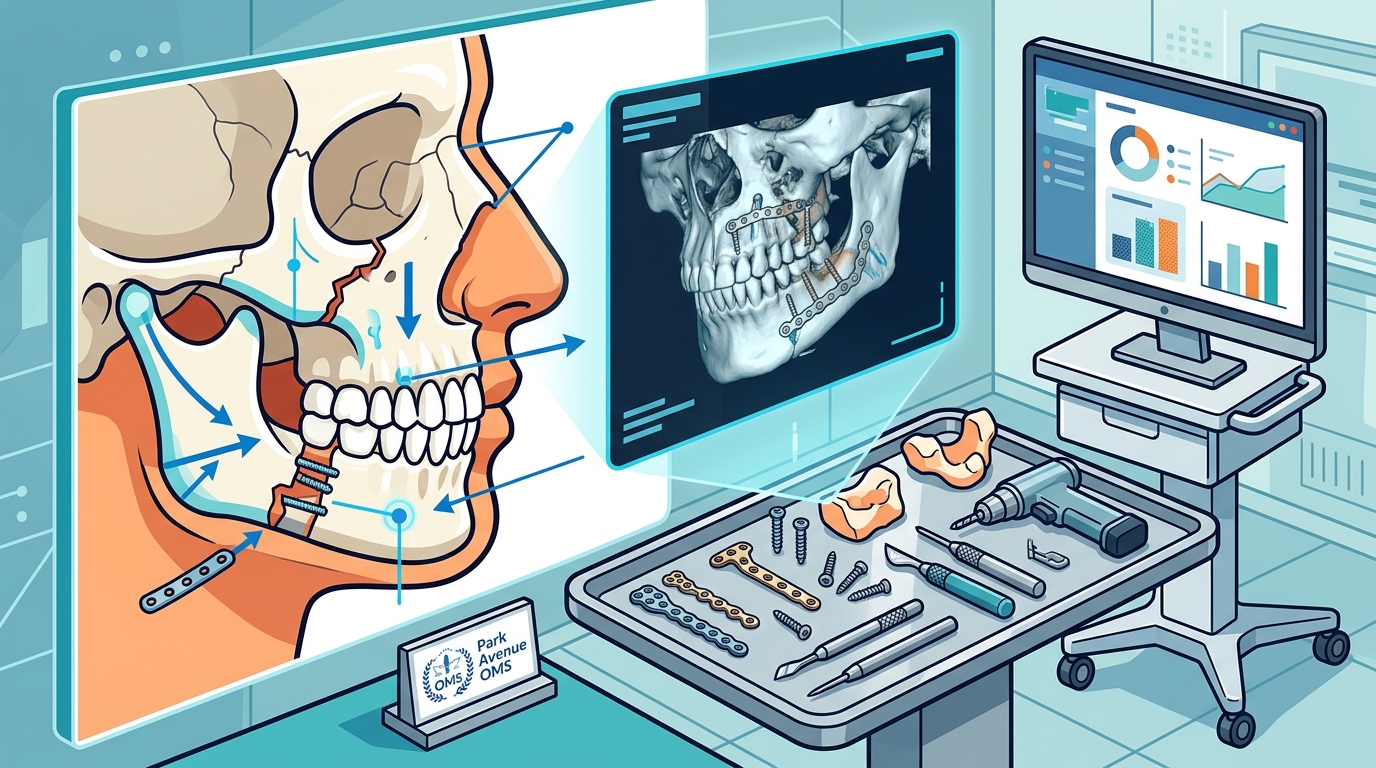
Open Reduction and Internal Fixation (ORIF)
ORIF is the gold-standard surgical technique for displaced jaw fractures. The surgeon accesses the broken bones, repositions the fragments into their correct alignment, and secures them with titanium plates and screws. Incisions are typically hidden inside the mouth to minimize visible scarring. For upper or lower jaw breaks, this approach restores both structural integrity and proper dental occlusion.
Bone Grafting and Tissue Reconstruction
When trauma causes significant bone loss, a bone graft is often required. Bone grafting is a procedure in which bone tissue is transplanted to rebuild areas where the natural bone has been destroyed or resorbed. Grafts may be harvested from the patient (autograft), sourced from a donor (allograft), or made from synthetic materials. In severe cases, surgeons may use bone from the fibula to reconstruct large sections of the jaw.
Dental Implants for Tooth Replacement
Jaw injuries frequently result in lost or irreparably damaged teeth. Dental implants are titanium posts surgically placed into the jawbone to serve as permanent replacements for missing teeth. The implant fuses with the bone through a process called osseointegration, creating a stable foundation for a crown or prosthetic. Implants can be placed immediately or in a staged approach after the fracture has healed.
Corrective Jaw Surgery (Orthognathic Surgery)
In cases where trauma has shifted the jaw out of alignment, corrective jaw surgery may be needed to reposition the upper jaw, lower jaw, or both. This procedure restores a functional bite and balanced facial proportions. It is often coordinated with orthodontic treatment before and after surgery.
Chin and Jawline Reconstruction
Injuries to the lower face can alter chin projection and jawline definition. A chin surgery (genioplasty) reshapes and repositions the chin bone to restore symmetry. For patients seeking further enhancement, jawline implants can refine the contour of the lower face after structural repair is complete.
| Procedure | Best For | Typical Timeline |
|---|---|---|
| ORIF (Plates & Screws) | Displaced jaw fractures | 6 to 8 weeks bone healing |
| Bone Grafting | Significant bone loss | 3 to 6 months before implant placement |
| Dental Implants | Missing or damaged teeth | 3 to 6 months for osseointegration |
| Corrective Jaw Surgery | Jaw misalignment post-trauma | 6 to 12 months total with orthodontics |
| Chin/Jawline Surgery | Altered facial contour | 4 to 6 weeks recovery |
Advanced Technology in Jaw Reconstruction
Modern facial reconstruction relies on cutting-edge tools to improve precision and outcomes. Virtual surgical planning (VSP) uses 3D computer modeling to map fracture patterns and simulate the repair before the surgeon enters the operating room. This technology reduces operating time and improves accuracy.
CT-guided implant placement allows surgeons to position dental implants with sub-millimeter precision, which is especially important when working in bone that has been reconstructed after trauma. Other innovations, such as piezoelectric saws, cut bone while preserving surrounding soft tissue and nerves.
Recovery Timeline and What to Expect
Recovery from jaw reconstruction varies depending on the severity of the injury and the procedures performed. Most patients can expect some swelling, soreness, and stiffness immediately after surgery. Your surgeon will likely prescribe medications to manage pain and prevent infection.
A liquid or soft-food diet is typically required for two to six weeks following surgery. Keeping your head elevated and applying ice packs during the first 24 to 48 hours helps reduce swelling. Most patients return to work or school within two to four weeks, though full bone healing may take several months. Review the detailed post-operative instructions provided by your surgical team for the best outcomes.
TMJ Considerations After Jaw Trauma
The temporomandibular joint (TMJ) is the hinge that connects your jawbone to your skull. Trauma to the jaw can damage the TMJ, leading to clicking, limited mouth opening, or chronic pain. Many post-traumatic TMJ issues respond to conservative treatment, but some require surgical intervention to repair damaged joint structures.
Choosing the Right Surgeon in NYC
When selecting a surgeon for facial reconstruction after a jaw injury, look for board certification, dual-degree training (MD and DMD or DDS), and fellowship-level experience in maxillofacial trauma. A surgeon who operates from a fully equipped surgical facility with in-office anesthesia capabilities can offer both convenience and safety.
At Park Avenue Oral Maxillofacial & Implant Surgery, our surgeons are board-certified, dual-degreed, and fellowship-trained. Located on Park Avenue in the heart of Manhattan, our practice has been voted New York Times Magazine SuperDoctors and featured on national television. We accept major PPO insurances and offer safe in-office anesthesia for patient comfort.
Key Takeaways
- Jaw injuries require prompt evaluation by a qualified oral and maxillofacial surgeon to prevent long-term complications.
- Open reduction and internal fixation (ORIF) with titanium plates and screws is the standard treatment for displaced jaw fractures.
- Bone grafting rebuilds areas of significant bone loss and prepares the jaw for dental implants.
- Dental implants offer a permanent, natural-looking replacement for teeth lost due to trauma.
- Corrective jaw surgery can realign the jaws after traumatic displacement, restoring bite function and facial balance.
- Virtual surgical planning and CT-guided technology improve surgical precision and shorten recovery.
- Choosing a board-certified, fellowship-trained surgeon is the single most important factor in achieving an optimal outcome.
Frequently Asked Questions
What is facial reconstruction surgery?
Facial reconstruction surgery is a set of procedures designed to restore the structure, function, and appearance of the face after injury, disease, or congenital deformity. It can involve repairing broken bones, grafting tissue, placing dental implants, and reshaping the jaw or chin.
How long does recovery from jaw reconstruction take?
Most patients return to daily activities within two to four weeks. However, full bone healing and final results may take three to six months or longer, depending on the complexity of the injury and procedures performed.
Will I need dental implants after a jaw injury?
If teeth were lost or damaged beyond repair during the injury, dental implants are often the best long-term replacement option. Your surgeon will evaluate whether immediate or delayed implant placement is appropriate for your case.
Is jaw reconstruction covered by insurance?
Reconstructive jaw surgery performed to repair trauma is typically covered by medical insurance. Coverage varies by plan. Park Avenue Oral Surgery accepts major PPO insurances and can help verify your benefits before treatment. Visit our financial information page for details.
What is virtual surgical planning?
Virtual surgical planning (VSP) is a technology that uses 3D imaging and computer modeling to map out the surgical procedure before it happens. It improves accuracy, reduces operating time, and leads to better outcomes in complex facial reconstruction cases.
Can jaw injuries cause TMJ problems?
Yes. Trauma to the jaw can damage the temporomandibular joint, leading to pain, clicking, and limited mouth opening. Many cases improve with conservative treatment, but persistent symptoms may require surgical repair.
How do I choose the best oral surgeon for facial reconstruction?
Look for a surgeon who is board-certified, has dual-degree training (MD and DMD/DDS), and has fellowship-level experience in facial trauma and reconstruction. Ask about the technology used in their practice and their experience with cases similar to yours.
What should I do immediately after a jaw injury?
Seek emergency medical attention right away. Stabilize the jaw by gently holding it in place, apply ice to reduce swelling, and avoid eating solid foods. Prompt evaluation by an oral and maxillofacial surgeon is essential to determine the extent of the injury and plan treatment.
Ready to Restore Your Smile and Confidence?
If you or a loved one has suffered a jaw injury, the board-certified surgeons at Park Avenue Oral Maxillofacial & Implant Surgery are here to help. Schedule a consultation today to discuss your reconstruction options and take the first step toward recovery.