
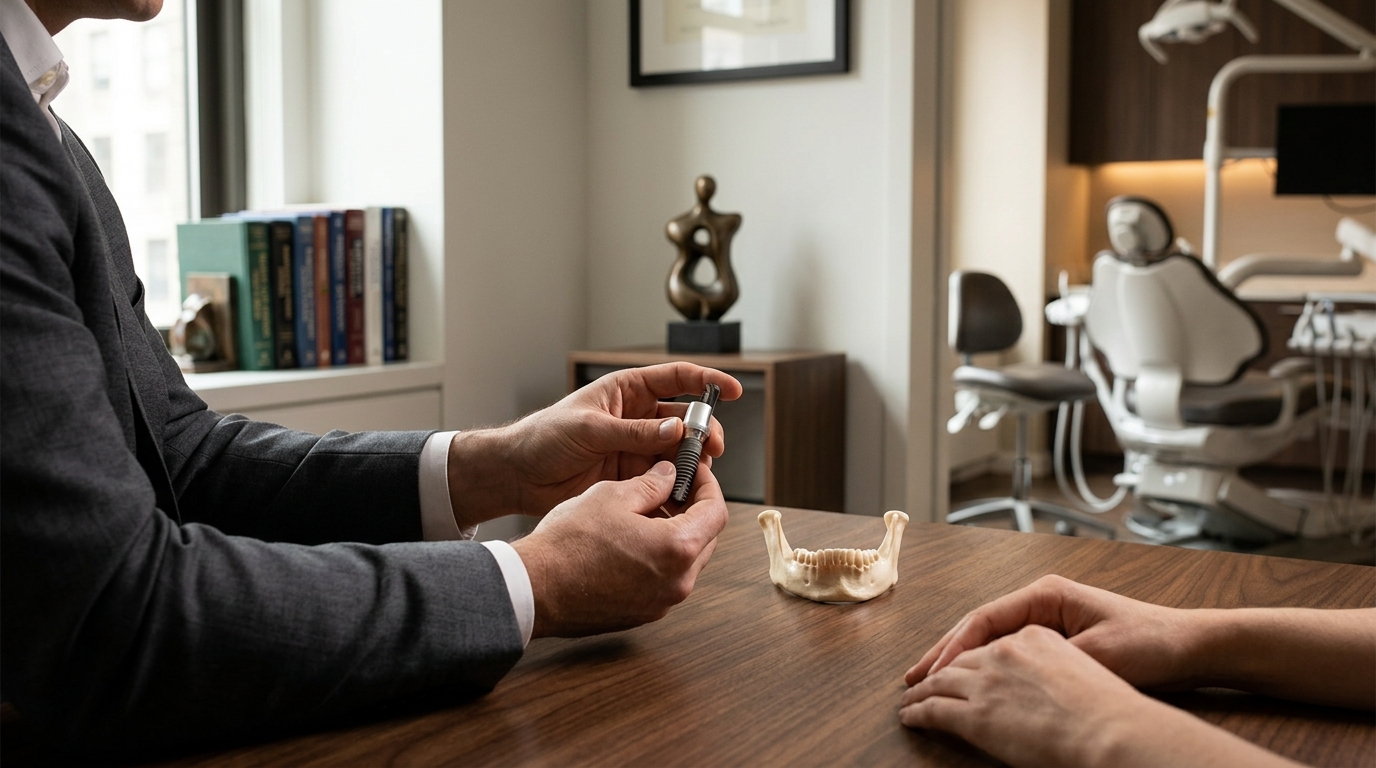
Dental implants are widely regarded as the gold standard for replacing missing teeth, with long-term success rates between 95% and 98%. However, like any surgical procedure, dental implant surgery carries potential risks and complications that patients should understand before moving forward. Knowing what can go wrong, how likely it is, and what steps minimize those risks empowers you to make a confident, informed decision. Below, our board-certified oral surgeons at Park Avenue Oral Surgery break down the key risks, supporting data, and prevention strategies.
Most Common Risks and Complications
Dental implant complications range from minor, temporary side effects to more serious concerns requiring intervention. A 2024 study published in the Journal of Pharmacy and Bioallied Sciences reviewed 150 implant cases and found that infection (15.3%), peri-implantitis (12.0%), and implant failure (8.0%) were the most common complications. Notably, about two-thirds of patients experienced no complications at all.
Short-term effects such as swelling, mild bleeding, and bruising are normal and typically resolve within one to two weeks. More serious complications, while uncommon, deserve careful attention.
| Complication | Approximate Incidence | Severity |
|---|---|---|
| Swelling | ~80% of patients | Mild / Temporary |
| Infection | 10-15% | Moderate |
| Peri-implantitis | 10-20% | Moderate to Serious |
| Implant failure | 2-8% | Serious |
| Nerve injury | <5% | Serious |
| Sinus complications | <5% | Moderate |
| Prosthetic failure | <6% | Moderate |
Infection After Dental Implant Surgery
Infection is the most frequently observed post-operative complication of dental implant placement. Infection is a bacterial invasion of the surgical site that can affect the gum tissue, the bone, or both. Signs include persistent swelling, pain, fever, and discharge around the implant site.
According to research in the Journal of Pharmacy and Bioallied Sciences, infection prevention strategies such as preoperative antimicrobial therapy and meticulous surgical technique are essential for reducing post-operative infections. At Park Avenue Oral Surgery, our surgeons follow strict safety and anesthesia protocols to keep infection risk as low as possible.
Implant Failure and Osseointegration Problems
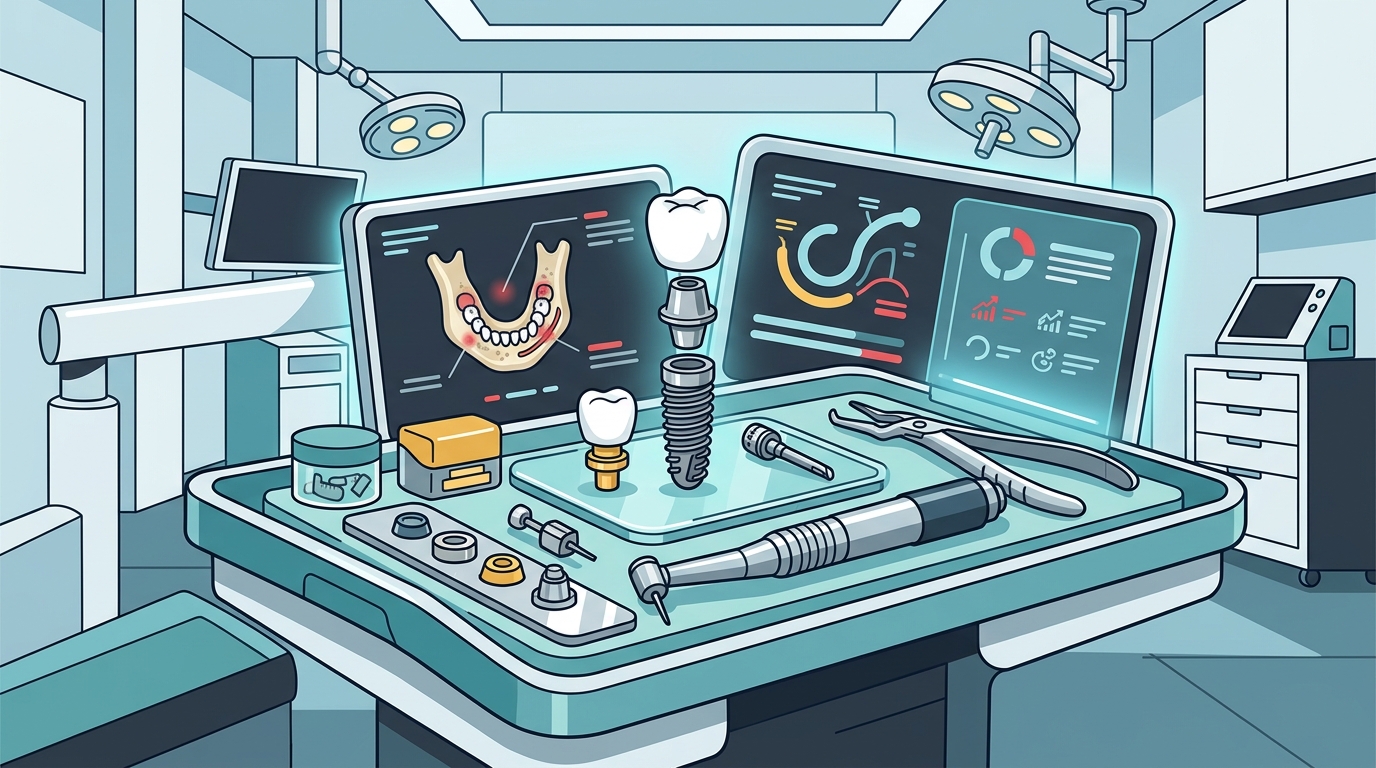
Osseointegration is the biological process by which a dental implant fuses with the surrounding jawbone to form a stable foundation. When this process fails, the implant becomes loose and must be removed. A large-scale 2025 study of over 158,000 implants reported an overall failure rate of just 2.21%, with early failure during the healing phase at 1.56%.
Early vs. Late Failure
Early failure occurs before the implant is loaded with a prosthetic crown, usually within the first few months. Late failure happens after the implant has been in function, often due to chronic inflammation or excessive mechanical forces. People who grind their teeth, for example, may need a protective mouthguard to prevent damage.
The Role of Advanced Technology
Modern planning tools like CT-guided implant placement and virtual surgical planning allow surgeons to position implants with exceptional precision, significantly reducing the risk of failure.
Nerve Injury and Sinus Complications
Nerve injury is damage to the inferior alveolar nerve or other nerves near the surgical site that can result in numbness, tingling, or pain in the chin, lips, or tongue. This complication is most relevant for implants placed in the lower jaw and occurs in fewer than 5% of cases.
For upper jaw implants, there is a risk that the implant may encroach on the sinus cavity, causing sinusitis or discomfort. A sinus lift procedure may be performed beforehand to build adequate bone height and avoid this complication entirely.
Key Risk Factors That Increase Complications
Not every patient faces the same level of risk. Several factors can increase the likelihood of complications after dental implant surgery.
Smoking
Smokers face roughly three times the implant failure risk compared to non-smokers. Smoking disrupts blood flow and impairs osseointegration, making it the single most significant modifiable risk factor.
Uncontrolled Diabetes and Systemic Health
Patients with uncontrolled diabetes may have up to 40% higher complication rates. Conditions like autoimmune disorders and rheumatoid arthritis can also affect healing. Proper medical management before surgery is critical.
Bone Quality and Quantity
Low bone density (Type III-IV bone) is associated with higher failure rates. When bone volume is insufficient, a bone grafting procedure can rebuild the foundation before implant placement.
How to Minimize Your Risk
The good news is that most dental implant complications are preventable with proper planning and care. Here is what you can do:
- Choose a board-certified oral surgeon. Fellowship-trained specialists with dual MD and DMD degrees, like the surgeons at Park Avenue Oral Surgery, have the advanced training to handle complex cases safely.
- Stop smoking at least two weeks before and after surgery.
- Follow post-operative instructions carefully. Review our detailed post-op care guidelines to support proper healing.
- Attend all follow-up appointments. Early detection of complications makes them far easier to treat.
- Maintain excellent oral hygiene, including professional cleanings every three to six months.
Key Takeaways
- Dental implants have a 95-98% long-term success rate, but complications can occur.
- Infection (10-15%), peri-implantitis (10-20%), and implant failure (2-8%) are the most common risks.
- About two-thirds of implant patients experience no complications at all.
- Smoking triples the risk of implant failure and is the top modifiable risk factor.
- Advanced technology like CT-guided placement and virtual surgical planning dramatically improves precision and safety.
- Choosing a board-certified, fellowship-trained oral surgeon is one of the most important steps you can take to reduce risk.
- Most complications are treatable when detected early through routine follow-up visits.
Frequently Asked Questions
What is the most common complication of dental implant surgery?
Infection is the most frequently reported complication, occurring in roughly 10-15% of cases. It is usually treatable with antibiotics and proper wound care when caught early.
How often do dental implants fail?
Overall implant failure rates range from about 2% to 8%, depending on the study and patient population. A 2025 study of over 158,000 implants found a failure rate of just 2.21%.
Does smoking affect dental implant success?
Yes. Smokers face approximately three times the risk of implant failure compared to non-smokers. Quitting smoking before and after surgery significantly improves outcomes.
Can dental implants cause nerve damage?
Nerve injury is possible but uncommon, affecting fewer than 5% of patients. Symptoms may include numbness or tingling in the lip, chin, or tongue. CT-guided surgical planning helps surgeons avoid nerve structures.
What is peri-implantitis?
Peri-implantitis is an inflammatory condition affecting the tissues surrounding a dental implant, often caused by bacterial buildup. It can lead to bone loss around the implant if left untreated, but it is preventable with good oral hygiene and regular dental visits.
Are dental implants safe for diabetic patients?
Patients with well-controlled diabetes can safely receive dental implants. However, uncontrolled diabetes may increase complication risk by up to 40%, so blood sugar management before surgery is essential.
How can I reduce my risk of dental implant complications?
Choose an experienced, board-certified oral surgeon, follow all pre- and post-operative instructions, quit smoking, manage systemic health conditions, and maintain consistent oral hygiene and follow-up care.
What should I do if I suspect a dental implant complication?
Contact your oral surgeon immediately. Signs such as persistent pain, swelling beyond two weeks, fever, or changes in bite warrant prompt evaluation. Early intervention leads to the best outcomes. You can reach Park Avenue Oral Surgery through our online booking page.
Schedule Your Consultation at Park Avenue Oral Surgery
Understanding the risks is the first step toward a safe, successful dental implant experience. Our board-certified, fellowship-trained oral surgeons in New York City use the latest technology and evidence-based protocols to deliver optimal outcomes with maximum patient comfort. Book your consultation today and take the next step toward restoring your smile with confidence.