
If you are searching for a jaw surgery specialist who can enhance your facial aesthetics in New York City, understanding the procedure, its benefits, and what sets a qualified surgeon apart is essential. Orthognathic surgery is a corrective jaw procedure that repositions the upper jaw, lower jaw, or both to restore facial balance, improve bite function, and create a more harmonious profile. At Park Avenue Oral Maxillofacial & Implant Surgery, our board-certified, dual-degree surgeons combine clinical precision with an artistic eye to deliver results that look and feel natural.
What Is Jaw Surgery (Orthognathic Surgery)?
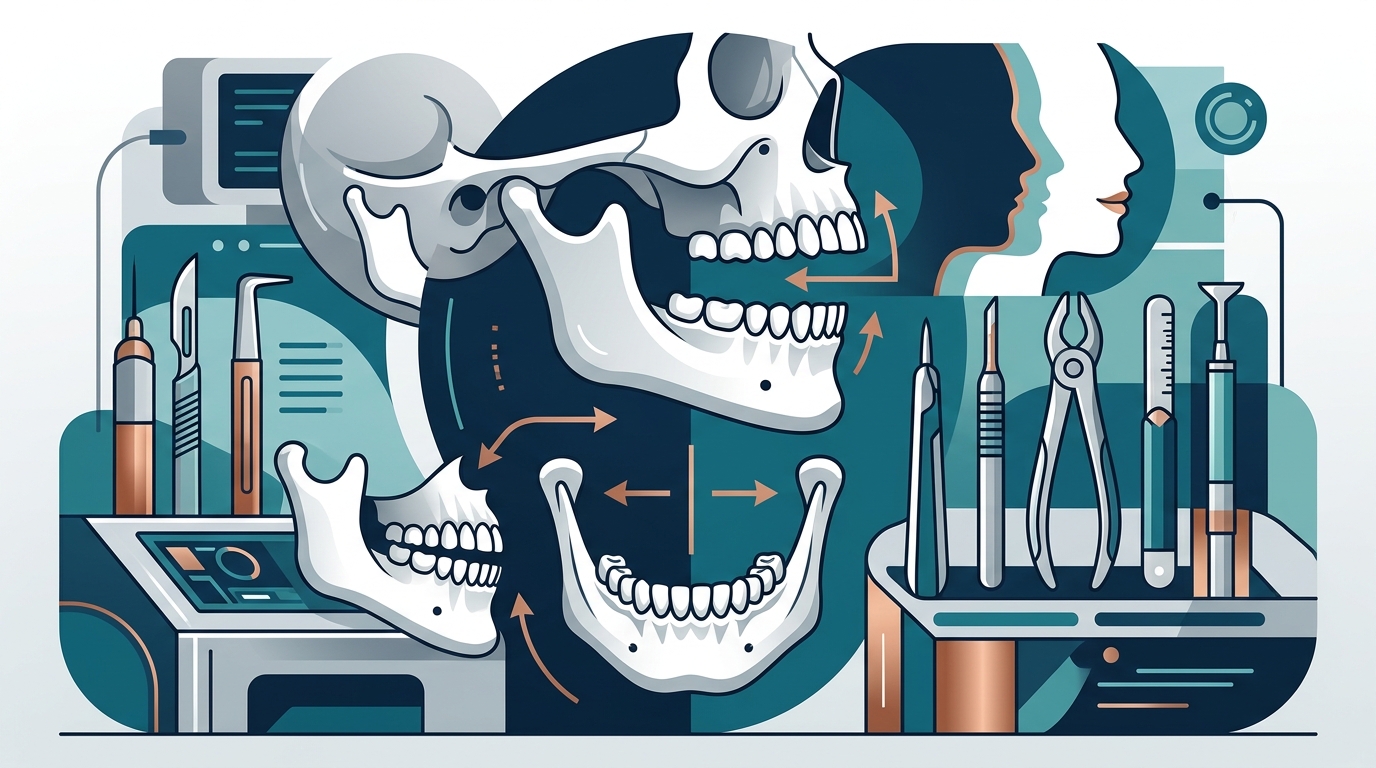
Orthognathic surgery is a specialized surgical procedure that corrects structural abnormalities of the jaw, including overbites, underbites, crossbites, and asymmetrical jaw growth. The surgery involves carefully repositioning the maxilla (upper jaw), mandible (lower jaw), or both to achieve proper alignment. According to the American Association of Oral and Maxillofacial Surgeons (AAOMS), orthognathic procedures are among the most impactful treatments for correcting skeletal jaw discrepancies.
Unlike purely cosmetic interventions, jaw surgery targets the root cause of misalignment. Advanced techniques such as virtual surgical planning and 3D imaging allow surgeons to map precise bone movements before a single incision is made, resulting in highly predictable outcomes.
How Jaw Surgery Enhances Facial Aesthetics
One of the most compelling reasons patients seek orthognathic surgery is the dramatic improvement in facial harmony. By repositioning the jaws, the procedure can correct asymmetries, improve profile contour, and create a more defined jawline.
Facial Symmetry and Balance
Facial asymmetry is a condition where one side of the face differs noticeably from the other, often caused by uneven jaw growth. Corrective jaw surgery restores balance by aligning the skeletal framework, which in turn harmonizes soft tissue proportions. Patients frequently report a significant boost in self-confidence after surgery.
Jawline Definition and Chin Projection
A well-defined jawline is widely associated with attractiveness and vitality. Orthognathic surgery creates sharper, more proportional angles for the lower face. When paired with chin surgery (genioplasty), results can be even more transformative, addressing a receding chin or overly prominent jaw in one coordinated plan.
Profile Enhancement
Adjusting the jaw angle and alignment improves the contour of the face and neck. For patients considering additional refinements, facial contouring procedures can complement orthognathic results to achieve a comprehensive aesthetic transformation.
Functional Benefits Beyond Appearance
While aesthetics may be the primary motivator for many patients, corrective jaw surgery also delivers substantial functional improvements. Jaw misalignment can interfere with biting, chewing, and speaking, and can contribute to chronic pain.
| Benefit | Aesthetic Impact | Functional Impact |
|---|---|---|
| Jaw Realignment | Improved facial symmetry | Corrected bite and chewing |
| Chin Repositioning | Balanced profile | Better lip closure |
| Palatal Expansion (SARPE) | Wider, fuller smile | Improved airway and breathing |
| TMJ Correction | Reduced facial tension | Pain relief and improved jaw mobility |
Patients who suffer from temporomandibular joint (TMJ) disorders often experience significant relief after orthognathic surgery, as correcting skeletal alignment reduces pressure on the joint.
Who Is an Ideal Candidate?
The ideal candidate for orthognathic surgery is someone whose jaw growth is complete, typically age 16 and older for females and 18 and older for males. Candidates usually have one or more of the following concerns:
- Significant overbite, underbite, or open bite not correctable with braces alone
- Facial asymmetry caused by uneven jaw development
- Chronic jaw pain or TMJ dysfunction
- Difficulty chewing, breathing, or speaking
- Desire for improved facial aesthetics and profile balance
A thorough evaluation, including 3D CT scans and dental impressions, determines the precise surgical plan. Learn more about the diagnostic technology used during your first visit.
How to Choose a Jaw Surgery Specialist in NYC
Not all oral surgeons have the same level of training in orthognathic and facial aesthetic surgery. When selecting a specialist in New York City, look for these credentials:
Board Certification and Dual Degree
A board-certified oral and maxillofacial surgeon has completed rigorous examinations beyond residency training. Surgeons who hold both an MD and a DMD (or DDS) possess a uniquely comprehensive understanding of both medicine and dentistry, which is critical for complex jaw procedures.
Fellowship Training
Fellowship training is an additional period of specialized education focused on a subspecialty such as orthognathic surgery or craniofacial surgery. This extra training translates to deeper expertise in both the functional and aesthetic dimensions of jaw surgery.
Advanced Technology
Leading practices invest in tools like virtual surgical planning, piezoelectric saws for precision bone cuts, and in-office CT imaging. These technologies reduce operative time and improve accuracy. At Park Avenue Oral Surgery, our advanced technology suite reflects our commitment to optimal outcomes.
What to Expect: From Consultation to Recovery
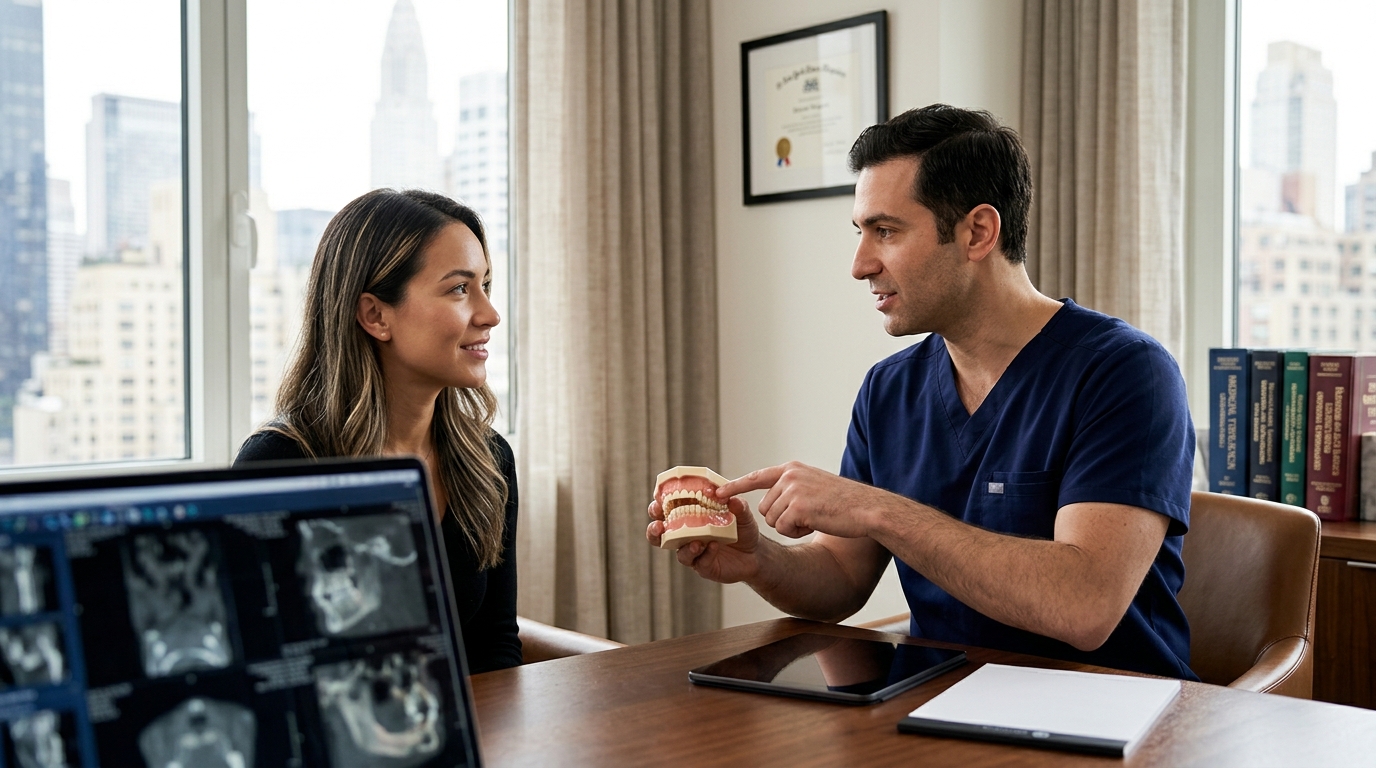
Your journey begins with a comprehensive consultation, during which your surgeon evaluates your jaw structure, discusses your aesthetic goals, and outlines a personalized treatment plan. Virtual surgical planning allows you to preview projected results before surgery.
The procedure itself is typically performed under general anesthesia in a hospital or accredited surgical facility. Most orthognathic surgeries take two to four hours depending on complexity. Recovery involves a soft diet for several weeks and gradual return to normal activities over six to eight weeks. Detailed guidance is provided through our post-operative instructions page.
Final results become fully apparent once swelling resolves, usually within three to six months, revealing improved facial balance and bite function.
Key Takeaways
- Orthognathic surgery corrects jaw misalignment to improve both facial aesthetics and function.
- The procedure can address overbites, underbites, facial asymmetry, and TMJ disorders in a single surgical plan.
- Choosing a board-certified, fellowship-trained oral and maxillofacial surgeon is critical for safe, predictable results.
- Advanced tools like virtual surgical planning and 3D imaging allow precise, customized treatment.
- Jaw surgery can be combined with chin surgery or facial contouring for a comprehensive transformation.
- Recovery typically spans six to eight weeks, with final aesthetic results visible within three to six months.
- Park Avenue Oral Surgery in NYC offers dual-degree specialists, cutting-edge technology, and in-network insurance options.
Frequently Asked Questions
Is jaw surgery purely cosmetic?
No. While jaw surgery delivers significant aesthetic improvements such as better facial symmetry and a more defined jawline, it primarily corrects functional problems like bite misalignment, chewing difficulties, and TMJ pain. Many insurance plans cover the procedure when medical necessity is established.
How long does recovery from orthognathic surgery take?
Most patients return to work or school within two to three weeks. Full recovery, including bone healing and resolution of swelling, typically takes three to six months. Your surgeon will provide a detailed recovery timeline during your consultation.
Will I need braces before or after jaw surgery?
In many cases, orthodontic treatment is coordinated with surgery. Pre-surgical braces align the teeth so the jaws can be repositioned accurately. Post-surgical orthodontics fine-tune the bite. Some patients may qualify for a surgery-first approach that reduces overall treatment time.
What is the difference between jaw surgery and chin surgery?
Jaw surgery (orthognathic surgery) repositions the entire upper or lower jaw to correct skeletal misalignment. Chin surgery (genioplasty) specifically reshapes or repositions the chin bone. The two procedures are often performed together for optimal facial balance.
Does insurance cover jaw surgery in NYC?
Many major PPO insurance plans cover orthognathic surgery when it is deemed medically necessary. Park Avenue Oral Surgery accepts major in-network insurances. Visit our financial information page for details on coverage and payment options.
How do I know if I need jaw surgery or just braces?
If your bite problem is caused by skeletal misalignment rather than tooth positioning alone, braces may not be sufficient. A consultation with an oral and maxillofacial surgeon, often in collaboration with your orthodontist, will determine the best course of action.
What technology does Park Avenue Oral Surgery use for jaw surgery?
Our practice uses virtual surgical planning, in-office cone beam CT scanning, piezoelectric surgical instruments, and advanced anesthesia protocols to ensure precision, safety, and comfort throughout your procedure.
Can jaw surgery fix my TMJ pain?
In many cases, yes. When TMJ pain is caused by jaw misalignment, orthognathic surgery can relieve pressure on the temporomandibular joint and reduce or eliminate symptoms. Learn more on our TMJ treatment page.
Take the Next Step Toward Facial Harmony
If jaw misalignment is affecting your appearance, comfort, or confidence, schedule a consultation with a jaw surgery specialist at Park Avenue Oral Maxillofacial & Implant Surgery. Our board-certified, fellowship-trained surgeons on Park Avenue in New York City are ready to create a personalized treatment plan tailored to your goals. Book your consultation today.