
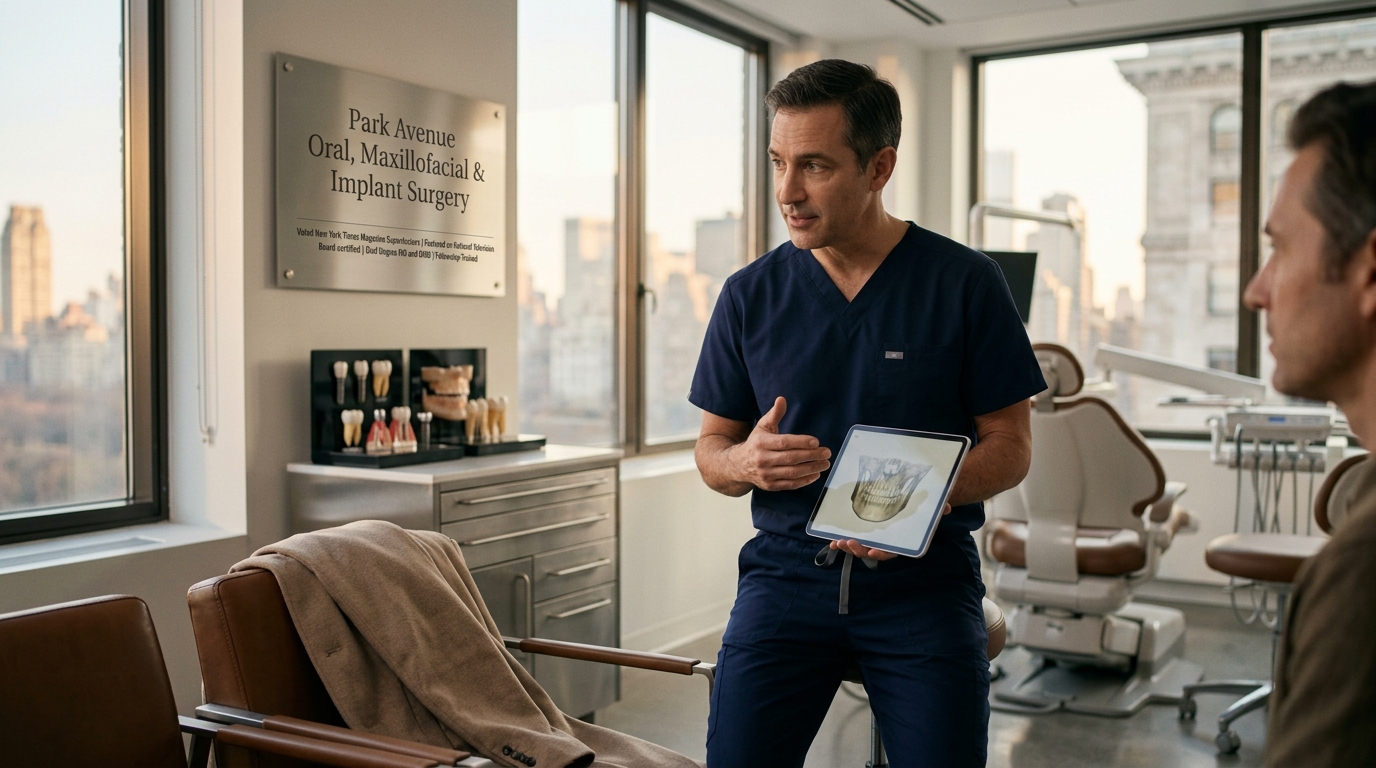
Dental implants are one of the most reliable solutions for replacing missing teeth, with documented success rates between 95% and 98%. Yet no surgical procedure is entirely without risk. Understanding the potential complications before your procedure helps you make a confident, informed decision and take proactive steps to protect your investment. At Park Avenue Oral, Maxillofacial & Implant Surgery in New York City, our board-certified, fellowship-trained surgeons prioritize transparency so every patient knows exactly what to expect.
What Are Dental Implant Risks?
Dental implant risk is any adverse outcome that may occur during or after the surgical placement of a titanium post into the jawbone. According to a retrospective study published in the Journal of Pharmacy and Bioallied Sciences, the most common complications include infection (15.3%), peri-implantitis (12%), and implant failure (8%). While these figures may seem alarming, most complications are manageable when caught early by an experienced oral surgeon.
Risks generally fall into two categories: short-term surgical complications and long-term biological or mechanical issues. Both can be substantially reduced with proper planning and skilled execution, which is why choosing a qualified implant surgery specialist matters.
Common Short-Term Complications
Most patients experience temporary side effects during the first one to two weeks after implant placement. These are normal parts of healing and typically resolve without intervention.
Swelling, Bruising, and Bleeding
Post-surgical swelling occurs in roughly 80% of patients, while mild bleeding and bruising affect approximately 30% and 15% respectively. Following your post-operative care instructions carefully will help manage these symptoms effectively.
Infection at the Surgical Site
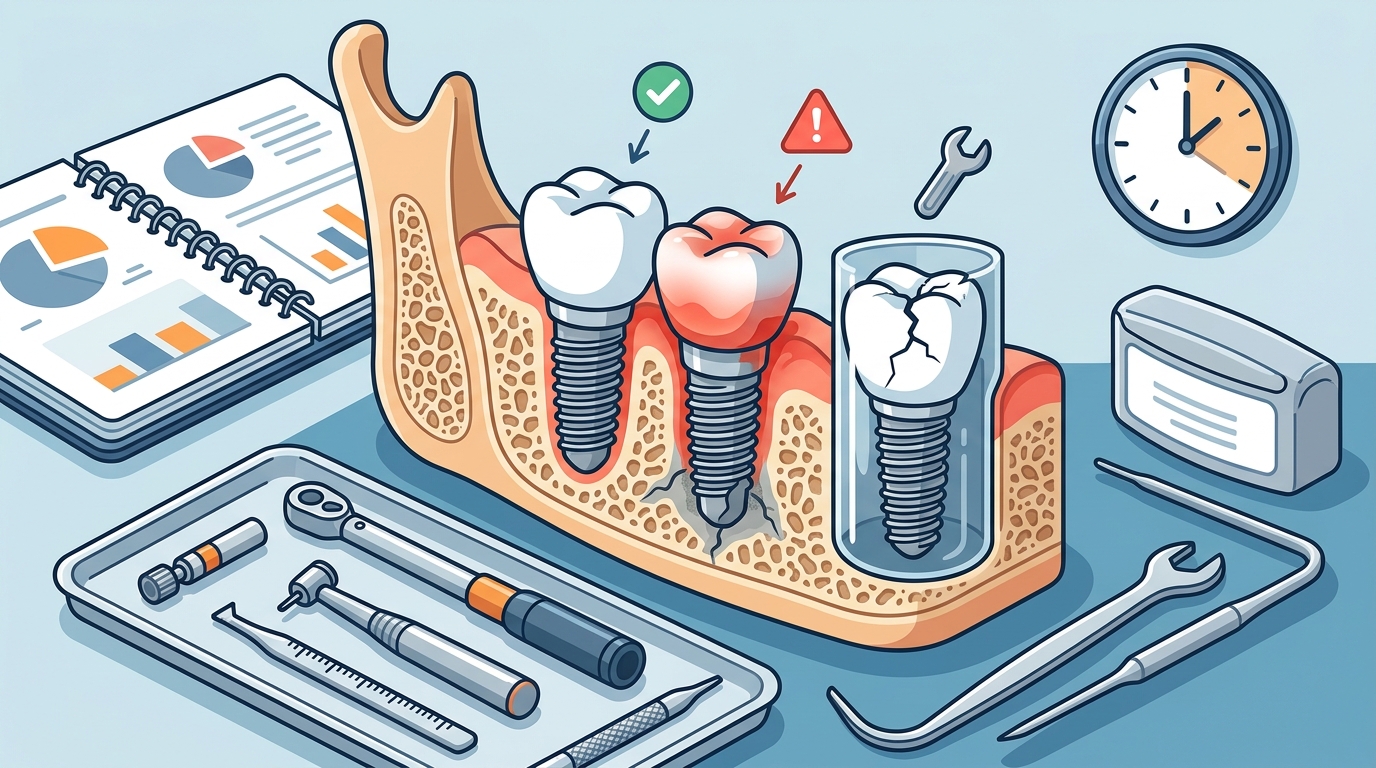
Infection is the most frequently reported complication in implant surgery. Preoperative antimicrobial therapy and meticulous surgical technique are essential strategies for reducing infection risk. Our surgeons follow strict aseptic protocols at every stage of the procedure.
Nerve Damage
Nerve injury is a rare but notable risk, particularly for implants placed in the lower jaw near the inferior alveolar nerve. Symptoms may include temporary numbness or tingling in the lip, chin, or tongue. Advanced CT-guided implant placement technology allows our team to map nerve pathways precisely and avoid them during surgery.
Long-Term Risks and Peri-Implantitis
Peri-implantitis is a chronic inflammatory condition that causes progressive bone loss around an integrated implant. Research shows its prevalence ranges from 10% to 20% of implant patients, though diligent oral hygiene and regular maintenance visits significantly reduce this figure.
Mechanical complications can also arise over time. These include loosening of abutment screws, fracture of the prosthetic framework, or wear of the crown material. Routine follow-up visits allow your surgeon to identify and address these issues early. If you are dealing with an existing problem, our failing implants page outlines how we approach rescue and revision cases.
Who Is at Higher Risk?
Not every patient carries the same level of risk. Several factors influence your likelihood of experiencing complications.
Smoking
Smokers face roughly three times the implant failure risk compared to non-smokers. Smoking impairs blood flow to healing tissues and delays osseointegration, the process by which the implant fuses with bone.
Uncontrolled Diabetes
Patients with uncontrolled diabetes have an estimated 40% higher risk of implant complications. Stable blood sugar management before and after surgery is critical.
History of Periodontal Disease
A study in BMC Oral Health identified smoking, treated periodontitis history, and lack of maintenance as significant risk factors for peri-implantitis. Patients with prior gum disease should discuss a tailored prevention plan with their surgeon.
Dental Implant Failure Rates by the Numbers
Understanding how often implants actually fail puts the risks in perspective. The table below summarizes findings from recent peer-reviewed research.
| Metric | Rate | Source |
|---|---|---|
| Overall implant failure rate | 2.21% | MDPI, 2025 (158,824 implants) |
| Early failure (before osseointegration) | 1.56% | MDPI, 2025 |
| 10-year success rate | 97% | 2024 meta-analysis |
| 20-year success rate | 75% | 2024 meta-analysis |
| Infection rate | 15.3% | J Pharm Bioallied Sci, 2024 |
| Peri-implantitis prevalence | 10 – 20% | Multiple sources |
A large-scale study of over 158,000 implants found an overall failure rate of just 2.21%, with early failures accounting for only 1.56% of placements, as reported in the journal Journal of Functional Biomaterials. These numbers confirm that dental implants remain one of the most predictable procedures in modern dentistry.
How We Minimize Risk at Park Avenue
At Park Avenue Oral, Maxillofacial & Implant Surgery, risk reduction is built into every step of the patient journey.
3D Imaging and Guided Surgery
Our practice uses virtual surgical planning and CT-guided placement to achieve sub-millimeter precision. This technology reduces the chance of nerve injury, sinus perforation, and implant misalignment.
PRF and Bone Grafting
Platelet-rich fibrin (PRF) is a regenerative concentrate derived from your own blood that accelerates healing. We routinely incorporate PRF therapy and bone grafting to build a strong foundation and lower the risk of implant failure.
Board-Certified Expertise
Our surgeons hold dual MD and DMD degrees and completed fellowship training in oral and maxillofacial surgery. This depth of training matters because complication rates drop significantly when procedures are performed by experienced specialists.
Key Takeaways
- Dental implants carry a success rate of 95% to 98%, making them highly predictable.
- The most common complications are infection, peri-implantitis, and implant failure.
- Smoking, uncontrolled diabetes, and periodontal disease history increase risk significantly.
- Early failures before osseointegration occur in only about 1.56% of cases.
- CT-guided placement and virtual surgical planning reduce surgical risks substantially.
- Regular maintenance visits are essential to prevent long-term peri-implant disease.
- Choosing a board-certified oral surgeon is one of the most important risk-reduction decisions you can make.
Frequently Asked Questions
What is the most common risk of dental implant surgery?
Infection at the implant site is the most frequently reported complication, occurring in approximately 15% of cases. Strict surgical protocols and prescribed antibiotics help manage this risk.
How often do dental implants fail?
Large-scale research shows an overall failure rate of about 2.21%. Most failures happen during the early healing phase before the implant fully integrates with the jawbone.
Does smoking affect dental implant success?
Yes. Smokers face roughly three times the risk of implant failure because tobacco restricts blood flow and impairs the body's ability to heal around the implant.
What is peri-implantitis?
Peri-implantitis is an inflammatory condition characterized by progressive bone loss around a dental implant. It affects 10% to 20% of implant patients but is largely preventable with good oral hygiene and regular professional cleanings.
Can nerve damage occur during implant placement?
Nerve damage is a rare complication most associated with lower jaw implants. Symptoms like numbness or tingling are usually temporary. Advanced 3D imaging helps surgeons avoid nerve structures during placement.
Are dental implants safe for diabetic patients?
Dental implants can be safe for diabetic patients whose blood sugar is well controlled. Uncontrolled diabetes raises complication risk by an estimated 40%, so medical optimization before surgery is important.
How can I reduce my risk of implant complications?
Follow all pre- and post-operative instructions, quit smoking, maintain excellent oral hygiene, attend every follow-up appointment, and choose a board-certified oral and maxillofacial surgeon for your procedure.
What advanced technology helps make implants safer?
CT-guided implant placement, virtual surgical planning, and platelet-rich fibrin therapy all contribute to safer, more predictable outcomes. Park Avenue Oral, Maxillofacial & Implant Surgery uses each of these technologies routinely.
Schedule Your Consultation
The best way to understand your personal risk profile is through a comprehensive evaluation with a specialist. At Park Avenue Oral, Maxillofacial & Implant Surgery, we provide 3D imaging, a thorough medical history review, and an honest discussion of both risks and expected outcomes during every consultation. Book your appointment today and take the first step toward a confident, fully informed decision about dental implants.