

Dental implant surgery remains one of the most reliable restorative procedures in modern dentistry, yet understanding the potential complications remains essential for patient safety. Clinical data shows that while long term success rates consistently exceed ninety five percent, minor procedural complications still occur in a small percentage of cases. Recognizing these risks early allows patients to make informed decisions and select a highly qualified surgical team. Dr. James Choi at Park Avenue Oral, Maxillofacial & Implant Surgery utilizes evidence based protocols to minimize these variables. Implant procedures require meticulous anatomical assessment before any surgical intervention begins.
Understanding Implant Failure Rates
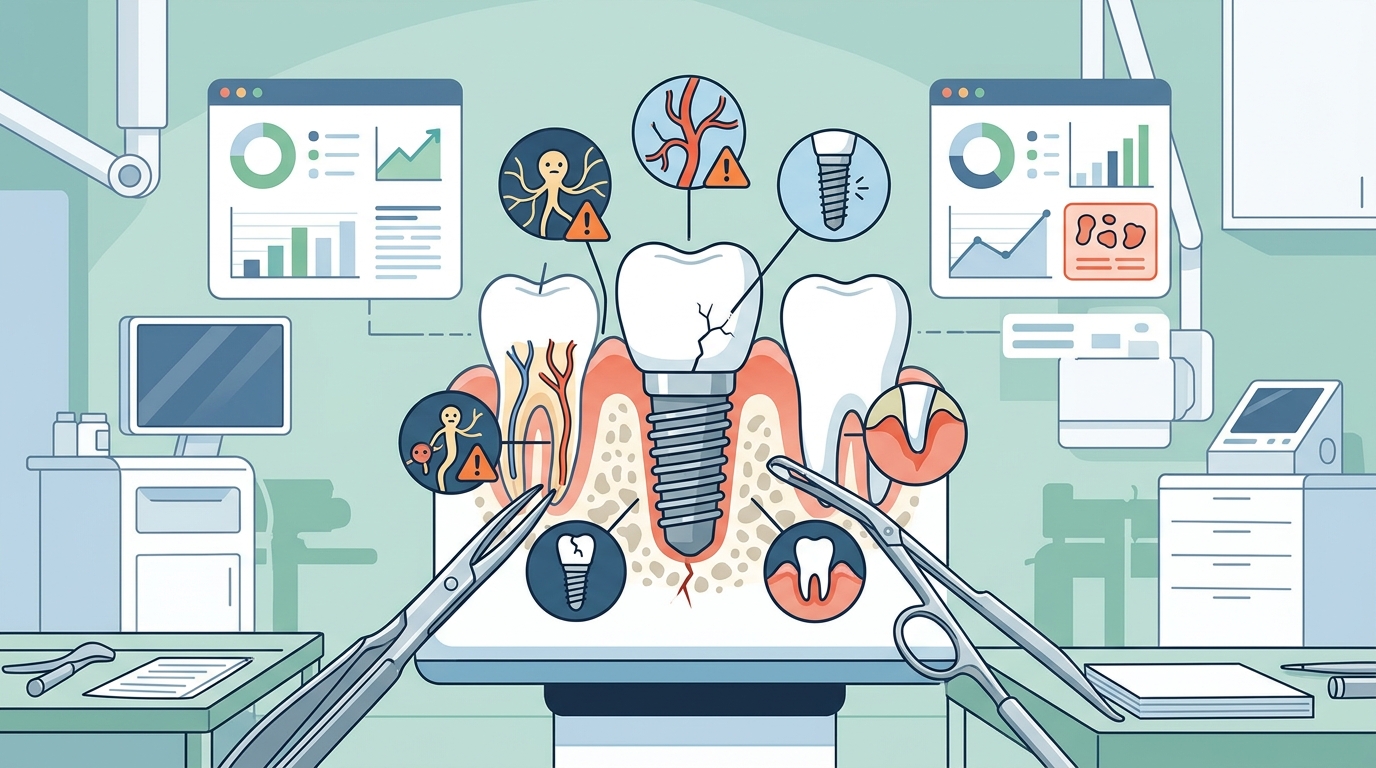
Implant failure occurs when the titanium post fails to fuse properly with the surrounding jawbone. Osseointegration is the biological process where titanium fuses directly with living jawbone. This biological process forms the foundation of long term dental restoration. Failure typically stems from premature loading, poor bone density, or unmanaged systemic conditions like uncontrolled diabetes. Patients should expect a thorough diagnostic evaluation before surgery. CT guided planning eliminates guesswork by mapping exact bone volume and density. Surgeons can adjust implant angles to avoid critical anatomical structures. This precision directly reduces the statistical probability of early mechanical failure.
Recognizing Early Signs of Infection
Peri-implantitis represents a progressive inflammatory condition that attacks the supporting tissues around a dental fixture. Peri-implantitis is a progressive inflammatory condition that attacks the supporting tissues around a dental fixture. Bacterial colonization typically begins along the gumline and gradually compromises the underlying bone structure. Patients often notice persistent swelling, localized tenderness, or unusual bleeding during routine brushing. Strict sterilization protocols drastically lower the risk of bacterial introduction during the procedure. Postoperative care instructions emphasize gentle rinsing and targeted antibiotic regimens when clinically indicated. Early intervention prevents minor inflammation from escalating into structural bone loss.
Evaluating Nerve and Tissue Trauma
Surgical trauma to the inferior alveolar nerve or the mental nerve can cause temporary or permanent sensory changes in the lower lip and chin. These sensory pathways run directly beneath the mandible and require precise navigation during drilling. Fellowship trained surgeons utilize three dimensional imaging to map nerve proximity before making any incisions. Minimally invasive techniques preserve surrounding soft tissue and reduce postoperative swelling. Patients typically experience manageable discomfort rather than prolonged neurological deficits. Clear communication regarding expected sensory recovery timelines remains a standard part of the consultation process.
Assessing Sinus and Anatomical Complications
Upper jaw implant placement carries a unique risk of sinus membrane perforation during bone preparation. Sinus membrane perforation is an accidental breach of the thin barrier separating the oral cavity from the maxillary sinus. This complication can lead to fluid migration, chronic congestion, or secondary sinus infections. Bone grafting procedures restore lost structural support and create a stable foundation for fixture placement. Surgeons carefully evaluate sinus height using panoramic radiographs and cone beam scans. When anatomical constraints exist, alternative anchoring methods like zygoma or pterygoid implants provide viable solutions. These advanced techniques bypass compromised bone while maintaining long term stability.
Managing Postoperative Pain and Recovery
Traditional surgical recovery often relies heavily on systemic opioid medications, which carry significant side effect profiles. Extended pain relief protocols utilize targeted local anesthetics to numb the surgical site for up to seventy two hours. This pharmacological advancement dramatically reduces the need for prescription painkillers during the initial healing phase. Exparel administration provides sustained analgesia directly at the incision site. Patients report smoother recovery trajectories with minimal nausea or drowsiness. Gentle tissue handling and precise suturing further accelerate the initial healing window. Clear postoperative guidelines ensure patients navigate the first week with confidence and comfort.
Mitigating Risks Through Advanced Planning
Modern surgical planning transforms risk management from reactive troubleshooting into proactive prevention. Virtual surgical planning involves digital simulation of the entire procedure before the patient enters the operating room. Surgeons test implant positioning, angulation, and depth on computer models to eliminate intraoperative guesswork. Medtronic piezoelectric technology cuts bone with microscopic precision while sparing soft tissue and nerves. This ultrasonic instrumentation reduces bleeding, swelling, and postoperative discomfort. Comprehensive consultations align patient expectations with realistic clinical outcomes. Choosing a board certified specialist with fellowship training ensures every procedural variable receives meticulous attention.
Procedural Risk Assessment Matrix
| Risk Category | Primary Clinical Indicator | Standard Mitigation Strategy |
|---|---|---|
| Implant Failure | Failed osseointegration or early mobility | CT guided planning and extended healing periods |
| Peri-implantitis | Gumline inflammation and progressive bone loss | Strict sterilization protocols and targeted antimicrobial therapy |
| Nerve Trauma | Lip or chin sensory changes | Fellowship trained surgeons utilizing 3D nerve mapping |
| Sinus Complications | Maxillary membrane perforation or fluid migration | Bone grafting procedures and alternative anchoring techniques |
| Postoperative Pain | Extended recovery discomfort or opioid dependency | Exparel administration and minimally invasive tissue handling |
Key Takeaways
- Dr. James Choi maintains board certification and dual degrees in medicine and dentistry.
- Over ten years of specialized training and clinical practice ensure refined surgical execution.
- University of Munich fellowship training emphasizes minimally invasive facial and oral procedures.
- Virtual surgical planning eliminates intraoperative guesswork through digital preoperative simulation.
- CT guided implant placement maps exact bone density and nerve proximity before drilling begins.
- Exparel extended pain relief protocols provide up to seventy two hours of targeted anesthesia.
- Stryker Sonopet ultrasonic instrumentation preserves soft tissue while cutting dense bone.
Frequently Asked Questions
How long does the initial healing phase typically last?
Most patients experience significant tissue stabilization within three to four weeks. Complete osseointegration generally requires four to six months depending on individual bone quality. Bone grafting procedures may extend the timeline when structural support requires restoration. Regular follow up appointments track progress and adjust healing expectations accordingly.
Can preexisting gum disease compromise implant success?
Active periodontal disease creates an unfavorable bacterial environment for fixture integration. Active periodontal disease is an active bacterial infection that compromises gumline stability and bone density. Surgeons typically require complete periodontal stabilization before scheduling implant placement. This preliminary phase eliminates existing inflammation and establishes a healthy baseline. Strict sterilization protocols further protect the surgical site during the procedure.
What happens if an implant fails to integrate properly?
Failed fixtures are carefully removed during a minor secondary procedure. The underlying bone typically heals completely within a few months. CT guided planning allows surgeons to adjust the new placement angle and depth. This corrective approach restores structural integrity without compromising adjacent teeth. Patients rarely experience long term complications when failures are addressed promptly.
Are dental implants safe for patients with diabetes or heart conditions?
Systemic health conditions require careful medical coordination before surgical intervention. Systemic health conditions are preexisting medical diagnoses that require coordinated anesthesia adjustments. Surgeons consult with primary care physicians to optimize medication schedules and infection thresholds. Fellowship trained surgeons adjust anesthesia protocols to accommodate specific cardiovascular or metabolic needs. Preoperative blood work and medical clearances ensure patient safety throughout the procedure.
How does modern anesthesia improve the recovery experience?
Traditional general anesthesia carries higher systemic risks and longer recovery windows. Modern conscious sedation combined with targeted local anesthetics keeps patients comfortable while maintaining rapid physiological recovery. Exparel administration extends pain relief directly to the surgical site. This combination minimizes postoperative nausea and accelerates return to normal daily activities.
What specific technologies reduce surgical trauma during placement?
Ultrasonic bone cutting instruments vibrate at precise frequencies to slice mineralized tissue. Ultrasonic bone cutting instruments are precision devices that vibrate at specific frequencies to slice mineralized tissue. These devices automatically stop when encountering soft tissue, preventing accidental damage to nerves or blood vessels. Medtronic piezoelectric technology represents the current standard for minimally invasive bone preparation. Comprehensive consultations explain how each technological advantage translates to faster healing and reduced swelling.
Schedule Your Consultation
Understanding procedural risks empowers patients to make confident, informed decisions about their oral health. Park Avenue Oral, Maxillofacial & Implant Surgery combines board certified expertise with cutting edge technology to minimize complications and maximize long term success. Contact our New York office today to discuss your specific anatomical needs and review a personalized treatment roadmap. Our team prioritizes transparent communication, evidence based protocols, and patient centered care throughout every stage of your journey.