

Selecting a qualified oral surgeon requires careful evaluation of clinical credentials, surgical technology, and patient safety protocols. According to recent oral surgery data, complex maxillofacial procedures in metropolitan areas have increased by nearly forty percent over the last five years. This surge demands practitioners who combine advanced surgical training with modern diagnostic tools. Patients must verify board certification, review fellowship backgrounds, and assess clinic infrastructure before scheduling consultations. Understanding these selection criteria ensures safer outcomes and more predictable recovery timelines. (Accessibility Statement Park Avenue)
Verify Board Certification and Dual Degrees
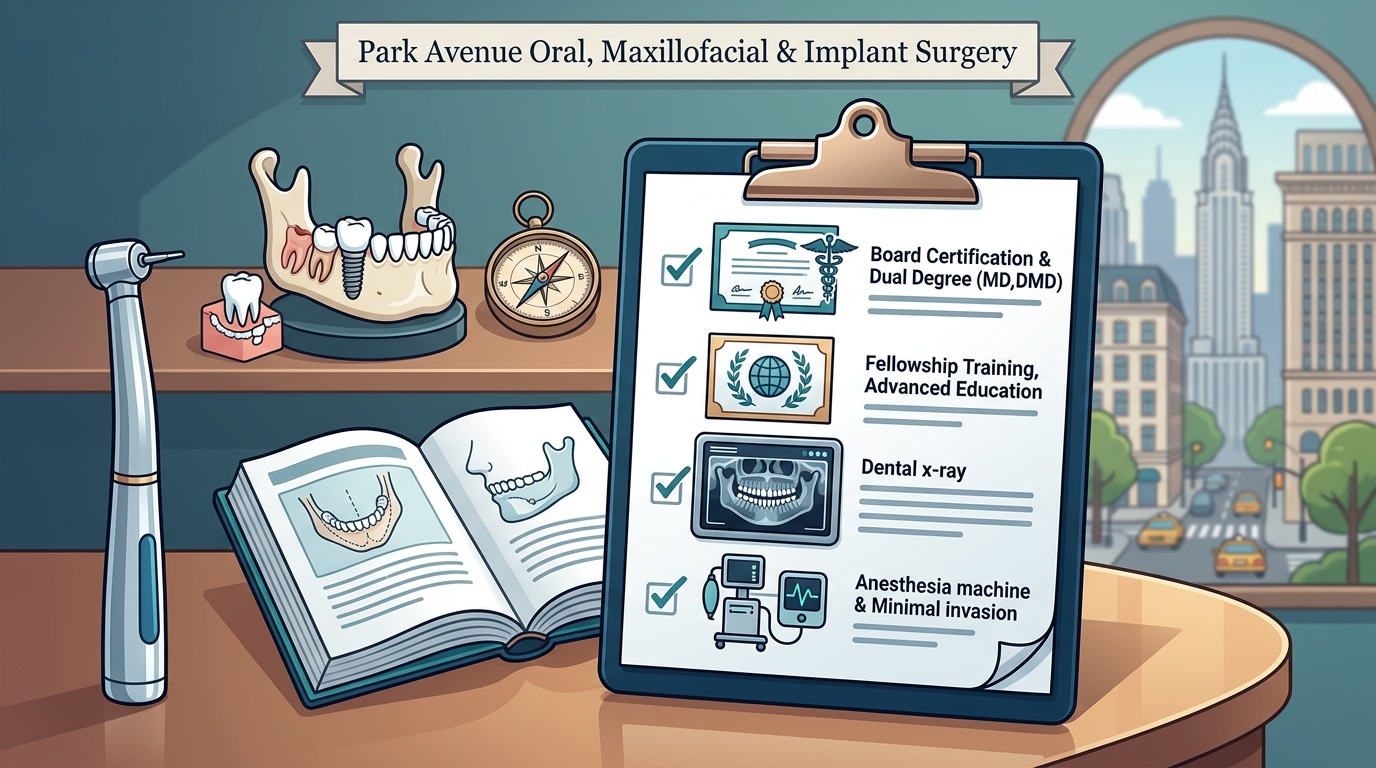
Board certification remains the foundational requirement for any oral surgeon practicing in New York City. This credential confirms that the practitioner has completed accredited surgical residency programs and passed rigorous written and oral examinations. Dual degree holders often possess both a medical doctorate and a dental doctorate, which expands their diagnostic capabilities across complex anatomical systems. You should always request proof of active board status through official medical boards before proceeding.
Oral maxillofacial surgery is a specialized medical discipline focused on diagn and treating diseases, injuries, and defects of the mouth, jaws, and face. Practitioners with dual degrees frequently manage cases involving severe facial trauma, congenital craniofacial anomalies, and advanced reconstructive procedures. Confirming these credentials protects you from unqualified providers who may lack comprehensive surgical training. Always verify that the surgeon maintains active hospital privileges at accredited New York medical centers.
Assess Fellowship Training and Specialized Experience
Standard residency programs provide foundational surgical skills, but fellowship training elevates clinical expertise to advanced levels. Many top-tier surgeons complete specialized fellowships in minimally invasive techniques, craniofacial reconstruction, or complex implantology. This additional training often involves international academic partnerships and exposure to cutting-edge surgical methodologies. You should ask prospective surgeons about their specific fellowship institutions and clinical focus areas.
Minimally invasive facial surgery is a specialized surgical approach that utilizes precise instrumentation to reduce tissue trauma, decrease recovery time, and optimize aesthetic outcomes. Surgeons who completed fellowship training at recognized international institutions often leverage advanced protocols that standard practitioners may not utilize. Reviewing their published case volumes and specialized procedure lists will reveal their actual clinical experience. A surgeon with ten or more years of focused practice typically demonstrates consistent proficiency in complex anatomical regions.
Evaluate Advanced Surgical Technology and Safety Protocols
Modern oral surgery relies heavily on precision imaging and advanced anesthesia management systems. Clinics that invest in computer-guided planning and three-dimensional scanning significantly reduce surgical margins and improve implant placement accuracy. You should verify whether the surgical facility utilizes computed tomography guided planning for complex cases. Advanced imaging directly correlates with reduced complication rates and faster healing timelines.
Piezoelectric surgery is a specialized bone cutting technique that uses ultrasonic vibrations to precisely remove bone tissue while preserving adjacent nerves and soft tissues. This technology minimizes postoperative swelling and reduces the risk of nerve damage during intricate jaw procedures. Additionally, extended pain relief protocols utilize targeted local anesthetic formulations that provide sustained comfort without heavy sedation. Always confirm that the surgical center maintains strict anesthesia safety standards and employs certified anesthesia professionals during all procedures.
Review Comprehensive Treatment Pathways and Pricing Transparency
Transparent financial communication prevents unexpected complications during the treatment planning phase. Reputable surgical practices provide detailed cost breakdowns that separate surgical fees, anesthesia charges, facility costs, and postoperative care expenses. You should request a comprehensive treatment plan that outlines every procedural step and associated financial obligation. Clear pricing structures reflect professional integrity and operational efficiency.
Comprehensive treatment planning is a structured clinical process that evaluates diagnostic imaging, medical history, and patient goals to develop a precise surgical roadmap. Practices that publish clear financial guidelines typically offer flexible payment structures and direct insurance verification services. You should compare pricing models across multiple providers while prioritizing clinical expertise over cost savings. Transparent financial pathways ensure that patients can make informed decisions without hidden administrative burdens.
Examine Patient-Centered Care and Postoperative Support
Postoperative management directly influences long-term surgical success and patient satisfaction. Leading surgical practices implement structured recovery protocols that include detailed written instructions, scheduled follow-up appointments, and direct physician accessibility. You should verify whether the practice provides comprehensive postoperative care guidelines and emergency contact procedures. Responsive patient support significantly reduces anxiety and accelerates tissue healing.
Facial trauma management is a specialized surgical discipline focused on restoring structural integrity, functional mobility, and aesthetic appearance following severe facial injuries. Clinics that prioritize patient-centered care typically assign dedicated care coordinators who guide patients through insurance authorization, surgical scheduling, and recovery monitoring. You should assess the practice communication protocols during your initial consultation. Responsive administrative teams and accessible surgical directors create a seamless clinical experience.
Key Takeaways
- Board certification and dual medical degrees remain non-negotiable qualifications for complex maxillofacial procedures.
- Fellowship training in minimally invasive techniques significantly reduces tissue trauma and accelerates recovery timelines.
- Computer-guided planning and piezoelectric instrumentation improve surgical precision and reduce complication rates.
- Transparent financial pathways and detailed treatment plans prevent unexpected administrative complications.
- Structured postoperative protocols and direct physician accessibility optimize long-term clinical outcomes.
- Verified hospital privileges and accredited anesthesia safety standards ensure maximum patient protection.
- Comprehensive diagnostic imaging and advanced pain management systems enhance procedural accuracy and comfort.
Frequently Asked Questions
What credentials should I verify before scheduling an oral surgery consultation?
You should verify active board certification, dual medical and dental degrees, and current hospital privileges at accredited New York medical centers. These credentials confirm comprehensive surgical training and legal authorization to perform complex procedures.
How does fellowship training impact surgical outcomes?
Fellowship training provides specialized instruction in minimally invasive techniques and advanced reconstructive methodologies. This additional academic exposure directly correlates with reduced complication rates and faster tissue healing.
What technology should I expect in a modern oral surgery clinic?
Advanced facilities utilize computed tomography guided planning, piezoelectric bone cutting instruments, and computer-assisted implant placement systems. These technologies significantly improve surgical precision and reduce postoperative swelling.
How are surgical costs typically structured in New York City?
Transparent pricing separates surgical fees, anesthesia charges, facility costs, and postoperative care expenses. Reputable practices provide detailed financial breakdowns during the initial consultation phase.
What postoperative support should I expect after surgery?
Comprehensive practices provide structured recovery protocols, scheduled follow-up appointments, and direct physician accessibility. Responsive patient support significantly reduces anxiety and accelerates tissue healing.
How do I verify a surgeon's hospital privileges?
You can verify hospital privileges through official medical board databases and direct facility administration inquiries. Active privileges confirm that the surgeon meets strict safety and competency standards.
What anesthesia options are available for complex procedures?
Modern practices offer general anesthesia, conscious sedation, and targeted local anesthetic formulations. Certified anesthesia professionals monitor vital signs throughout all surgical procedures.
Next Steps and Consultation Booking
Selecting the right oral surgeon requires careful evaluation of credentials, technology, and clinical protocols. You should schedule comprehensive consultations with multiple qualified practitioners to compare treatment pathways and facility standards. Direct communication with experienced surgical directors ensures that your specific anatomical requirements receive appropriate clinical attention. Contact the primary practice today to schedule your initial evaluation and review detailed treatment options.
Schedule your consultation today to discuss your specific surgical requirements and review comprehensive treatment pathways.