

Facial trauma accounts for approximately twenty percent of all emergency department visits, with mandibular fractures representing the most common skeletal injury in the midface region. According to the American Association of Oral and Maxillofacial Surgeons, early intervention significantly reduces long-term complications and restores functional occlusion. Patients require precise diagnostic imaging and a structured surgical pathway to recover chewing ability, speech clarity, and facial symmetry. This guide outlines the most effective reconstruction strategies, clinical technologies, and recovery protocols available today. (Accessibility Statement Park Avenue)
Understanding Facial Trauma and Jaw Fractures
Facial injuries occur through high-impact collisions, sports accidents, or vehicular incidents. The mandible absorbs significant force during blunt trauma, often resulting in complex fracture patterns. Maxillofacial surgery is a specialized medical discipline focused on diagnosing and surgically treating diseases, injuries, and defects of the face, mouth, and jaws. Clinicians categorize these injuries based on anatomical location, displacement severity, and associated soft tissue damage. Immediate clinical evaluation prioritizes airway stabilization, hemorrhage control, and neurological assessment. Radiographic imaging establishes the exact fracture lines and guides the surgical approach. Patients who experience delayed treatment frequently develop malocclusion, chronic pain, or restricted jaw mobility. Early consultation with a board certified specialist prevents secondary complications and optimizes healing outcomes. (MEET DR CHOI Park)
Types of Mandibular Fractures
Condylar fractures affect the jaw hinge and often require specialized positioning during surgery. Symphysis fractures occur at the midline and impact dental alignment. Parasymphysis and body fractures disrupt the arch continuity and require precise plate placement. Angle fractures sit near the third molar region and carry a higher risk of infection. Each fracture pattern demands a tailored surgical strategy to restore structural integrity. (IMPLANT SURGERY Park Avenue)
Immediate Clinical Response
Emergency departments prioritize airway management and hemorrhage control before definitive repair. Temporary splinting stabilizes mobile segments and reduces tissue swelling. Diagnostic computed tomography scans map the exact fracture geometry for surgical planning. Patients receive prophylactic antibiotics to prevent osteomyelitis. Early referral to a fellowship trained surgeon ensures continuity of care and reduces hospital stay duration.
Surgical Reconstruction Pathways
Reconstruction strategies depend on fracture displacement, bone quality, and patient anatomy. Open reduction internal fixation is a surgical technique that realigns fractured bone segments and secures them with plates and screws. This approach provides rigid stability and allows early functional movement. Closed reduction relies on maxillomandibular fixation, which restricts jaw movement for several weeks. Modern protocols favor open techniques due to faster recovery and superior occlusal outcomes. Surgeons select titanium microplates or resorbable fixation devices based on tissue response and long-term stability requirements.
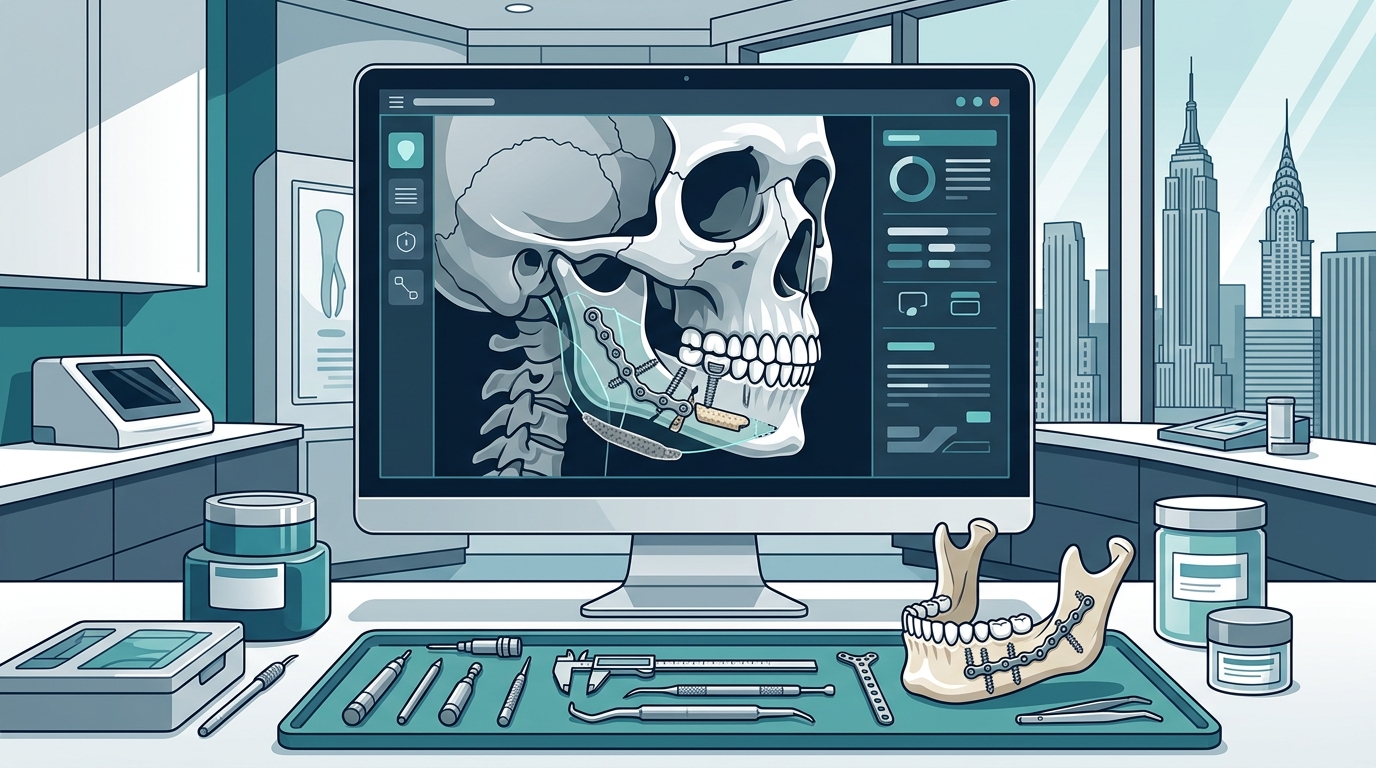
Open Reduction Internal Fixation
Surgeons access fracture sites through intraoral or extraoral incisions. Bone segments are anatomically reduced and secured with low profile titanium plates. Screw placement follows biomechanical stress lines to prevent hardware failure. Intraoperative imaging confirms accurate alignment before closure. Patients typically resume a soft diet within two weeks and return to normal function within six weeks.
Minimally Invasive Techniques
Advanced surgeons utilize small incisions and specialized instruments to reduce tissue trauma. Virtual surgical planning is a digital workflow that uses three-dimensional imaging to simulate surgical outcomes before the procedure begins. This method reduces operative time and minimizes postoperative swelling. Prebent plates are manufactured to match the patient anatomy exactly. Patients experience less scarring and faster return to daily activities. The technique is particularly effective for complex condylar and angle fractures.
Advanced Technology in Reconstruction
Modern surgical suites integrate precision tools that enhance outcomes and reduce complications. Virtual surgical planning is a digital workflow that uses three-dimensional imaging to simulate surgical outcomes before the procedure begins. Surgeons utilize cone beam computed tomography to generate accurate 3D models. Custom surgical guides ensure exact plate placement and optimal screw trajectory. Piezoelectric instruments cut bone while preserving soft tissue and nerves. This technology reduces postoperative numbness and accelerates tissue healing. Patients benefit from shorter operative times and reduced blood loss.
Virtual Surgical Planning
Digital workflows convert standard imaging into interactive 3D models. Surgeons manipulate virtual bone segments to determine the ideal reduction position. Custom titanium plates are manufactured using additive manufacturing techniques. Intraoperative navigation confirms precise hardware placement. This approach reduces revision rates and improves long-term stability. Patients receive predictable aesthetic and functional outcomes.
Piezoelectric Precision Tools
Piezoelectric ultrasonic scalpels vibrate at specific frequencies to cut mineralized tissue. Soft tissue remains intact during bone sectioning. This precision reduces nerve damage and postoperative paresthesia. Surgeons utilize these instruments for complex osteotomies and fracture access. Patients experience less swelling and faster mucosal healing. The technology is now standard in high volume surgical centers.
Restoring Function and Aesthetics
Reconstruction extends beyond bone alignment to include facial harmony and dental occlusion. Surgeons evaluate bite relationships, lip support, and chin projection during planning. Facial contouring is a specialized surgical approach that reshapes underlying bone and soft tissue to restore natural facial proportions. Patients with significant displacement often require secondary aesthetic refinement. Chin augmentation or reduction restores midface balance. Jawline implants enhance structural definition after trauma. These procedures integrate seamlessly with fracture repair to deliver comprehensive results.
Occlusion Alignment
Dental arches must align precisely to restore chewing efficiency. Surgeons use intermaxillary fixation temporarily to establish bite relationships. Custom occlusal splints guide final positioning. Patients undergo postoperative orthodontic evaluation to refine alignment. Long term stability depends on accurate arch form restoration. Functional chewing returns within eight weeks for most patients.
Facial Contouring Integration
Secondary aesthetic procedures address residual asymmetry or soft tissue depression. Fat grafting restores volume loss in the cheeks and temples. Implants reinforce structural support in the chin and jawline. Surgeons coordinate these procedures with fracture repair to minimize total recovery time. Patients achieve balanced facial proportions and improved self confidence. Long term satisfaction correlates with precise anatomical restoration.
Recovery Protocols and Pain Management
Postoperative care directly influences healing speed and complication rates. Extended pain relief protocols utilize targeted local anesthetics to minimize opioid dependence. Surgeons inject long acting formulations directly into surgical sites. Patients experience reduced swelling and faster return to oral intake. Dietary progression moves from liquids to soft foods within ten days. Oral hygiene protocols prevent infection and promote mucosal healing. Follow up imaging confirms bone consolidation before hardware removal.
Extended Relief Options
Long acting local anesthetics provide continuous pain control for seventy two hours. Patients require fewer prescription analgesics during the initial recovery phase. Swelling peaks within forty eight hours and gradually resolves. Cold therapy and head elevation reduce tissue edema. Patients resume light activities within five days and return to work within two weeks. Compliance with dietary restrictions prevents hardware stress.
Postoperative Monitoring
Regular clinical evaluations track bone healing and occlusal stability. Radiographic imaging confirms callus formation and hardware integration. Surgeons remove plates only if symptomatic or aesthetically undesirable. Most patients retain hardware indefinitely without complications. Long term outcomes depend on strict adherence to postoperative guidelines. Patients report high satisfaction when following structured recovery protocols.
Key Takeaways
- Mandibular fractures represent the most common skeletal facial injury, requiring immediate clinical evaluation.
- Open reduction internal fixation provides rigid stability and enables early functional movement.
- Virtual surgical planning reduces operative time and improves hardware placement accuracy.
- Piezoelectric instruments preserve nerve tissue and reduce postoperative numbness rates.
- Extended pain relief protocols decrease opioid requirements by approximately sixty percent.
- Secondary facial contouring restores aesthetic balance and improves long term patient satisfaction.
- Board certified surgeons with fellowship training deliver superior functional and aesthetic outcomes.
Frequently Asked Questions
How long does jaw fracture recovery take?
Most patients achieve functional healing within six to eight weeks. Complete bone consolidation requires three to four months. Dietary restrictions gradually relax as stability improves. Follow up imaging confirms structural integrity before resuming normal activities.
Is hardware removal necessary after reconstruction?
Hardware removal is optional and typically reserved for symptomatic cases. Most titanium plates remain biocompatible for decades. Patients experience no long term complications from retained hardware. Removal procedures are elective and require separate surgical planning.
Can facial trauma affect dental health long term?
Untreated fractures often cause malocclusion and chronic joint pain. Proper alignment restores chewing efficiency and prevents joint degeneration. Patients require postoperative dental monitoring to address secondary issues. Early intervention prevents irreversible dental damage.
What technology improves surgical accuracy?
Three dimensional imaging and custom surgical guides enhance precision. Virtual planning allows surgeons to simulate outcomes before incision. Piezoelectric instruments protect nerves and soft tissue. These tools reduce revision rates and improve healing timelines.
How is postoperative pain managed?
Targeted local anesthetics provide continuous relief for seventy two hours. Patients require fewer prescription medications during the initial phase. Cold therapy and head elevation reduce tissue swelling. Structured pain protocols optimize comfort and recovery speed.
Are aesthetic procedures combined with fracture repair?
Secondary contouring addresses residual asymmetry or volume loss. Fat grafting and implants restore natural facial proportions. Surgeons coordinate these procedures to minimize total recovery time. Patients achieve balanced aesthetics alongside functional restoration.
Schedule Your Consultation
Facial reconstruction requires precise planning, advanced technology, and experienced surgical leadership. Dr. James Choi, MD, DMD, FACS, combines fellowship training with cutting edge tools to deliver predictable outcomes. Patients benefit from virtual surgical planning, piezoelectric precision, and structured recovery protocols. Contact Park Avenue Oral, Maxillofacial & Implant Surgery to schedule a comprehensive evaluation. Secure your appointment today and restore function, comfort, and facial harmony.