

Modern restorative dentistry has evolved significantly over the past decade. According to recent clinical data, approximately 3 million people replace missing teeth with removable dentures in the United States each year. This growing demographic highlights the critical need for permanent, functional solutions. Dental implants serve as the gold standard for tooth replacement, offering unmatched durability and natural aesthetics. Understanding the specific surgical approaches available ensures patients can select the optimal treatment path for their anatomical requirements. This comprehensive overview examines the primary implant categories, surgical techniques, and clinical indications to guide your next consultation.
Conventional Dental Implants
A dental implant is a titanium or zirconia fixture surgically embedded into the jawbone to replace missing tooth roots. This foundational procedure remains the most widely utilized restorative method across modern dental practices. The fixture integrates directly with the surrounding bone tissue through a biological process called osseointegration. Patients typically require a healing period of three to six months before attaching the final abutment and crown. This extended timeline ensures maximum structural stability and long-term success rates exceeding ninety-five percent. Clinical guidelines strongly recommend this approach for patients with adequate bone volume and healthy gum tissue.
Standard Fixture Design
The standard fixture features a threaded cylindrical shape that mimics natural root anatomy. This geometric design maximizes surface contact with the surrounding alveolar bone. Surgeons utilize computer-aided design software to select the precise diameter and length for each specific case. The titanium alloy composition provides exceptional biocompatibility and corrosion resistance. Long-term clinical studies confirm that properly placed conventional fixtures can successfully support natural chewing forces for decades.
Surgical Integration Process
The surgical integration process begins with precise diagnostic imaging and three-dimensional planning. The surgeon creates a small incision to expose the underlying bone structure. A specialized drilling sequence prepares the implant site while maintaining controlled temperatures to prevent thermal bone damage. The titanium fixture is then seated into the prepared osteotomy. The surgical site is sutured closed to protect the healing interface. Patients follow a structured postoperative protocol to minimize swelling and accelerate tissue recovery.
All-on-X Implant Systems
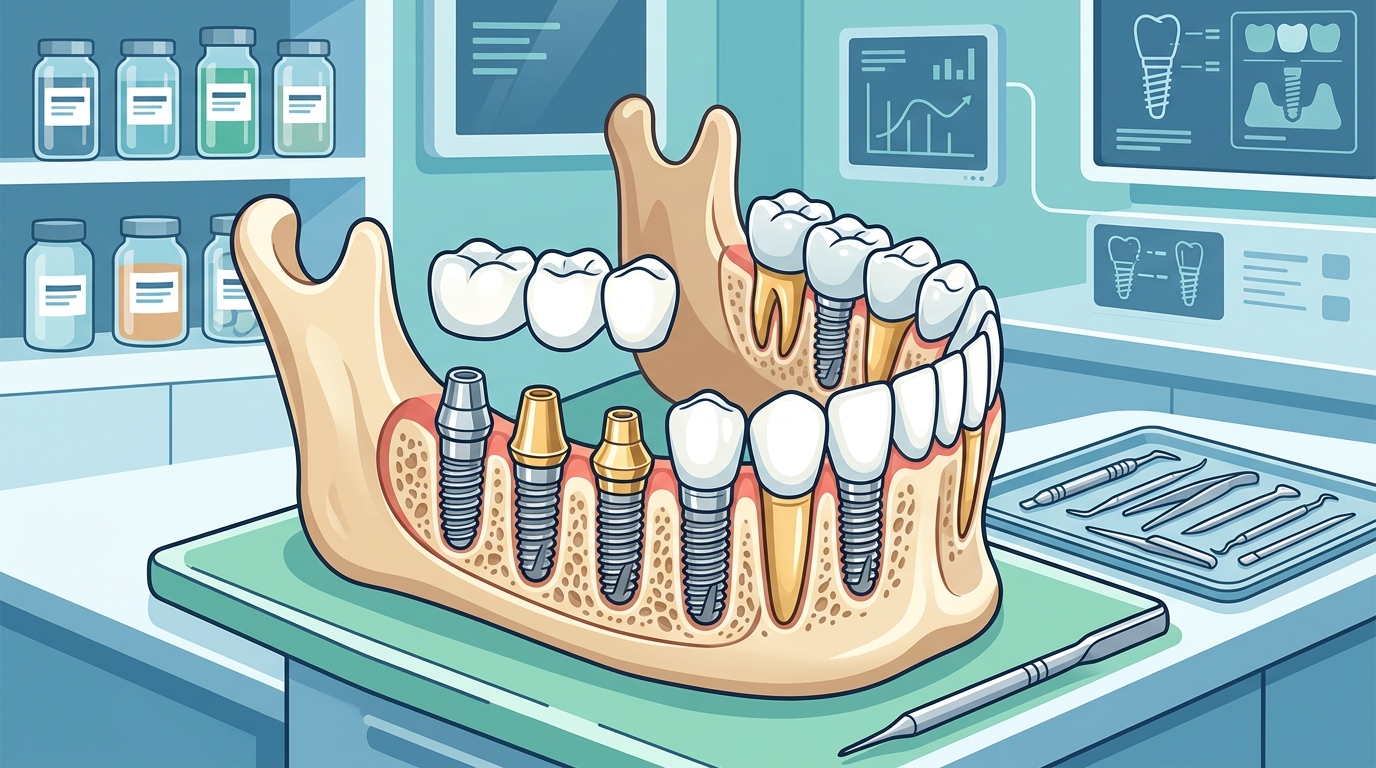
All-on-X therapy is a full-arch restoration protocol utilizing four to six strategically placed fixtures to support a fixed prosthetic bridge. This advanced treatment option addresses complete tooth loss without requiring extensive bone grafting procedures. The surgical team strategically angles posterior fixtures to maximize available bone density. This strategic positioning eliminates the need for complex sinus lift procedures in most upper jaw cases. Patients receive a temporary prosthetic bridge on the same day as surgery. This immediate loading protocol restores full function and aesthetic appearance within hours.
Full-Arch Restoration
Full-arch restoration addresses severe edentulism by replacing an entire dental arch in a single surgical session. The treatment plan relies on precise biomechanical calculations to distribute occlusal forces evenly. Each fixture is positioned to avoid critical anatomical structures like the inferior alveolar nerve. The final prosthetic bridge is fabricated from high-impact acrylic or zirconia materials. These materials provide exceptional fracture resistance and natural translucency. Long-term maintenance requires regular professional cleanings and routine radiographic monitoring.
Immediate Loading Protocols
Immediate loading protocols allow patients to receive functional teeth on the day of surgery. This accelerated timeline significantly reduces treatment duration and psychological stress. The surgical team utilizes rigid fixation techniques to prevent micro-movement during the initial healing phase. Patients follow a strict soft diet for the first four weeks to protect the integration interface. Follow-up appointments monitor tissue adaptation and prosthetic stability. This approach has become increasingly popular among active professionals seeking rapid functional restoration.
Zygoma and Pterygoid Solutions
Zygomatic anchorage is a specialized surgical technique that secures elongated implants into the cheekbone when the upper jaw lacks sufficient bone density. This innovative procedure bypasses the maxillary sinus entirely to achieve primary stability. The elongated fixtures measure approximately fifty to fifty-five millimeters in length. Surgeons route these fixtures through the alveolar ridge and anchor them directly into the zygomatic bone. This method eliminates the need for extensive bone grafting procedures that traditionally require six to twelve months of healing. Peer-reviewed research confirms that zygomatic anchorage achieves survival rates comparable to conventional methods.
Advanced Anchorage Methods
Advanced anchorage methods address severe maxillary atrophy by utilizing alternative skeletal structures. The pterygoid plates provide exceptional density and stability for posterior fixation. Surgeons utilize three-dimensional cone beam imaging to map precise trajectory paths. The surgical navigation system guides the drill to avoid vital vascular structures. This precision reduces operative time and minimizes postoperative discomfort. Patients recover significantly faster than those undergoing traditional grafting procedures. The final prosthetic bridge attaches to the integrated fixtures using standard abutment connections.
Minimally Invasive Techniques
Minimally invasive techniques prioritize tissue preservation and accelerated recovery timelines. Modern surgical workflows utilize computer-guided planning to eliminate traditional flap elevation. The surgical team creates precise osteotomies through small mucosal openings. This approach drastically reduces postoperative swelling and bleeding. Patients experience significantly less discomfort during the initial healing phase. Advanced anesthesia protocols like extended-release local anesthetics further minimize postoperative pain. National health data indicates that minimally invasive workflows reduce overall treatment costs by approximately twenty percent.
Computer-Guided Placement
Computer-guided placement utilizes three-dimensional diagnostic imaging to create precise surgical templates. The planning software calculates optimal fixture angles and depths before surgery begins. The surgical team transfers this digital plan directly to the operating room. Sterile surgical guides ensure exact positioning during the drilling sequence. This technology reduces surgical time by approximately thirty percent. The precision minimizes the risk of damaging adjacent teeth or vital nerves. Long-term success rates remain exceptionally high when executed by experienced surgical teams.
Comparative Analysis
| Implant Category | Primary Indication | Surgical Complexity | Typical Healing Timeline | Long-Term Success Rate |
|---|---|---|---|---|
| Conventional Dental Implants | Single or multiple missing teeth | Low to Moderate | 3 to 6 months | 95 to 98 percent |
| All-on-X Implant Systems | Complete arch edentulism | Moderate to High | Immediate provisional | 92 to 96 percent |
| Zygoma and Pterygoid Solutions | Severe maxillary atrophy | High | Immediate provisional | 90 to 94 percent |
| Minimally Invasive Techniques | Preservation-focused restoration | Low | 2 to 4 months | 94 to 97 percent |
Key Takeaways
- Conventional fixtures integrate directly with native bone tissue to support single or multiple tooth replacements.
- All-on-X therapy utilizes four to six strategically angled fixtures to restore complete dental arches.
- Zygomatic anchorage bypasses compromised maxillary bone by securing elongated fixtures into the cheekbone.
- Computer-guided surgical planning reduces operative time by approximately thirty percent while maximizing precision.
- Extended-release local anesthetics significantly minimize postoperative discomfort and accelerate initial tissue recovery.
- Board-certified surgical teams with fellowship training consistently achieve long-term success rates exceeding ninety percent.
- Comprehensive financial planning and transparent pricing structures ensure predictable treatment investment for all patients.
Frequently Asked Questions
How long do dental implants typically last?
Properly placed and maintained dental implants can successfully support natural chewing forces for decades. Long-term clinical studies confirm that modern titanium fixtures achieve survival rates exceeding ninety-five percent. Regular professional cleanings and routine radiographic monitoring ensure optimal long-term performance.
Is bone grafting required for all implant procedures?
Bone grafting is not required for every implant procedure. Patients with adequate native bone volume can proceed directly to fixture placement. Advanced techniques like zygomatic anchorage bypass compromised bone entirely to achieve primary stability. Diagnostic imaging determines the exact requirements for each individual case.
What is the typical recovery timeline after surgery?
Initial tissue healing typically requires two to four weeks following standard surgical placement. Full osseointegration generally completes within three to six months. Patients following structured postoperative protocols experience significantly faster recovery timelines. Extended-release anesthesia further minimizes early postoperative discomfort.
Can I receive temporary teeth on the day of surgery?
Immediate loading protocols allow patients to receive functional provisional teeth on the day of surgery. This accelerated timeline requires precise surgical planning and rigid fixation techniques. The temporary bridge restores full function and aesthetic appearance within hours. Final prosthetic fabrication begins immediately after the initial healing phase.
How much do dental implants typically cost?
Comprehensive treatment costs vary based on the specific surgical approach and material selections. Transparent financial planning ensures predictable investment for all patients. Insurance coverage and flexible financing options help manage overall treatment expenses. Detailed consultations provide exact pricing breakdowns before any surgical commitment.
Are dental implants safe for patients with chronic health conditions?
Dental implants remain safe for most patients with well-managed chronic health conditions. Comprehensive medical evaluations determine surgical eligibility before any procedural commitment. Certain autoimmune disorders or uncontrolled diabetes may require specialized protocols. Experienced surgical teams carefully assess individual risk factors to ensure optimal outcomes.
What materials are used for the final prosthetic bridge?
Final prosthetic bridges utilize high-impact acrylic or premium zirconia materials. These materials provide exceptional fracture resistance and natural translucency. Custom shade matching ensures seamless integration with surrounding natural teeth. The prosthetic design prioritizes both aesthetic harmony and functional durability.
Next Steps
Choosing the optimal restorative approach requires comprehensive diagnostic imaging and personalized surgical planning. Our experienced surgical team utilizes advanced three-dimensional imaging to map precise treatment pathways. We prioritize evidence-based protocols to maximize long-term success rates and patient comfort. Schedule your comprehensive consultation today to explore your specific treatment options. Visit our practice to begin your personalized restorative journey.