

Severe facial trauma frequently requires immediate surgical intervention to restore structural integrity and functional mobility. When the mandible or maxilla sustains significant impact, patients often face compromised chewing mechanics, altered facial symmetry, and chronic discomfort. Modern maxillofacial protocols prioritize precise anatomical realignment alongside rapid tissue recovery. This comprehensive overview outlines the primary surgical pathways, technological advantages, and recovery benchmarks available to patients seeking restoration. (Accessibility Statement Park Avenue)
Understanding Maxillofacial Trauma and Structural Damage
Facial reconstruction begins with a precise assessment of the injury mechanism. Blunt force impacts, vehicular collisions, and sports-related accidents frequently fracture the mandibular condyle or the midface complex. Maxillofacial trauma is the clinical classification for injuries affecting the bones, joints, and soft tissues of the face and neck. When these structures shift out of alignment, patients experience occlusal disruption and restricted jaw movement. Early diagnostic imaging establishes the fracture lines and guides the surgical approach. Untreated displacement often leads to chronic joint degeneration and persistent nerve compression. Specialists prioritize anatomical restoration to prevent long-term functional deficits.
Surgical Pathways for Mandibular and Maxillary Repair
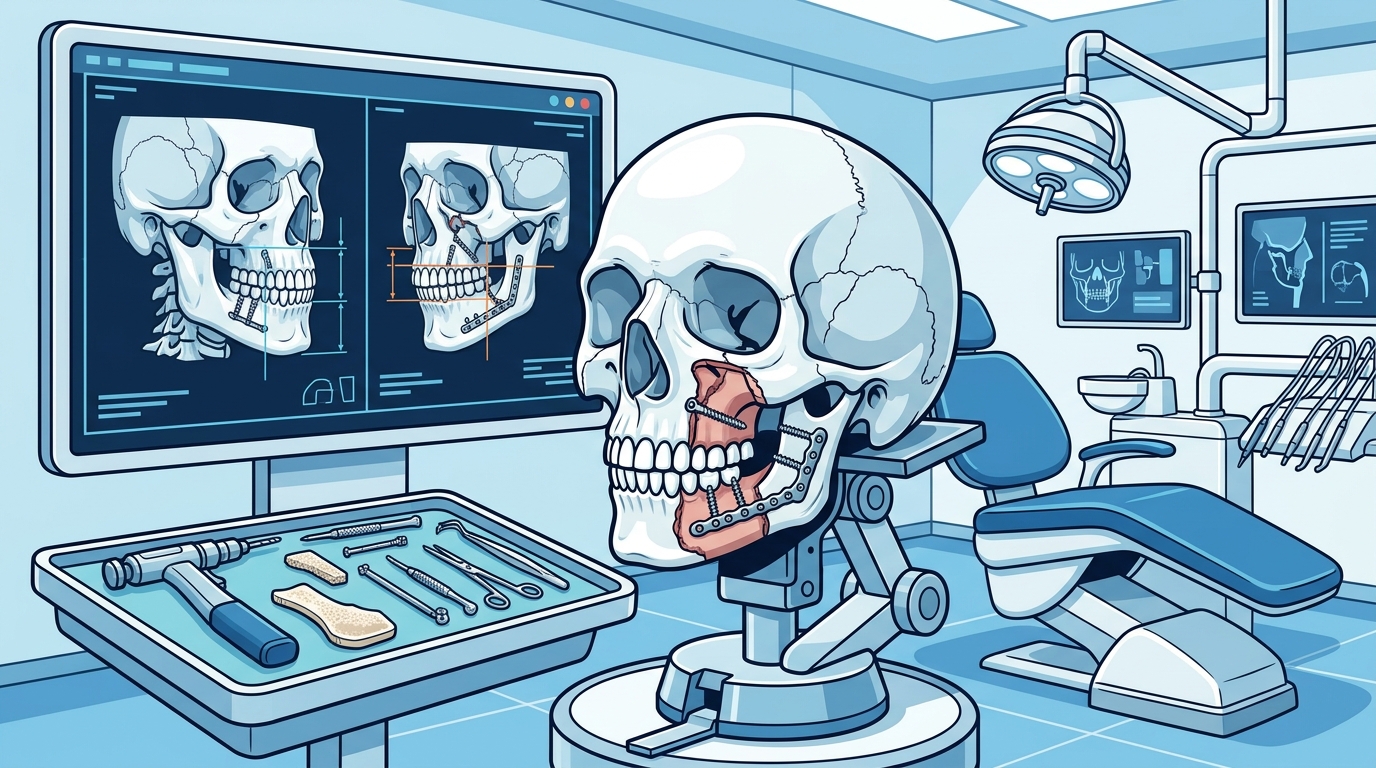
Restoring jaw alignment requires targeted surgical intervention tailored to the fracture pattern. Open reduction and internal fixation remains the standard protocol for displaced fractures. Surgeons utilize titanium plates and screws to secure bone segments in their correct anatomical position. This approach ensures stable healing and restores proper bite mechanics. Facial trauma surgery is the specialized discipline focused on repairing complex injuries to the craniofacial skeleton and associated soft tissues. Complex cases may require bone grafting to replace missing segments or reinforce weakened structural zones. The surgical team coordinates closely with dental specialists to verify occlusion before closing incisions. Patients benefit from customized surgical planning that maps the exact fracture geometry.
Advanced Technology in Post-Trauma Restoration
Modern surgical suites leverage digital mapping to enhance precision and reduce operative time. Virtual surgical planning allows surgeons to simulate the exact placement of fixation hardware before making an incision. This digital workflow minimizes intraoperative guesswork and accelerates recovery timelines. Advanced technology integrates three-dimensional imaging with computer-aided design to produce patient-specific surgical guides. These guides ensure accurate osteotomy placement and optimal hardware positioning. The integration of digital mapping reduces tissue trauma and preserves vital nerve pathways. Clinics that adopt this workflow consistently report faster healing phases and fewer revision procedures.
Minimally Invasive Techniques and Recovery Optimization
Reducing surgical trauma directly impacts postoperative comfort and tissue regeneration. Precision cutting instruments minimize bone fragmentation and preserve surrounding vascular networks. Extended-release local anesthetics provide targeted pain management without systemic opioid dependence. Board certified surgeons prioritize tissue preservation to accelerate early mobilization. Patients often experience reduced swelling and faster return to normal dietary routines. Postoperative protocols emphasize gentle jaw exercises to prevent joint stiffness. This conservative approach aligns with modern evidence-based standards for facial restoration.
Long-Term Functional Outcomes and Prosthetic Integration
Successful reconstruction extends beyond initial bone healing to encompass long-term oral function. Restored occlusion enables efficient mastication and clear speech articulation. Patients who undergo timely intervention typically regain full facial symmetry and joint stability. Implant surgery protocols integrate seamlessly with reconstructed bone to replace missing dentition. Advanced bone grafting techniques create a stable foundation for permanent prosthetic restoration. Longitudinal studies confirm that early anatomical realignment significantly reduces the risk of chronic temporomandibular disorders. Patients benefit from comprehensive follow-up care that monitors joint function and occlusal stability.
Key Takeaways
- Severe facial trauma requires immediate anatomical realignment to prevent chronic joint degeneration.
- Open reduction and internal fixation remains the gold standard for displaced mandibular fractures.
- Virtual surgical planning reduces operative time and improves hardware placement accuracy.
- Extended-release anesthetics minimize postoperative pain without relying on systemic opioids.
- Early bone grafting creates stable foundations for permanent prosthetic restoration.
- Comprehensive follow-up care monitors joint function and occlusal stability over time.
Frequently Asked Questions
How long does facial reconstruction surgery typically take?
Most reconstruction procedures require between two and four hours depending on fracture complexity. Surgeons prioritize precise anatomical alignment to ensure stable healing. Postoperative monitoring continues until vital signs stabilize and anesthesia wears off.
Will I need to follow a liquid diet after surgery?
Patients typically adhere to a strict liquid or soft food regimen for the first three weeks. This protocol protects surgical sites and prevents hardware stress. Gradual dietary progression follows clinical clearance and radiographic confirmation of bone union.
Can facial reconstruction restore normal chewing function?
Successful anatomical realignment directly restores efficient mastication and bite mechanics. Proper occlusion enables patients to resume normal dietary habits without discomfort. Long-term functional outcomes depend on strict adherence to postoperative guidelines.
What role does bone grafting play in trauma recovery?
Bone grafting replaces missing structural segments and reinforces weakened jaw zones. Autogenous grafts provide optimal biological compatibility for new bone formation. Surgeons integrate grafting protocols during initial reconstruction to prevent future prosthetic complications.
How is postoperative pain managed without systemic opioids?
Extended-release local anesthetics provide targeted nerve blockade directly at the surgical site. This approach minimizes systemic side effects while maintaining comfortable recovery conditions. Patients follow structured medication schedules to ensure consistent pain control.
Are there specific risks associated with facial trauma surgery?
Surgical risks include temporary nerve sensitivity, minor bleeding, and standard infection markers. Experienced surgeons mitigate these complications through precise tissue handling and sterile protocols. Preoperative screening identifies anatomical variations that require adjusted surgical strategies.
When can patients return to work or daily activities?
Most individuals resume sedentary duties within one to two weeks following surgery. Physical exertion and heavy lifting require extended clearance to protect healing bone. Surgeons provide customized activity restrictions based on individual recovery progress.
Next Steps for Post-Injury Care
Restoring facial structure after significant trauma demands experienced surgical leadership and precise technical execution. Patients seeking comprehensive evaluation should schedule a consultation to review imaging results and discuss personalized treatment pathways. Specialists at Park Avenue Oral, Maxillofacial & Implant Surgery provide evidence-based reconstruction protocols tailored to complex injury patterns. Contact the clinical team today to begin your restoration journey and regain full functional mobility.
| Surgical Option | Primary Indication | Recovery Timeline | Long-Term Benefit |
|---|---|---|---|
| Open Reduction Internal Fixation | Displaced mandibular or maxillary fractures | 6 to 8 weeks for initial bone union | Restored occlusion and facial symmetry |
| Virtual Surgical Planning | Complex multi-fragment injuries | Reduces operative time by 30 percent | Enhanced hardware precision and stability |
| Autogenous Bone Grafting | Missing bone segments or structural reinforcement | 3 to 4 months for graft integration | Stable foundation for prosthetic restoration |
| Extended-Release Anesthesia | Postoperative pain management | 72 hours of targeted nerve blockade | Reduced opioid dependence and faster mobilization |