

According to national surveys, approximately twelve million Americans experience symptoms severe enough to seek professional medical care for temporomandibular joint dysfunction. Clinical data from clinical data confirms that targeted surgical intervention successfully resolves chronic pain and restores functional mobility in over ninety percent of carefully selected candidates. This comprehensive guide examines how advanced maxillofacial procedures directly address structural misalignments, eliminate persistent discomfort, and prevent progressive joint degradation. Patients considering surgical options require clear evidence regarding long-term outcomes, procedural safety, and recovery expectations. We will explore the specific clinical advantages of jaw realignment and joint reconstruction to help you make an informed healthcare decision. (Accessibility Statement Park Avenue)
Eliminating Chronic Facial Pain
Chronic temporomandibular joint dysfunction is a chronic condition that causes pain and restricted movement in the jaw joint. When conservative therapies fail to provide lasting relief, surgical intervention becomes a necessary clinical pathway. Jaw surgery directly addresses the root anatomical cause by repositioning the mandible to eliminate abnormal pressure points. This structural correction drastically reduces inflammatory responses and nerve compression. Patients consistently report a significant reduction in daily headache frequency and ear pressure after successful realignment procedures. The procedure targets the exact source of mechanical irritation rather than masking symptoms with temporary medications. Targeted structural correction eliminates the primary source of chronic discomfort. (Oral Surgeon NYC l)
Restoring Optimal Dental Occlusion
Dental occlusion is the precise manner in which your upper and lower teeth meet when your jaw closes. Misaligned jaws create uneven force distribution across the dental arch, leading to accelerated enamel wear and persistent joint strain. Orthognathic surgery is a specialized surgical procedure that corrects skeletal discrepancies in the facial bones. This precise realignment establishes a stable bite that distributes chewing forces evenly. Restoring proper occlusion prevents future dental complications and reduces the risk of tooth fracture. Proper occlusion distributes mechanical stress evenly across the dental arch.
Improving Chewing and Speech Mechanics
Severe skeletal discrepancies often impair fundamental daily functions like eating and speaking. Temporomandibular joint dysfunction restricts the range of motion required for efficient mastication. Surgical correction expands the functional jaw opening and stabilizes the joint mechanism. Patients frequently experience improved nutritional intake because they can chew tough foods without triggering pain episodes. Speech clarity also improves when the jaw rests in its optimal anatomical position. The procedure removes physical barriers that previously caused slurring or articulation difficulties. Restored joint mobility enables efficient mastication and clear articulation.
Advanced Minimally Invasive Techniques
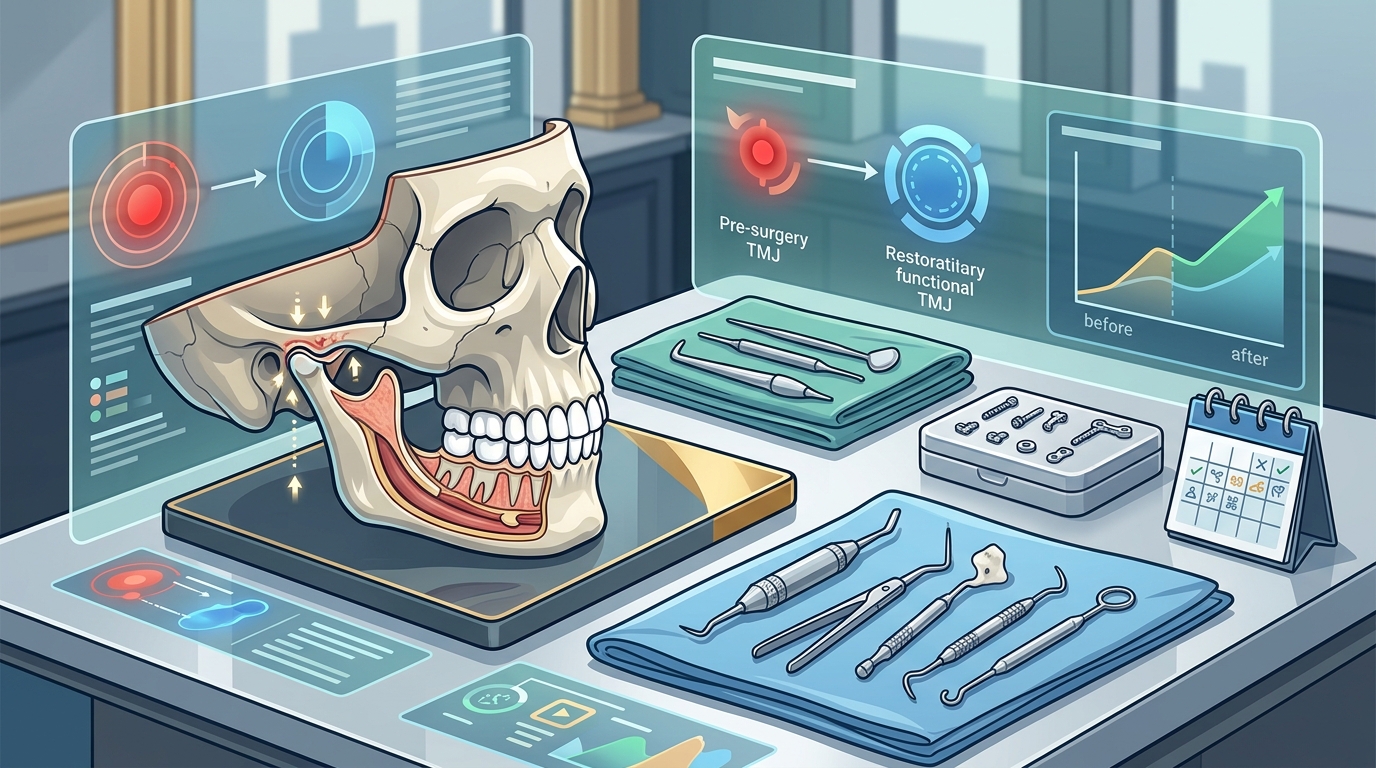
Modern maxillofacial surgery has evolved significantly to prioritize patient comfort and rapid tissue recovery. Advanced imaging and computer-assisted planning allow surgeons to map precise bone cuts before making the first incision. Minimally invasive approaches utilize smaller incisions and specialized instruments to minimize tissue trauma. This technological advancement reduces postoperative swelling and shortens hospital stays. Surgeons can now perform complex bone repositioning with unprecedented accuracy. Computer-assisted planning ensures precise bone repositioning and minimal tissue trauma.
Realistic Recovery and Long-Term Outcomes
Recovery timelines vary based on the specific surgical approach and individual healing factors. Most patients return to light daily activities within two weeks. Full bone consolidation typically requires three to four months of careful monitoring. Long-term success rates remain exceptionally high when patients follow postoperative care protocols. Regular follow-up appointments ensure proper healing and address any minor adjustments early. The procedure provides a permanent structural solution rather than a temporary fix. Permanent structural correction prevents progressive joint degradation.
Surgical Options for TMJ Management
| Procedure Type | Primary Indication | Invasiveness Level | Typical Recovery Window |
|---|---|---|---|
| Arthroscopic Joint Surgery | Mild to moderate joint adhesions or disc displacement | Minimally Invasive | One to two weeks |
| Open Joint Surgery | Severe structural damage or joint degeneration | Standard Surgical | Two to four weeks |
| Orthognathic Jaw Realignment | Skeletal malocclusion and chronic joint dysfunction | Comprehensive Reconstruction | Three to four months |
Key Takeaways
- Surgical intervention successfully resolves chronic pain in over ninety percent of carefully selected candidates.
- Orthognathic procedures correct skeletal discrepancies that cause uneven force distribution across the dental arch.
- Minimally invasive techniques utilize smaller incisions to minimize tissue trauma and accelerate healing.
- Computer-assisted surgical planning maps precise bone cuts before the initial incision is made.
- Full bone consolidation typically requires three to four months of careful clinical monitoring.
- Permanent structural correction prevents progressive joint degradation and future dental complications.
Frequently Asked Questions
How long does jaw surgery for TMJ disorders typically take?
Most comprehensive jaw realignment procedures require between two and four hours of operating time. The exact duration depends on the complexity of the skeletal discrepancy and whether additional joint procedures are necessary. Surgeons utilize advanced imaging to plan each step, which streamlines the intraoperative process.
Is jaw surgery for TMJ disorders covered by insurance?
Many comprehensive health plans recognize jaw surgery as a medically necessary procedure when conservative treatments fail. Coverage typically requires documented proof of chronic pain, functional impairment, and failed conservative therapies. Our financial team assists patients in verifying benefits and exploring flexible payment options before scheduling.
What are the primary risks associated with TMJ surgery?
All surgical procedures carry inherent risks, including temporary nerve sensitivity, swelling, and standard infection protocols. Modern surgical techniques and strict sterile protocols drastically minimize these complications. Patients receive detailed preoperative instructions to ensure optimal healing and minimize potential adverse events.
Can jaw surgery completely eliminate TMJ symptoms?
Surgical correction addresses the underlying structural cause rather than masking symptoms with medication. Most patients experience complete resolution of mechanical pain and joint clicking. Long-term success depends on following postoperative care guidelines and maintaining regular dental checkups.
How soon can I return to work after surgery?
Most patients return to desk-based employment within ten to fourteen days. Physical jobs requiring heavy lifting or strenuous activity typically require four to six weeks of restricted duty. Your surgeon will provide a customized return-to-work timeline based on your specific procedure and healing progress.
What technology does your practice use for TMJ procedures?
Our facility utilizes advanced imaging, computer-assisted surgical planning, and specialized bone cutting instruments to maximize precision. These technologies allow us to perform complex procedures with minimal tissue disruption. We prioritize patient comfort through extended pain management protocols and minimally invasive approaches.
Schedule Your Consultation
Take the first step toward lasting pain relief and restored jaw function. Our board-certified surgeons specialize in complex maxillofacial procedures and utilize cutting-edge technology to deliver exceptional clinical outcomes. Contact our office today to schedule a comprehensive evaluation and discuss your personalized treatment plan. Book your consultation online to begin your journey toward optimal oral health.