
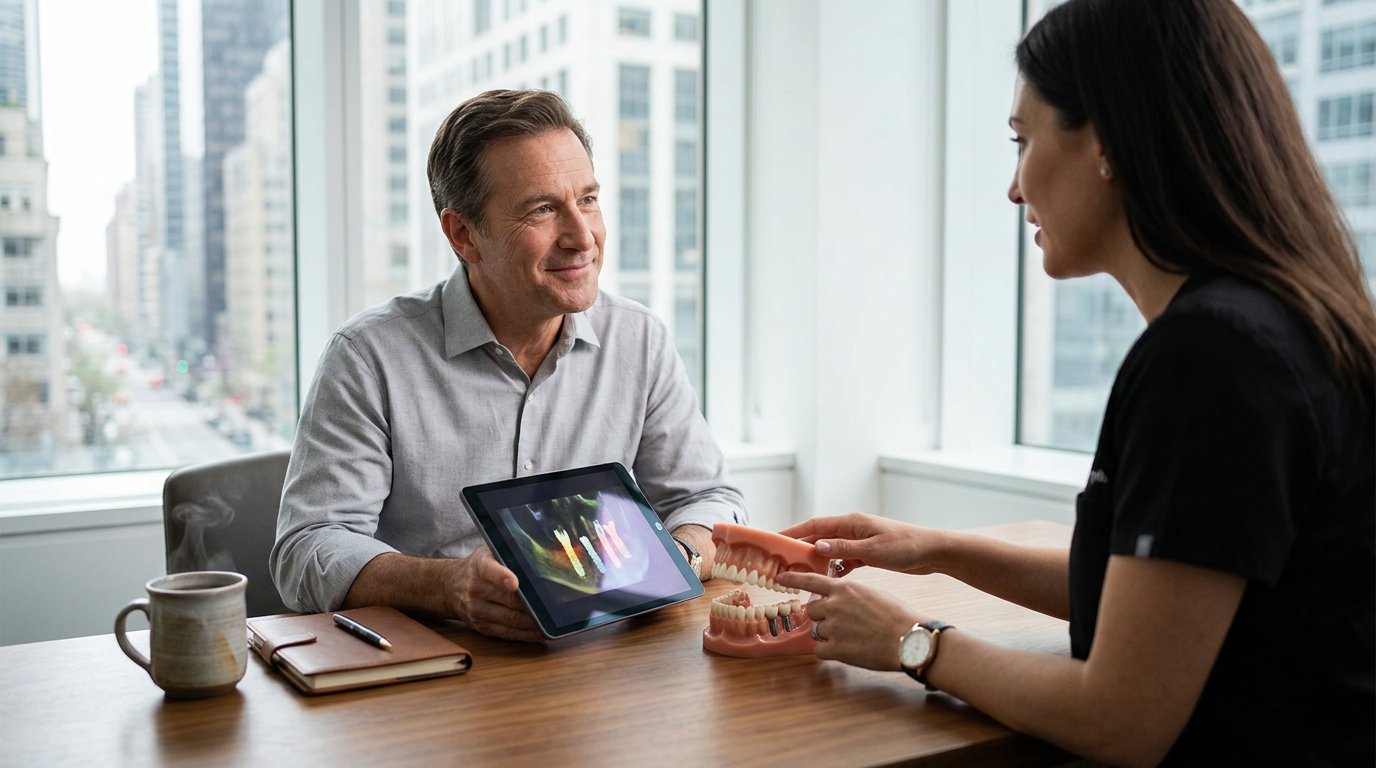
Missing teeth create significant functional and aesthetic challenges that modern restorative dentistry addresses through advanced surgical solutions. Dental implants are titanium or ceramic posts surgically placed into the jawbone to replace missing tooth roots and support permanent prosthetics. Clinical data shows that over four million people receive implant-supported teeth annually, and that number continues to grow each year. Understanding the specific implant categories allows patients to evaluate their anatomical constraints and treatment pathways. This comprehensive overview examines the primary modalities available through specialized oral surgery practices.
Conventional Dental Implants
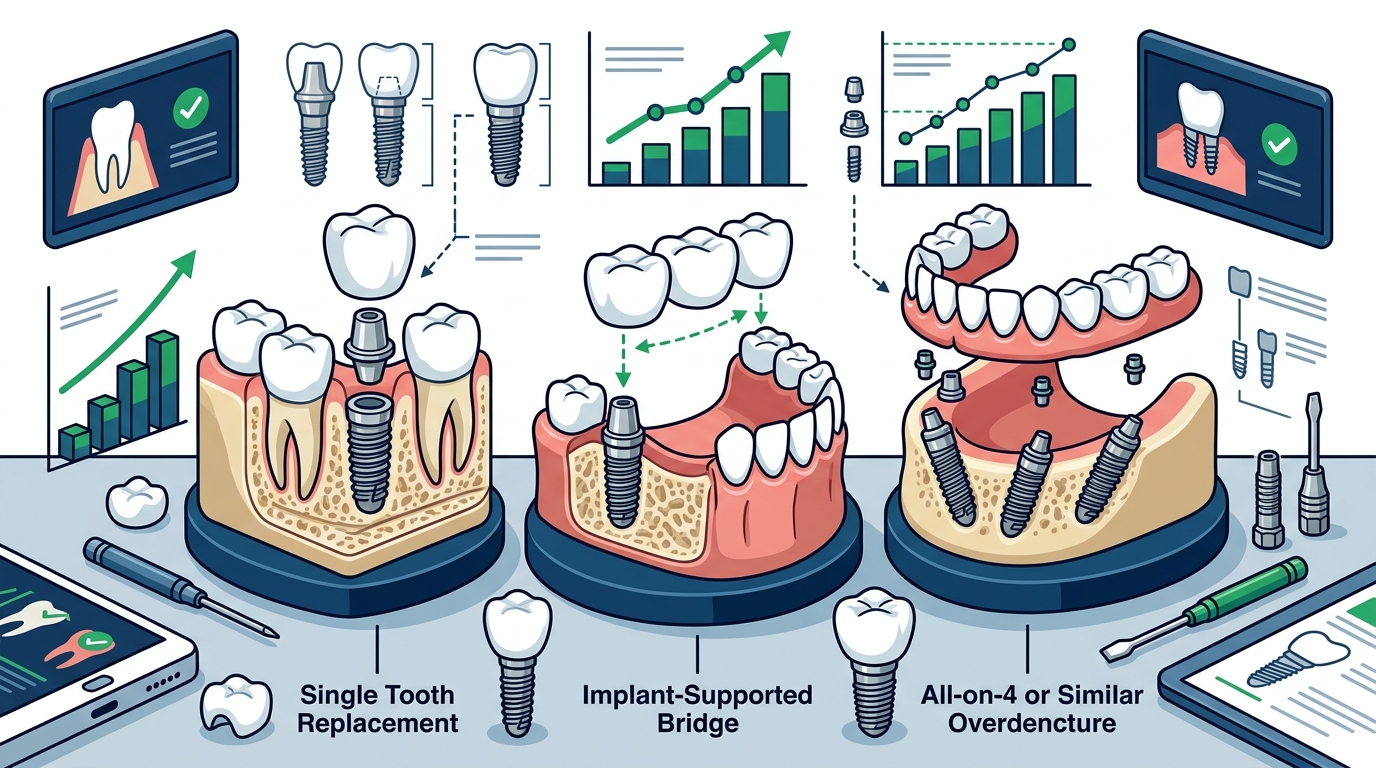
Conventional dental implants are titanium posts surgically embedded into the jawbone to support individual crowns or bridge structures. This standard approach remains the most widely prescribed solution for single-tooth or multi-tooth replacement scenarios. The procedure requires adequate bone density to achieve primary stability and long-term osseointegration. Patients benefit from predictable longevity and straightforward maintenance protocols. Conventional implants integrate seamlessly with natural dentition while preserving adjacent tooth structure. Surgeons utilize computer-aided planning to position fixtures at optimal angles for maximum biomechanical support.
Material Composition and Biocompatibility
Titanium alloys dominate the market due to their exceptional corrosion resistance and biological compatibility. Zirconia alternatives offer metal-free aesthetics for patients with specific sensitivities. Both materials demonstrate high success rates when placed by experienced clinicians. The surface texture of modern fixtures promotes rapid cellular attachment and bone regeneration. Advanced technology enables precise surface modifications that accelerate healing timelines.
All-on-X Implant Systems
All-on-X systems are full-arch prosthetic frameworks anchored by four to six strategically placed fixtures. This revolutionary approach restores complete function for edentulous patients without requiring extensive bone grafting procedures. The treatment protocol typically involves immediate loading, allowing patients to leave the clinic with temporary teeth on the same day. Long-term outcomes demonstrate exceptional patient satisfaction and improved nutritional intake. All-on-X implants provide a fixed, non-removable solution that mimics natural chewing mechanics. The framework distributes occlusal forces evenly across the supporting fixtures to prevent mechanical failure.
Prosthetic Design and Load Distribution
Custom milled acrylic or porcelain bridges attach securely to the underlying abutments. The prosthetic design prioritizes phonetic clarity and aesthetic harmony with facial proportions. Engineers calculate bite forces to ensure the framework withstands years of functional stress. Regular professional cleanings maintain the interface between the prosthesis and the supporting hardware. Financial information
Zygoma and Pterygoid Solutions
Zygoma implants are specialized titanium rods anchored directly into the cheekbone to bypass severe upper jaw bone loss. This advanced technique eliminates the need for complex sinus augmentation or autogenous bone grafting procedures. The fixtures utilize the dense zygomatic bone to achieve immediate stability and support full-arch rehabilitation. Clinical studies confirm high survival rates even in severely atrophic maxillary arches. Maxillofacial surgery
Surgical Navigation and Precision
Virtual surgical planning software maps the exact trajectory required to engage the zygomatic bone safely. Surgeons avoid critical anatomical structures while maximizing fixture length and diameter. The procedure typically requires general anesthesia administered by board-certified anesthesiologists. Postoperative protocols emphasize swelling management and infection prevention. Meet Dr. Choi to review your specific anatomical suitability for this advanced protocol.
Minimally Invasive Techniques
Minimally invasive techniques prioritize tissue preservation and accelerated healing through advanced surgical instrumentation. Piezoelectric devices cut bone with microscopic precision while leaving soft tissue completely unharmed. This selective cutting capability reduces postoperative swelling and preserves vital nerve pathways. Extended-release local anesthetics provide pain management that extends well beyond the initial recovery window. Advanced technology integration ensures predictable outcomes with minimal patient discomfort. The surgical approach aligns with modern patient expectations for rapid return to normal activities.
Pharmacological Support and Recovery
Extended-release anesthetic formulations bind to nerve membranes to block pain signals for several days. This pharmacological strategy reduces opioid dependency and improves early postoperative comfort. Patients report significantly fewer complications compared to traditional surgical methods. Follow-up appointments monitor tissue integration and prosthetic adaptation. The combination of surgical precision and pharmacological innovation sets a new clinical standard.
Specialized Surgical Protocols
Specialized surgical protocols address complex anatomical variations and compromised systemic health conditions. Bone grafting procedures restore deficient volumes to accommodate standard fixture placement. Sinus lift techniques elevate the maxillary floor to create adequate vertical height for posterior implants. Canine exposure procedures guide impacted teeth into functional alignment using surgical exposure and orthodontic traction. Implant surgery encompasses a broad spectrum of restorative strategies tailored to individual patient needs. Each protocol requires meticulous planning and execution to achieve predictable long-term success.
Regenerative Medicine Integration
Platelet-rich fibrin concentrates accelerate tissue healing by releasing growth factors directly into the surgical site. This autologous biological material enhances soft tissue closure and reduces inflammation. The integration of regenerative protocols improves overall treatment outcomes and patient comfort. Surgeons evaluate systemic health factors to optimize healing potential. The comprehensive approach ensures maximum biological response to surgical intervention.
| Implant Category | Primary Indication | Bone Requirement | Typical Fixture Count | Recovery Timeline |
|---|---|---|---|---|
| Conventional Implants | Single or multiple missing teeth | Moderate to adequate density | One per missing tooth | 3 to 6 months |
| All-on-X Systems | Complete arch edentulism | Moderate density | Four to six fixtures | Immediate temporary loading |
| Zygoma Implants | Severe maxillary bone loss | Dense cheekbone structure | Two to four fixtures | 3 to 4 months |
| Pterygoid Implants | Posterior maxillary atrophy | Pterygoid plate engagement | One to two fixtures | 3 to 6 months |
Key Takeaways
- Conventional implants remain the gold standard for single-tooth replacement with predictable long-term survival.
- All-on-X systems provide fixed full-arch rehabilitation without requiring extensive bone grafting procedures.
- Zygoma implants bypass severe upper jaw bone loss by anchoring directly into the cheekbone structure.
- Piezoelectric surgical devices preserve soft tissue and reduce postoperative swelling significantly.
- Extended-release anesthetics eliminate opioid dependency during the initial recovery window.
- Virtual surgical planning ensures precise fixture positioning and optimal biomechanical load distribution.
- Regenerative protocols enhance healing outcomes through autologous biological material integration.
Frequently Asked Questions
How long do dental implants typically last?
With proper oral hygiene and regular professional maintenance, dental implants can function successfully for decades. The titanium fixture integrates permanently with the jawbone, while the prosthetic crown may require replacement after fifteen to twenty years due to normal wear.
Are dental implants painful during the procedure?
Modern anesthesia protocols and extended-release pain management strategies ensure a comfortable surgical experience. Most patients report minimal discomfort during the procedure and manageable soreness during the initial recovery phase.
Can I get implants if I have thin bone structure?
Advanced surgical techniques like zygoma and pterygoid implants bypass deficient bone volumes entirely. Bone grafting procedures can also restore adequate dimensions to accommodate standard fixtures when necessary.
How long does the entire implant process take?
The complete treatment timeline typically spans three to six months for osseointegration and prosthetic fabrication. All-on-X systems may allow immediate temporary loading, enabling patients to receive functional teeth on the same day.
What maintenance do implants require after placement?
Implants require the same daily brushing and flossing routines as natural teeth. Professional cleanings every six months monitor tissue health and fixture stability to prevent peri-implant complications.
Are there any dietary restrictions after implant surgery?
Patients must follow a soft-food diet during the initial healing phase to protect the surgical site. Gradual reintroduction of normal foods occurs once osseointegration is confirmed through clinical evaluation.
How much do dental implants cost on average?
Implant costs vary based on fixture type, prosthetic materials, and required adjunctive procedures. Comprehensive treatment planning provides transparent pricing before surgery begins to eliminate financial surprises.
Schedule Your Implant Consultation
Restoring your smile begins with a comprehensive evaluation of your anatomical structure and treatment goals. Our specialized oral surgery practice utilizes advanced imaging and virtual planning to design your personalized implant strategy. Contact Park Avenue Oral, Maxillofacial & Implant Surgery to schedule your consultation and explore your restorative options. Our board-certified surgeons combine decades of clinical experience with cutting-edge technology to deliver predictable, long-lasting results. Take the first step toward permanent tooth replacement and schedule your appointment today.