

Temporomandibular joint dysfunction affects millions of adults worldwide, creating chronic pain and functional limitations that conservative therapies often fail to resolve. According to the American Association of Oral and Maxillofacial Surgeons, approximately two percent of the general population requires surgical intervention to restore proper occlusion and joint mechanics. When non-invasive treatments like physical therapy or splint therapy fail to deliver lasting relief, patients frequently explore advanced surgical pathways. This comprehensive guide examines how precise maxillofacial procedures directly address structural misalignments, reduce chronic inflammation, and restore long-term oral function. Understanding these clinical benefits helps patients make informed decisions about their care. (Accessibility Statement Park Avenue)
How Jaw Realignment Resolves Chronic Joint Stress
Maxillofacial surgery is a specialized surgical discipline focusing on the diagnosis and treatment of diseases, injuries, and defects of the hard and soft tissues of the face, jaws, and oral cavity. When the upper and lower jaws do not align correctly, excessive pressure concentrates on the articular disc and surrounding ligaments. This constant friction accelerates cartilage degradation and triggers persistent inflammatory responses. Surgical repositioning redistributes biomechanical forces evenly across the joint surfaces. Patients typically experience immediate relief from clicking, locking, and radiating headaches. The procedure eliminates the abnormal wear patterns that conservative therapies cannot correct.
Maxillofacial procedures focus on precise skeletal adjustments rather than temporary symptom suppression. Surgeons utilize advanced imaging to map the exact spatial relationship between the condyles and the glenoid fossa. This data drives customized surgical plans that restore natural joint kinematics. The goal remains restoring physiological function while preserving surrounding soft tissue integrity. Patients who undergo proper skeletal correction often report sustained improvements in daily chewing and speaking abilities.
Minimally Invasive Techniques and Recovery Protocols
Modern surgical protocols prioritize tissue preservation and accelerated healing timelines. Traditional open approaches required extensive muscle detachment and prolonged recovery periods. Contemporary techniques utilize smaller incisions and specialized instruments to minimize collateral damage. The Medtronic Piezoelectric Saw enables precise bone cutting without damaging adjacent nerves or blood vessels. This technology reduces intraoperative bleeding and postoperative swelling significantly. Patients following these advanced protocols typically return to light activities within one week.
Recovery optimization relies on strategic pharmacological interventions and structured rehabilitation. Extended-release local anesthetics like Exparel provide continuous pain blockade for seventy-two hours. This approach drastically reduces reliance on systemic opioids during the critical initial healing phase. Physical therapy protocols begin early to prevent joint stiffness and muscle atrophy. Patients who adhere to these structured recovery pathways experience fewer complications and faster functional restoration.
Restoring Functional Occlusion and Bite Mechanics
Temporomandibular joint dysfunction is a complex medical condition affecting the hinge mechanism that connects the jawbone to the skull, often causing pain and functional impairment. Malocclusion forces the jaw muscles to compensate for uneven contact points, creating chronic myofascial pain. Surgical realignment establishes harmonious tooth-to-tooth contact across all functional positions. This correction eliminates the abnormal muscle spasms that frequently accompany joint disorders. Patients regain the ability to chew tough foods without triggering joint fatigue or pain.
Restoring occlusion also improves respiratory airflow and sleep quality. Severe skeletal discrepancies often compress the upper airway, contributing to obstructive sleep apnea. Corrective jaw surgery expands the skeletal framework and opens the airway passage. This structural improvement reduces snoring and eliminates breathing interruptions during sleep. Patients frequently report enhanced daytime energy and improved cognitive function following successful correction.
Advanced Imaging and Virtual Surgical Planning
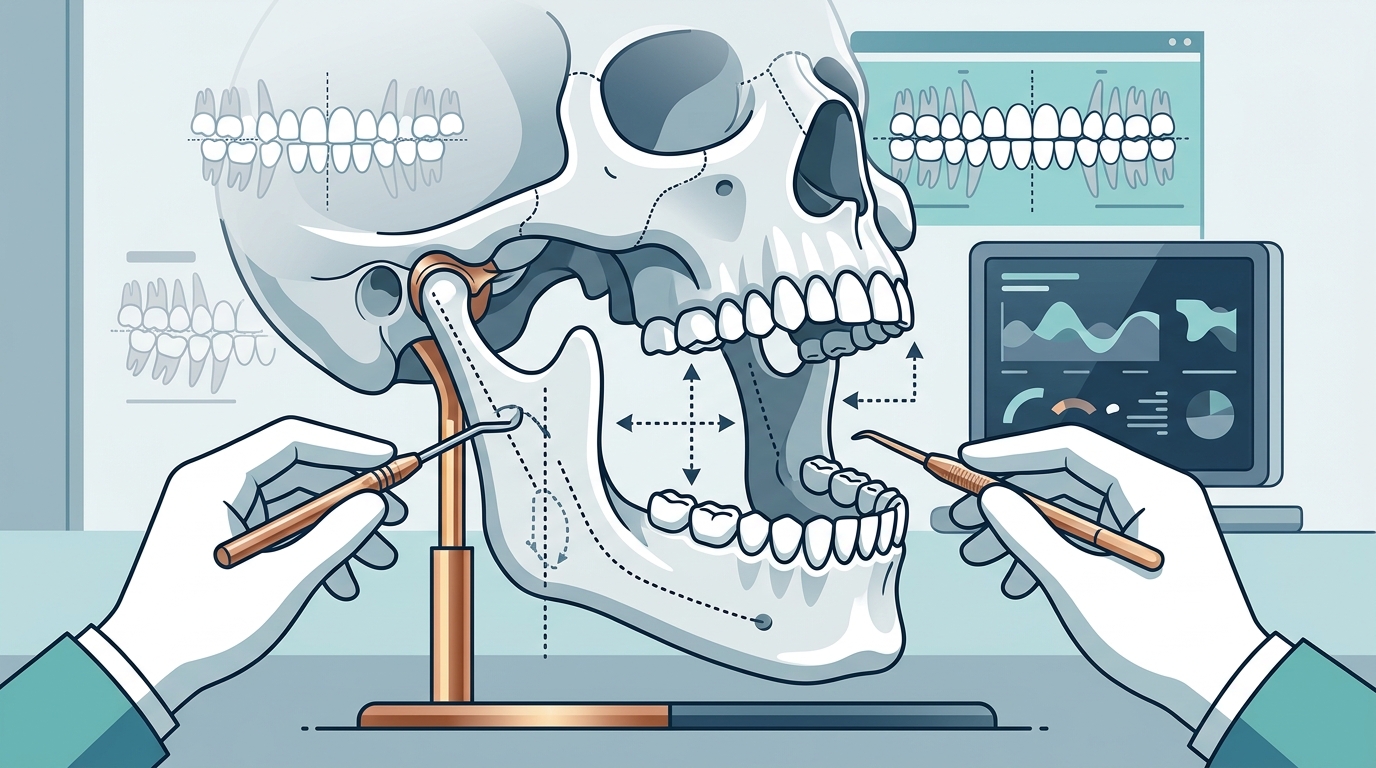
Virtual surgical planning is a digital workflow that utilizes three-dimensional imaging to simulate and predict surgical outcomes before the procedure begins. Precision planning eliminates guesswork and maximizes surgical predictability. Three-dimensional computed tomography scans capture detailed bone architecture and nerve pathways. Virtual surgical planning software allows surgeons to simulate multiple repositioning scenarios before incision. This digital workflow ensures optimal aesthetic and functional outcomes. Surgeons can preview how specific bone movements will affect facial proportions and joint mechanics.
Computer-guided surgical splints translate digital plans directly into the operating room. These custom-fabricated guides ensure exact bone placement without intraoperative adjustments. The process reduces operating room time and minimizes anesthesia exposure. Patients benefit from predictable healing patterns and consistent aesthetic results. This technological integration represents the current standard for complex maxillofacial procedures.
Postoperative Pain Management and Tissue Preservation
Effective pain control directly influences surgical success and patient satisfaction. Traditional postoperative regimens relied heavily on systemic analgesics with significant side effects. Modern protocols combine targeted nerve blocks with extended-release formulations to maintain comfort. This multimodal approach preserves tissue integrity while preventing pain-induced muscle guarding. Patients experience smoother transitions back to normal dietary habits.
Tissue preservation techniques minimize surgical trauma and accelerate cellular regeneration. Platelet-rich fibrin concentrates release growth factors that stimulate rapid bone and soft tissue healing. This biological enhancement reduces swelling and prevents postoperative fibrosis. Surgeons who integrate these biological adjuncts consistently report higher patient satisfaction scores. The combination of precise surgical technique and biological optimization creates optimal healing environments.
Long-Term Prognosis and Quality of Life Improvements
Surgical correction delivers durable results when properly indicated and executed. Longitudinal studies demonstrate sustained functional improvements across decades of follow-up. Patients report significant reductions in chronic pain scores and medication dependency. The restoration of normal joint mechanics prevents secondary degenerative changes. Most individuals maintain their surgical results without requiring revision procedures.
Quality of life metrics improve dramatically following successful skeletal correction. Patients regain confidence in social interactions and professional presentations. The elimination of chronic pain enables consistent exercise routines and active lifestyles. Families benefit from improved communication and reduced caregiver stress. The cumulative impact of successful surgery extends far beyond clinical metrics.
Comparative Treatment Options
| Procedure Type | Primary Indication | Expected Recovery |
|---|---|---|
| Orthognathic Surgery | Skeletal malocclusion and airway restriction | 6 to 8 weeks |
| Arthroscopic Joint Debridement | Mild to moderate internal derangement | 2 to 4 weeks |
| Open Joint Repair | Severe degenerative joint disease | 8 to 12 weeks |
| Conservative Splint Therapy | Muscle hyperactivity and minor disc displacement | Ongoing maintenance |
Key Takeaways
- Surgical realignment eliminates abnormal joint stress and prevents cartilage degradation.
- Minimally invasive techniques reduce recovery time to approximately one week.
- Virtual surgical planning ensures predictable aesthetic and functional outcomes.
- Extended-release anesthetics minimize opioid dependency during initial healing.
- Restored occlusion improves respiratory airflow and sleep quality significantly.
- Longitudinal data confirms sustained pain reduction across decades of follow-up.
Frequently Asked Questions
How long does recovery typically take after jaw surgery for TMJ?
Most patients return to light daily activities within one week. Full bone consolidation requires approximately six to eight weeks. Physical therapy protocols begin early to prevent joint stiffness. Patients gradually resume normal dietary habits as swelling subsides.
Is jaw surgery for TMJ disorders covered by insurance?
Many comprehensive dental and medical plans recognize surgical necessity. Documentation of failed conservative therapies typically satisfies coverage requirements. Our financial team assists with pre-authorization and benefit verification. Patients receive transparent cost estimates before scheduling procedures.
What are the primary risks associated with corrective jaw surgery?
Surgical risks include temporary nerve sensitivity and standard infection protocols. Modern techniques minimize these complications through precise planning. Surgeons utilize advanced imaging to avoid critical anatomical structures. Patients who follow postoperative instructions experience exceptionally low complication rates.
Can jaw surgery improve breathing and sleep apnea symptoms?
Skeletal expansion frequently opens compressed airway passages. Patients with concurrent sleep apnea often experience dramatic improvements. Reduced snoring and eliminated breathing interruptions become common outcomes. Enhanced oxygenation directly improves daytime energy and cognitive function.
How does virtual surgical planning improve surgical outcomes?
Digital modeling allows surgeons to simulate multiple repositioning scenarios. Custom surgical guides translate digital plans directly into the operating room. This precision eliminates intraoperative adjustments and reduces operating time. Patients benefit from predictable healing patterns and consistent aesthetic results.
What biological adjuncts accelerate postoperative healing?
Platelet-rich fibrin concentrates release growth factors that stimulate tissue regeneration. These biological enhancements reduce swelling and prevent postoperative fibrosis. Surgeons who integrate these adjuncts consistently report higher satisfaction scores. The combination of precise technique and biological optimization creates optimal healing environments.
When should patients consider surgical intervention over conservative therapy?
Surgical evaluation becomes necessary when conservative therapies fail to deliver lasting relief. Persistent joint pain, functional limitations, and progressive degeneration indicate surgical candidacy. Comprehensive imaging reveals structural abnormalities that splints cannot correct. Patients who pursue timely intervention typically experience superior long-term outcomes.
Schedule Your Consultation
Advanced maxillofacial procedures require experienced surgical leadership and comprehensive planning. Dr. James Choi combines dual board certification with specialized fellowship training to deliver precise outcomes. Our facility utilizes cutting-edge imaging and minimally invasive techniques to maximize patient comfort. Patients seeking definitive solutions for temporomandibular joint disorders should schedule a comprehensive evaluation. Contact our team today to discuss your specific clinical needs and explore personalized treatment pathways. Book your consultation to begin your journey toward lasting relief.