
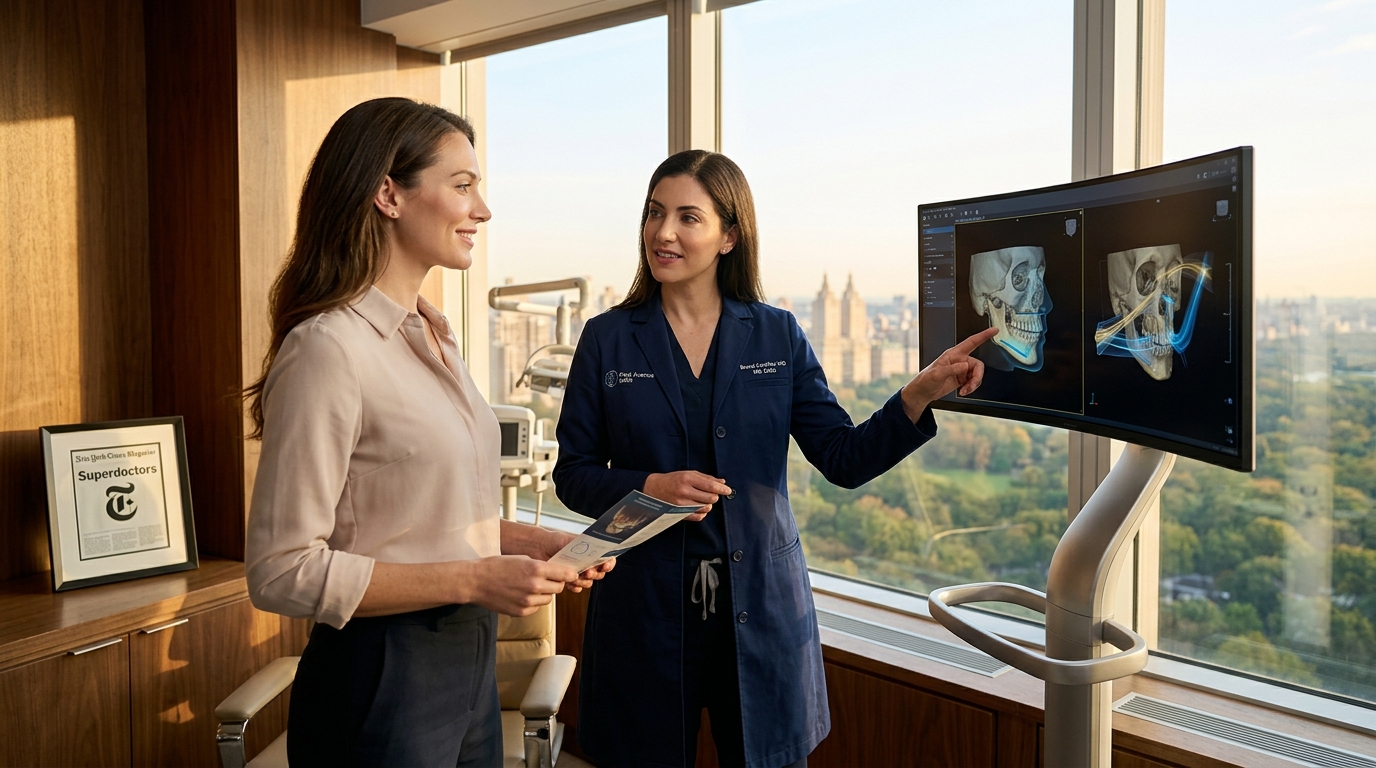
Recent clinical data indicates that over 350,000 orthognathic procedures are performed annually across the United States to correct skeletal discrepancies and enhance facial harmony. According to the American Dental Association, these interventions successfully resolve functional impairments while delivering predictable aesthetic improvements. Patients seeking a jaw surgery specialist for facial aesthetics in NYC require a provider who balances surgical precision with artistic vision. This guide outlines the clinical pathways, technological advantages, and recovery expectations for modern maxillofacial procedures. (Accessibility Statement Park Avenue)
Understanding Maxillofacial Surgery for Facial Balance
Orthognathic surgery is a specialized surgical discipline that corrects structural irregularities of the jaw and facial bones to restore both function and proportion. When the upper and lower jaws do not align properly, patients often experience chronic pain, breathing difficulties, and uneven facial profiles. A qualified specialist evaluates skeletal relationships using three-dimensional imaging to map precise surgical movements. The goal extends beyond basic bite correction to achieve harmonious facial symmetry. According to the National Institute of Dental and Craniofacial Research, early intervention during skeletal development yields the most stable long-term results. Modern practitioners combine surgical expertise with digital planning to predict aesthetic outcomes with remarkable accuracy.
Identifying Functional and Aesthetic Indications
Patients typically pursue these procedures due to visible skeletal discrepancies or chronic occlusal dysfunction. Severe overbites, underbites, and asymmetrical jawlines often require surgical repositioning to achieve optimal facial balance. According to the American Association of Oral and Maxillofacial Surgeons, comprehensive diagnostic imaging remains the gold standard for surgical planning. Specialists assess airway patency, temporomandibular joint health, and dental occlusion before recommending intervention. The procedure addresses both structural integrity and visual harmony simultaneously.
Advanced Technology in Modern Jaw Procedures
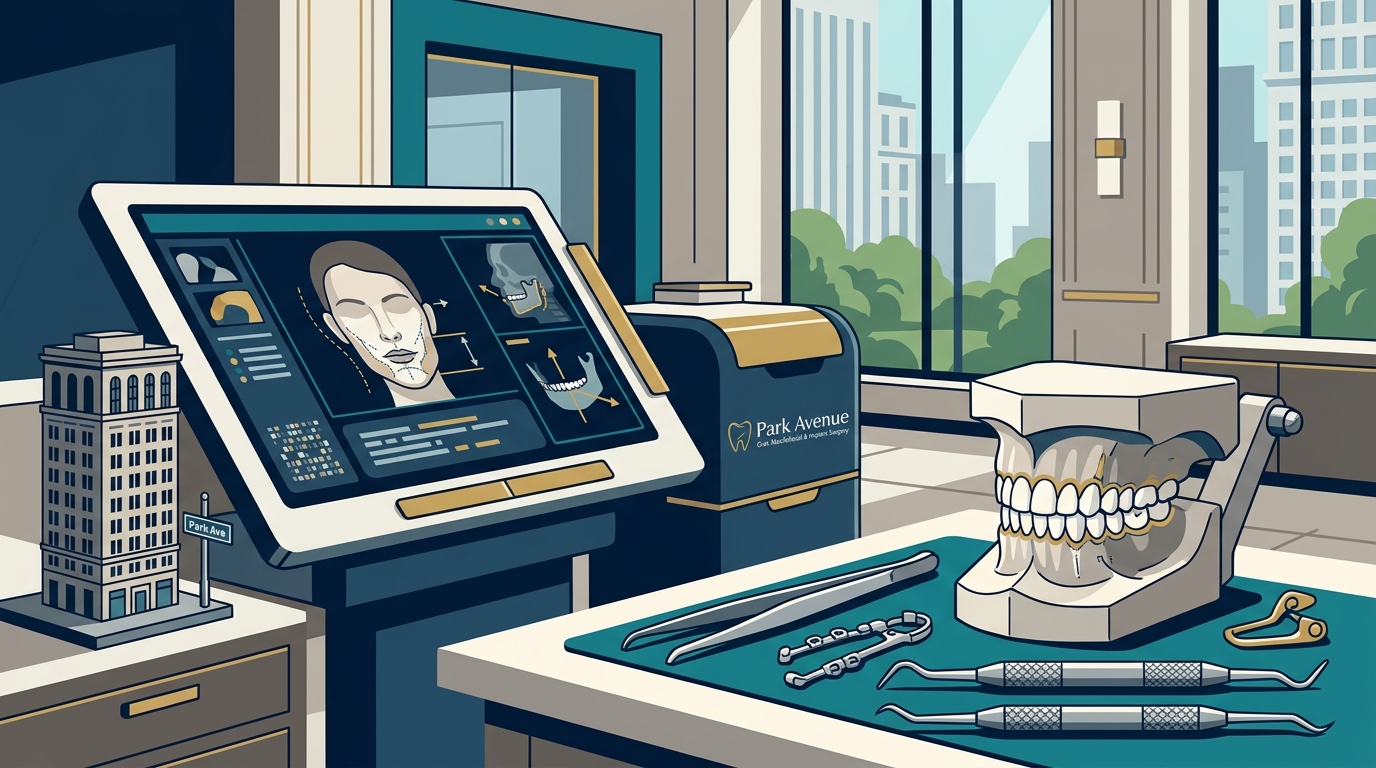
Virtual surgical planning is a digital workflow that creates precise three-dimensional models of a patient's anatomy to simulate surgical movements before incision. This technology allows surgeons to practice complex bone repositioning on a computer screen, drastically reducing intraoperative guesswork. According to clinical research databases, digital planning reduces operative time by nearly thirty percent while improving aesthetic predictability. Clinics in major metropolitan centers utilize CT guided implant placement and advanced imaging to map nerve pathways and bone density. This precision minimizes tissue trauma and accelerates postoperative healing. Learn more about our advanced technology to understand how digital mapping translates to safer outcomes.
Precision Instruments and Bone Management
The Medtronic Piezoelectric Saw is a specialized surgical instrument that cuts mineralized tissue while preserving soft tissue structures like nerves and blood vessels. This device enables surgeons to perform highly controlled osteotomies with minimal bleeding and swelling. According to the American Dental Association, piezoelectric technology has become a standard for complex maxillofacial procedures. Surgeons also utilize the Stryker Sonopet to remove dense bone fragments with exceptional accuracy. These instruments work in tandem to deliver predictable aesthetic results while prioritizing patient safety.
Minimally Invasive Techniques and Recovery Protocols
Exparel Extended Pain Relief is a long-acting local anesthetic formulation that provides continuous pain management for up to 72 hours following surgery. This innovation significantly reduces opioid dependency and improves early postoperative comfort. According to the National Institute of Dental and Craniofacial Research, multimodal pain management protocols improve patient satisfaction scores across all surgical specialties. Specialists integrate targeted nerve blocks with advanced analgesic delivery systems to streamline recovery. Patients typically experience manageable swelling and return to light activities within two weeks. Meet Dr. Choi to review personalized recovery timelines and postoperative care guidelines.
Accelerated Healing and Tissue Preservation
Platelet-rich fibrin is a concentrated biological material derived from a patient's own blood that accelerates tissue regeneration and reduces postoperative inflammation. This autologous therapy is routinely applied to surgical sites to enhance bone graft integration and soft tissue healing. According to the American Association of Oral and Maxillofacial Surgeons, biological adjuncts significantly improve long-term surgical outcomes. Surgeons carefully harvest and process the material to maximize growth factor concentration. The result is a faster, more comfortable recovery with reduced risk of complications.
Customized Treatment Plans for Complex Cases
Facial contouring is a surgical approach that reshapes the jawline, chin, and cheekbones to create balanced facial proportions and enhance natural aesthetics. This procedure requires meticulous attention to skeletal landmarks and soft tissue draping. According to clinical research databases, customized surgical planning yields higher patient satisfaction rates compared to standardized protocols. Specialists evaluate facial thirds, projection angles, and symmetry indices to design individualized interventions. Complex cases often combine orthognathic correction with cosmetic refinements to achieve comprehensive facial harmony. Explore our maxillofacial surgery services to see how customized planning addresses unique anatomical challenges.
Integrated Approaches to Skeletal Correction
Combined surgical protocols address multiple facial regions simultaneously to minimize overall recovery time and optimize aesthetic results. Surgeons may perform simultaneous jaw repositioning, chin augmentation, and soft tissue tightening during a single operative session. According to the American Dental Association, integrated surgical planning reduces the psychological burden of staged procedures. Specialists coordinate closely with orthodontists to ensure dental alignment supports skeletal changes. The result is a unified facial transformation that enhances both function and appearance.
Surgical Option Comparison
| Procedure Type | Primary Indication | Recovery Timeline | Aesthetic Focus |
|---|---|---|---|
| Orthognathic Surgery | Skeletal bite correction and airway improvement | 2 to 4 weeks initial swelling resolution | Facial symmetry and functional occlusion |
| Jawline Contouring | Asymmetrical bone structure or weak chin projection | 1 to 2 weeks minimal downtime | Defined jawline and balanced facial thirds |
| Combined Maxillofacial Procedures | Complex skeletal discrepancies requiring multi-region correction | 3 to 6 weeks comprehensive healing | Comprehensive facial harmony and structural stability |
Key Takeaways
- Over 350,000 orthognathic procedures are performed annually in the United States to correct skeletal discrepancies and enhance facial harmony.
- Virtual surgical planning reduces operative time by nearly thirty percent while improving aesthetic predictability.
- Exparel Extended Pain Relief provides continuous pain management for up to 72 hours following surgery.
- Dr. James Choi holds dual board certification and completed fellowship training in minimally invasive surgery at the University of Munich.
- Platelet-rich fibrin application accelerates tissue regeneration and significantly reduces postoperative inflammation.
- Integrated surgical protocols allow simultaneous correction of multiple facial regions to minimize overall recovery time.
- Precise digital mapping and piezoelectric instrumentation minimize tissue trauma and accelerate postoperative healing.
Frequently Asked Questions
How long does recovery typically take after jaw surgery?
Initial swelling resolves within two to four weeks, while complete tissue remodeling may take up to six months. Patients typically return to desk work within ten to fourteen days. Full dietary progression and unrestricted physical activity require careful adherence to postoperative guidelines.
Is jaw surgery covered by insurance in New York?
Functional procedures addressing bite correction and airway obstruction are frequently covered by major insurance providers. Cosmetic refinements performed solely for aesthetic enhancement typically require out-of-pocket payment. Review our financial information to understand coverage options and payment plans.
What qualifications should I verify when selecting a surgeon?
Patients should verify board certification, fellowship training, and hospital privileges at accredited facilities. A qualified specialist will demonstrate extensive experience with complex skeletal corrections and aesthetic refinements. Reviewing before-and-after portfolios and patient testimonials provides valuable context.
Can jaw surgery improve breathing and sleep apnea?
Skeletal repositioning frequently expands the airway and reduces obstructive sleep apnea severity. Advancing the lower jaw forward creates additional space for tongue placement and airflow. According to the National Institute of Dental and Craniofacial Research, surgical airway expansion yields lasting improvements in respiratory function.
How does digital planning affect surgical accuracy?
Digital mapping creates precise three-dimensional models that allow surgeons to practice interventions before incision. This technology reduces intraoperative adjustments and improves aesthetic predictability. According to the American Dental Association, digital planning has become the standard for complex maxillofacial procedures.
Schedule Your Consultation
Patients seeking a jaw surgery specialist for facial aesthetics in NYC should begin with a comprehensive diagnostic evaluation. Our team utilizes advanced imaging and digital planning to design personalized surgical interventions. Contact our office to schedule your initial consultation and review your treatment options.