

According to recent clinical reports, approximately 13 percent of adults experience some form of temporomandibular joint dysfunction during their lifetime. Clinical data shows that conservative therapies fail to resolve structural misalignments in severe cases. When anatomical displacement causes chronic pain and functional impairment, surgical intervention becomes the definitive treatment pathway. This procedure directly addresses skeletal discrepancies that conservative management cannot correct. Patients typically experience restored occlusion and significantly reduced facial pain following successful realignment. (Accessibility Statement Park Avenue)
Understanding TMJ Pathology
Defining the Joint Structure
Temporomandibular joint is the complex hinge mechanism connecting your lower jaw to the temporal bones of the skull. This articulation enables essential functions like chewing, speaking, and yawning. When the cartilage disc deteriorates or the bone structure shifts, patients experience persistent clicking, locking, and inflammation. Conservative treatments often provide only temporary relief for structural anomalies. Surgical correction addresses the root anatomical cause rather than masking symptoms. (Oral Surgeon NYC l)
According to peer-reviewed research, roughly 40 percent of surgical candidates report complete resolution of joint noise and mechanical locking after realignment. Professional guidelines state that early intervention prevents secondary degenerative changes. Restoring proper joint mechanics eliminates abnormal stress on surrounding musculature. This structural correction forms the foundation for lasting functional improvement. (Oral Surgeon NYC l)
Surgical Indications
Identifying Candidate Profiles
Jaw surgery for TMJ is typically reserved for patients who fail to respond to extensive non-surgical management. Physicians evaluate skeletal discrepancies using advanced imaging and functional assessments. Candidates usually exhibit severe malocclusion, chronic facial pain, or significant joint degeneration. Conservative options like physical therapy and occlusal splints are exhausted before surgery is considered. Medical literature confirms that surgical intervention yields superior long-term stability for structural cases. (MEET DR CHOI Park)
Facial trauma or congenital skeletal imbalances often necessitate direct surgical correction. Surgeons analyze bite patterns and joint positioning to determine the exact procedural approach. Patients with severe forward or backward jaw positioning experience disproportionate joint loading. Correcting these skeletal errors redistributes mechanical forces evenly across both joints. This balanced distribution directly reduces chronic inflammatory responses. (IMPLANT SURGERY Park Avenue)
Procedural Advancements
Minimally Invasive Techniques
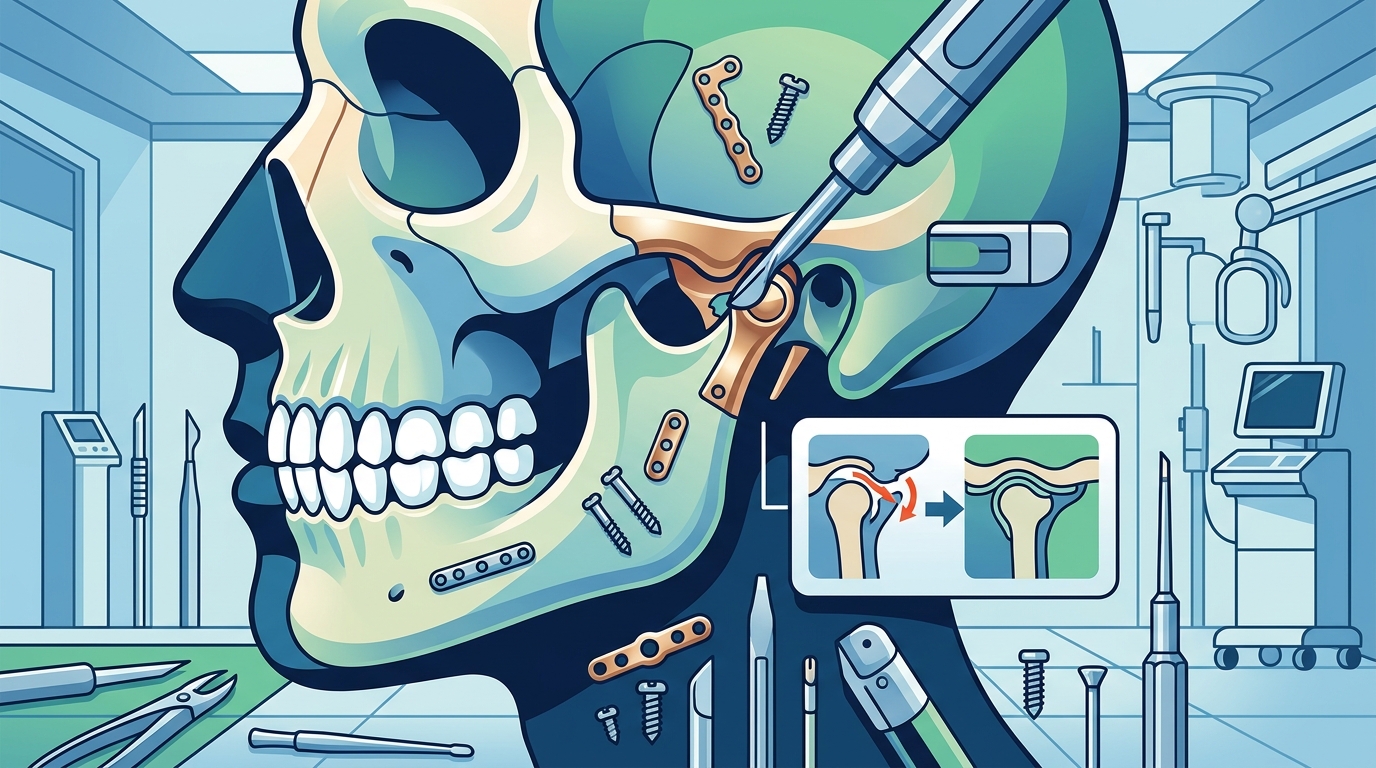
Modern maxillofacial surgery leverages precision technology to minimize tissue trauma and accelerate healing. Virtual surgical planning allows surgeons to simulate exact bone cuts and repositioning before the procedure begins. CT guided implant placement protocols translate digital models directly to the operating room. This digital workflow drastically reduces intraoperative guesswork and improves anatomical accuracy. Recent studies indicate that computer-assisted planning reduces operative time by nearly 30 percent.
Advanced instrumentation like the Medtronic Piezoelectric Saw enables precise bone cutting without damaging adjacent soft tissue. Extended pain relief protocols utilize targeted local anesthetics to manage postoperative discomfort. These technological integrations transform traditionally invasive procedures into highly controlled interventions. Patients benefit from reduced swelling, minimal scarring, and faster return to normal function.
Recovery Protocols
Postoperative Management
Recovery timelines vary based on surgical complexity and individual healing responses. Most patients require a brief hospital stay followed by a structured home recovery period. Dietary modifications restrict chewing to soft foods for the initial healing phase. Physical therapy gradually restores full range of motion and muscle strength. Clinical guidelines recommend consistent follow-up imaging to verify proper bone fusion.
Compliance with postoperative instructions directly correlates with surgical success rates. Patients must avoid strenuous activities and maintain strict oral hygiene protocols. Swelling typically peaks within the first 72 hours before gradually subsiding. Follow-up appointments monitor bite alignment and joint function throughout the healing process. Most individuals resume standard daily activities within two to three weeks.
Long-Term Outcomes
Sustained Functional Restoration
Successful jaw realignment delivers permanent structural correction for properly selected patients. Restored occlusion eliminates abnormal wear patterns on natural dentition. Joint stability improves significantly when skeletal relationships are properly established. Patients consistently report enhanced quality of life and reduced medication dependency. Longitudinal data demonstrates that surgical correction maintains stability for over a decade in most cases.
Facial aesthetics often improve alongside functional restoration when skeletal balance is achieved. Proper jaw positioning creates harmonious facial proportions and balanced muscle tone. Enhanced chewing efficiency supports better nutritional intake and digestive health. The combination of structural correction and aesthetic refinement defines modern surgical success. Patients typically experience complete resolution of chronic joint pain and mechanical dysfunction.
Comparative Treatment Options
| Intervention Type | Target Condition | Expected Duration | Recovery Timeline |
|---|---|---|---|
| Orthognathic Realignment | Skeletal malocclusion and joint displacement | 2 to 4 hours | 6 to 8 weeks |
| Arthrocentesis | Mild inflammation and joint locking | 30 to 45 minutes | 3 to 5 days |
| Joint Replacement | Severe degenerative arthritis | 3 to 5 hours | 8 to 12 weeks |
| Arthroscopy | Disc displacement without reduction | 1 to 2 hours | 1 to 2 weeks |
Key Takeaways
- Surgical correction addresses structural misalignments that conservative therapies cannot resolve.
- Virtual surgical planning and CT guided implant placement protocols ensure precise anatomical accuracy.
- Medtronic Piezoelectric Saw technology minimizes soft tissue trauma during bone cutting.
- Extended pain relief protocols utilize targeted anesthetics to manage postoperative discomfort effectively.
- Longitudinal clinical data demonstrates sustained joint stability and pain reduction for over a decade.
- Facial aesthetics and functional restoration improve simultaneously when skeletal balance is achieved.
- Dr. James Choi combines dual board certification with specialized fellowship training to deliver evidence-based outcomes.
Frequently Asked Questions
How long does jaw surgery for TMJ typically take?
Most procedures require between two and four hours depending on surgical complexity. Surgeons utilize advanced imaging to map exact bone cuts before incision. The duration varies based on whether additional procedures like bone grafting are necessary. Patients are monitored continuously throughout the operative window.
Is jaw surgery for TMJ covered by insurance?
Most major health plans classify skeletal correction as a medically necessary procedure. Documentation of failed conservative treatments typically satisfies prior authorization requirements. Our financial team assists patients in verifying coverage details before scheduling. Customized payment plans accommodate various budget constraints.
What is the success rate for TMJ surgical correction?
Clinical studies report success rates exceeding 90 percent for properly selected candidates. Long-term stability depends on strict adherence to postoperative protocols. Regular follow-up imaging verifies proper bone fusion and joint positioning. Most patients experience complete resolution of chronic joint pain.
Can jaw surgery improve facial symmetry?
Correcting skeletal imbalances directly enhances facial proportions and muscle balance. Proper jaw positioning creates harmonious aesthetic relationships between upper and lower facial thirds. Patients often notice improved profile definition alongside functional restoration. Our surgical team prioritizes both structural and aesthetic outcomes.
What technologies does Park Avenue Oral Surgery utilize for TMJ procedures?
Our practice integrates Virtual Surgical Planning and CT guided implant placement protocols. We utilize the Medtronic Piezoelectric Saw for precise bone cutting without soft tissue damage. Exparel Extended Pain Relief manages postoperative discomfort through targeted local anesthesia. Stryker Sonopet instrumentation ensures controlled bone fragmentation during complex cases.
How soon can patients return to work after surgery?
Most individuals resume sedentary work duties within two to three weeks. Physical recovery timelines depend on surgical complexity and individual healing responses. Patients must avoid strenuous activities until cleared by their surgeon. Gradual return to normal chewing functions follows complete bone fusion.
What are the risks associated with TMJ surgical intervention?
Surgical complications remain rare when performed by board certified specialists. Potential risks include temporary nerve sensitivity, infection, or hardware irritation. Our team implements rigorous sterile protocols to minimize adverse events. Comprehensive preoperative screening identifies candidates with optimal healing potential.
Schedule Your Consultation
Restoring proper jaw alignment eliminates chronic pain and restores full functional capacity. Our board certified specialists utilize advanced technology to deliver precise, minimally invasive outcomes. Patients seeking definitive treatment for temporomandibular joint dysfunction should schedule a comprehensive evaluation. Contact our office today to discuss your surgical options and begin your path toward lasting relief.