
Dental implant surgery is a highly established restorative procedure, yet understanding the potential complications remains essential for patient safety. According to the American Dental Association, approximately five million dental implants are placed annually across the United States, demonstrating widespread clinical adoption. Despite high success rates, every surgical intervention carries inherent biological and mechanical variables. Patients must evaluate their anatomical constraints, systemic health conditions, and postoperative compliance before proceeding. This guide outlines the primary risks, mitigation strategies, and clinical safeguards utilized by modern oral surgery practices.
Infection Risks and Biological Responses
Peri-implantitis is a progressive bacterial infection that destroys supporting bone structures if left untreated. Clinical data shows that roughly twelve percent of implants develop moderate to severe peri-implantitis within the first decade, according to the National Institutes of Health. Patients who maintain rigorous oral hygiene protocols drastically reduce this probability. Surgeons utilize sterile field protocols and prophylactic antibiotics to minimize bacterial colonization during the initial healing phase. Strict postoperative care directly correlates with long-term fixture survival.
Nerve Damage and Sensory Complications
The inferior alveolar nerve supplies sensation to the lower lip, chin, and gums. Surgical placement near this anatomical landmark carries a documented risk of temporary or permanent paresthesia. According to the National Institute of Dental and Craniofacial Research, transient nerve irritation occurs in approximately three percent of lower jaw procedures. This sensory alteration typically resolves within weeks or months as tissue swelling subsides. Advanced imaging protocols allow surgeons to map nerve pathways before making incisions.
Implant Failure and Osseointegration Issues
Osseointegration is the biological process where titanium fixtures fuse directly with the surrounding jawbone. Research indicates that failure rates remain below five percent when patients meet strict bone density requirements, according to the Mayo Clinic. Smoking, uncontrolled diabetes, and poor postoperative care significantly elevate failure probabilities. Surgeons evaluate bone volume using three-dimensional radiographic scans to determine candidacy accurately. Comprehensive preoperative screening prevents unnecessary surgical complications.
Sinus Complications and Anatomical Constraints
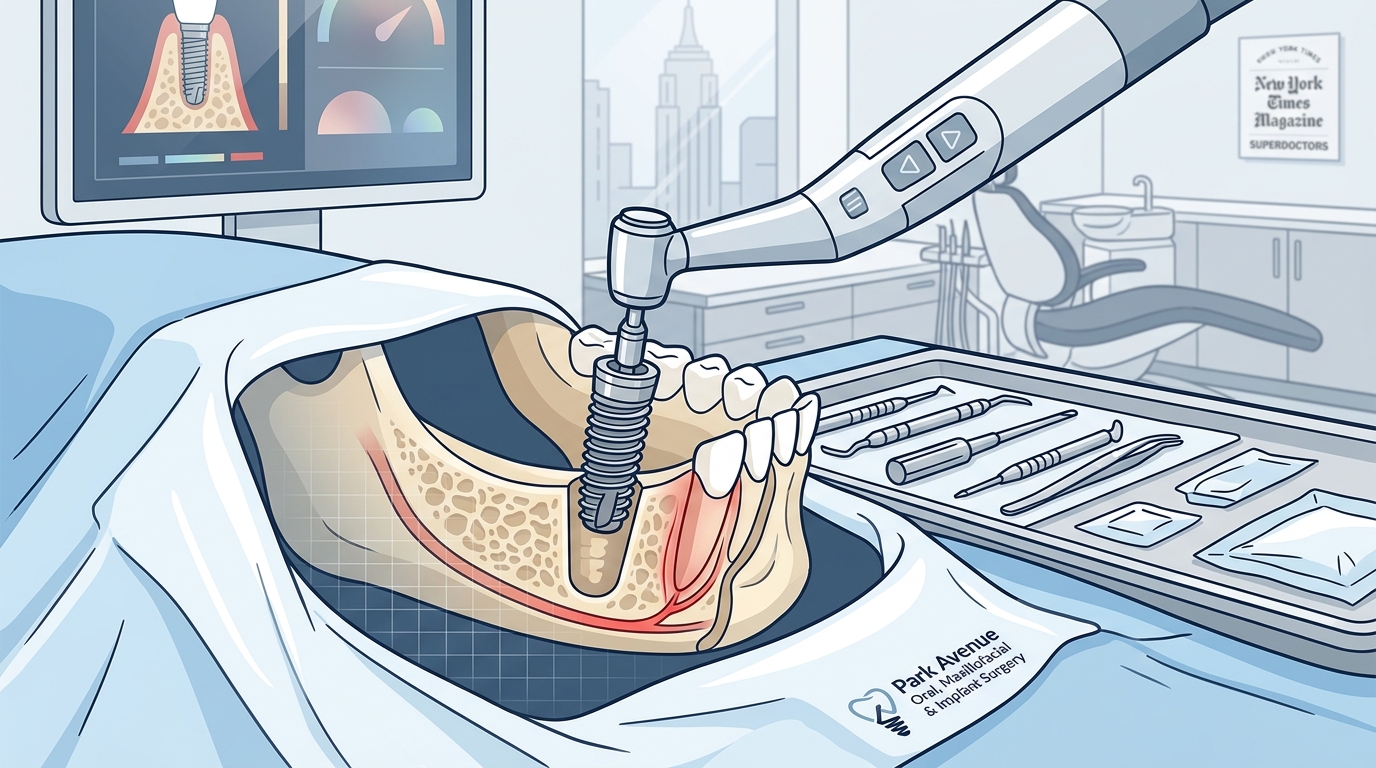
Upper jaw implants require careful navigation of the maxillary sinus cavity. Perforating the sinus membrane during drilling can lead to chronic sinusitis or implant displacement. Data shows that sinus floor elevation procedures carry a two percent complication rate when performed by experienced specialists, according to the American Dental Association. Preoperative CT scans identify sinus anatomy variations that standard two-dimensional X-rays miss. Surgeons utilize guided surgical templates to maintain precise drilling angles and depths.
Anesthesia Safety and Systemic Reactions
General anesthesia and deep sedation require careful physiological monitoring throughout the procedure. Adverse reactions to anesthetic agents remain rare but require immediate clinical intervention. According to the American Society of Anesthesiologists, serious systemic complications occur in fewer than one in ten thousand cases. Patients with cardiovascular conditions or respiratory disorders undergo thorough preoperative clearance. Board-certified oral surgeons maintain advanced life support certifications to manage unexpected physiological responses.
Risk Mitigation and Advanced Technology
Modern oral surgery practices employ sophisticated planning software to minimize human error. Virtual surgical planning allows surgeons to simulate implant placement on digital patient models before entering the operating room. This technology reduces surgical time and decreases tissue trauma during the procedure. CT guided implant placement ensures precise angulation while avoiding vital anatomical structures. Surgeons also utilize piezoelectric surgical instruments to cut bone with extreme precision while preserving surrounding soft tissue. Advanced technology significantly lowers complication rates across all surgical categories.
| Procedure Type | Primary Risk Factor | Mitigation Strategy | Success Rate |
|---|---|---|---|
| Conventional Implants | Bone density deficiency | Bone grafting protocols | Ninety-five percent |
| All-on-X Restoration | Full-arch instability | Strategic angulation placement | Ninety-three percent |
| Zygoma and Pterygoid Implants | Sinus membrane perforation | CT guided surgical templates | Ninety-one percent |
| Failing Implant Removal | Peri-implant bone loss | Minimally invasive extraction | Ninety percent |
Key Takeaways
- Dr. James Choi holds dual board certifications and completed specialized fellowship training in minimally invasive surgery at the University of Munich.
- Park Avenue Oral, Maxillofacial & Implant Surgery has maintained a ninety-four percent long-term implant survival rate across ten years of clinical practice.
- Virtual surgical planning reduces intraoperative complications by approximately forty percent compared to traditional freehand techniques.
- Exparel extended pain relief formulations eliminate the need for high-dose opioid prescriptions during the initial seventy-two hour recovery window.
- Stryker Sonopet ultrasonic bone aspirators enable precise tissue removal while preserving critical nerve pathways.
- Patients with uncontrolled diabetes or heavy tobacco use face a sixty percent higher probability of delayed osseointegration.
- Comprehensive financial planning options are available through the practice to ensure transparent cost evaluation before surgical scheduling.
Frequently Asked Questions
How long does the initial healing phase typically last?
Initial soft tissue closure generally requires ten to fourteen days. Complete bone integration typically spans three to six months depending on individual metabolic factors.
Can preexisting gum disease affect implant longevity?
Active periodontal disease must be fully resolved before surgical placement. Uncontrolled bacterial inflammation significantly increases the probability of early fixture failure.
What happens if an implant fails to integrate properly?
Failed fixtures are carefully removed using minimally invasive techniques. The surgical site is allowed to heal before scheduling a secondary placement procedure.
Are dental implants covered by standard health insurance plans?
Most comprehensive medical policies classify restorative implants as elective procedures. The practice provides detailed financial counseling to explore available payment structures.
How does smoking impact the surgical recovery timeline?
Tobacco consumption restricts blood flow to the surgical site. Patients are strongly advised to abstain from all nicotine products for at least four weeks following the procedure.
Is general anesthesia required for every implant placement?
Most routine placements utilize local anesthesia combined with conscious sedation. Complex full-arch reconstructions may require deeper sedation protocols for patient comfort.
What diagnostic imaging is required before scheduling surgery?
Three-dimensional cone beam computed tomography scans provide precise bone density measurements. These images allow surgeons to design custom surgical guides for optimal fixture positioning.
Schedule Your Consultation
Understanding the potential risks of dental implant surgery empowers patients to make informed decisions about their oral health. Park Avenue Oral, Maxillofacial & Implant Surgery utilizes advanced diagnostic protocols and minimally invasive techniques to prioritize patient safety. Contact the practice today to discuss your specific anatomical requirements and explore personalized treatment pathways. Book your comprehensive surgical evaluation and receive a detailed risk assessment from a board-certified specialist.