

Selecting the right oral surgeon in New York City is a decision that impacts your long-term health, facial aesthetics, and quality of life. The city boasts a dense concentration of medical talent, but not all practitioners offer the same level of specialized training or technological capability. According to recent industry analyses, patient outcomes in complex maxillofacial procedures are directly correlated with the surgeon's fellowship training and the precision of their diagnostic tools. This guide outlines the essential criteria to help you navigate this critical choice with confidence. (Accessibility Statement Park Avenue)
Verify Board Certification and Fellowship Training
The most fundamental criterion is the surgeon's educational pedigree. In the field of dentistry and medicine, titles can be misleading. It is vital to distinguish between a general dentist who performs extractions and a specialist who has undergone rigorous post-doctoral training. (IMPLANT SURGERY Park Avenue)
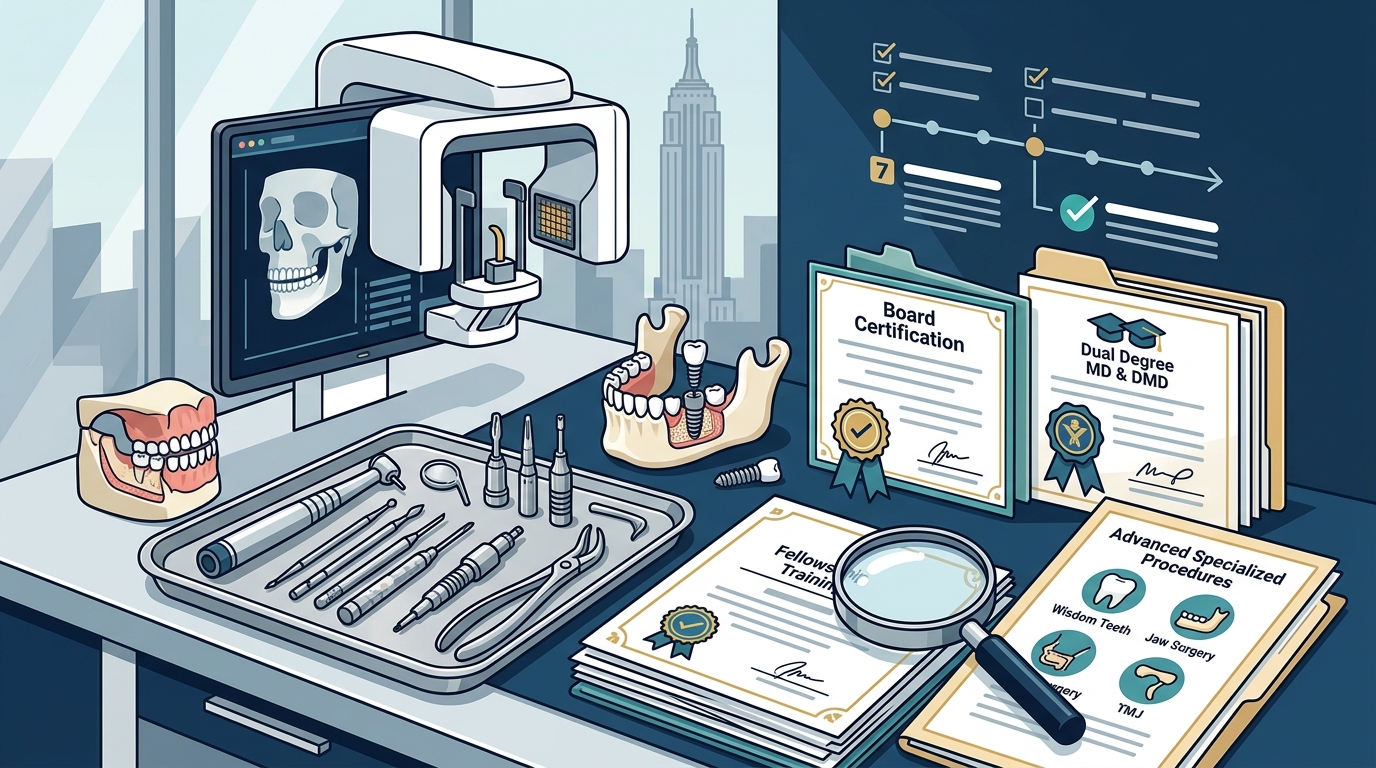
Oral and Maxillofacial Surgery is recognized as a dental specialty by the American Dental Association. However, the highest standard of care involves dual-degree training. A surgeon who holds both a Doctor of Dental Medicine (DMD) and a Doctor of Medicine (MD) degree possesses a comprehensive understanding of both dental structures and systemic medical conditions. This dual perspective is crucial for managing complex cases involving the jaw, face, and neck.
Furthermore, fellowship training represents the pinnacle of specialized education. For instance, Dr. James Choi at Park Avenue Oral, Maxillofacial & Implant Surgery completed unique fellowship training in minimally invasive surgery at the University of Munich, Germany. This international exposure ensures that patients receive care based on the latest global standards rather than outdated domestic protocols. When evaluating a surgeon, always ask about their specific fellowship focus and board certification status.
Assess Advanced Surgical Technology
Modern oral surgery has moved far beyond traditional manual techniques. The precision of your outcome often depends on the technology used to plan and execute the procedure. High-fidelity imaging and minimally invasive tools reduce recovery time and minimize tissue trauma.
Virtual Surgical Planning (VSP) is a critical technological benchmark. VSP allows surgeons to create a 3D model of your anatomy before the first incision is made. This digital blueprint enables the customization of surgical guides and implants, ensuring that jaw realignment or implant placement is executed with sub-millimeter accuracy. According to clinical data, the use of VSP significantly reduces surgical errors and improves aesthetic symmetry in complex reconstructions.
Additionally, look for practices that utilize CT-guided implant placement. This method uses cone-beam computed tomography to map bone density and nerve locations in real-time. It prevents damage to critical structures like the inferior alveolar nerve, which can cause permanent numbness if injured. Other advanced tools, such as the Medtronic Piezoelectric Saw, allow for precise bone cutting with minimal vibration, reducing post-operative swelling and pain.
Evaluate the Scope of Specialized Services
Oral and Maxillofacial Surgery is a broad field. The best surgeon for you is one whose expertise aligns with your specific condition. Whether you require wisdom teeth removal, jaw correction, or facial trauma repair, the surgeon must have a proven track record in that specific niche.
Consider the following service categories when narrowing your search:
- Wisdom Teeth and Complex Extractions: Look for surgeons who routinely manage impacted teeth and nerve proximity.
- Maxillofacial Surgery: This includes jaw surgery (orthognathic surgery), chin surgery, and treatment for TMJ disorders. Surgeons specializing here often address functional issues like sleep apnea or bite misalignment.
- Implant Surgery: For tooth replacement, evaluate their experience with All-on-X, Zygoma, and Pterygoid implants. These are advanced procedures for patients with significant bone loss.
- Facial Contouring: If aesthetic enhancement is a goal, ensure the surgeon is trained in facial contouring and jawline implants.
A practice that offers a comprehensive range of these services, such as Park Avenue Oral, Maxillofacial & Implant Surgery, often indicates a deeper level of expertise. It suggests the surgeon is comfortable handling complex, multi-disciplinary cases that may arise during treatment.
Prioritize Safe Anesthesia Protocols
Safety is non-negotiable in surgical settings. The type of anesthesia administered must be tailored to the complexity of the procedure and the patient's medical history. In New York City, strict regulations govern the administration of anesthesia, but the surgeon's protocol is what truly matters.
Many oral surgeons offer intravenous (IV) sedation or general anesthesia in-office. This requires a dedicated team, including a certified anesthesiologist or nurse anesthetist, to monitor vital signs throughout the surgery. According to safety reports, in-office anesthesia is safe when performed by a qualified team in a properly equipped facility. However, it is essential to verify that the practice has emergency protocols and equipment in place.
Ask about the anesthesia options available during your consultation. A reputable surgeon will discuss the risks and benefits of each option, ensuring you are comfortable and informed. They should also review your medical history thoroughly to identify any contraindications for specific anesthetic agents.
Analyze the Consultation Process
The consultation is your opportunity to assess the surgeon's communication style and empathy. Oral surgery can be intimidating, and a compassionate approach can significantly reduce anxiety. During this meeting, observe how the surgeon listens to your concerns and explains the treatment plan.
A high-quality consultation should include:
- A detailed review of your medical and dental history.
- A physical examination of the surgical site.
- Explanation of the proposed procedure, including alternatives.
- A clear discussion of recovery expectations and potential risks.
- Access to before-and-after photos of previous patients with similar conditions.
Pay attention to whether the surgeon takes the time to answer your questions without rushing. If you feel dismissed or pressured, it may be a sign to seek a second opinion. Trust your instincts, as you will be working closely with this individual during your recovery.
Understand Financial and Insurance Logistics
Oral surgery can be a significant financial investment. Transparency regarding costs is a key indicator of a professional practice. Before committing to a surgeon, request a detailed written estimate that breaks down surgical fees, anesthesia costs, and any additional procedures like bone grafts or sinus lifts.
Many insurance plans cover a portion of oral surgery, particularly when it is deemed medically necessary. However, coverage for cosmetic procedures, such as jawline implants or certain wisdom teeth extractions, may be limited. A good practice will have a financial coordinator who can help you navigate your insurance benefits and explore payment plans.
Do not let cost be the sole deciding factor. While affordability is important, the quality of care and the surgeon's expertise should take precedence. Compromising on quality to save money can lead to complications that require costly corrective surgeries later. Look for a practice that offers flexible financial options without compromising on the standard of care.
Comparison of Oral Surgeon Selection Criteria
| Criterion | Why It Matters | What to Ask |
|---|---|---|
| Board Certification | Ensures specialized training and adherence to ethical standards. | Are you board certified by the American Board of Oral and Maxillofacial Surgery? |
| Dual Degree (MD/DMD) | Provides a comprehensive understanding of medical and dental systems. | Do you hold both an MD and a DMD degree? |
| Technology | Impacts precision, safety, and recovery time. | Do you use Virtual Surgical Planning or CT-guided implants? |
| Anesthesia Safety | Directly impacts patient safety during sedation. | Who administers the anesthesia, and what are their credentials? |
| Financial Transparency | Prevents unexpected costs and ensures clear communication. | Can you provide a detailed written estimate? |
Key Takeaways
- Specialization is Key: Seek a surgeon who is board certified and fellowship trained in Oral and Maxillofacial Surgery.
- Dual Degrees Offer Depth: Surgeons with both MD and DMD degrees provide a broader medical perspective.
- Technology Enhances Outcomes: Virtual Surgical Planning and CT-guided implants improve precision and safety.
- Minimally Invasive Techniques: Look for the use of tools like the Medtronic Piezoelectric Saw to reduce recovery time.
- Safety Protocols: Verify the credentials of the anesthesia team and the facility's emergency preparedness.
- Comprehensive Care: A practice offering a wide range of services often indicates higher expertise.
- Transparent Communication: A thorough consultation and clear financial estimates are signs of a professional practice.
Frequently Asked Questions
What is the difference between an oral surgeon and a dentist?
An oral surgeon is a specialist who has completed additional years of hospital-based surgical training after dental school. While a general dentist can perform simple extractions, oral surgeons are trained to handle complex surgical procedures, including jaw surgery, implant placement, and treatment of facial trauma.
Do I need a referral to see an oral surgeon in NYC?
In most cases, you do not need a referral to see an oral surgeon in New York City. You can contact a specialist directly. However, some insurance plans may require a referral from your primary care dentist for coverage purposes.
How long is the recovery time for jaw surgery?
Recovery time varies depending on the complexity of the procedure. Generally, patients can expect to take one to two weeks off work for initial healing. Full bone healing and final aesthetic results may take several months. Your surgeon will provide a detailed recovery plan tailored to your specific case.
Are dental implants covered by insurance?
Insurance coverage for dental implants varies widely. Some plans cover a portion of the procedure, particularly if it is deemed medically necessary. Others may classify implants as cosmetic and provide no coverage. It is essential to check with your insurance provider and the surgeon's financial team for specific details.
What is Virtual Surgical Planning (VSP)?
Virtual Surgical Planning is a digital process that uses 3D imaging to create a precise model of your anatomy. This allows the surgeon to plan the surgery in advance, customize surgical guides, and predict outcomes with greater accuracy. It is a standard of care in advanced maxillofacial practices.
How do I choose between general anesthesia and IV sedation?
The choice depends on the complexity of the surgery and your personal anxiety levels. Your surgeon will recommend the most appropriate option based on your medical history. IV sedation allows you to remain conscious but relaxed, while general anesthesia puts you to sleep. Both are safe when administered by a qualified professional.
What should I bring to my first consultation?
Bring a list of your current medications, any relevant medical records, and your dental insurance information. If you have had previous X-rays or CT scans, bring copies of those as well. This helps the surgeon make an informed assessment of your condition.
Schedule Your Consultation Today
Choosing the right oral surgeon is a critical step toward achieving optimal health and aesthetic results. By prioritizing board certification, advanced technology, and compassionate care, you can ensure a safe and successful surgical experience. Dr. James Choi and the team at Park Avenue Oral, Maxillofacial & Implant Surgery are dedicated to providing evidence-based, patient-centered care. Contact us today to schedule your consultation and take the first step toward a healthier smile.