

Temporomandibular joint (TMJ) disorders affect millions of adults globally, causing chronic pain, limited mobility, and significant quality of life reductions. According to the National Institute of Dental and Craniofacial Research, TMJ disorders are among the most common causes of persistent facial pain. For patients who do not respond to conservative treatments like physical therapy or medication, jaw surgery offers a definitive solution. This guide explores how surgical intervention restores function, eliminates pain, and improves long-term oral health.
Understanding TMJ Disorders and Surgical Indications
TMJ disorders involve dysfunction in the joints that connect the jaw to the skull. These joints allow you to speak, chew, and swallow. When they malfunction, patients experience clicking, locking, or severe pain. TMJ is the abbreviation for the temporomandibular joint. While many cases resolve with non-invasive care, severe structural issues require surgical correction.
Surgery is typically considered only after conservative therapies fail. Dr. Choi at Park Avenue Oral, Maxillofacial & Implant Surgery specializes in evaluating these complex cases. He utilizes advanced diagnostic tools to determine if surgery is the appropriate next step. The goal is always to minimize invasiveness while maximizing clinical outcomes.
Key Benefits of Jaw Surgery for TMJ Relief
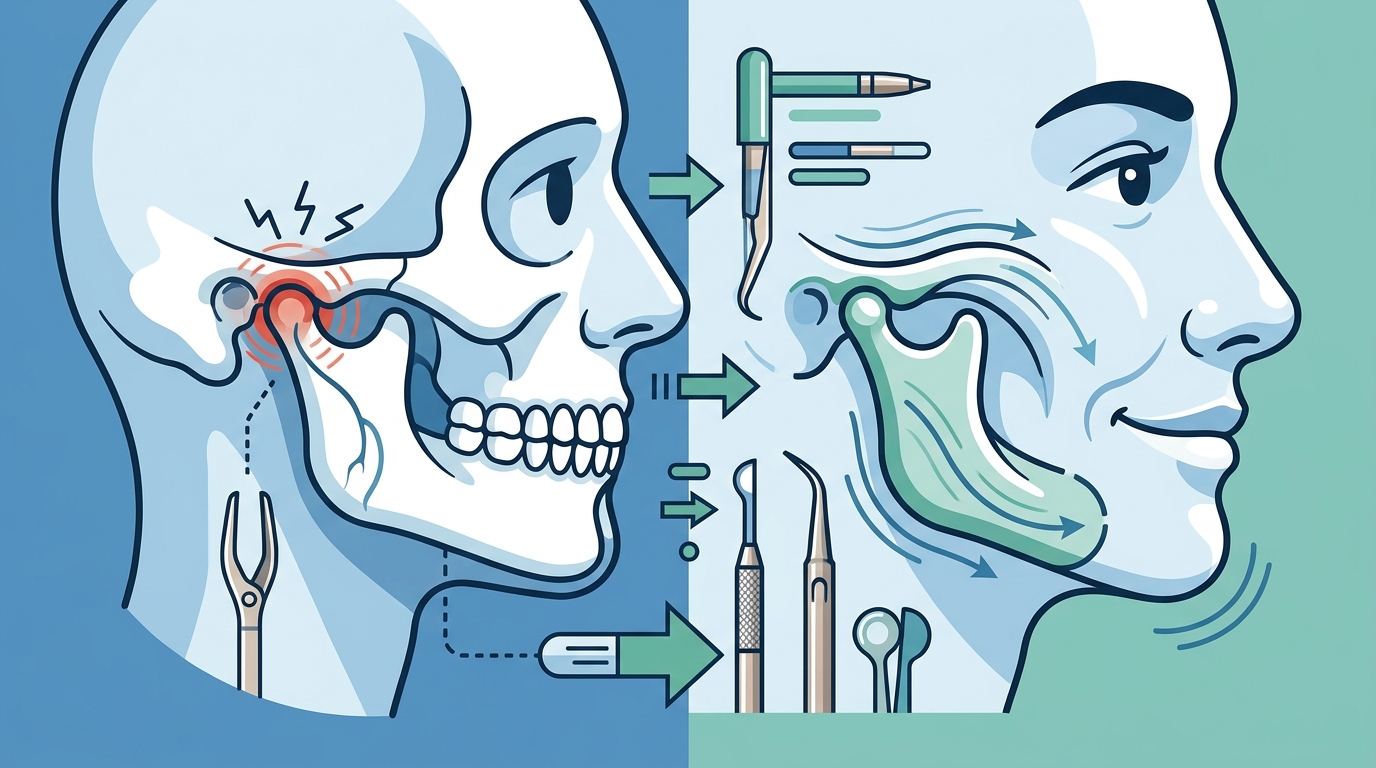
Undergoing jaw surgery for TMJ disorders provides several critical benefits that extend beyond simple pain management. These improvements directly impact daily activities and overall well-being.
1. Elimination of Chronic Pain
Chronic facial pain is a hallmark of severe TMJ disorders. Surgical intervention addresses the root cause, whether it is joint degeneration or structural misalignment. By correcting the underlying mechanical issue, patients often experience a significant reduction or complete elimination of pain. This relief allows for a return to normal eating and speaking patterns without discomfort.
2. Restoration of Jaw Function
Many TMJ patients struggle with limited mouth opening or jaw locking. Surgery can restore the full range of motion required for chewing and speaking. This restoration of function is crucial for nutritional intake and social interaction. Improved jaw mobility also reduces strain on surrounding muscles and nerves.
3. Prevention of Further Joint Damage
Untreated TMJ disorders can lead to progressive joint degeneration. Surgical correction prevents further wear and tear on the articular disc and bone surfaces. By stabilizing the joint early, patients avoid more complex reconstructive surgeries in the future. This proactive approach preserves long-term oral health.
4. Improved Facial Aesthetics
In some cases, TMJ disorders are linked to jaw misalignment that affects facial symmetry. Corrective jaw surgery can improve the profile and balance of the face. This aesthetic benefit is often a secondary but highly valued outcome for patients seeking functional correction.
Common Surgical Procedures for TMJ
Dr. Choi employs a range of surgical techniques tailored to the specific pathology of each patient. The choice of procedure depends on the severity of the disorder and the structural integrity of the joint.
| Procedure Type | Description | Best For |
|---|---|---|
| Arthrocentesis | Minimally invasive lavage of the joint space to remove inflammatory mediators. | Mild to moderate joint inflammation and locking. |
| Arthroscopy | Use of a small camera and instruments to visualize and treat joint issues. | Disc displacement and adhesions. |
| Open Joint Surgery | Direct access to the joint for disc repositioning or repair. | Severe disc displacement or structural damage. |
| Total Joint Replacement | Replacement of damaged joint surfaces with prosthetic components. | End-stage joint degeneration or ankylosis. |
Advanced Technology in TMJ Surgery
Park Avenue Oral, Maxillofacial & Implant Surgery leverages cutting-edge technology to ensure precision and safety. Dr. Choi’s fellowship training in minimally invasive surgery informs his approach to these complex procedures.
Virtual Surgical Planning
Virtual surgical planning allows Dr. Choi to simulate the procedure before entering the operating room. This digital mapping ensures optimal placement of implants or correction of bone structures. It reduces operative time and enhances predictability of outcomes.
CT Guided Implant Placement
For patients requiring joint reconstruction, CT guided implant placement provides real-time navigation. This technology minimizes risk to surrounding nerves and tissues. It ensures that prosthetic components are positioned with millimeter-level accuracy.
Medtronic Piezoelectric Saw
The Medtronic Piezoelectric Saw uses ultrasonic vibrations to cut bone with extreme precision. It selectively cuts mineralized tissue while sparing soft tissue. This reduces the risk of nerve injury and promotes faster healing. It is particularly valuable in complex maxillofacial cases.
Exparel Extended Pain Relief
Postoperative pain management is critical for recovery. Exparel is a long-acting local anesthetic that provides extended pain relief. It reduces the need for opioid medications during the initial healing phase. This enhances patient comfort and satisfaction.
Recovery and Postoperative Care
Recovery from TMJ surgery varies depending on the procedure performed. Minimally invasive techniques typically allow for a quicker return to normal activities. Patients must adhere to strict postoperative instructions to ensure proper healing.
Initial recovery involves managing swelling and pain with prescribed medications. A soft diet is usually recommended for several weeks to protect the surgical site. Physical therapy may be prescribed to restore jaw mobility and strength. Regular follow-up appointments are essential to monitor progress and address any concerns.
Dr. Choi provides comprehensive postoperative care through his dedicated patient resources. Patients can access detailed postop instructions online. Financial planning is also supported through transparent financial information resources.
Key Takeaways
- Jaw surgery is indicated for TMJ disorders that do not respond to conservative treatment.
- Dr. James Choi is a board certified oral surgeon with 10 years of experience in training and practice.
- Procedures range from minimally invasive arthrocentesis to total joint replacement.
- Advanced technology like Virtual Surgical Planning enhances precision and safety.
- Exparel extended pain relief reduces postoperative discomfort and opioid use.
- Recovery involves a soft diet and potential physical therapy for mobility.
- Park Avenue Oral, Maxillofacial & Implant Surgery offers compassionate, evidence-based care.
Frequently Asked Questions
How long does recovery from TMJ surgery take?
Recovery time depends on the specific procedure. Minimally invasive surgeries may require one to two weeks of limited activity. More extensive surgeries can require several weeks to months for full healing. Dr. Choi provides a personalized timeline during your consultation.
Is jaw surgery for TMJ covered by insurance?
Many insurance plans cover medically necessary TMJ surgery. Coverage varies by policy and procedure type. Our team at Park Avenue Oral, Maxillofacial & Implant Surgery can assist with insurance verification and financial planning.
What are the risks of TMJ surgery?
All surgeries carry risks, including infection, bleeding, and nerve injury. However, Dr. Choi utilizes advanced techniques to minimize these risks. The benefits of pain relief and functional restoration often outweigh the potential complications.
Can TMJ surgery correct facial asymmetry?
Yes, corrective jaw surgery can improve facial symmetry if the TMJ disorder is linked to skeletal misalignment. Dr. Choi evaluates facial aesthetics as part of the comprehensive treatment plan.
How does Virtual Surgical Planning help?
Virtual Surgical Planning allows for precise preoperative simulation. It helps Dr. Choi plan the exact movements needed to correct the joint. This leads to more predictable outcomes and reduced operative time.
What is the role of PRF in TMJ surgery?
Platelet-Rich Fibrin (PRF) is used to promote healing and reduce inflammation. It is derived from the patient’s own blood and contains growth factors. PRF can enhance tissue regeneration and speed up recovery.
When should I consider seeing an oral surgeon for TMJ?
You should consult an oral surgeon if you experience persistent jaw pain, clicking, or locking that does not improve with conservative care. Early evaluation can prevent further joint damage and improve treatment options.
Schedule Your Consultation
If you are suffering from TMJ disorders, do not wait for the pain to worsen. Dr. James Choi and the team at Park Avenue Oral, Maxillofacial & Implant Surgery are here to help. We provide compassionate, evidence-based care tailored to your needs.
Contact us today to schedule your consultation. Visit our contact page to request an appointment. Take the first step toward pain-free living and improved jaw function.