
Dental implants are widely regarded as the gold standard for tooth replacement, offering a permanent solution that mimics natural teeth in both function and aesthetics. However, understanding the potential complications is critical for any patient considering this procedure in New York City. According to the American Association of Oral and Maxillofacial Surgeons, while implant success rates exceed 95%, the procedure remains a surgical intervention that carries inherent biological and mechanical risks. Ignoring these potential outcomes can lead to prolonged recovery times, additional surgical interventions, and significant financial burdens. This guide details the specific risks associated with implant surgery, how Dr. James Choi mitigates them using advanced technology, and what patients in NYC should expect during their consultation.
Infection and Healing Complications
One of the most immediate risks following any surgical procedure is infection. The mouth contains a vast microbiome, making it a challenging environment for wound healing. If bacteria enter the surgical site, it can lead to localized inflammation, abscess formation, or delayed healing. Patients must adhere strictly to postoperative care instructions to minimize this risk.
Infection rates for dental implants are generally low, estimated at less than 5% in healthy patients. However, this risk increases significantly for individuals with compromised immune systems or those who smoke. Smoking restricts blood flow to the gums, drastically reducing the body's ability to fight off bacteria and heal tissue. At Park Avenue Oral, Maxillofacial & Implant Surgery, we emphasize rigorous sterilization protocols and pre-surgical antibiotic regimens to protect our patients. For more details on our safety standards, please review our Safe Anesthesia and Advanced Technology pages.
Nerve Injury and Sensory Changes
The lower jaw contains the inferior alveolar nerve, which provides sensation to the lower lip, chin, and gums. During the placement of implants in the lower jaw, there is a small risk of damaging this nerve. This can result in temporary or, in rare cases, permanent numbness, tingling, or burning sensations known as paresthesia.
Dr. Choi utilizes CT guided Implant Placement technology to map the exact location of nerves and blood vessels before surgery. This 3D imaging allows for precise planning, ensuring that implants are placed in safe zones, far from critical neural structures. This level of precision is a hallmark of our approach to Maxillofacial Surgery and Implant Surgery.
Implant Failure and Osseointegration
Osseointegration is the process by which the titanium implant fuses with the jawbone. If this fusion does not occur properly, the implant will become loose and fail. Several factors contribute to implant failure, including insufficient bone density, excessive pressure on the implant during healing, and systemic health issues like uncontrolled diabetes.
According to the National Institute of Dental and Craniofacial Research, the long-term survival of dental implants is high, but bone loss around the implant site can occur if oral hygiene is neglected. To address bone deficiency, we often recommend Bone Graft procedures prior to implant placement. This ensures a solid foundation for the implant. We also utilize PRF (Platelet-Rich Fibrin) to accelerate healing and enhance bone regeneration.
Sinus Complications in Upper Jaw Implants
Implants placed in the upper jaw, particularly in the molar and premolar regions, are close to the maxillary sinuses. If the bone height is insufficient, the implant tip may protrude into the sinus cavity. This can lead to sinusitis, chronic congestion, or infection of the sinus membrane.
To mitigate this risk, we perform a Sinus Lift procedure. This involves lifting the sinus membrane and placing bone graft material underneath to create adequate bone height. This technique is standard practice for patients requiring All-on-X Implant solutions or single-tooth replacements in the posterior maxilla. Dr. Choi’s fellowship training in minimally invasive surgery allows for precise execution of these delicate procedures.
Peri-Implantitis and Long-Term Maintenance
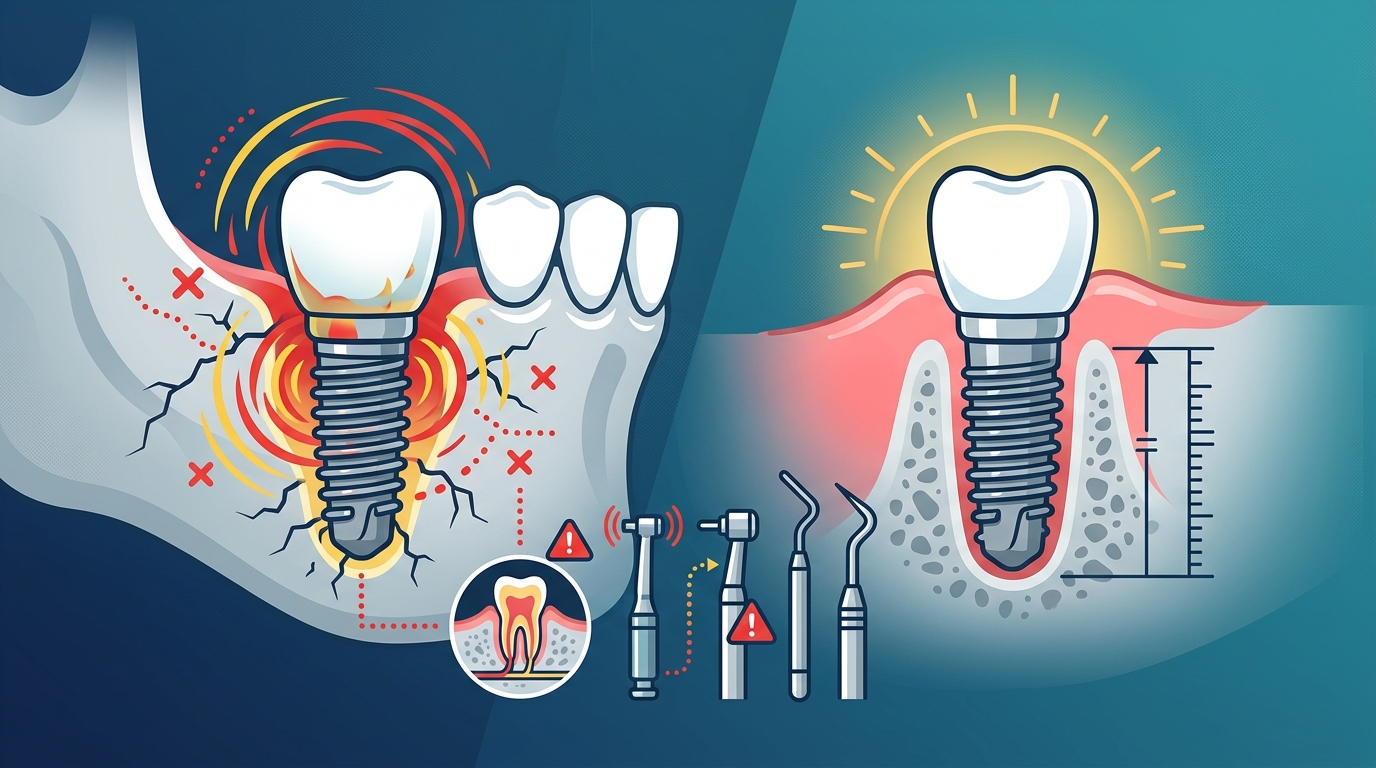
Peri-implantitis is a destructive inflammatory process affecting the soft and hard tissues around dental implants. It is analogous to periodontal disease in natural teeth. If left untreated, it leads to bone loss and eventual implant failure. The primary cause is bacterial plaque accumulation due to inadequate oral hygiene.
Prevention is key. Patients must commit to rigorous daily cleaning and regular professional cleanings. According to the American Dental Association, regular maintenance visits are crucial for the longevity of dental prosthetics. We provide detailed Postop Instructions to ensure patients understand how to care for their new implants. Our Financial Information page outlines the long-term value of investing in high-quality care that prevents costly revisions.
Anesthesia and Sedation Risks
Dental implant surgery is typically performed under local anesthesia, sometimes supplemented with sedation. While generally safe, any anesthesia carries risks, including allergic reactions, nausea, or respiratory issues. Dr. Choi is board certified and fellowship trained, ensuring that all anesthesia protocols are followed with the highest level of safety.
We utilize Exparel Extended Pain Relief to provide long-lasting postoperative pain management, reducing the need for systemic opioids. This advanced technique is part of our commitment to patient comfort and safety. For more information on our surgical protocols, visit our Meet Dr. Choi page.
Comparison of Implant Options and Risks
Understanding the different types of implants helps patients weigh the risks and benefits. The table below summarizes common implant types and their associated considerations.
| Implant Type | Description | Primary Risk Consideration | Best For |
|---|---|---|---|
| Conventional Implants | Single titanium post replacing a single tooth root. | Requires adequate bone density; risk of nerve proximity. | Single tooth replacement. |
| All-on-X Implants | Full arch restoration supported by 4-6 implants. | Complex surgery; higher initial cost; sinus risks in upper jaw. | Patients with full tooth loss. |
| Zygoma and Pterygoid Implants | Long implants anchored in the cheekbone or pterygoid plate. | Highly specialized procedure; requires expert surgical skill. | Severe bone loss in upper jaw. |
| Failing Implants | Removal and replacement of compromised implants. | Additional surgery; bone grafting often required. | Correcting previous failures. |
Key Takeaways
- Infection Risk: Low in healthy patients but increased by smoking and poor hygiene.
- Nerve Injury: Rare but serious; mitigated by 3D CT guided planning.
- Implant Failure: Often due to lack of osseointegration or peri-implantitis.
- Sinus Issues: Common in upper jaw implants; managed with sinus lift procedures.
- Long-Term Care: Peri-implantitis is preventable with rigorous oral hygiene.
- Anesthesia Safety: Board-certified surgeons ensure safe sedation protocols.
- Expertise Matters: Fellowship-trained surgeons like Dr. Choi reduce complication rates.
Frequently Asked Questions
How long does it take for dental implants to fail?
Implant failure can occur early during the healing phase or late due to peri-implantitis. Early failure is often due to poor osseointegration, while late failure is typically linked to infection or bone loss. Regular check-ups help detect issues early.
Can smoking cause dental implant failure?
Yes, smoking significantly increases the risk of implant failure. It restricts blood flow, impairs healing, and increases susceptibility to infection. We strongly advise patients to quit smoking before and after surgery.
What is peri-implantitis?
Peri-implantitis is an inflammatory condition affecting the tissues around dental implants, leading to bone loss. It is caused by bacterial plaque and can be prevented with good oral hygiene.
How does Dr. Choi prevent nerve damage?
Dr. Choi uses Virtual Surgical Planning and CT imaging to map nerve locations precisely. This allows for safe implant placement away from critical structures.
Are dental implants covered by insurance?
Coverage varies by plan. Many insurance plans cover a portion of the procedure, particularly if it is deemed medically necessary. Please review our Financial Information page for details on payment options.
What is the success rate of dental implants?
The success rate of dental implants is generally over 95%. Factors such as bone quality, patient health, and surgical expertise influence the outcome.
Do I need a bone graft for implants?
If you have experienced bone loss due to tooth extraction or periodontal disease, a Bone Graft may be necessary to provide a stable foundation for the implant.
Schedule Your Consultation
Understanding the risks of dental implant surgery is the first step toward a successful outcome. By choosing a board-certified specialist like Dr. James Choi, you ensure that your procedure is performed with the highest level of expertise and care. We invite you to schedule a consultation at our Park Avenue office to discuss your specific needs and create a personalized treatment plan. Contact us today to take the first step toward a healthier smile.