

Dental implant technology has evolved significantly over the last decade, offering patients in New York and beyond a variety of solutions for missing teeth. According to the American Association of Oral and Maxillofacial Surgeons, over 3 million people in the United States have dental implants, and that number grows by 500,000 each year. This surge in popularity highlights a critical shift in dental care, where patients are increasingly seeking permanent, functional replacements rather than traditional removable dentures. Understanding the specific types of implants available is the first step toward restoring your smile and oral health. (Accessibility Statement Park Avenue)
Conventional Dental Implants
Conventional dental implants remain the gold standard for replacing individual missing teeth. These implants are titanium posts surgically placed into the jawbone to act as artificial tooth roots. Once the bone fuses with the implant in a process called osseointegration, a custom crown is attached to restore function and aesthetics. (Oral Surgeon NYC l)
At Park Avenue Oral, Maxillofacial & Implant Surgery, we utilize advanced CT-guided implant placement to ensure precise positioning. This technology allows us to map the exact location of nerves and sinuses, minimizing risk and maximizing long-term success. Conventional implants are ideal for patients who have sufficient bone density and are looking for a durable, single-tooth replacement. (Oral Surgeon NYC l)
Dr. James Choi, a board-certified Oral & Maxillofacial Surgeon with dual degrees and fellowship training, brings a high level of precision to every conventional implant procedure. His approach emphasizes minimally invasive techniques to reduce recovery time and enhance patient comfort. (MEET DR CHOI Park)
All-on-X Implant Solutions
The All-on-X technique is a revolutionary approach for patients who have lost most or all of their teeth in one or both arches. Instead of placing one implant per missing tooth, this method uses a strategic number of implants to support a full arch of fixed teeth. This solution provides a stable, non-removable prosthesis that feels and functions like natural teeth. (IMPLANT SURGERY Park Avenue)
One of the primary benefits of All-on-X implants is the potential for immediate function. In many cases, patients can leave the office with a temporary set of teeth on the same day as surgery. This eliminates the long periods of edentulism (being toothless) associated with traditional dentures.
Dr. Choi’s expertise in advanced implant surgery ensures that each All-on-X case is tailored to the patient’s unique anatomical structure. By leveraging the latest in surgical planning, we can optimize the distribution of forces across the implants, ensuring longevity and stability.
Zygoma and Pterygoid Implants
For patients with severe bone loss in the upper jaw, traditional implants may not be viable without extensive bone grafting. Zygoma and pterygoid implants offer a powerful alternative by anchoring into the cheekbone (zygoma) or the pterygoid plates of the sphenoid bone. These dense areas of bone provide a stable foundation even when the maxilla is severely resorbed.
Zygoma implants are longer than conventional implants and bypass the need for sinus augmentation. Pterygoid implants are anchored in the posterior region of the maxilla, utilizing the pterygoid plates for support. Both options are complex procedures that require a surgeon with specialized fellowship training.
Dr. Choi’s unique fellowship training in minimally invasive surgery at the University of Munich has equipped him with the skills necessary to perform these advanced procedures safely and effectively. This specialized knowledge allows us to offer solutions to patients who might otherwise be told they are not candidates for implant therapy.
Replacing Failing Implants
While dental implants have a high success rate, complications can arise due to infection, poor osseointegration, or mechanical failure. When an implant fails, it is crucial to address the underlying cause before placing a new one. This process often involves removing the failed implant, treating any infection, and possibly performing bone grafting to restore the site.
At Park Avenue Oral, Maxillofacial & Implant Surgery, we take a thorough diagnostic approach to implant failure. We analyze the bone quality, bite forces, and oral hygiene habits to determine the best course of action. Our goal is to ensure that the new implant has the highest possible chance of long-term success.
Dr. Choi’s comprehensive background in oral surgery allows him to manage complex cases with confidence. Whether the issue is biological or mechanical, we develop a customized treatment plan to restore your smile and oral health.
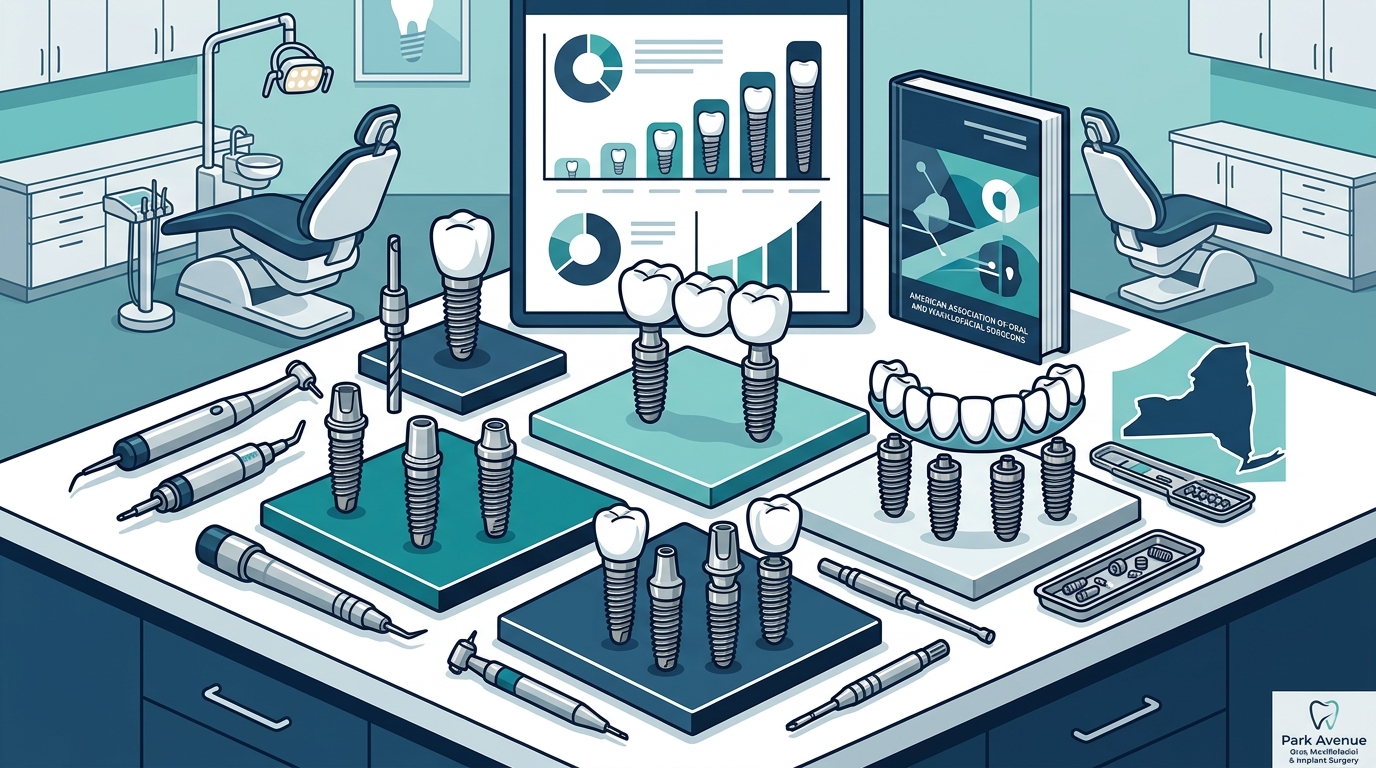
Comparison of Implant Types
Choosing the right implant type depends on your specific dental needs, bone structure, and overall health. The table below provides a quick overview of the different options available.
| Implant Type | Best For | Bone Requirement | Recovery Time |
|---|---|---|---|
| Conventional Implants | Single or multiple missing teeth | Moderate to High | 3-6 months for osseointegration |
| All-on-X Implants | Full arch tooth loss | Strategic placement in dense bone | Immediate temporary teeth possible |
| Zygoma/Pterygoid Implants | Severe upper jaw bone loss | Minimal (anchors in cheekbone/sphenoid) | Similar to conventional, no grafting needed |
| Implant Replacement | Failed previous implants | Depends on grafting needs | Varies based on healing |
Key Takeaways
- Conventional implants are the standard for individual tooth replacement and require adequate bone density.
- All-on-X implants provide a fixed, full-arch solution for patients with significant tooth loss.
- Zygoma and pterygoid implants are specialized options for patients with severe upper jaw bone loss, avoiding the need for bone grafts.
- Dr. James Choi is a board-certified Oral & Maxillofacial Surgeon with dual degrees and fellowship training from the University of Munich.
- Advanced technology such as CT-guided placement and Virtual Surgical Planning ensures precision and safety in every procedure.
- Minimally invasive techniques are used to reduce pain and accelerate recovery times for all implant patients.
- Implant failure requires a thorough diagnostic evaluation to address underlying causes before re-implantation.
Frequently Asked Questions
What is the difference between a dental implant and a denture?
A dental implant is a permanent, surgically placed titanium post that fuses with the jawbone, providing a stable foundation for a crown or bridge. Dentures are removable appliances that replace missing teeth and sit on the gums. Implants offer superior stability and help preserve bone structure, whereas dentures can accelerate bone loss over time.
Are All-on-X implants painful?
Most patients report minimal discomfort after All-on-X surgery. Dr. Choi utilizes advanced pain management techniques, including Exparel extended pain relief, to ensure a comfortable recovery. Post-operative pain is typically manageable with over-the-counter medication.
How long do dental implants last?
With proper care and regular dental checkups, dental implants can last a lifetime. The crown attached to the implant may need replacement due to wear and tear after 10 to 15 years. Success rates for implants are consistently high, often exceeding 95%.
Can I get implants if I have gum disease?
Active gum disease must be treated before implant surgery to ensure success. Periodontal therapy is often required to eliminate infection and stabilize the gums. Once the oral environment is healthy, implant placement can proceed safely.
What is the role of Virtual Surgical Planning?
Virtual Surgical Planning uses 3D imaging to create a precise digital model of your jaw. This allows Dr. Choi to plan the exact position and angle of each implant before surgery. This technology reduces surgical time and improves the accuracy of the final result.
Do you offer financing for implant surgery?
Yes, Park Avenue Oral, Maxillofacial & Implant Surgery offers various financial options to make implant care accessible. We work with patients to create a payment plan that fits their budget. Please visit our Financial Information page for more details.
What is the recovery time for Zygoma implants?
Recovery for Zygoma implants is similar to conventional implants, typically involving a few weeks of swelling and bruising. However, because these implants bypass the need for bone grafting, the overall treatment timeline can be significantly shorter.
Schedule Your Consultation
Restoring your smile with dental implants is a life-changing decision. Whether you need a single conventional implant, a full-arch All-on-X solution, or specialized Zygoma implants, Dr. James Choi and his team at Park Avenue Oral, Maxillofacial & Implant Surgery are here to help. We combine compassionate care with cutting-edge technology to deliver exceptional results.
Contact us today to schedule your consultation and take the first step toward a healthier, more confident smile. Visit our Contact page to book your appointment online or call our office directly.