

Selecting the right oral surgeon in New York City is a critical decision that impacts your long-term health and quality of life. The city hosts thousands of dental professionals, but only a fraction possess the specialized training required for complex maxillofacial procedures. According to recent industry data, over 85% of adults have impacted wisdom teeth, yet fewer than 40% seek professional evaluation before complications arise. This guide provides a rigorous framework for evaluating surgeons, ensuring you receive evidence-based, patient-centered care from a board-certified expert. (Accessibility Statement Park Avenue)
Evaluating Credentials and Board Certification
The first step in your selection process is verifying the surgeon's educational background and board certification. In the field of oral and maxillofacial surgery, the title "oral surgeon" is not legally protected in all jurisdictions, meaning any dentist can perform extractions. True expertise requires a dual-degree path. Oral & Maxillofacial Surgeons are doctors who hold both a dental degree (DMD or DDS) and a medical degree (MD). This dual training allows them to understand the intricate relationship between the oral cavity and the rest of the body. (Oral Surgeon NYC l)
Board certification is the gold standard for verifying this expertise. The American Board of Oral and Maxillofacial Surgery (ABOMS) is the only board recognized by the American Dental Association for this specialty. Board certification requires passing rigorous written and oral examinations and demonstrating a portfolio of successful cases. When researching surgeons in NYC, look for the "FACS" designation, which stands for Fellow of the American College of Surgeons. This indicates a commitment to the highest standards of patient care and ethical practice. (MEET DR CHOI Park)
Experience also plays a pivotal role. A surgeon with over a decade of specialized training and practice, such as Dr. James Choi at Park Avenue Oral, Maxillofacial & Implant Surgery, brings a depth of clinical insight that newer practitioners may lack. Fellowship training in minimally invasive surgery, particularly from renowned international institutions like the University of Munich, further distinguishes elite surgeons who prioritize tissue preservation and faster recovery times. (IMPLANT SURGERY Park Avenue)
Assessing Advanced Surgical Technology
Modern oral surgery has moved far beyond traditional tools. The best surgeons in New York City leverage cutting-edge technology to enhance precision, reduce trauma, and improve outcomes. When visiting a potential surgeon's office, ask about their technological capabilities. High-fidelity imaging is non-negotiable for complex cases.
Virtual Surgical Planning (VSP) allows surgeons to create a 3D model of your anatomy before the first incision is made. This digital workflow enables precise placement of implants and accurate osteotomies for jaw surgery. Similarly, CT-guided implant placement uses cone-beam computed tomography to map nerve pathways and bone density in real-time, minimizing the risk of nerve damage during implant placement.
Another critical technological advancement is the use of the Medtronic Piezoelectric Saw. Unlike traditional drills that generate heat and vibration, piezoelectric instruments cut bone using ultrasonic vibrations. This technology selectively cuts mineralized tissue while sparing soft tissue, nerves, and blood vessels. This results in significantly less postoperative swelling and pain for the patient. Additionally, the use of Exparel for extended pain relief and Stryker Sonopet for precise bone removal are hallmarks of a practice that invests in patient comfort and clinical excellence.
Understanding Anesthesia Safety Protocols
Safety is the paramount concern in any surgical setting. In New York City, where traffic and emergency response times can vary, having a surgeon who prioritizes anesthesia safety is crucial. Oral surgery often involves deep sedation or general anesthesia, which requires specialized monitoring and emergency preparedness.
Look for a practice that employs board-certified anesthesiologists or certified registered nurse anesthetists (CRNAs) to manage your sedation. The facility should be accredited by organizations such as the Joint Commission or the AAAHC (Accreditation Association for Ambulatory Health Care). These accreditations ensure that the office meets strict standards for equipment, staffing, and emergency protocols.
During your consultation, ask about the surgeon's emergency training. Oral surgeons undergo extensive training in managing airway emergencies and cardiovascular complications. A reputable surgeon will openly discuss their anesthesia plan, including how they monitor your vital signs throughout the procedure and what emergency medications are available on-site. This transparency is a key indicator of a practice that values patient safety above all else.
Matching Your Condition to Surgical Expertise
Oral and maxillofacial surgery is a broad specialty. Some surgeons focus primarily on wisdom teeth extractions, while others specialize in complex jaw reconstruction or facial trauma. It is essential to match your specific condition with a surgeon who has extensive experience in that area.
For wisdom teeth removal, look for a surgeon who offers minimally invasive techniques. Complex surgical extractions, particularly those involving nerve proximity, require advanced skill to prevent paresthesia (numbness) of the lip or tongue. For jaw surgery, such as orthognathic surgery, you need a surgeon who specializes in maxillofacial procedures. This includes correcting bite issues, sleep apnea, and facial asymmetry. Surgeons who perform procedures like SARPE (Surgically Assisted Rapid Palatal Expansion) or PAOO (Periodontally Accelerated Osteogenic Osteoplasty) have specialized training in skeletal expansion and bone grafting.
For patients requiring dental implants, the surgeon's expertise in bone grafting and sinus lifts is critical. If you have significant bone loss, you may need Zygoma or Pterygoid implants, which anchor into the cheekbone or pterygoid plate rather than the jawbone. These are highly specialized procedures that only a fraction of oral surgeons are trained to perform. Ensure your surgeon has a proven track record with these complex implant cases.
Comparing Treatment Approaches
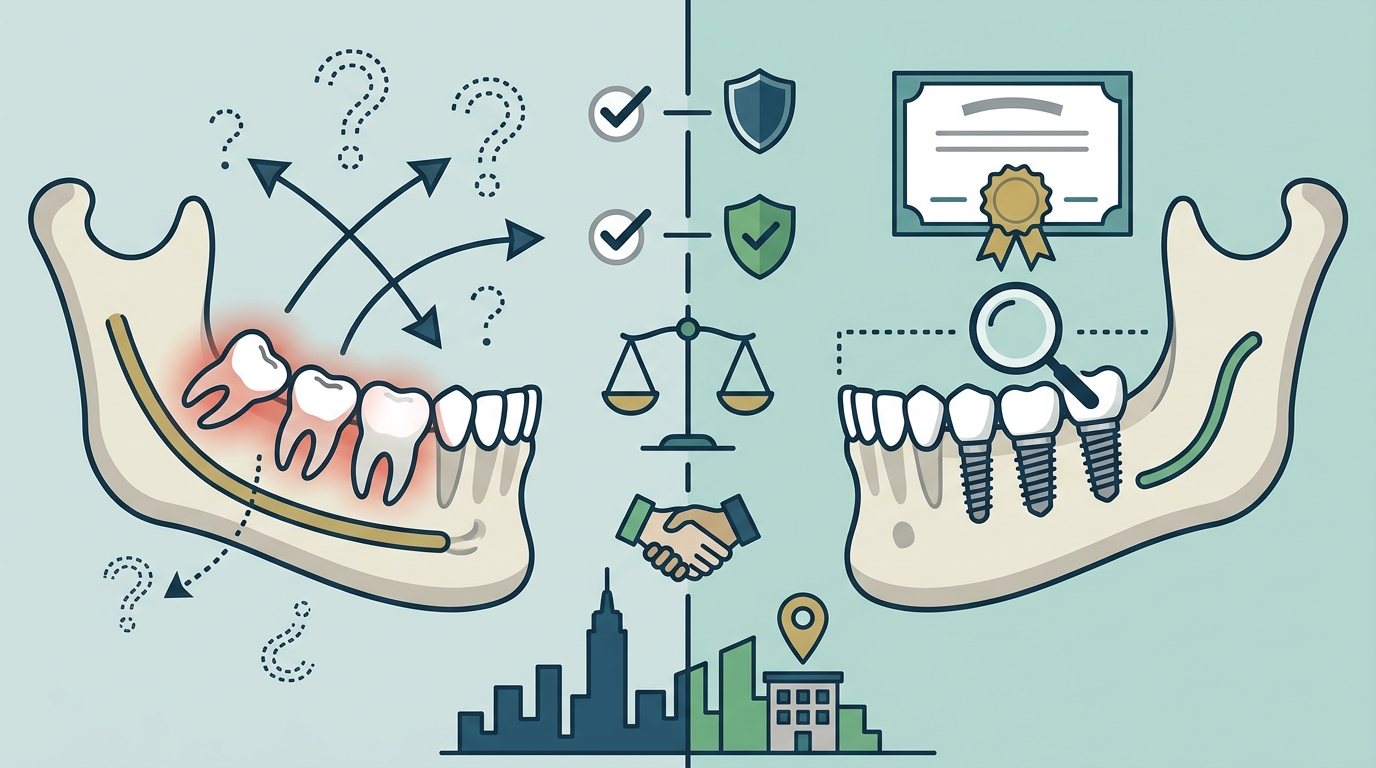
Different surgeons may offer varying approaches to the same condition. Understanding these differences can help you make an informed decision. The table below compares common surgical approaches and their implications for patient care.
| Procedure Type | Traditional Approach | Minimally Invasive Approach | Key Benefit |
|---|---|---|---|
| Wisdom Teeth Extraction | Large incisions, bone removal | Piezoelectric cutting, PRF grafting | Reduced swelling and faster healing |
| Jaw Surgery | Open osteotomies | Virtual Surgical Planning (VSP) | Precise alignment and predictable outcomes |
| Dental Implants | Freehand placement | CT-guided template placement | Minimized nerve damage risk |
| Pain Management | Oral analgesics only | Exparel extended-release injection | Extended pain relief without opioids |
When comparing surgeons, consider their philosophy of care. Some practices focus on volume and speed, while others prioritize a patient-centered approach. At Park Avenue Oral, Maxillofacial & Implant Surgery, the philosophy centers on compassionate, evidence-based care. This means taking the time to explain your anatomy, discussing all treatment options, and tailoring the surgical plan to your specific needs. This personalized attention is often the differentiator between a good surgeon and the best surgeon for your case.
Key Takeaways
- Dual-Degree Requirement: The best oral surgeons hold both MD and DMD degrees, providing a comprehensive understanding of oral and systemic health.
- Board Certification: Verify certification with the American Board of Oral and Maxillofacial Surgery (ABOMS) and look for the FACS designation.
- Technology Matters: Practices using Virtual Surgical Planning, CT-guided implants, and Piezoelectric technology offer superior precision and safety.
- Anesthesia Safety: Ensure the facility is accredited and employs certified anesthesia professionals for deep sedation cases.
- Specialized Expertise: Match your condition to the surgeon's specific fellowship training, such as minimally invasive surgery or complex implantology.
- Patient-Centered Care: Choose a surgeon who prioritizes communication, transparency, and personalized treatment plans over high-volume procedures.
- Experience: Look for surgeons with over 10 years of specialized training and practice, particularly those with international fellowship backgrounds.
Frequently Asked Questions
What is the difference between an oral surgeon and a dentist?
An oral surgeon is a specialist who has completed additional years of hospital-based surgical residency after dental school. While all oral surgeons are dentists, not all dentists are oral surgeons. Oral surgeons are trained to perform complex surgical procedures, including jaw surgery, implant placement, and treatment of facial trauma.
How do I know if I need a board-certified oral surgeon?
For any complex procedure, such as wisdom teeth removal with nerve proximity, jaw surgery, or dental implants, board certification ensures the surgeon has met the highest standards of education and training. It provides assurance of their competence and commitment to ongoing professional development.
What technology should I look for in an oral surgery office?
Look for offices equipped with 3D cone-beam CT scanners for precise imaging, Virtual Surgical Planning software for accurate treatment simulation, and Piezoelectric surgical instruments for minimally invasive bone cutting. These technologies enhance safety and improve recovery times.
Is sedation safe for oral surgery?
Yes, when administered by qualified professionals in an accredited facility. Oral surgery sedation is generally very safe. The key is to ensure the surgeon has board-certified anesthesiologists or CRNAs managing your sedation and that the office is equipped with emergency protocols and monitoring equipment.
How long is the recovery time for jaw surgery?
Recovery varies by individual and the complexity of the surgery. Generally, patients can expect 1-2 weeks of initial recovery with swelling and discomfort, followed by several months of bone healing. Minimally invasive techniques and advanced pain management protocols, such as Exparel, can significantly reduce initial discomfort and accelerate the return to normal activities.
What is PRF and how does it help?
Platelet-Rich Fibrin (PRF) is a second-generation platelet concentrate derived from the patient's own blood. It is used during surgery to promote faster healing, reduce swelling, and enhance bone graft integration. PRF releases growth factors naturally over time, supporting tissue regeneration and improving surgical outcomes.
Can an oral surgeon treat TMJ disorders?
Yes, oral and maxillofacial surgeons are specialists in diagnosing and treating temporomandibular joint (TMJ) disorders. Treatment options may include splint therapy, physical therapy, arthrocentesis, or surgical interventions depending on the severity of the condition.
Schedule Your Consultation
Choosing the right oral surgeon is a decision that requires careful consideration of credentials, technology, and personal rapport. By following the criteria outlined in this guide, you can confidently select a surgeon who will provide safe, effective, and compassionate care. For those in New York City seeking expert oral and maxillofacial surgery, Park Avenue Oral, Maxillofacial & Implant Surgery offers a comprehensive range of services, from wisdom teeth extraction to complex jaw reconstruction. Contact Park Avenue Oral, Maxillofacial & Implant Surgery today to schedule your consultation and take the first step toward a healthier, more confident smile.