
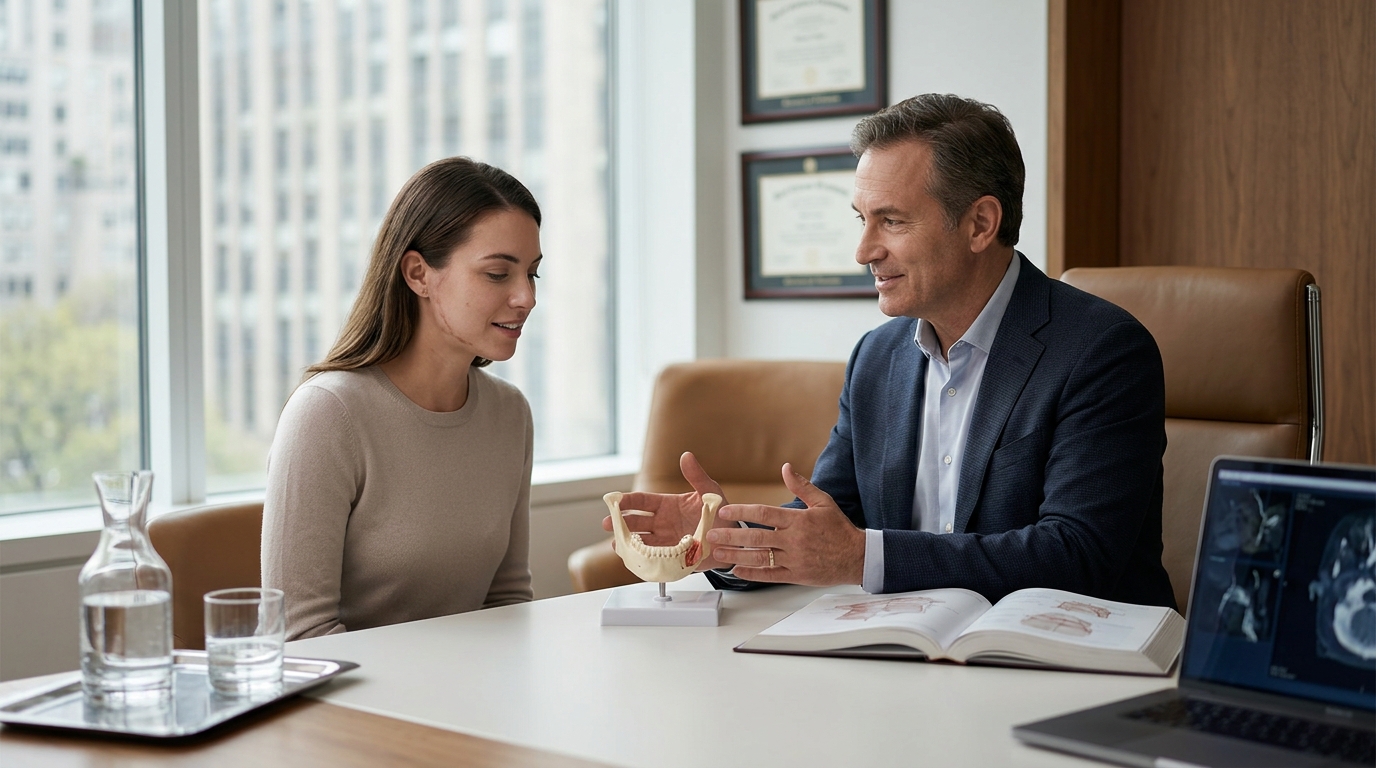
Severe facial trauma can permanently alter your appearance and function if not addressed with precision. According to the American Association of Oral and Maxillofacial Surgeons, millions of facial injuries occur annually in the United States, with the mandible and maxilla being the most commonly fractured sites. Immediate and accurate reconstruction is critical to restore chewing ability, speech clarity, and facial symmetry. This guide outlines the definitive surgical pathways available for jaw injury recovery. (Accessibility Statement Park Avenue)
Understanding Jaw Injury Types
Jaw injuries, medically classified as maxillofacial trauma, range from simple fractures to complex compound breaks involving soft tissue damage. The mandible, or lower jaw, is the most frequently fractured bone in the face due to its prominent position. The maxilla, or upper jaw, is often involved in high-impact accidents such as motor vehicle collisions or sports injuries. (Oral Surgeon NYC l)
Facial reconstruction is the process of restoring the structural integrity and aesthetic appearance of the face after such trauma. It is not merely cosmetic but functional, ensuring that the temporomandibular joint (TMJ) operates correctly and that the airway remains unobstructed. Delayed treatment can lead to malocclusion, chronic pain, and irreversible nerve damage.
At Park Avenue Oral, Maxillofacial & Implant Surgery, we specialize in diagnosing these complex injuries using advanced imaging. Early intervention is the single most important factor in achieving a successful reconstruction. Our board-certified surgeons utilize evidence-based protocols to stabilize the jaw and prepare for definitive repair.
Surgical Intervention Options
The choice of reconstruction method depends entirely on the severity of the fracture, the patient's overall health, and the specific anatomical structures involved. Below is a comparative analysis of the primary surgical interventions.
| Procedure | Best For | Key Benefit |
|---|---|---|
| Open Reduction Internal Fixation (ORIF) | Complex mandibular and maxillary fractures | Stable fixation allowing early function |
| Closed Reduction | Simple, non-displaced fractures | Minimally invasive, no external incisions |
| Orthognathic Surgery | Post-traumatic malocclusion | Corrects bite alignment and symmetry |
| Bone Grafting | Significant bone loss or defects | Restores structural volume and support |
Open Reduction Internal Fixation (ORIF)
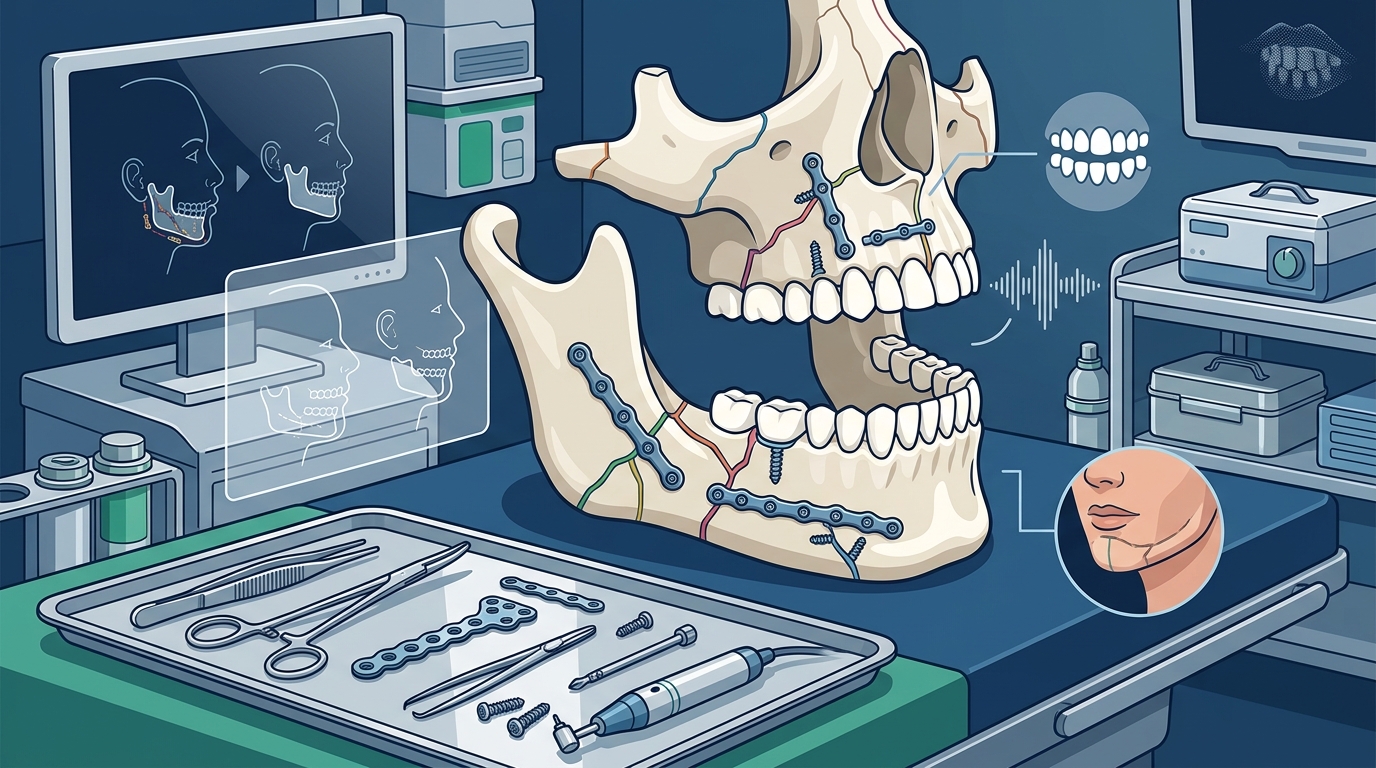
ORIF is the gold standard for complex jaw fractures. This procedure involves making incisions inside the mouth or along natural skin creases to access the fracture site. Titanium plates and screws are used to stabilize the bone fragments in their correct anatomical position. This method allows for rigid fixation, which promotes faster healing and reduces the need for prolonged jaw wiring.
The precision of ORIF is enhanced by Virtual Surgical Planning. This technology allows surgeons to simulate the surgery beforehand, ensuring that the plates are pre-contoured to fit the patient's unique anatomy. This reduces operative time and minimizes tissue trauma.
Closed Reduction and Maxillomandibular Fixation
In cases where the fracture lines are simple and the bone fragments can be aligned manually, closed reduction may be sufficient. This technique involves wiring the jaws together (maxillomandibular fixation) to hold the bones in place while they heal. While less invasive, this method requires a longer recovery period with a liquid diet and carries a higher risk of joint stiffness.
Advanced Technology in Reconstruction
Modern maxillofacial surgery relies heavily on technology to minimize invasiveness and maximize clinical outcomes. At Park Avenue, we leverage several proprietary and industry-leading technologies.
CT Guided Implant Placement and Planning
For patients with significant bone loss following trauma, CT guided implant placement may be necessary later in the recovery process. However, even in acute trauma, CT scans are vital for mapping the fracture lines and identifying nearby nerves. This data is integrated into our surgical planning software to avoid nerve damage during reconstruction.
Medtronic Piezoelectric Surgery
One of the most significant advancements in facial reconstruction is the use of the Medtronic Piezoelectric Saw. This ultrasonic device cuts bone with extreme precision while sparing soft tissue, nerves, and blood vessels. In facial reconstruction, where nerves like the inferior alveolar nerve are critical for lip sensation, this technology drastically reduces the risk of permanent numbness.
Exparel Extended Pain Relief
Post-operative pain is a major concern for facial trauma patients. We utilize Exparel, a long-acting local anesthetic, to provide extended pain relief. This reduces the reliance on opioids during the critical first 72 hours of recovery, leading to a smoother and more comfortable healing process.
Recovery and Long-Term Outcomes
Recovery from facial reconstruction is a phased process. The initial two weeks involve managing swelling and pain, followed by a period of restricted diet and oral hygiene maintenance. Full bone consolidation typically takes six to eight weeks, but functional recovery can continue for several months.
According to clinical data, patients who undergo minimally invasive techniques like piezoelectric surgery report significantly lower post-operative swelling and faster return to normal activities compared to traditional osteotomy methods. The integration of PRF (Platelet-Rich Fibrin) in our bone grafting protocols further accelerates tissue regeneration.
Long-term outcomes depend heavily on the precision of the initial reduction. Malocclusion, or a misaligned bite, is the most common complication if the bones heal in the wrong position. This is why choosing a fellowship-trained surgeon like Dr. James Choi is essential. His specialized training in minimally invasive surgery ensures that the aesthetic and functional goals are met simultaneously.
Key Takeaways
- Immediate Evaluation is Critical: Delayed treatment of jaw fractures can lead to permanent malocclusion and chronic pain.
- ORIF is the Standard for Complexity: Open Reduction Internal Fixation provides the most stable results for complex fractures.
- Piezoelectric Technology Reduces Risk: Ultrasonic bone cutting spares nerves and soft tissue, reducing numbness risks.
- Virtual Planning Enhances Precision: Pre-surgical simulation allows for custom plate fitting and reduced operative time.
- Minimally Invasive Options Exist: Techniques like Exparel anesthesia and PRF grafting improve recovery comfort and speed.
- Fellowship Training Matters: Surgeons with specialized fellowship training in facial plastic surgery offer superior aesthetic outcomes.
- Long-Term Follow-Up is Necessary: Regular monitoring ensures proper bone healing and bite alignment.
Frequently Asked Questions
How long does it take to heal from jaw surgery?
Initial healing takes about two weeks, but full bone consolidation typically requires six to eight weeks. Complete functional recovery may take several months depending on the complexity of the reconstruction.
Will my face look the same after reconstruction?
With modern techniques like virtual surgical planning and piezoelectric surgery, the goal is to restore your pre-injury appearance. Dr. Choi specializes in facial contouring to ensure symmetry is maintained.
What is the difference between ORIF and closed reduction?
ORIF uses plates and screws to stabilize the bone, allowing for earlier function. Closed reduction involves wiring the jaws together and is reserved for simpler, non-displaced fractures.
Is facial reconstruction covered by insurance?
Most insurance plans cover the medical necessity of facial reconstruction after trauma. Our financial team can help verify your benefits and navigate the claims process.
What are the risks of jaw fracture surgery?
Risks include infection, nerve damage, and malocclusion. However, using advanced imaging and minimally invasive tools significantly reduces these risks compared to traditional methods.
Can I eat normally after surgery?
Initially, you will need a liquid or soft diet. As healing progresses, you can gradually reintroduce solid foods under the guidance of your surgeon.
How does PRF help in recovery?
PRF (Platelet-Rich Fibrin) is derived from your own blood and contains growth factors that accelerate tissue healing and reduce inflammation when applied to the surgical site.
Schedule Your Consultation
If you or a loved one has suffered a jaw injury, timely and expert care is essential for the best possible outcome. Dr. James Choi and the team at Park Avenue Oral, Maxillofacial & Implant Surgery are dedicated to providing compassionate, evidence-based care. We utilize the latest technology to ensure your recovery is as smooth and successful as possible.
Do not wait to address facial trauma. Contact our office today to schedule a comprehensive evaluation and discuss your reconstruction options. Visit our contact page to book your appointment or call us directly for urgent inquiries.