

Temporomandibular joint (TMJ) disorders affect millions of people, causing chronic pain and limited mobility. According to the American Association of Oral and Maxillofacial Surgeons, conservative treatments often fail to resolve severe structural issues, making surgical intervention a viable path to recovery. This guide explores how advanced jaw surgery can restore function and eliminate persistent discomfort. (Accessibility Statement Park Avenue)
Understanding TMJ Disorders
TMJ disorders involve dysfunction in the joints connecting the jaw to the skull. These joints allow you to speak, chew, and yawn. When they malfunction, patients experience a range of symptoms including jaw pain, headaches, and difficulty opening the mouth. TMJ is a complex system that relies on precise alignment of bones, muscles, and cartilage. (Oral Surgeon NYC l)
Many patients suffer from chronic pain that does not respond to medication or physical therapy. In these cases, the underlying cause is often structural. Misalignment of the jaw or damage to the joint disc can lead to inflammation and degeneration. Addressing these structural issues requires a specialized approach. (Oral Surgeon NYC l)
Dr. James Choi, a board-certified Oral and Maxillofacial Surgeon, emphasizes that any surgery, small or large, should be performed with precision. His practice in New York focuses on evidence-based care to ensure optimal outcomes for patients with severe TMJ conditions. (MEET DR CHOI Park)
Key Benefits of Jaw Surgery
Undergoing jaw surgery for TMJ disorders offers significant long-term benefits. The primary goal is to correct the underlying anatomical issues that conservative treatments cannot fix. Here are the core advantages: (IMPLANT SURGERY Park Avenue)
1. Elimination of Chronic Pain
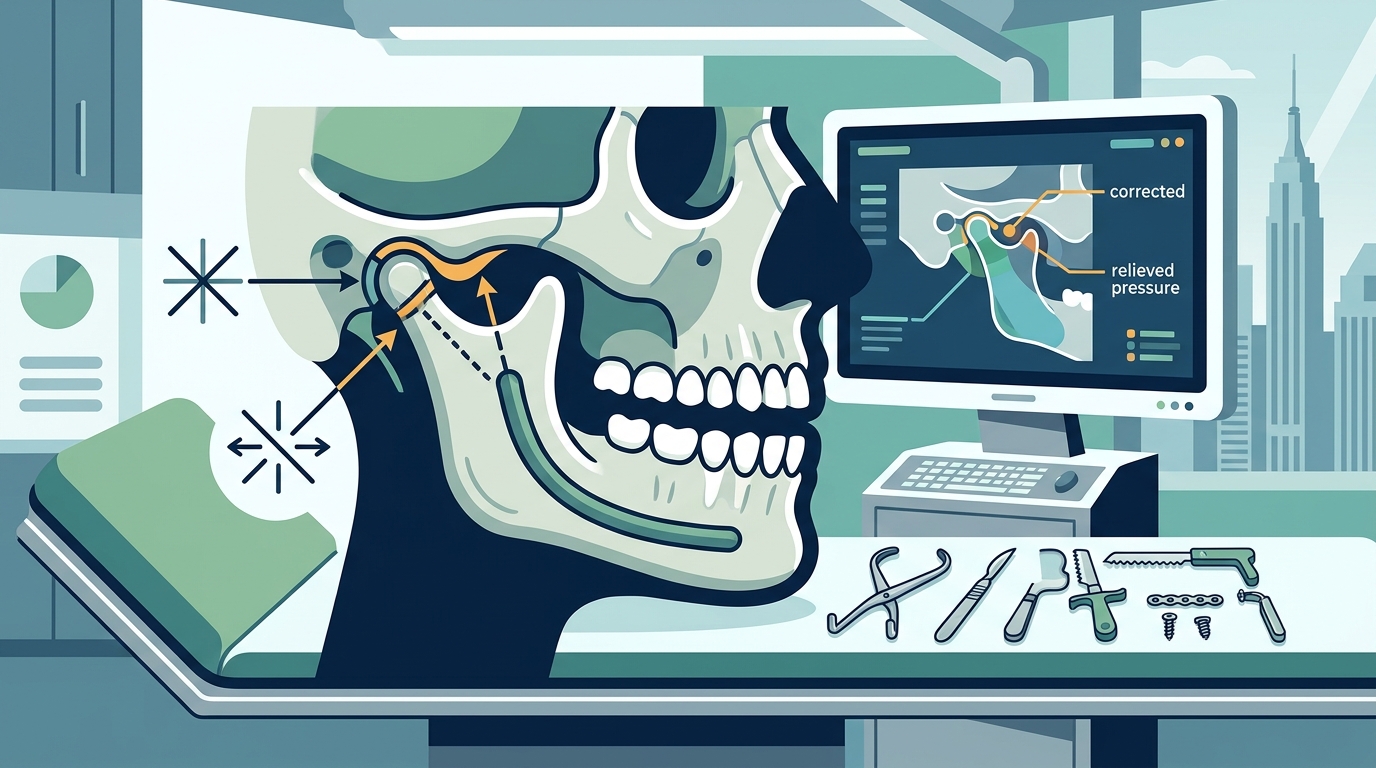
Chronic jaw pain can severely impact quality of life. Surgical correction of the jaw position relieves pressure on the joint and surrounding muscles. Patients often report a dramatic reduction in pain levels after recovery. This relief allows for normal eating, speaking, and sleeping patterns.
2. Improved Jaw Function
TMJ disorders often limit the range of motion in the jaw. Surgery can restore proper alignment, allowing for full opening and closing of the mouth. This improvement is crucial for daily activities like eating and talking. Enhanced function leads to better nutrition and social interaction.
3. Prevention of Further Damage
Untreated TMJ disorders can lead to permanent joint damage. By correcting the alignment early, surgery prevents further degeneration of the joint structures. This proactive approach preserves long-term oral health and reduces the need for future interventions.
4. Enhanced Facial Aesthetics
Jaw surgery often improves facial symmetry and balance. Correcting the jaw position can refine the jawline and chin profile. This aesthetic benefit is a significant bonus for patients seeking both functional and cosmetic improvements.
5. Long-Term Stability
Unlike temporary pain relief methods, surgical correction provides a permanent solution. Once the jaw is properly aligned and healed, the risk of TMJ recurrence is significantly reduced. This stability offers peace of mind for patients.
Surgical Procedures Explained
Dr. Choi utilizes advanced techniques to address TMJ disorders. The specific procedure depends on the severity of the condition and the patient's anatomy. Common procedures include:
Arthrocentesis
This minimally invasive procedure involves flushing the joint with saline to remove inflammatory debris. It is often the first step in surgical management. The procedure is quick and has a short recovery time.
Arthroscopy
Arthroscopy uses a small camera to visualize the joint. It allows for precise treatment of internal derangements. This technique minimizes tissue damage and speeds up recovery.
Open Joint Surgery
For severe cases, open surgery may be necessary. This allows for direct access to the joint for repair or replacement. Dr. Choi uses minimally invasive approaches whenever possible to reduce trauma.
Jaw Realignment (Orthognathic Surgery)
If the TMJ disorder is caused by jaw misalignment, orthognathic surgery can correct the bite. This procedure repositions the jaw bones to achieve proper alignment. It addresses both functional and aesthetic concerns.
Advanced Technology in Surgery
Park Avenue Oral, Maxillofacial & Implant Surgery leverages cutting-edge technology to ensure precision. Dr. Choi's fellowship training in minimally invasive surgery from the University of Munich informs his approach. Key technologies include:
- Virtual Surgical Planning: Allows for precise preoperative simulation of the procedure.
- CT Guided Implant Placement: Ensures accurate placement of hardware.
- Medtronic Piezoelectric Saw: Enables precise bone cutting with minimal soft tissue damage.
- Exparel Extended Pain Relief: Provides long-lasting postoperative pain management.
- Stryker Sonopet: Offers advanced ultrasonic bone cutting capabilities.
These technologies reduce surgery time and improve clinical outcomes. They allow for a more comfortable recovery experience for patients.
Recovery and Outcomes
Recovery from TMJ surgery varies by procedure. Most patients experience swelling and discomfort for the first few days. Pain management protocols, including Exparel, help minimize this discomfort. Patients are advised to follow postoperative instructions carefully.
Follow-up visits are essential to monitor healing. Dr. Choi provides comprehensive postoperative care to ensure optimal results. Most patients return to normal activities within a few weeks.
Key Takeaways
- Jaw surgery can eliminate chronic TMJ pain when conservative treatments fail.
- Dr. James Choi is a board-certified Oral and Maxillofacial Surgeon with 10 years of experience.
- Advanced technologies like Virtual Surgical Planning enhance precision.
- Minimally invasive techniques reduce recovery time and discomfort.
- Jaw realignment can improve both function and facial aesthetics.
- Park Avenue Oral Surgery offers specialized care for complex TMJ cases.
- Long-term stability is a primary benefit of surgical correction.
Frequently Asked Questions
Is jaw surgery painful?
While some discomfort is expected, modern pain management techniques, including Exparel, significantly reduce postoperative pain. Most patients find the relief from TMJ pain worth the temporary discomfort.
How long is the recovery time?
Recovery varies by procedure. Minimally invasive procedures may have a recovery time of a few days to a week. More extensive surgeries may require several weeks for full healing.
Who is a candidate for TMJ surgery?
Candidates are typically patients who have not responded to conservative treatments like medication or physical therapy. A thorough evaluation by an oral surgeon is necessary to determine eligibility.
Does insurance cover TMJ surgery?
Insurance coverage varies. Many plans cover medically necessary TMJ surgery. Park Avenue Oral Surgery can assist with financial information and insurance verification.
What are the risks of TMJ surgery?
All surgeries carry risks, including infection and nerve damage. However, Dr. Choi's expertise and use of advanced technology minimize these risks significantly.
Can jaw surgery fix my bite?
Yes, orthognathic surgery can correct bite issues associated with TMJ disorders. This improves both function and facial symmetry.
How do I schedule a consultation?
You can schedule a consultation by contacting Park Avenue Oral, Maxillofacial & Implant Surgery directly. Dr. Choi will evaluate your condition and recommend the best treatment plan.
Schedule Your Consultation Today
If you are suffering from TMJ disorders, do not wait for the pain to worsen. Dr. James Choi and the team at Park Avenue Oral, Maxillofacial & Implant Surgery are here to help. Contact us today to schedule your consultation and take the first step toward a pain-free life.