

Facial harmony relies heavily on the structural balance of the lower face. Recent clinical data indicates that over 60% of patients seeking orthognathic correction also desire aesthetic refinement of their jawline and chin profile. This dual focus on function and form defines modern maxillofacial surgery. Patients in New York City are increasingly looking for specialists who can address both breathing issues and facial contouring in a single, coordinated surgical plan. The goal is not just to fix a bite, but to create a balanced, natural-looking profile that enhances overall facial aesthetics.
Understanding the Role of Jaw Surgery in Aesthetics
Jaw surgery, medically known as orthognathic surgery, is often misunderstood as purely functional. While it corrects malocclusion and improves breathing, its impact on facial aesthetics is profound. Jaw surgery is a surgical procedure that repositions the upper and lower jaws to correct skeletal discrepancies. When the jawbones are misaligned, it can cause the chin to appear recessed or the lower face to look overly long or short.
By realigning these bones, surgeons can significantly improve the profile view. A protruding lower jaw, or prognathism, can be reduced to create a softer, more balanced look. Conversely, a recessed chin can be advanced to provide better definition. This structural change is the foundation of facial aesthetics. It creates a canvas that allows for further refinements, such as chin augmentation or neck contouring.
The psychological impact of these changes is significant. Patients often report increased confidence after their surgery. The improvement in facial symmetry is not just cosmetic. It is a restoration of natural balance. This holistic approach to facial structure is what distinguishes a true specialist from a general practitioner.
Choosing the Right Specialist in NYC
New York City is home to many medical professionals, but finding a specialist who combines surgical precision with an artistic eye is rare. A qualified specialist must be board-certified in Oral and Maxillofacial Surgery. This certification ensures rigorous training in both the medical and surgical aspects of the face and neck.
Look for a surgeon who offers dual degrees, such as an MD and a DMD. This combination provides a deeper understanding of both medical pathology and dental occlusion. Dual-degreed surgeons are trained to bridge the gap between dental alignment and skeletal structure. They understand how the teeth fit into the jawbones, which is critical for achieving both functional and aesthetic goals.
Experience in minimally invasive techniques is another key factor. Traditional surgery involves large incisions and longer recovery times. Modern specialists use advanced tools to minimize tissue trauma. This results in less swelling and faster healing. Patients should review before-and-after photos of previous jawline implant and chin surgery cases to assess the surgeon's aesthetic style.
Additionally, consider the surgeon's approach to patient care. A compassionate, evidence-based approach ensures that your concerns are heard and addressed. The Park Avenue Difference emphasizes patient-centered care, ensuring that every step of the journey is clear and supportive. You can learn more about their philosophy by visiting the About Us page.
Common Procedures for Facial Contouring
Facial aesthetics are achieved through a combination of procedures. The specific plan depends on your unique skeletal structure and soft tissue profile. Below is a summary of common interventions used to enhance jawline aesthetics.
| Procedure | Primary Aesthetic Goal | Best For |
|---|---|---|
| Orthognathic Jaw Surgery | Realigning the bite and profile | Severe overbite or underbite |
| Chin Surgery (Genioplasty) | Advancing or reducing chin projection | Recessed or weak chin |
| Jawline Implant | Adding width and definition to the jaw | Narrow or undefined jawline |
| Facial Contouring | Smoothing bone edges and angles | Boxy or square jaw appearance |
Each procedure requires precise planning. Virtual Surgical Planning (VSP) is often used to simulate the outcome. This technology allows the surgeon and patient to visualize the changes before surgery begins. It reduces uncertainty and sets realistic expectations. You can explore the advanced technology used in these procedures to understand how precision is achieved.
Technology Advantages in Modern Surgery
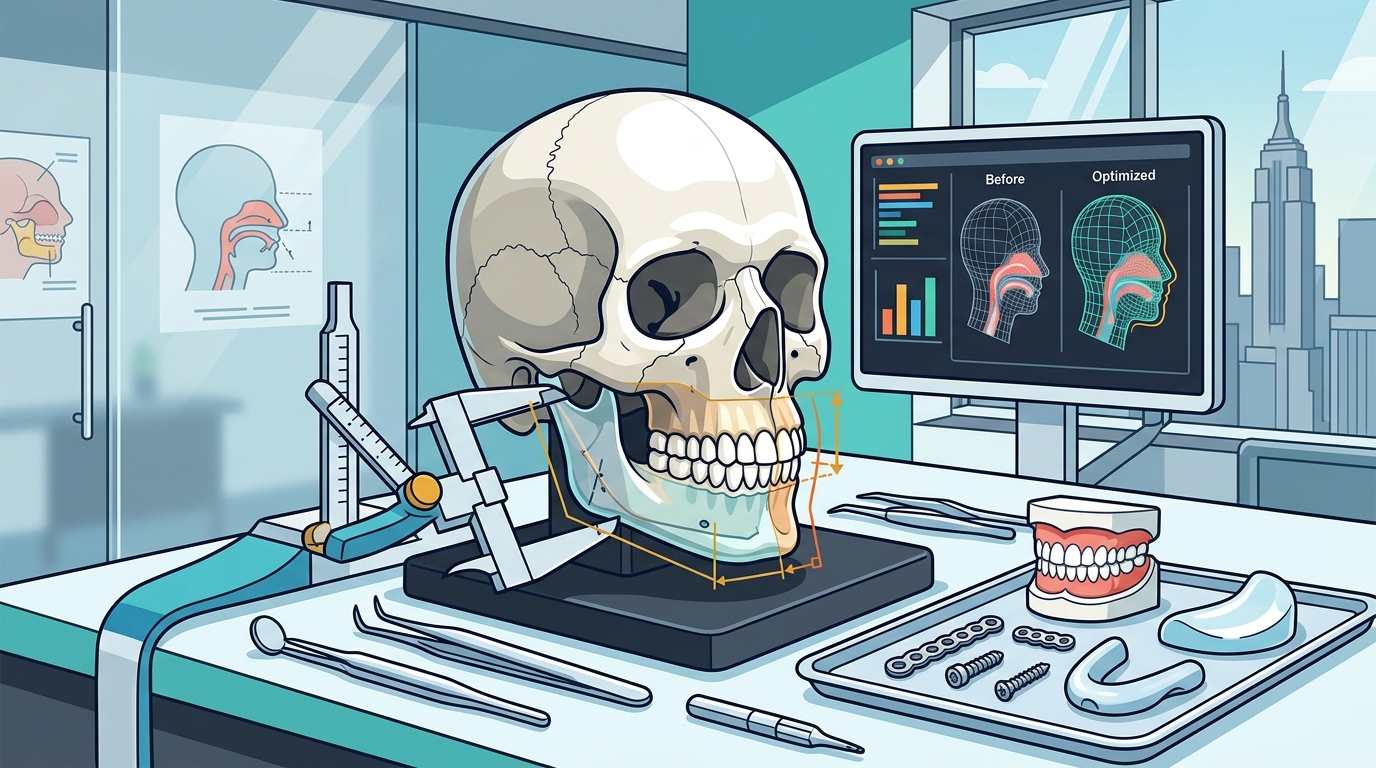
Modern maxillofacial surgery relies heavily on digital innovation. The integration of 3D imaging and computer-guided surgery has revolutionized the field. Virtual Surgical Planning is a digital workflow that creates a 3D model of the patient's anatomy for pre-surgical simulation. This allows for the fabrication of custom surgical guides that ensure the bones are moved to the exact planned position.
Another critical advancement is the use of piezoelectric surgery. This technique uses ultrasonic waves to cut bone while sparing soft tissue. It is particularly useful in maxillofacial surgery where nerves and blood vessels are nearby. The result is reduced bleeding and less postoperative pain. Patients benefit from a smoother recovery process.
Pain management has also improved significantly. The use of Exparel, a long-acting local anesthetic, provides extended pain relief after surgery. This reduces the need for opioid medications. Combined with the expertise of a fellowship-trained surgeon, patients experience a more comfortable healing journey. Dr. Choi’s training in minimally invasive surgery in Munich, Germany, brings these European standards to New York City.
Recovery and Long-Term Outcomes
Recovery from jaw surgery is a gradual process. The first week typically involves significant swelling and bruising. Patients must adhere to a liquid or soft food diet during this time. However, the aesthetic improvements become visible as the swelling subsides. Most patients see their final results within six to twelve months.
Long-term outcomes are generally stable and permanent. The repositioned bones heal in their new position, providing a lasting change to the facial structure. Proper postoperative care is essential. Patients must follow the postoperative instructions provided by their surgeon to ensure optimal healing.
Financial considerations are also important. Many insurance plans cover the functional aspects of jaw surgery. Aesthetic components, such as chin implants, may be considered cosmetic and require separate financing. Park Avenue Oral, Maxillofacial & Implant Surgery offers transparent financial information to help patients plan their treatment.
Key Takeaways
- Jaw surgery corrects skeletal imbalances that affect both function and facial aesthetics.
- Board-certified, dual-degreed specialists offer the highest level of expertise in NYC.
- Procedures include orthognathic surgery, chin augmentation, and jawline implants.
- Virtual Surgical Planning ensures precise and predictable surgical outcomes.
- Minimally invasive techniques reduce recovery time and postoperative pain.
- Dr. James Choi brings fellowship-trained expertise from the University of Munich.
- Long-term results are stable, with final aesthetics visible after swelling resolves.
Frequently Asked Questions
What is the difference between jaw surgery and chin surgery?
Jaw surgery repositions the entire upper or lower jawbone to correct bite issues and profile. Chin surgery, or genioplasty, modifies only the chin bone to enhance projection. They are often performed together for optimal facial balance.
How long is the recovery period for jawline contouring?
Initial swelling subsides within two to three weeks. However, complete healing and final aesthetic results can take six to twelve months. Most patients return to work within two to three weeks.
Is jaw surgery covered by insurance?
Insurance often covers the functional benefits of jaw surgery, such as improved breathing and chewing. Aesthetic components like jawline implants may be classified as cosmetic and require out-of-pocket payment or financing.
What is Virtual Surgical Planning?
Virtual Surgical Planning is a digital process that creates a 3D model of your face. It allows the surgeon to simulate the surgery and create custom guides for precise bone repositioning.
How do I find a qualified oral surgeon in NYC?
Look for a surgeon who is board-certified and has fellowship training. Review their before-and-after photos and read patient testimonials. Dr. Choi’s profile highlights his extensive training and experience.
What are the risks of facial contouring surgery?
Risks include infection, bleeding, and nerve injury. However, these risks are minimized with an experienced surgeon and proper postoperative care. Discuss all potential risks during your consultation.
Can jaw surgery improve my breathing?
Yes, correcting a misaligned jaw can open the airway and improve breathing. This is a primary functional benefit of orthognathic surgery, alongside aesthetic improvements.
Schedule Your Consultation
Transforming your facial aesthetics requires a trusted partner. Dr. James Choi and the team at Park Avenue Oral, Maxillofacial & Implant Surgery are dedicated to providing compassionate, evidence-based care. Whether you are seeking jaw surgery, chin augmentation, or dental implants, we are here to help you achieve your goals.
Take the first step toward a balanced, confident smile. Contact us today to schedule your private consultation. Our team will guide you through the process, from initial planning to final recovery. Visit our Your Visit page to learn more about our patient experience.