

Dental implant technology has evolved significantly over the last decade, offering patients a wide array of restorative options tailored to their specific bone density, budget, and aesthetic goals. According to the American Association of Oral and Maxillofacial Surgeons, dental implants are the standard of care for tooth replacement due to their ability to preserve jawbone structure and provide long-term durability. Understanding the distinct categories of implants is crucial for making an informed decision about your oral health. This guide explores the primary types of dental implants available today, including conventional single-tooth replacements, full-arch solutions, and specialized techniques for patients with limited bone volume.
Conventional Dental Implants
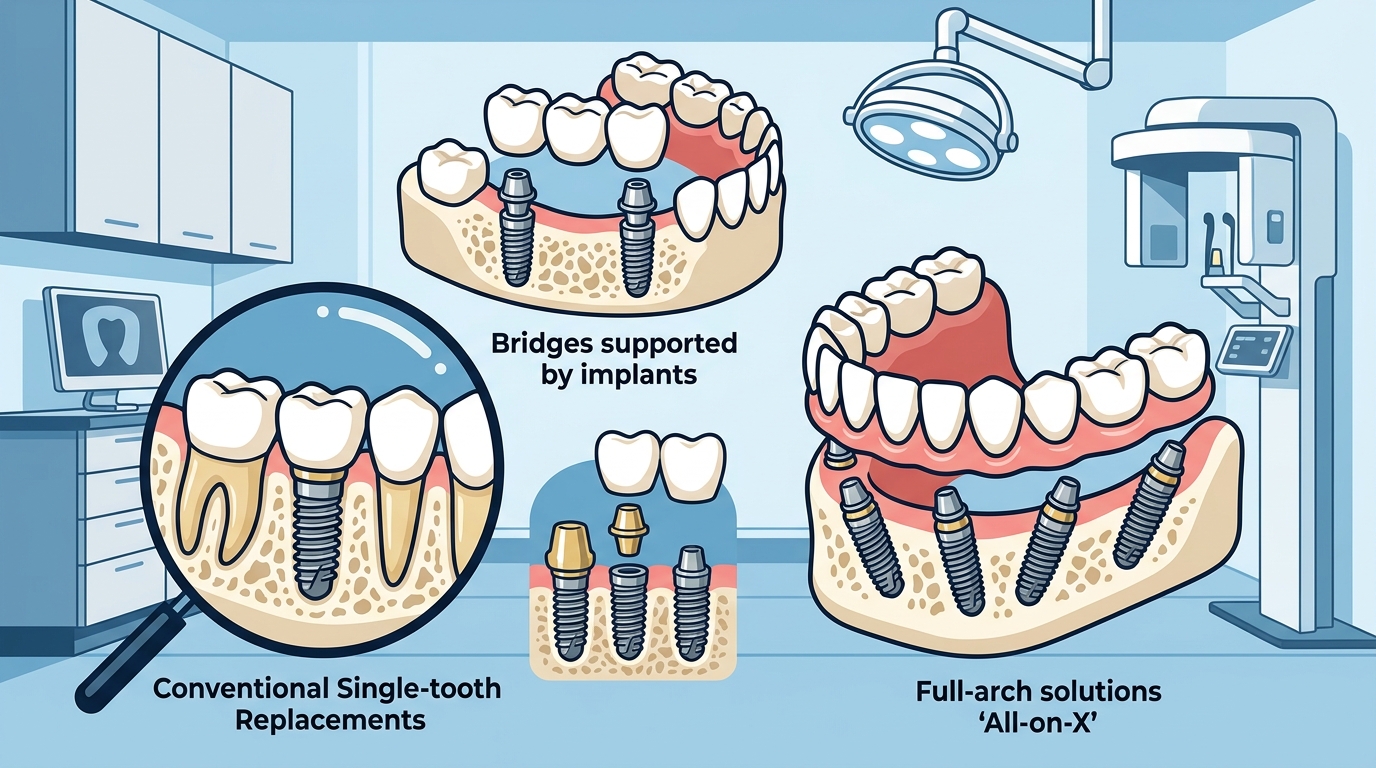
Conventional dental implants remain the most widely recognized and utilized form of tooth replacement. These implants typically consist of a titanium or zirconia post that is surgically placed into the jawbone to act as an artificial root. Once the implant integrates with the bone through a process called osseointegration, an abutment and crown are attached to complete the restoration.
This method is ideal for patients who have sufficient bone density and healthy gums. The procedure usually involves a healing period of three to six months to ensure the implant fuses securely with the jawbone. Conventional implants are highly durable and can last a lifetime with proper care. For more details on the surgical process, you can review our Implant Surgery protocols.
Single-Tooth vs. Multiple Implants
Conventional implants can be used to replace a single missing tooth or multiple teeth. When replacing several adjacent teeth, dentists may place implants at strategic intervals and attach a bridge to the abutments. This approach avoids the need for a removable partial denture and provides a fixed, stable solution. Patients interested in learning more about the initial consultation process should visit our Your Visit page.
All-on-X Implant Solutions
The All-on-X technique is a revolutionary approach for patients who have lost most or all of their teeth in one or both arches. Instead of placing one implant per missing tooth, this method utilizes a strategic number of implants, typically four to six, to support a full arch of fixed teeth. This approach maximizes the use of available bone and often eliminates the need for bone grafting.
All-on-X implants provide immediate function, meaning patients can often leave the office with a temporary set of teeth on the same day as surgery. This procedure is particularly beneficial for those seeking a permanent alternative to traditional dentures. The stability of All-on-X implants allows for a more natural chewing experience and improved speech clarity. Learn more about our specialized Maxillofacial Surgery services to understand how full-arch restoration works.
Immediate Load vs. Staged Loading
Depending on the patient's bone quality, the implants may be loaded immediately with a temporary prosthesis or allowed to heal before the final restoration is placed. Dr. Choi evaluates each case individually to determine the safest and most effective loading protocol. This decision is critical for ensuring long-term success and patient comfort. You can explore our Financial Information to understand the investment involved in full-arch restoration.
Zygoma and Pterygoid Implants
For patients with severe bone loss in the upper jaw, traditional implants may not be viable due to insufficient bone volume. Zygoma and pterygoid implants offer a solution by anchoring into the cheekbone (zygoma) or the pterygoid plate at the back of the skull. These implants bypass the maxillary sinus entirely, providing a secure foundation for full-arch restoration without the need for complex bone grafting procedures.
Zygoma implants are longer than conventional implants and are specifically designed for cases where the upper jaw has atrophied significantly. Pterygoid implants utilize the dense bone at the back of the maxilla, offering a stable anchor point. These advanced techniques are highly specialized and require significant expertise. Dr. Choi’s fellowship training includes advanced Advanced Technology applications, ensuring precise placement of these complex implants. For a deeper dive into our surgical capabilities, visit our Meet Dr. Choi page.
Benefits of Zygoma Implants
The primary benefit of zygoma implants is the avoidance of sinus lift surgeries and bone grafts, which can extend treatment time and increase recovery periods. Patients often experience faster healing and immediate restoration of function. This method is particularly effective for patients who have undergone radiation therapy to the head and neck area, where bone grafting is contraindicated. The durability of zygoma implants is supported by extensive clinical data showing high success rates over time.
Minimally Invasive Techniques
Modern oral surgery emphasizes minimally invasive approaches to reduce patient discomfort and accelerate recovery. Park Avenue Oral, Maxillofacial & Implant Surgery utilizes state-of-the-art tools such as the Medtronic Piezoelectric Saw and Stryker Sonopet. These devices allow for precise bone cutting with minimal trauma to surrounding soft tissues and nerves.
Virtual Surgical Planning is another key component of our minimally invasive protocol. This technology allows Dr. Choi to plan the implant placement digitally before the surgery, ensuring optimal positioning and avoiding critical anatomical structures. CT guided Implant Placement further enhances precision by providing real-time navigation during the procedure. These technologies reduce the risk of complications and improve overall outcomes. For more information on our safety protocols, please review our Safe Anesthesia guidelines.
Pain Management and Recovery
Minimally invasive surgery is often combined with advanced pain management techniques, such as Exparel Extended Pain Relief. This local anesthetic provides prolonged pain control after surgery, reducing the need for opioid medications. Patients typically experience less swelling and bruising compared to traditional surgical methods. The combination of precise technology and effective pain management ensures a smoother recovery process. You can read our detailed Postop Instructions to prepare for your procedure.
Implant Type Comparison
Choosing the right implant type depends on several factors, including bone density, overall health, and personal preferences. The following table summarizes the key characteristics of the main implant types discussed.
| Implant Type | Best For | Bone Requirement | Recovery Time | Cost Range |
|---|---|---|---|---|
| Conventional Implant | Single or few missing teeth | Moderate to High | 3-6 months | $$$ |
| All-on-X | Full arch tooth loss | Moderate | Immediate function | $$$$ |
| Zygoma Implant | Severe upper jaw bone loss | Low (uses cheekbone) | Immediate function | $$$$ |
| Pterygoid Implant | Severe upper jaw bone loss | Low (uses pterygoid plate) | Immediate function | $$$$ |
Each option has distinct advantages and considerations. Conventional implants are versatile and widely used, while All-on-X and zygoma implants offer solutions for complex cases. The choice should be made in consultation with an experienced oral surgeon who can evaluate your specific anatomical needs. For a comprehensive overview of our services, visit our Home page.
Key Takeaways
- Conventional dental implants are the gold standard for replacing single or multiple missing teeth with high long-term success rates.
- All-on-X implants provide a fixed, full-arch solution for patients with extensive tooth loss, often allowing for immediate function.
- Zygoma and pterygoid implants are specialized options for patients with severe upper jaw bone loss, bypassing the need for bone grafts.
- Minimally invasive techniques, including virtual surgical planning and CT guided placement, enhance precision and reduce recovery time.
- Dr. James Choi, MD, DMD, FACS, is a board-certified oral surgeon with fellowship training in minimally invasive surgery from the University of Munich.
- Park Avenue Oral, Maxillofacial & Implant Surgery offers comprehensive care, from initial consultation to postoperative support.
- Advanced pain management options like Exparel Extended Pain Relief help ensure patient comfort during recovery.
Frequently Asked Questions
What is the difference between a dental implant and a bridge?
A dental implant replaces the tooth root and the crown, preserving jawbone health, while a bridge relies on adjacent teeth for support and does not prevent bone loss. Implants are generally considered a more durable and long-term solution.
How long do dental implants last?
With proper care and regular dental checkups, dental implants can last a lifetime. The crown attached to the implant may need replacement due to wear and tear after 10 to 15 years. Success rates for implants are consistently high, often exceeding 95% over ten years.
Are zygoma implants painful?
Zygoma implants are placed under anesthesia, so you will not feel pain during the procedure. Postoperative discomfort is managed with advanced pain relief techniques like Exparel. Most patients report manageable discomfort that subsides within a few days.
Can I get All-on-X implants if I have gum disease?
Gum disease must be treated and controlled before implant surgery to ensure success. Active infections can compromise the integration of the implant with the bone. Dr. Choi will evaluate your oral health and recommend appropriate pre-surgical treatments.
What is the recovery time for All-on-X implants?
Patients can often leave with a temporary set of teeth on the same day. Initial healing takes about two weeks, but full integration of the implants with the bone may take several months. Soft food is recommended for the first few weeks.
How is virtual surgical planning used in implant surgery?
Virtual surgical planning uses 3D imaging to map out the exact placement of implants before surgery. This allows for precise positioning, avoidance of nerves and sinuses, and the creation of surgical guides for accurate execution. It enhances safety and predictability.
What is the role of PRF in implant surgery?
Platelet-Rich Fibrin (PRF) is derived from the patient's own blood and contains growth factors that promote healing and tissue regeneration. It is often used during implant placement to enhance bone grafting and reduce inflammation. PRF can accelerate the recovery process.
Schedule Your Consultation
Choosing the right dental implant is a significant decision that impacts your oral health, aesthetics, and quality of life. Dr. James Choi and the team at Park Avenue Oral, Maxillofacial & Implant Surgery are dedicated to providing compassionate, evidence-based care tailored to your unique needs. Whether you require a conventional implant, All-on-X restoration, or specialized zygoma implants, we are here to guide you through every step of the process.
Take the first step toward a confident smile. Contact us today to schedule your consultation and learn more about how dental implants can restore your function and appearance. Visit our Contact page to book your appointment. For more information on our services, explore our Procedures section.