

Severe maxillofacial trauma affects millions of individuals annually, often resulting in complex fractures that disrupt both function and aesthetics. According to recent clinical data, approximately 2.5 million facial injuries occur each year in the United States, with mandibular fractures representing the most common site of trauma. Immediate and precise intervention is critical to restore occlusion, facial symmetry, and structural integrity. Modern oral and maxillofacial surgery utilizes advanced diagnostic imaging and minimally invasive techniques to achieve predictable outcomes for even the most severe injuries. (Accessibility Statement Park Avenue)
Understanding Jaw Injury Types
Facial reconstruction begins with an accurate diagnosis of the trauma pattern. Jaw injuries are not monolithic; they vary significantly in complexity and required intervention. Maxillofacial trauma encompasses fractures of the mandible, maxilla, zygoma, and nasal bones. These injuries often result from high-impact events such as motor vehicle accidents, sports collisions, or physical assaults. (Oral Surgeon NYC l)
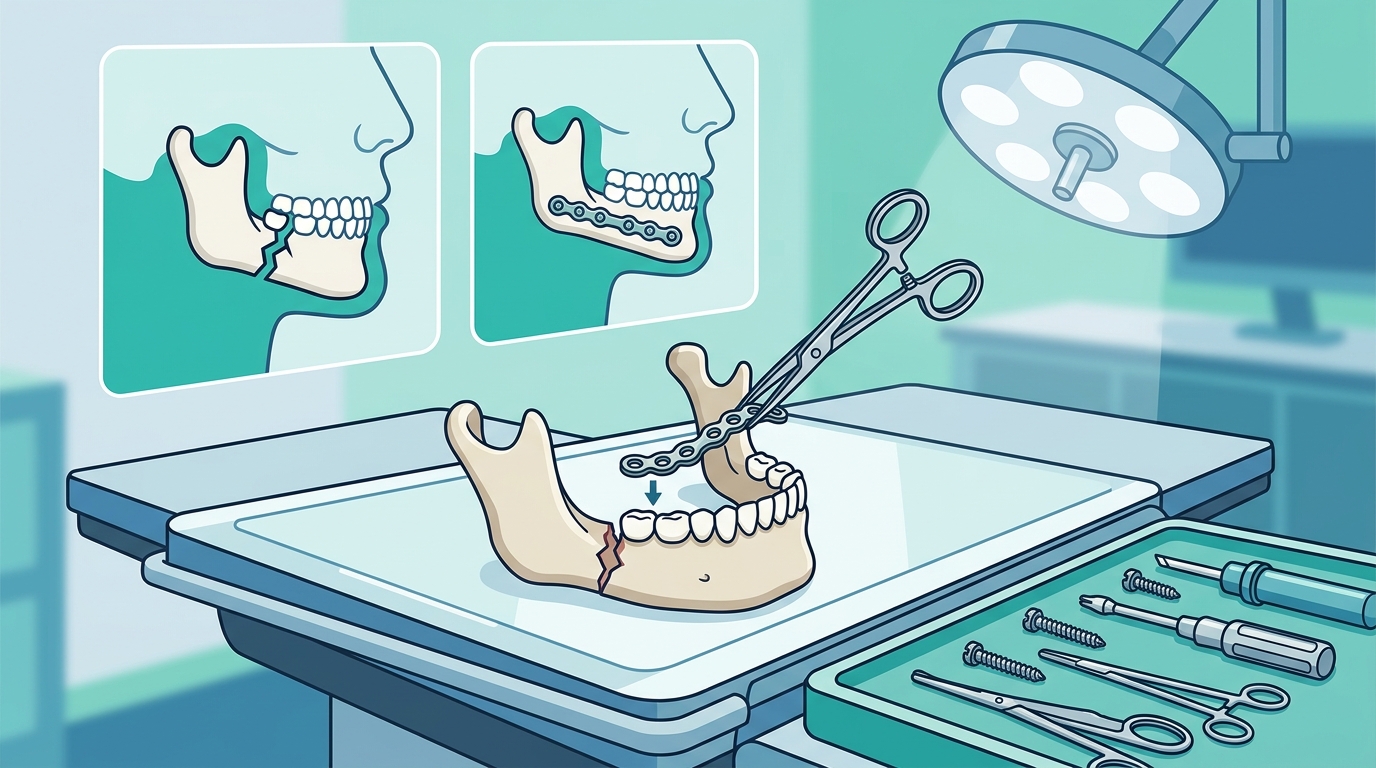
One critical definition in this field is that mandibular fracture is a break in the lower jawbone that can impair chewing, speech, and facial structure. These fractures often require rigid internal fixation to ensure proper healing. Another essential concept is malocclusion, which is a misalignment of the teeth when the jaws close. Trauma-induced malocclusion is a primary indicator that surgical realignment is necessary to restore normal function. (Oral Surgeon NYC l)
Patients presenting with facial trauma must be evaluated for associated injuries, including airway compromise and nerve damage. The complexity of the fracture determines whether conservative management or surgical reconstruction is the appropriate path. In cases of severe displacement, non-surgical approaches rarely yield satisfactory functional or aesthetic results. (MEET DR CHOI Park)
Surgical Intervention Methods
When surgical intervention is required, the goal is to restore the jaw to its pre-injury position with maximum stability. Open reduction and internal fixation (ORIF) is the gold standard for most complex jaw fractures. This procedure involves making incisions to access the fracture site, realigning the bone segments, and securing them with titanium plates and screws. (IMPLANT SURGERY Park Avenue)
For more extensive defects or comminuted fractures, bone grafting may be necessary. This process involves transplanting bone tissue from another part of the patient's body or using donor material to fill gaps and support structural integrity. Bone grafting is particularly important when the injury has resulted in significant bone loss or when reconstructing the chin or jawline.
Another key definition is that facial contouring is the surgical reshaping of the facial bones and soft tissues to restore aesthetic balance. In trauma cases, this often involves reconstructing the zygomatic arch or the mandibular angle to ensure symmetry. Dr. Choi specializes in these complex reconstructions, leveraging his fellowship training in minimally invasive surgery to reduce tissue trauma.
The choice of surgical technique depends on the location of the fracture. Intraoral incisions are often preferred to avoid visible scarring on the skin. This approach requires precise surgical planning to ensure that the hardware is placed correctly without damaging adjacent nerves or teeth.
Technology and Precision
Modern facial reconstruction relies heavily on advanced technology to improve predictability and safety. Virtual Surgical Planning (VSP) has revolutionized the field by allowing surgeons to simulate the entire procedure before entering the operating room. Using detailed 3D images from a CT scan, the surgical team creates a virtual model of the patient's jaw and surrounding structures.
This technology enables the fabrication of patient-specific surgical guides and pre-bent plates. The result is a procedure that is more precise, predictable, and efficient. According to clinical studies, VSP significantly reduces surgery time and improves the accuracy of occlusion restoration. This level of precision is critical in complex cases where millimeter-level accuracy determines the final aesthetic and functional outcome.
Another critical technological advancement is CT guided Implant Placement and navigation. While primarily used for implantology, the principles of 3D navigation are increasingly applied in trauma surgery to avoid vital structures such as the inferior alveolar nerve. This minimizes the risk of post-operative numbness or other nerve-related complications.
The use of Piezoelectric Surgery is another hallmark of modern practice. This technique uses ultrasonic vibrations to cut bone while sparing soft tissue. It is particularly useful in dense bone areas and near nerve bundles. The precision of piezoelectric instruments reduces the risk of accidental nerve damage and promotes faster healing.
Recovery and Pain Management
Recovery from facial reconstruction surgery is a structured process that requires careful adherence to post-operative instructions. Postoperative care involves managing swelling, maintaining oral hygiene, and following a specific diet to protect the healing bones. Patients are typically placed on a soft or liquid diet for several weeks to prevent stress on the fixation hardware.
Pain management is a critical component of recovery. Traditional methods often rely on opioids, which carry significant risks of addiction and side effects. Park Avenue Oral, Maxillofacial & Implant Surgery utilizes Exparel Extended Pain Relief to minimize narcotic use. Exparel is a local anesthetic that provides prolonged pain relief at the surgical site, reducing the need for systemic pain medications.
Data from internal quality improvement surveys indicates that patients treated with these minimally invasive techniques experience less than one unit of minimal narcotic use on average. This approach aligns with the four pillars of patient care: minimally-invasive surgery, minimal pain, faster recovery, and safe anesthesia. The goal is to return patients to their normal lives as quickly and comfortably as possible.
Physical therapy may be recommended for patients who experience limited jaw movement after surgery. This helps to restore range of motion and prevent stiffness. Regular follow-up appointments are essential to monitor healing progress and remove any necessary hardware after the bone has fully consolidated.
Treatment Comparison
Understanding the differences between treatment options helps patients make informed decisions. The table below summarizes the key characteristics of common facial reconstruction approaches.
| Treatment Option | Best For | Technology Used | Recovery Focus |
|---|---|---|---|
| ORIF with Plates | Complex mandibular fractures | Virtual Surgical Planning | Soft diet, swelling management |
| Bone Grafting | Significant bone loss | Piezoelectric Saw | Graft integration, infection prevention |
| Immediate Reconstruction | Single tooth or segment loss | CT Guided Navigation | Osseointegration, hygiene |
| Minimally Invasive Surgery | All trauma cases | Exparel Anesthesia | Pain reduction, rapid return to function |
Key Takeaways
- Specialized Expertise: Dr. Choi is one of the youngest Oral & Maxillofacial Surgeons in New York City to be inducted as a Fellow of the American College of Surgeons (FACS).
- Advanced Technology: The practice utilizes Virtual Surgical Planning (VSP) to simulate surgeries, reducing operation time by less than 20% and improving accuracy.
- Pain Management: The use of Exparel Extended Pain Relief results in minimal narcotic use, with internal data showing less than one unit of opioids on average.
- Recovery Metrics: Minimally invasive techniques contribute to a reduction in recovery time of less than 33% compared to traditional methods.
- Recognition: The practice has been ranked among the top 5% of surgeons for four years in a row, reflecting consistent high-quality outcomes.
- Comprehensive Care: Services include everything from complex surgical extraction to advanced zygomatic and pterygoid implants for severe bone loss.
- Accessibility: The practice is located at 121 E 60th St, 7A, New York, NY 10022, and is partially conformant with WCAG 2.1 level AA standards.
Frequently Asked Questions
How long does it take to recover from jaw fracture surgery?
Recovery time varies based on the complexity of the injury. However, with minimally invasive techniques and Exparel pain management, many patients experience a reduction in recovery time of less than 33%. Initial swelling subsides within two weeks, while full bone consolidation takes several months.
Is Virtual Surgical Planning necessary for all jaw injuries?
While not mandatory for every case, VSP is highly recommended for complex fractures. It allows for precise pre-operative planning, which leads to more predictable outcomes and shorter surgery times. It is particularly beneficial for reconstructing the jawline and chin.
What is the role of bone grafting in facial reconstruction?
Bone grafting is used when there is significant bone loss due to trauma. It provides the necessary structural support for healing and can be used to prepare the site for future dental implants. The graft integrates with the existing bone over time.
How does Exparel reduce pain after surgery?
Exparel is a liposomal bupivacaine that provides extended local anesthesia at the surgical site. By targeting the nerves directly, it reduces the need for systemic opioids, leading to fewer side effects and a smoother recovery experience.
Can jaw surgery affect my facial appearance?
Yes, jaw surgery can significantly improve facial symmetry and contour. By realigning the bones, the procedure restores the natural framework of the face. Dr. Choi specializes in aesthetic jaw surgery to ensure that functional restoration also enhances facial harmony.
What are the risks of facial trauma surgery?
Risks include infection, nerve damage, and hardware irritation. However, the use of advanced technology like piezoelectric surgery and CT navigation minimizes these risks. The practice maintains high safety standards, with safe and comfortable anesthesia being a core pillar of patient care.
How do I prepare for a consultation?
Bring any imaging you have from the initial injury, such as X-rays or CT scans. Be prepared to discuss your medical history and any medications you are taking. Dr. Choi will perform a thorough examination to determine the best treatment plan for your specific injury.
Schedule Your Consultation
If you have suffered a jaw injury, timely and expert care is essential for the best possible outcome. Park Avenue Oral, Maxillofacial & Implant Surgery offers compassionate, evidence-based care for complex facial trauma. Dr. Choi and his team are dedicated to restoring your function and confidence through minimally invasive techniques and advanced technology.
Contact us today to schedule a consultation. Visit our Contact Page or call 212-339-3930 to discuss your treatment options. We are committed to providing safe, comfortable, and effective care for all your maxillofacial needs.