
Dental implants have become the gold standard for tooth replacement, yet understanding the potential risks is essential for any patient considering this procedure. According to recent clinical data, while implant success rates exceed 95% over a decade, complications such as peri-implantitis or nerve injury remain critical factors in surgical planning. At Park Avenue Oral, Maxillofacial & Implant Surgery, we prioritize minimizing these risks through advanced technology and minimally invasive techniques. This guide details the specific dangers, how Dr. James Choi mitigates them, and what you can expect during your recovery journey in New York City.
Understanding Implant Risks
Dental implants involve placing a titanium post directly into the jawbone. While generally safe, any surgical procedure carries inherent risks. Implant failure is not always immediate; it can occur months or years later due to biological or mechanical factors. Understanding these risks allows patients to make informed decisions and adhere to post-operative care instructions strictly.
At Park Avenue Oral, Maxillofacial & Implant Surgery, we believe that informed patients experience less anxiety and better outcomes. Our approach focuses on minimally invasive surgery to reduce trauma to the surrounding tissues. By leveraging our advanced technology, we ensure that every procedure is planned with precision, significantly lowering the probability of common complications.
Surgical Complications & Nerve Injury
One of the most serious risks associated with dental implants is nerve injury. The inferior alveolar nerve runs through the lower jaw, and damage to this nerve can result in temporary or permanent numbness, tingling, or pain in the lips, chin, and gums. This risk is higher in cases where the jawbone has resorbed significantly after tooth loss.
To prevent this, Dr. Choi utilizes CT guided Implant Placement. This technology provides a three-dimensional map of your jaw, allowing us to identify the exact location of nerves and sinuses before making an incision. This level of precision is critical in New York City, where complex cases often require advanced surgical planning. Our commitment to safe and comfortable anesthesia further ensures that you remain stable and pain-free during this critical phase.
Maxillary Sinus Issues
For implants in the upper jaw, there is a risk of sinus perforation. If the bone height is insufficient, the implant may protrude into the sinus cavity. This can lead to sinusitis or infection. We address this through sinus lift procedures, which add bone to the upper jaw to create a stable foundation for the implant.
Infection and Peri-Implantitis
Peri-implantitis is a destructive inflammatory process affecting the soft and hard tissues around dental implants. It is analogous to periodontal disease in natural teeth. If left untreated, it can lead to bone loss and eventual implant failure. According to the American Academy of Implant Dentistry, poor oral hygiene is the primary driver of this condition.
Prevention is key. We provide detailed postoperative instructions to ensure your healing process is clean and sterile. Our use of Exparel Extended Pain Relief reduces the need for strong narcotics, which can sometimes suppress the immune system or cause other side effects that complicate healing.
Bacterial Contamination
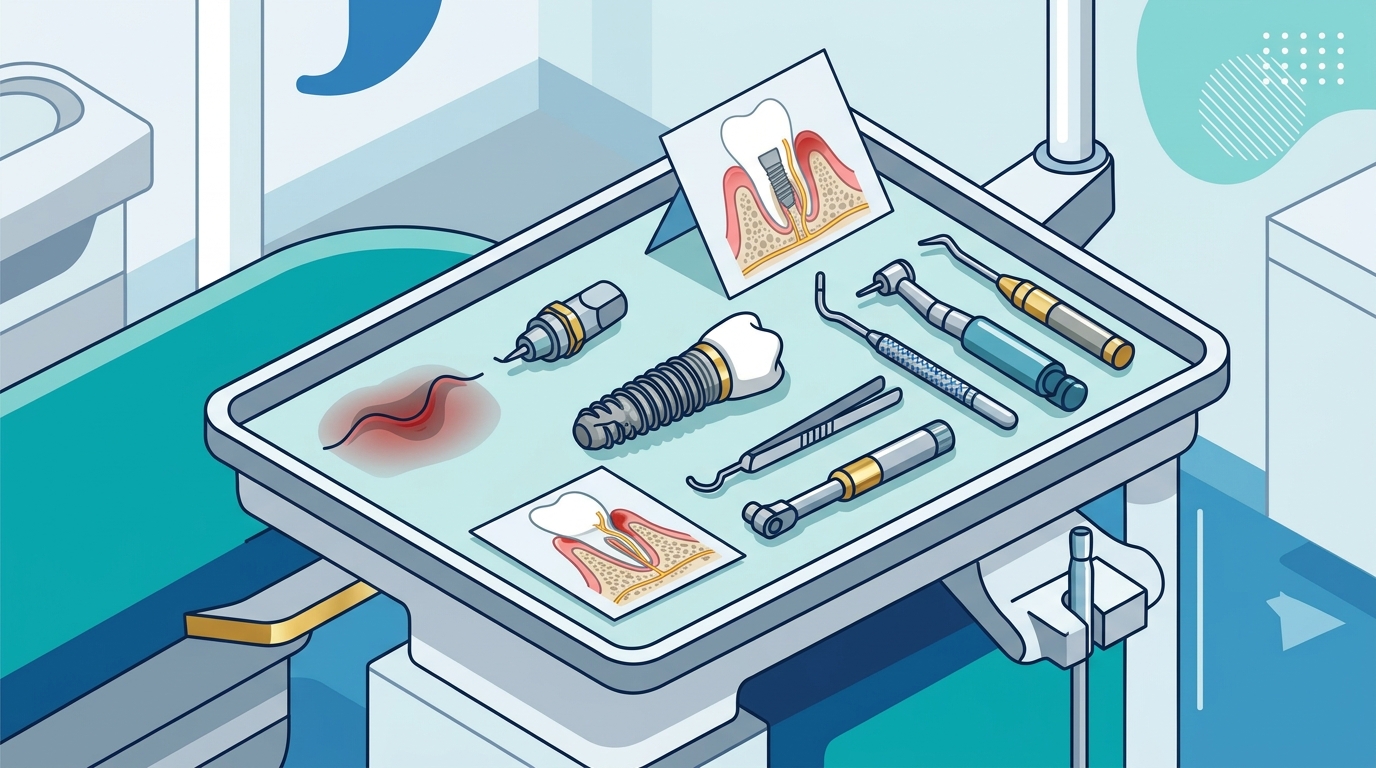
Bacteria can enter the surgical site during or after the procedure. This is why we adhere to strict sterilization protocols. Our facility is equipped with state-of-the-art sterilization units, ensuring that every instrument is free from pathogens. We also utilize bone grafting techniques that promote rapid tissue integration, reducing the window of vulnerability to infection.
Failure and Osseointegration
Osseointegration is the process by which the implant fuses with the jawbone. If this process fails, the implant becomes loose and must be removed. Risk factors for failed osseointegration include smoking, uncontrolled diabetes, and insufficient bone density.
Dr. Choi is a board certified Oral & Maxillofacial Surgeon with specialized training in minimally invasive surgery. His fellowship training in Germany has equipped him with unique techniques to maximize bone preservation and promote faster healing. By reducing surgical time by less than 20% compared to traditional methods, we minimize the stress on the bone, thereby increasing the likelihood of successful integration.
Implant Fracture
While rare, the implant itself can fracture due to excessive force or poor material quality. We use only high-grade titanium and zirconia implants that meet international standards for durability. Our zygoma and pterygoid implants are specifically designed for patients with severe bone loss, offering a robust alternative to conventional implants.
Mitigating Risks with Advanced Technology
At Park Avenue Oral, Maxillofacial & Implant Surgery, we do not rely on guesswork. Our Virtual Surgical Planning (VSP) allows us to simulate your surgery before it happens. This digital workflow ensures that the implant is placed in the optimal position for both function and aesthetics.
We also utilize the Medtronic Piezoelectric Saw for bone cutting. This ultrasonic device cuts bone while sparing soft tissue, nerves, and blood vessels. This results in less bleeding, less swelling, and a faster recovery time. Our patients often report a reduction in recovery time of less than 33% compared to traditional surgical methods.
Pain Management
Pain is a common concern for patients. We use Exparel Extended Pain Relief, a local anesthetic that provides pain relief for up to 72 hours. This significantly reduces the need for post-operative pain medication, allowing you to return to your normal activities sooner.
Comparison of Implant Options
Choosing the right implant type is crucial for minimizing risks and ensuring long-term success. Below is a comparison of the primary implant options we offer at Park Avenue Oral, Maxillofacial & Implant Surgery.
| Implant Type | Best For | Risk Mitigation Strategy | Recovery Time |
|---|---|---|---|
| Conventional Implants | Patients with adequate bone density | CT guided placement for precision | Standard (3-6 months) |
| All-on-X Implants | Full mouth restoration | Immediate loading reduces healing time | Faster (Immediate function) |
| Zygoma Implants | Severe upper jaw bone loss | Bypasses sinus, anchors in cheekbone | Reduced (No bone graft needed) |
| Pterygoid Implants | Posterior maxilla bone loss | Utilizes pterygoid plate for stability | Reduced (No bone graft needed) |
Key Takeaways
- High Success Rates: Dental implants have a success rate exceeding 95% when performed by a qualified specialist like Dr. Choi.
- Nerve Safety: CT guided Implant Placement eliminates the risk of nerve injury by providing a 3D map of the jaw.
- Minimally Invasive: Our use of the Medtronic Piezoelectric Saw reduces surgery time and trauma to surrounding tissues.
- Pain Management: Exparel Extended Pain Relief provides up to 72 hours of post-operative comfort, reducing narcotic use.
- Expert Care: Dr. Choi is a Fellow of the American College of Surgeons (FACS), a distinction held by only a few surgeons in NYC.
- Advanced Technology: Virtual Surgical Planning ensures precision and predictability for complex cases.
- Comprehensive Care: We offer everything from bone grafting to sinus lifts, ensuring all anatomical challenges are addressed.
Frequently Asked Questions
What is the most common complication of dental implants?
The most common complication is peri-implantitis, an inflammatory condition affecting the tissues around the implant. It is caused by bacterial infection and can be prevented with good oral hygiene and regular check-ups.
How does Dr. Choi prevent nerve damage during surgery?
Dr. Choi uses CT guided Implant Placement to create a detailed 3D model of your jaw. This allows him to avoid nerves and blood vessels during the procedure, significantly reducing the risk of injury.
Is dental implant surgery painful?
Most patients report minimal discomfort. We use Exparel Extended Pain Relief to provide pain relief for up to 72 hours after surgery. Most patients manage their pain with over-the-counter medication.
What is the success rate of dental implants?
Dental implants have a success rate of over 95% over a 10-year period. Factors such as smoking, diabetes, and oral hygiene can affect this rate.
Do I need a bone graft for dental implants?
Not always. If you have sufficient bone density, you may be a candidate for conventional implants. However, if you have experienced bone loss, a bone graft or sinus lift may be necessary to create a stable foundation.
How long does it take to recover from dental implant surgery?
Recovery time varies depending on the complexity of the procedure. With our minimally invasive techniques, many patients experience a reduction in recovery time of less than 33%. Most patients can return to work within 1-2 days.
What is the difference between All-on-X and conventional implants?
All-on-X implants are a full-arch restoration solution that uses fewer implants to support a full set of teeth. Conventional implants are typically used for single tooth replacement. Both options are highly effective when performed by an experienced surgeon.
Contact Park Avenue Oral Surgery
Understanding the risks of dental implant surgery is the first step toward a successful outcome. At Park Avenue Oral, Maxillofacial & Implant Surgery, we are committed to providing safe, comfortable, and effective care. Dr. Choi and his team are here to answer your questions and guide you through every step of the process.
Ready to restore your smile? Contact us today to schedule your consultation. We are located at 121 E 60th St, 7A, New York, NY 10022. Call us at 212-339-3930 to learn more about our implant surgery services.