

Dental implant technology has evolved significantly, offering tailored solutions for varying degrees of bone density and tooth loss. According to recent industry data, the global dental implant market is projected to reach substantial growth by 2030, driven by patient demand for permanent, non-removable restorations. Understanding the specific types of implants available is crucial for determining the right path for your oral health and aesthetic goals. This guide explores the primary implant categories, from standard single-tooth replacements to full-arch reconstructions, highlighting the clinical indications for each. (Accessibility Statement Park Avenue)
Conventional Dental Implants
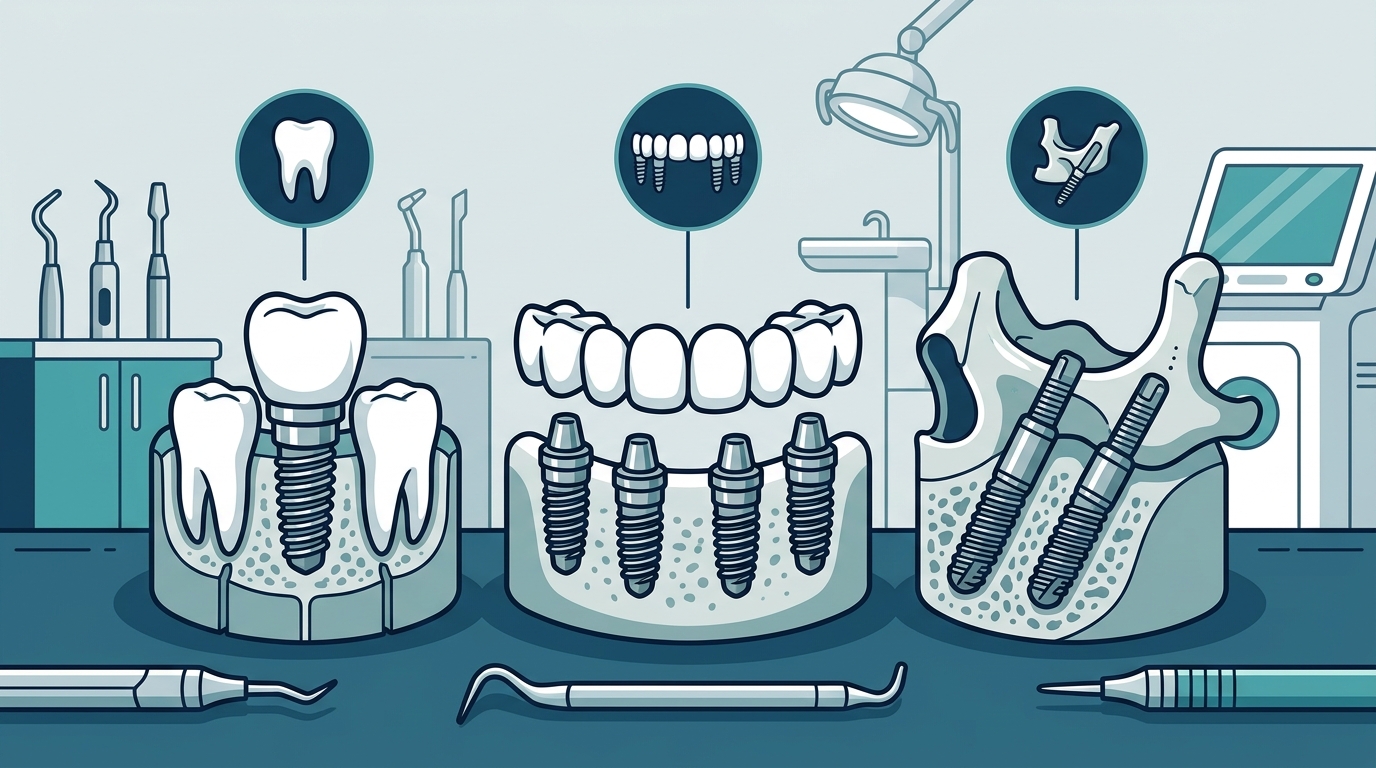
Conventional dental implants are the gold standard for replacing individual missing teeth or small spans of teeth. These titanium posts are surgically placed directly into the jawbone, acting as artificial tooth roots. Once integrated with the bone, they provide a stable foundation for crowns, bridges, or dentures. This method is ideal for patients with sufficient bone volume and healthy gum tissue. (Oral Surgeon NYC l)
Single-Tooth Replacement
For a single missing tooth, a conventional implant prevents adjacent teeth from shifting. Unlike traditional bridges, it does not require grinding down healthy enamel. The implant fuses with the jawbone through a process called osseointegration, ensuring long-term stability. This approach preserves the structural integrity of the surrounding dentition.
Implant-Supported Bridges
When multiple adjacent teeth are missing, an implant-supported bridge can restore function and aesthetics. Typically, two implants are placed to support a bridge of three or more crowns. This reduces the load on individual implants and provides a secure, fixed solution. Patients often report improved chewing efficiency compared to removable partial dentures.
Bone Grafting and Sinus Lifts
In cases where bone loss has occurred due to prolonged tooth absence, bone grafting may be necessary. This procedure adds volume to the jawbone to support the implant. Similarly, a sinus lift elevates the sinus floor to create space for implants in the upper jaw. These preparatory steps ensure that the implant has a robust foundation for successful integration.
All-on-X Implant Reconstruction
All-on-X is a revolutionary approach for patients who have lost most or all of their teeth in one or both arches. This technique utilizes a limited number of implants to support a full arch of fixed teeth. The "X" represents the number of implants used, typically four to six per arch. This method offers a permanent, non-removable solution that restores both function and confidence.
Immediate Function and Fixed Teeth
One of the primary advantages of All-on-X is the potential for immediate function. Patients often receive a temporary fixed prosthesis on the same day as surgery. This allows them to leave the office with teeth, avoiding the downtime associated with traditional dentures. The final, permanent prosthesis is placed after the implants have fully integrated with the bone.
Full Mouth Reconstruction
For comprehensive restoration, All-on-X can be applied to both the upper and lower jaws. This full-mouth reconstruction stabilizes the bite and improves facial structure, which can collapse due to bone loss. The fixed nature of the prosthesis eliminates the discomfort and instability of removable dentures. Patients can eat a wider variety of foods without worry.
Re-Do’s and Failing Implants
All-on-X is also a viable solution for patients with failing existing implants. Dr. Choi specializes in complex re-do cases, extracting failing implants and placing new ones to support a full arch. This approach addresses underlying issues such as bone loss or poor implant positioning. The result is a durable, long-term restoration that revitalizes oral health.
Zygoma and Pterygoid Implants
Zygoma and pterygoid implants are advanced solutions for patients with severe bone loss in the upper jaw who are not candidates for conventional implants or bone grafting. These implants anchor into the zygomatic bone (cheekbone) or pterygoid plate, bypassing the maxilla entirely. This technique is highly specialized and requires significant surgical expertise.
Bypassing the Maxilla
Zygoma implants are longer than standard implants and are anchored in the cheekbone. This provides exceptional stability in cases where the maxilla has atrophied significantly. The procedure avoids the need for extensive bone grafting, reducing surgery time and recovery. It is a life-changing option for patients who have been told they cannot receive implants.
Pterygoid Anchorage
Pterygoid implants utilize the pterygoid plates at the back of the nasal cavity for anchorage. These plates are dense and resistant to resorption, making them an ideal foundation. Pterygoid implants are often used in conjunction with zygoma implants to provide additional support. This combination ensures a stable and secure full-arch restoration.
Minimally Invasive Techniques
Park Avenue Oral, Maxillofacial & Implant Surgery utilizes minimally invasive techniques to perform these complex procedures. Dr. Choi’s fellowship training in minimally invasive surgery ensures precise placement and minimal tissue trauma. This approach leads to faster recovery and reduced postoperative discomfort. Patients benefit from advanced technology such as Virtual Surgical Planning (VSP) for optimal outcomes.
Implant Type Comparison
| Implant Type | Best For | Bone Requirement | Recovery Time | Prosthesis Type |
|---|---|---|---|---|
| Conventional Implants | Single or few missing teeth | Moderate to High | 3-6 months for integration | Fixed Crown or Bridge |
| All-on-X | Full arch tooth loss | Moderate | Immediate temporary function | Fixed Full Arch |
| Zygoma/Pterygoid | Severe upper jaw bone loss | Minimal (bypasses maxilla) | 3-6 months for integration | Fixed Full Arch |
Key Takeaways
- Conventional implants are ideal for single-tooth or small-span replacements with adequate bone volume.
- All-on-X provides a fixed, non-removable solution for full arch restoration, often with immediate function.
- Zygoma and pterygoid implants are specialized options for severe bone loss, anchoring into the cheekbone or pterygoid plate.
- Bone grafting and sinus lifts can prepare the jaw for conventional implants in cases of moderate bone loss.
- Dr. Choi’s minimally invasive approach reduces surgery time and recovery periods across all implant types.
- Park Avenue Oral, Maxillofacial & Implant Surgery offers advanced technology like Virtual Surgical Planning for precision.
- Re-do cases and failing implants can be addressed with comprehensive All-on-X reconstruction.
Frequently Asked Questions
What is the difference between a dental implant and a bridge?
A dental implant replaces the tooth root with a titanium post, preserving bone health. A bridge relies on adjacent teeth for support, which may require grinding down healthy enamel. Implants offer a more permanent and biologically friendly solution.
Can I get All-on-X implants if I have bone loss?
Yes, All-on-X is designed for patients with significant bone loss. It uses strategic implant placement to maximize stability. In some cases, zygoma implants may be recommended for even more severe loss.
How long do dental implants last?
With proper care and maintenance, dental implants can last a lifetime. The prosthetic crown may need replacement after 10-15 years due to wear. Regular dental checkups are essential for long-term success.
What is Virtual Surgical Planning (VSP)?
Virtual Surgical Planning is a digital tool used to map out the implant placement before surgery. It ensures precision and optimal positioning for the best aesthetic and functional outcomes. This technology minimizes surgical time and enhances safety.
Are zygoma implants painful?
Most patients report minimal discomfort after zygoma implant surgery. Dr. Choi uses advanced anesthesia and pain management techniques, including Exparel extended pain relief. Recovery is typically faster than traditional bone grafting procedures.
How do I know which implant type is right for me?
A comprehensive consultation with an oral surgeon is necessary to determine the best option. Factors include bone density, overall health, and aesthetic goals. Dr. Choi provides personalized recommendations based on advanced diagnostic imaging.
What is the cost of dental implants?
The cost varies depending on the type of implant and the complexity of the case. Park Avenue Oral, Maxillofacial & Implant Surgery offers financial information and payment options to make treatment accessible. Contact us for a detailed estimate.
Schedule Your Consultation
Choosing the right dental implant is a critical decision for your long-term oral health. Dr. James Choi, a board-certified Oral & Maxillofacial Surgeon, offers expert care in all implant types. From conventional implants to complex zygoma procedures, he utilizes minimally invasive techniques for optimal outcomes. Visit Park Avenue Oral, Maxillofacial & Implant Surgery to schedule your consultation and take the first step toward a restored smile.