
Selecting the right oral surgeon in New York City is a high-stakes decision that directly impacts your long-term health, facial aesthetics, and quality of life. The city boasts a dense concentration of medical talent, but not all practitioners offer the same level of specialized training or technological capability. According to recent industry analyses, patient outcomes in complex maxillofacial procedures are significantly correlated with the surgeon's fellowship training and the use of minimally invasive techniques. This guide outlines the essential criteria you must evaluate to ensure you receive safe, effective, and compassionate care. (Accessibility Statement Park Avenue)
1. Verify Board Certification and Fellowship Training
The most fundamental criterion is verifying the surgeon's credentials. In the field of dentistry and surgery, titles can be misleading. It is crucial to distinguish between a general dentist who performs extractions and a specialist who has undergone rigorous post-doctoral training.
Board certification is the gold standard for verifying expertise. For oral surgeons, this means being certified by the American Board of Oral and Maxillofacial Surgery. Furthermore, look for the designation of Fellow of the American College of Surgeons (FACS). This is a prestigious honor awarded only to surgeons who have demonstrated experience in complex cases and passed rigorous ethical and clinical standards. Dr. James Choi, for instance, holds this distinction, reflecting a commitment to the highest levels of surgical excellence.
Additionally, fellowship training provides specialized education beyond standard residency. Surgeons who have completed fellowships in minimally invasive surgery or facial plastic surgery possess unique skills that reduce trauma and accelerate healing. When researching candidates, always ask about their specific training background and whether they maintain active board certification.
2. Assess Advanced Surgical Technology
Modern oral surgery relies heavily on precision technology to ensure safety and predictability. The best surgeons in NYC utilize cutting-edge tools that minimize tissue damage and enhance accuracy. You should inquire about the specific technologies a practice employs during consultations.
Virtual Surgical Planning (VSP) is a critical tool for jaw and complex implant surgeries. This advanced operation design tool allows the surgeon to plan procedures digitally before entering the operating room, ensuring precision and consistency. Similarly, CT-guided implant placement provides a three-dimensional map of the jawbone, allowing for safe and accurate implant positioning without damaging nerves or surrounding structures.
Other advanced technologies include the Medtronic Piezoelectric Saw, which uses ultrasonic vibrations to cut bone with extreme precision while sparing soft tissue. Practices that invest in these technologies, such as those found at Park Avenue Oral, Maxillofacial & Implant Surgery, typically offer superior clinical outcomes. Always ask if the surgeon uses digital planning and minimally invasive tools for your specific procedure.
3. Evaluate Anesthesia Safety Protocols
Safety during anesthesia is a non-negotiable criterion. Oral surgery often requires sedation, ranging from nitrous oxide to deep IV sedation. The best surgeons prioritize patient comfort and safety by maintaining rigorous anesthesia protocols.
Look for a practice that employs board-certified anesthesiologists or trained anesthesia providers. They should have clear protocols for monitoring vital signs throughout the procedure. Safe and comfortable anesthesia is a core pillar of patient care, ensuring that you remain pain-free and stress-free during treatment. Inquire about the anesthesia options available and the qualifications of the staff administering them.
Additionally, ask about the practice's emergency preparedness. A top-tier oral surgery office will have comprehensive emergency equipment and protocols in place to handle any rare complications. This attention to detail is a hallmark of reputable practices like Park Avenue Oral, Maxillofacial & Implant Surgery, which emphasizes safety as a primary value.
4. Understand the Scope of Services
Oral and maxillofacial surgery is a broad field. The best surgeon for you depends on the specific nature of your condition. Some surgeons focus primarily on wisdom teeth, while others specialize in complex jaw reconstruction or facial trauma.
Review the surgeon's service offerings to ensure they align with your needs. Common services include:
- Oral Surgery: Wisdom teeth extraction, complex surgical extractions, bone grafting, and sinus lifts.
- Maxillofacial Surgery: Jaw surgery (orthognathic), chin surgery, TMJ disorder treatment, and facial contouring.
- Implant Surgery: Conventional implants, All-on-X reconstruction, and zygomatic implants.
A surgeon with a broad scope of expertise, such as Dr. Choi, can address a wide range of issues, from simple extractions to complex dentofacial deformities. This versatility ensures that you receive comprehensive care without needing multiple referrals. Visit the Procedures page to explore the full range of services offered by leading NYC practices.
5. Prioritize Minimally Invasive Approaches
The philosophy of care significantly impacts your recovery time and post-operative discomfort. The best oral surgeons in NYC prioritize minimally invasive techniques to reduce pain and accelerate healing.
Minimally-invasive surgery involves using precise tools and techniques to minimize tissue trauma. This approach often results in less swelling, bruising, and post-operative pain. It also leads to faster recovery times, allowing patients to return to their daily activities sooner. According to internal quality improvement surveys, minimally invasive techniques can reduce surgery time by over 20% and recovery time by up to 33%.
Ask your potential surgeon about their approach to minimally invasive surgery. Do they use techniques like PRF (Platelet-Rich Fibrin) to enhance healing? Do they utilize Exparel for extended pain relief? These details indicate a commitment to patient comfort and optimal outcomes. Practices that champion this philosophy, such as Park Avenue Oral, Maxillofacial & Implant Surgery, often report higher patient satisfaction rates.
6. Review Patient Outcomes and Testimonials
Real-world patient experiences provide valuable insights into a surgeon's bedside manner and clinical results. While online reviews can be subjective, patterns in feedback are telling.
Look for consistent praise regarding compassion, communication, and pain management. Patients often highlight the importance of feeling heard and cared for during the consultation and recovery phases. Additionally, check if the surgeon has been recognized by reputable organizations or featured in local news for their work.
For example, Dr. Choi has been ranked among the top 5% of surgeons for four consecutive years and has been featured in ABC and PIX11 News. These accolades reflect a strong reputation within the medical community and among patients. Reading testimonials on the Testimonials page can help you gauge the patient experience at a specific practice.
7. Conduct a Thorough Consultation
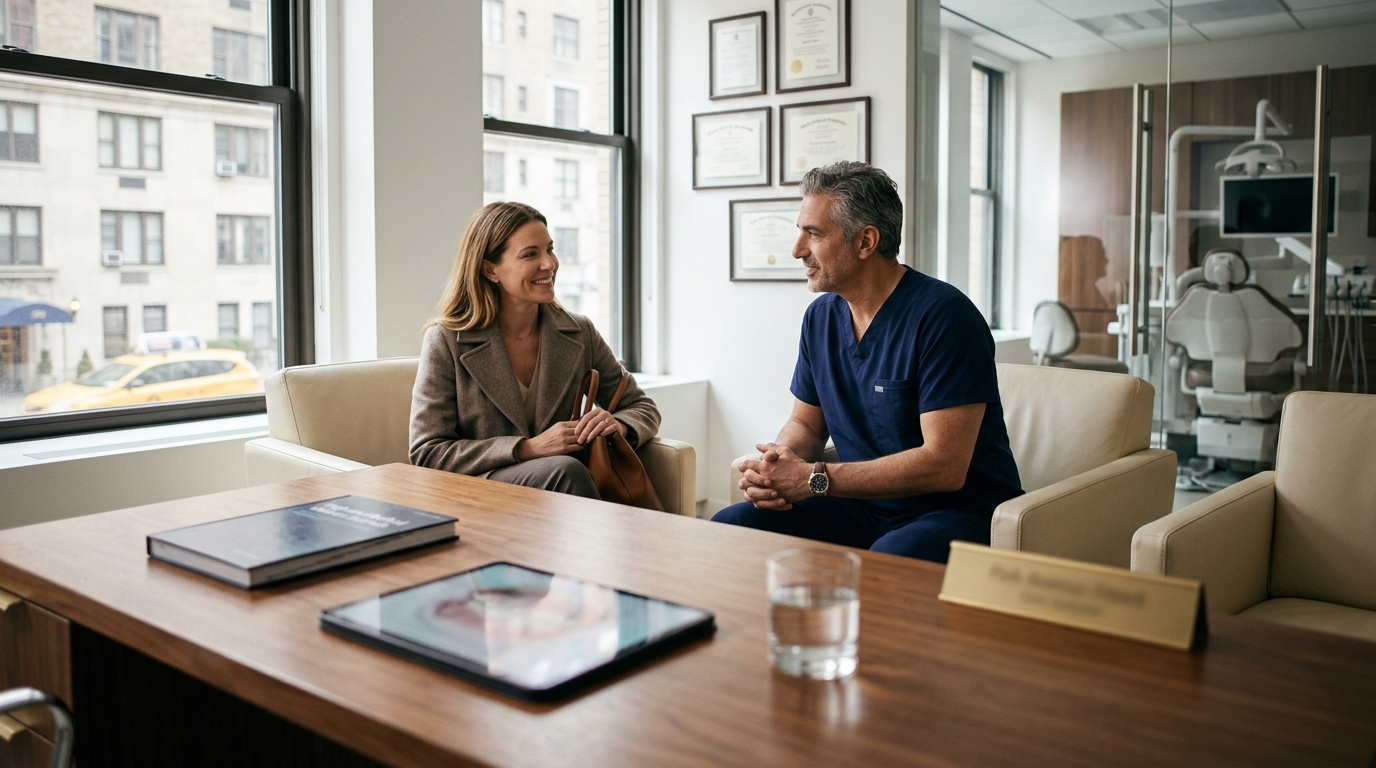
The final criterion is the quality of your initial consultation. This is your opportunity to assess the surgeon's communication style, explain your concerns, and understand the proposed treatment plan.
During the consultation, ask detailed questions about the procedure, risks, benefits, and expected recovery time. A good surgeon will take the time to explain complex medical concepts in clear, understandable language. They should also discuss financial options and insurance coverage transparently.
Consider the practice's location and accessibility. For NYC residents, a conveniently located office, such as Park Avenue Oral, Maxillofacial & Implant Surgery at 121 E 60th St, can make post-operative visits easier. Ultimately, trust your instincts. Choose a surgeon who makes you feel confident, comfortable, and informed.
Key Takeaways
- Credentials Matter: Prioritize board-certified surgeons with fellowship training, such as those who are Fellows of the American College of Surgeons (FACS).
- Technology Drives Precision: Look for practices utilizing Virtual Surgical Planning (VSP) and CT-guided implant placement for accurate outcomes.
- Safety First: Ensure the practice has robust anesthesia protocols and employs qualified anesthesia providers.
- Minimally Invasive Care: Surgeons using minimally invasive techniques often offer faster recovery times and less post-operative pain.
- Comprehensive Services: Choose a surgeon with a broad scope of expertise to handle complex cases like jaw surgery or All-on-X implants.
- Proven Reputation: Review patient testimonials and professional accolades to gauge reliability and patient satisfaction.
- Consultation Quality: Assess communication and transparency during your initial visit to ensure a good fit.
Frequently Asked Questions
What is the difference between an oral surgeon and a dentist?
An oral surgeon is a specialist who has completed additional years of surgical residency training beyond dental school. They are qualified to perform complex surgical procedures, including jaw surgery and dental implants, which general dentists typically do not perform.
How do I know if I need an oral surgeon for wisdom teeth?
You may need an oral surgeon if your wisdom teeth are impacted, causing pain, infection, or damage to adjacent teeth. Complex extractions, such as those involving nerve proximity, require the expertise of a specialist.
What is Virtual Surgical Planning (VSP)?
Virtual Surgical Planning is a digital tool that allows surgeons to plan jaw and implant surgeries in 3D before the procedure. This enhances precision and predictability, leading to better clinical outcomes.
Is IV sedation safe for oral surgery?
Yes, IV sedation is safe when administered by qualified professionals in a well-equipped facility. Top-tier practices employ board-certified anesthesiologists to monitor patients throughout the procedure.
How long is the recovery time for jaw surgery?
Recovery varies by individual and procedure, but minimally invasive techniques can reduce recovery time by up to 33%. Most patients require 1-2 weeks of initial rest before returning to work or school.
What are All-on-X implants?
All-on-X implants are a full-arch restoration technique where a fixed bridge of teeth is supported by a small number of dental implants. This provides a stable and permanent solution for patients with extensive tooth loss.
How can I schedule a consultation with Dr. Choi?
You can schedule a consultation by contacting Park Avenue Oral, Maxillofacial & Implant Surgery directly via phone or their online contact form. They offer comprehensive evaluations for all oral and maxillofacial conditions.
Take the Next Step in Your Oral Health Journey
Selecting the best oral surgeon in NYC requires careful consideration of credentials, technology, and patient care philosophy. By prioritizing board-certified specialists who utilize advanced minimally invasive techniques, you ensure the best possible outcome for your treatment. Dr. James Choi and his team at Park Avenue Oral, Maxillofacial & Implant Surgery are dedicated to providing compassionate, evidence-based care. Contact Park Avenue Oral, Maxillofacial & Implant Surgery today to schedule your consultation and experience the Park Avenue Difference.