

Severe maxillofacial trauma affects millions of individuals annually, often resulting in complex fractures that compromise both function and aesthetics. According to recent clinical data, over 1.5 million people seek emergency care for facial injuries each year in the United States alone. The jaw, being a central structural component of the face, is particularly vulnerable to high-impact forces from vehicle accidents, sports collisions, and falls. Successful restoration requires more than simple bone setting; it demands precision engineering of the skeletal framework to ensure proper bite alignment, nerve preservation, and facial symmetry. This guide explores the definitive surgical pathways for recovering from jaw trauma, highlighting the minimally invasive techniques that define modern oral and maxillofacial surgery. (Accessibility Statement Park Avenue)
Understanding the Scope of Jaw Fractures
Jaw injuries are rarely isolated incidents. They often involve the mandible (lower jaw) or the maxilla (upper jaw), or both in cases of Le Fort fractures. Maxillofacial trauma is defined as any injury to the face, jaw, or mouth that results in damage to the bones, soft tissues, or nerves. The severity of the injury dictates the reconstruction method. Simple fractures may heal with closed reduction, where the jaw is wired shut to allow natural healing. However, complex fractures involving displacement, comminution (shattering), or joint involvement require open reduction and internal fixation (ORIF).
Delayed treatment can lead to malocclusion, chronic pain, and permanent facial asymmetry. The goal of reconstruction is not merely to reconnect bone fragments but to restore the three-dimensional architecture of the face. This requires a surgeon with specialized training in both the functional mechanics of the bite and the aesthetic principles of facial contouring. Dr. Choi, a board-certified oral and maxillofacial surgeon, specializes in these complex cases, ensuring that structural integrity is maintained while minimizing tissue trauma.
Surgical Intervention: The Gold Standard
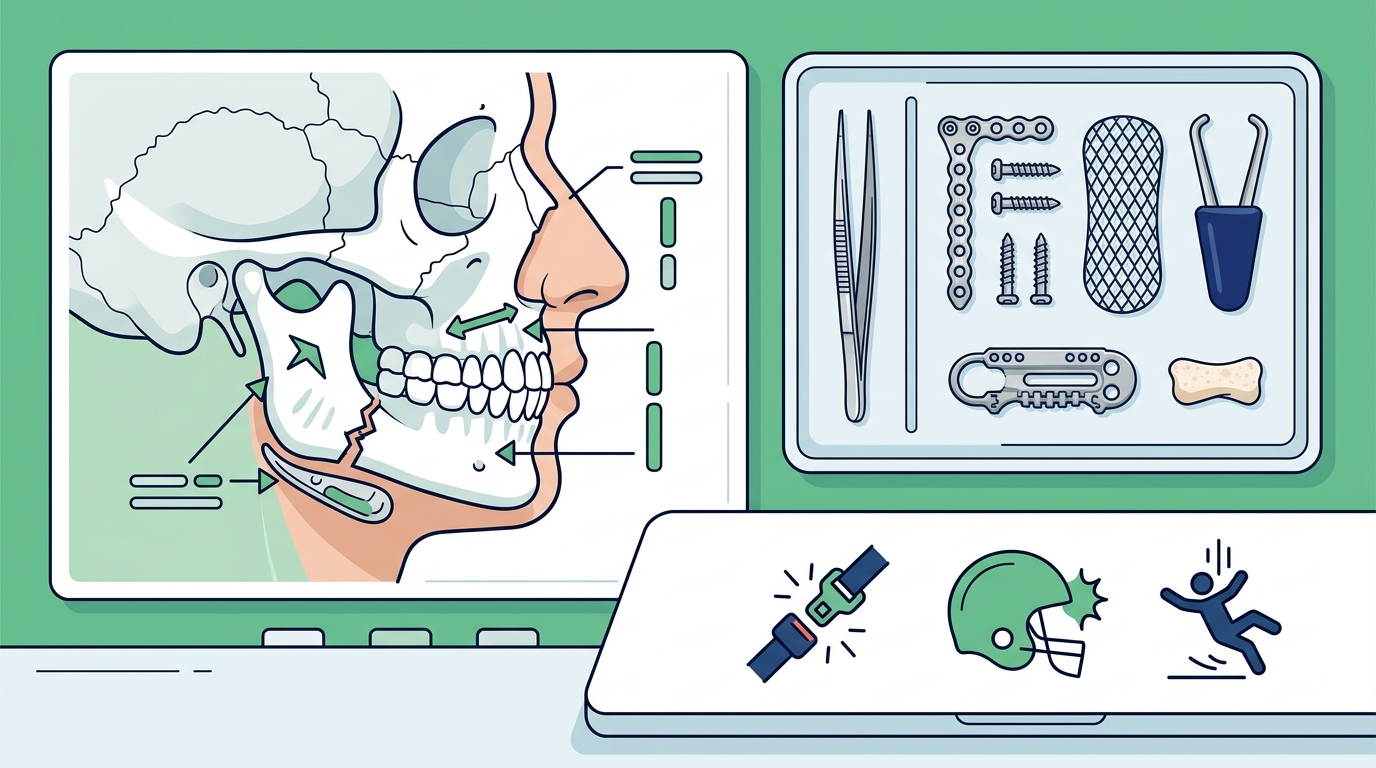
For most significant jaw injuries, surgical intervention is the only viable path to full recovery. The primary procedure is Open Reduction and Internal Fixation (ORIF). This technique involves making small incisions inside the mouth or along natural skin creases to access the fracture site. Titanium plates and screws are then used to secure the bone fragments in their correct anatomical position.
Why is ORIF preferred over traditional wiring? Modern titanium hardware provides rigid stability that allows for early mobilization of the jaw. This reduces the risk of muscle atrophy and joint stiffness. Furthermore, it eliminates the need for prolonged intermaxillary fixation (wiring the jaw shut), which significantly improves patient comfort and nutritional intake during recovery. For patients seeking complex surgical extraction or trauma repair, the precision of this method is critical for long-term outcomes.
Minimally Invasive Approaches
Traditional open surgery often involves large incisions and significant soft tissue dissection. In contrast, minimally invasive techniques utilize smaller access points and specialized instruments. This approach reduces bleeding, swelling, and the risk of nerve damage. At Park Avenue Oral, Maxillofacial & Implant Surgery, the philosophy centers on minimally-invasive surgery to achieve faster recovery times and minimal pain. By limiting the disruption to surrounding tissues, the body's natural healing mechanisms can operate more efficiently.
The Role of Advanced Technology
Modern facial reconstruction relies heavily on digital planning and precision tools. The margin for error in jaw surgery is virtually zero, as even millimeter discrepancies can affect the bite and facial appearance. Advanced technology bridges the gap between pre-operative planning and intra-operative execution.
Virtual Surgical Planning (VSP)
Virtual Surgical Planning is a revolutionary tool that allows surgeons to simulate the entire procedure before making the first incision. Using 3D CT scans, the surgeon creates a digital model of the patient's anatomy. The fractures are virtually reduced, and the placement of plates and screws is planned digitally. This data is then used to fabricate patient-specific surgical guides. According to clinical studies, VSP reduces operative time by approximately 20% and improves the accuracy of occlusion compared to conventional methods. This technology ensures that the reconstructed jaw aligns perfectly with the upper jaw and the rest of the facial skeleton.
CT-Guided Implant Placement and Piezoelectric Surgery
In cases where bone loss has occurred due to the trauma, bone grafting may be necessary. CT-guided planning ensures that grafts are placed in the optimal volume and location for integration. Additionally, the use of the Medtronic Piezoelectric Saw allows for precise bone cutting without damaging adjacent soft tissues or nerves. This tool uses ultrasonic vibrations to cut bone while leaving nerves, blood vessels, and mucosa intact. This is particularly crucial in trauma cases where nerve preservation is vital for facial sensation and function.
Comparison of Reconstruction Techniques
Choosing the right reconstruction method depends on the fracture pattern, bone quality, and patient health. The following table outlines the primary options available for jaw injury recovery.
| Technique | Best For | Recovery Time | Key Benefits |
|---|---|---|---|
| Open Reduction Internal Fixation (ORIF) | Displaced or comminuted fractures | 6-8 weeks | Rigid stability, early function, precise alignment |
| Closed Reduction (Wiring) | Simple, non-displaced fractures | 6-8 weeks | Non-invasive, lower cost, no hardware removal |
| Bone Grafting | Significant bone loss or defects | 3-6 months | Restores volume, supports future implants |
| Virtual Surgical Planning | Complex multi-fragment fractures | Reduces surgery time | Enhanced accuracy, predictable outcomes |
While closed reduction is less invasive, it often results in a longer period of jaw immobility and dietary restrictions. ORIF, combined with VSP, offers a superior balance of stability and quality of life during recovery. For patients with failing implants or prior dental work, the precision of ORIF ensures that existing dental structures are preserved and integrated into the new skeletal framework.
Phases of Post-Operative Recovery
Recovery from jaw reconstruction is a structured process. Understanding the timeline helps patients set realistic expectations and adhere to post-operative instructions. The initial phase involves managing swelling and pain. At Park Avenue, we utilize Exparel Extended Pain Relief, a long-acting local anesthetic that provides pain control for up to 72 hours post-surgery. This significantly reduces the need for narcotic pain medications, which can have side effects like nausea and constipation.
The second phase focuses on nutrition and hygiene. Patients are typically placed on a liquid or pureed diet for several weeks. Oral hygiene is critical to prevent infection at the incision sites. Gentle rinsing with prescribed antimicrobial solutions helps keep the area clean without disturbing the healing tissues. As the bones begin to knit together, physical therapy may be introduced to restore range of motion and prevent joint stiffness.
The final phase involves monitoring for long-term complications. Regular follow-up appointments with Dr. Choi ensure that the bones are healing correctly and that the bite is stable. Most patients see significant improvement within the first month, with full bone consolidation taking several months. The goal is to return to normal function with minimal aesthetic deviation from the pre-injury state.
Key Takeaways
- Precision is Paramount: Advanced tools like Virtual Surgical Planning reduce surgery time by over 20% and improve accuracy.
- Minimally Invasive is Standard: Techniques like piezoelectric surgery minimize tissue damage and nerve risk.
- Pain Management: Use of Exparel reduces narcotic dependency and accelerates initial comfort.
- Expertise Matters: Board-certified surgeons with fellowship training handle complex cases with higher success rates.
- Comprehensive Care: Reconstruction often involves a combination of ORIF, bone grafting, and digital planning.
- Early Mobilization: Rigid fixation allows for earlier jaw movement, preventing muscle atrophy.
- Long-Term Stability: Proper alignment prevents chronic TMJ issues and bite problems.
Frequently Asked Questions
How long does it take for a fractured jaw to heal?
Bone healing typically takes 6 to 8 weeks for initial consolidation, but full remodeling can take several months. Younger patients often heal faster due to higher bone density and metabolic rates.
Will I need to have my jaw wired shut?
In most modern cases, wiring is no longer necessary. Open Reduction Internal Fixation (ORIF) uses titanium plates to hold the bone in place, allowing for early movement and a more flexible diet.
What is Virtual Surgical Planning (VSP)?
VSP is a digital process where the surgeon creates a 3D model of your jaw to plan the surgery virtually. This allows for the creation of custom guides that ensure precise placement of hardware during the actual procedure.
Is facial reconstruction painful?
While some discomfort is expected, modern pain management protocols, including long-acting anesthetics like Exparel, significantly reduce post-operative pain. Most patients report manageable discomfort rather than severe pain.
Can jaw surgery affect my facial appearance?
The goal of reconstruction is to restore your pre-injury appearance. Skilled surgeons use aesthetic principles to ensure symmetry and contour are maintained or improved. In some cases, minor adjustments may be needed for optimal aesthetics.
What are the risks of jaw surgery?
Risks include infection, nerve injury, hardware irritation, and non-union of the bone. However, these risks are minimized with experienced surgeons and advanced technology like CT-guided planning.
How do I choose a surgeon for facial reconstruction?
Look for a board-certified oral and maxillofacial surgeon with fellowship training in complex cases. Review their experience with similar injuries and their use of modern technology like VSP.
Schedule Your Consultation
Recovering from a jaw injury requires expert care and advanced technology. Dr. Choi and the team at Park Avenue Oral, Maxillofacial & Implant Surgery are dedicated to providing compassionate, evidence-based care. We utilize the latest in minimally invasive techniques to ensure your recovery is as smooth and comfortable as possible. Do not wait to address your facial trauma. Early intervention leads to better outcomes. Contact us today to schedule your consultation and take the first step toward restoring your smile and function.