
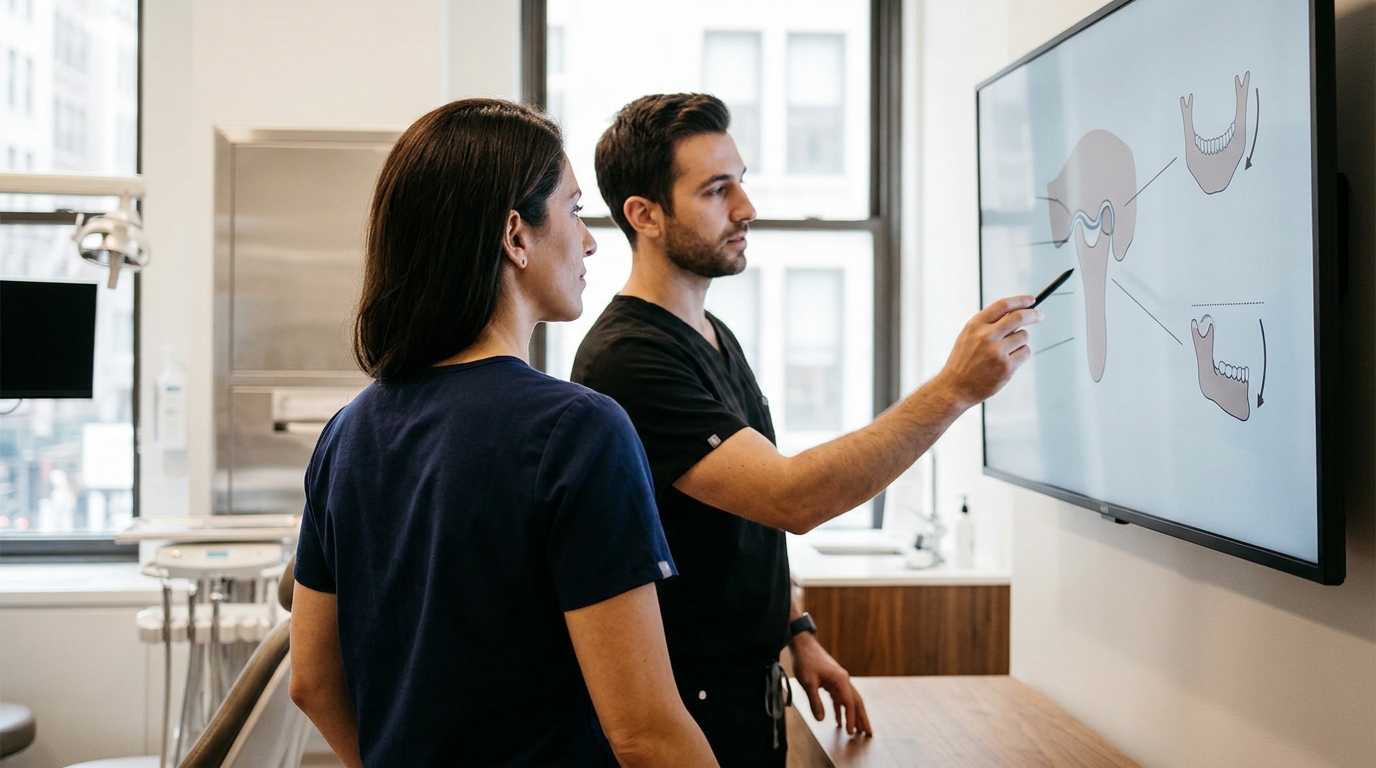
For most patients with temporomandibular joint (TMJ) disorders, physical therapy is the first-line treatment for restoring normal jaw function. Surgery is generally reserved for severe, end-stage cases where conservative care has failed. At Park Avenue Oral, Maxillofacial & Implant Surgery, we evaluate each patient's specific anatomy to determine if non-invasive therapy can resolve the issue or if surgical intervention is necessary to restore function and quality of life.
Understanding the Treatment Spectrum
TMJ disorders are complex conditions affecting the joint that connects the lower jaw to the skull. The approach to treatment depends heavily on the underlying cause, which can range from muscle tension to structural bone deformities. Physical therapy focuses on soft tissue management, while surgery addresses hard tissue and structural anomalies. Understanding the distinction between these two approaches is critical for setting realistic expectations and achieving long-term stability.
The Role of Physical Therapy
Physical therapy is a conservative, non-invasive approach that targets the muscles, ligaments, and soft tissues surrounding the jaw. It is often the first step in treatment for patients experiencing pain, clicking, or limited range of motion. Therapists use manual techniques, stretching, and strengthening exercises to reduce muscle tension and improve joint mobility. This method is ideal for patients whose symptoms are primarily muscular in origin, such as those suffering from bruxism (teeth grinding) or stress-related jaw clenching.
The Role of Surgical Intervention
Surgical intervention is a more invasive option used when structural problems prevent the jaw from functioning correctly. At Park Avenue Oral, Maxillofacial & Implant Surgery, we offer surgical evaluation and treatment options. Surgery is typically indicated for patients with severe joint degeneration, ankylosis (stiffness), or significant skeletal discrepancies that cannot be corrected with therapy alone. The goal of surgery is to restore the mechanical function of the joint and alleviate chronic pain that has not responded to other treatments.
Comparison of Treatment Modalities
The following table outlines the key differences between physical therapy and jaw surgery for TMJ disorders. This comparison helps patients and referring providers understand the scope, risks, and expected outcomes of each approach.
| Criteria | Physical Therapy | Jaw Surgery |
|---|---|---|
| Primary Target | Muscles, ligaments, and soft tissues | Bone, joint structures, and discs |
| Invasiveness | Non-invasive | Invasive (Surgical) |
| Recovery Time | Gradual improvement over weeks to months | 1-3 weeks for initial healing, longer for full function |
| Best For | Muscle tension, mild to moderate pain, clicking | Severe degeneration, ankylosis, failed conservative care |
| Risk Profile | Low risk, minimal side effects | Higher risk, requires anesthesia and recovery |
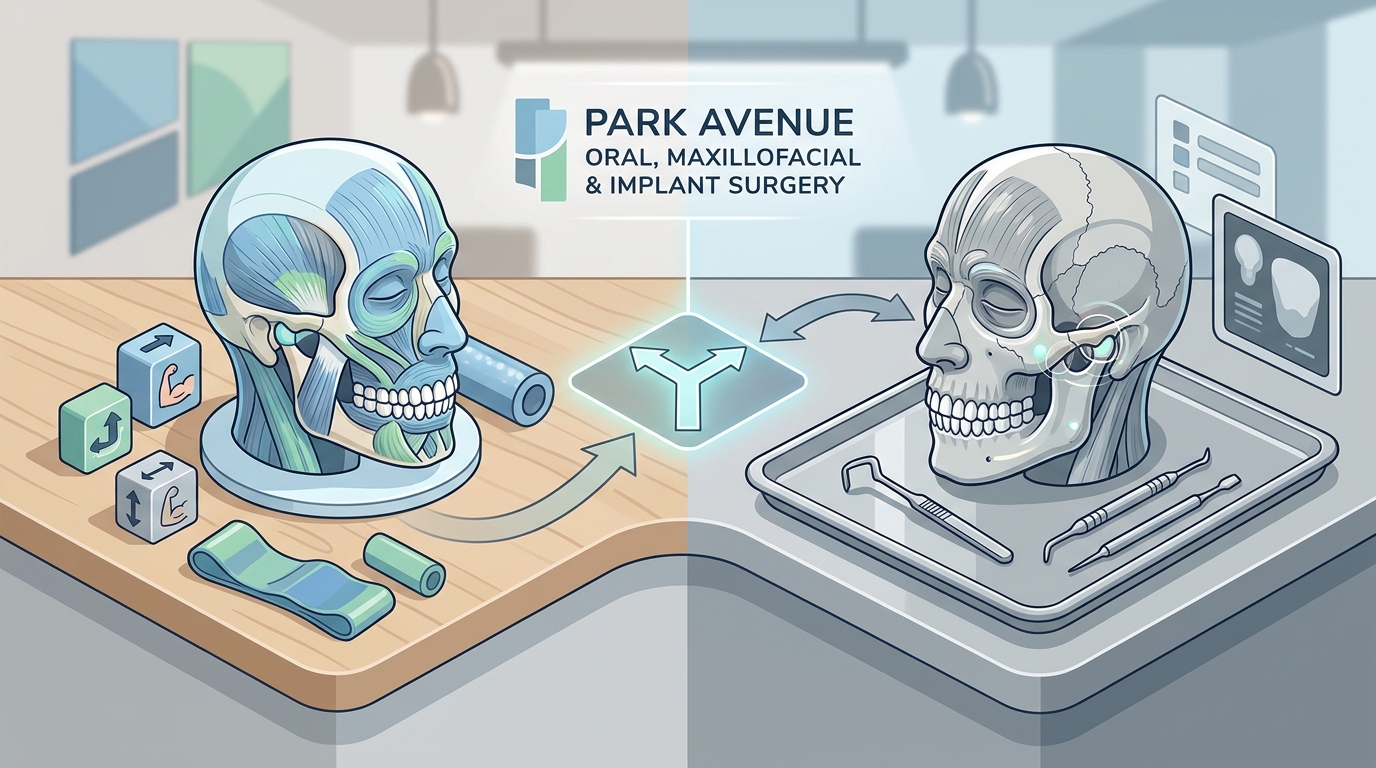
Physical Therapy for TMJ Disorders
Physical therapy is the cornerstone of conservative TMJ management. It is highly effective for patients whose symptoms stem from muscular dysfunction. The therapy typically involves a combination of manual therapy, therapeutic exercises, and patient education. By addressing the root cause of muscle tension, physical therapy can significantly reduce pain and improve jaw mobility without the need for anesthesia or incisions.
Strengths and Limitations
The primary strength of physical therapy is its low risk profile. It allows patients to maintain control over their recovery and often results in long-term improvements in jaw function. However, it has limitations. Physical therapy cannot correct structural bone deformities or replace a severely damaged joint. If the underlying issue is a displaced disc that has not reduced or advanced arthritis, therapy alone may provide only temporary relief.
Who It Suits
This approach is best suited for patients with mild to moderate TMJ disorders, particularly those with muscle pain, limited opening due to muscle spasm, or clicking without locking. It is also ideal for patients who are anxious about surgery and wish to exhaust all non-invasive options first.
Jaw Surgery for TMJ Disorders
When conservative treatments fail, surgical options become necessary to restore normal jaw function. At Park Avenue Oral, Maxillofacial & Implant Surgery, we utilize advanced techniques to address complex TMJ issues. Surgical procedures are designed to address the specific structural pathology affecting the patient's joint.
Strengths and Limitations
Surgery offers the ability to correct structural problems that therapy cannot. It can remove damaged tissue, reposition discs, or replace the joint structure when indicated. This provides a definitive solution for end-stage TMJ disorders. The limitation is the inherent risk of surgery, including infection, bleeding, and the need for a recovery period. Additionally, surgery is a more significant commitment in terms of cost and time off work.
Who It Suits
Surgical intervention is recommended for patients with severe TMJ pain, ankylosis, or significant joint degeneration that has not responded to physical therapy, medications, or splints. It is also indicated for patients with congenital deformities or failed previous TMJ surgeries. Our team at Park Avenue Oral, Maxillofacial & Implant Surgery works closely with patients to determine if they are candidates for surgical procedures.
Choosing the Right Path for Your Jaw Function
Selecting the appropriate treatment depends on the severity of your symptoms and the underlying cause of your TMJ disorder. A thorough evaluation, including imaging and a physical exam, is essential to make this decision.
Choose Physical Therapy If:
- Your primary symptoms are muscle pain, tension, or fatigue.
- You experience clicking or popping but can still open your mouth fully.
- You have a history of stress-related clenching or grinding.
- You prefer a non-invasive approach and are willing to commit to daily exercises.
Choose Jaw Surgery If:
- You have tried physical therapy, medications, and splints without lasting relief.
- You have a locked jaw or significant limitation in opening your mouth.
- Imaging shows severe joint degeneration, bone spurs, or ankylosis.
- You have a displaced disc that has not reduced and is causing chronic pain.
Frequently Asked Questions
Can physical therapy fix a displaced TMJ disc?
Physical therapy can help manage symptoms associated with a displaced disc, such as pain and limited opening, by reducing muscle tension and improving joint mechanics. However, it cannot physically reposition a disc that is stuck out of place. If the disc remains displaced and causes significant pain or functional limitation, surgical repositioning or replacement may be necessary.
Is surgery a permanent solution for TMJ disorders?
Surgery, particularly total joint replacement, is designed to be a long-term solution for end-stage TMJ disorders. While the prosthesis is durable, patients must still maintain good oral hygiene and follow post-operative care instructions to ensure the longevity of the implant. Regular follow-up appointments are recommended to monitor the joint's function.
How long does recovery take after TMJ surgery?
Recovery time varies depending on the type of surgery. Minimally invasive procedures may require only a few days of rest. More complex surgeries typically require 1-3 weeks for initial healing, with a gradual return to normal activities over several months. At Park Avenue Oral, Maxillofacial & Implant Surgery, we provide detailed post-operative instructions to guide your recovery.
Can I switch from physical therapy to surgery if therapy fails?
Yes, many patients begin with physical therapy and transition to surgery if conservative care does not provide lasting relief. This stepwise approach is common and allows for a thorough evaluation of the joint's response to non-invasive treatments. Our team can help you determine the right time to consider surgical options.
Does insurance cover TMJ surgery?
Coverage for TMJ surgery depends on your specific insurance plan and the medical necessity of the procedure. It is important to discuss financial aspects and verify insurance benefits prior to treatment to understand your coverage and any out-of-pocket costs.
Next Steps for Restoring Jaw Function
Determining whether physical therapy or surgery is the right choice for your TMJ disorder requires a comprehensive evaluation. At Park Avenue Oral, Maxillofacial & Implant Surgery, we combine advanced diagnostic imaging with expert clinical assessment to create a personalized treatment plan. Our team is dedicated to providing compassionate, evidence-based care that prioritizes your safety and comfort. To schedule a consultation and discuss your options for restoring normal jaw function, please contact our office today. Learn more: Accessibility Statement Park Avenue.