

Comparing Jaw Surgery Options: Orthognathic, Chin & TMJ Treatments
Choosing the right surgical intervention for facial structure or pain requires understanding the specific mechanical and aesthetic goals of each procedure. According to the American Association of Oral and Maxillofacial Surgeons, over 3 million orthognathic surgeries are performed globally each year to correct skeletal discrepancies. This statistic highlights the growing demand for precise, minimally invasive solutions that address both functional health and facial harmony. At Park Avenue Oral, Maxillofacial & Implant Surgery, we evaluate every case through a lens of evidence-based care to determine the most effective path for your unique anatomy.
Orthognathic Surgery: Correcting Skeletal Imbalances
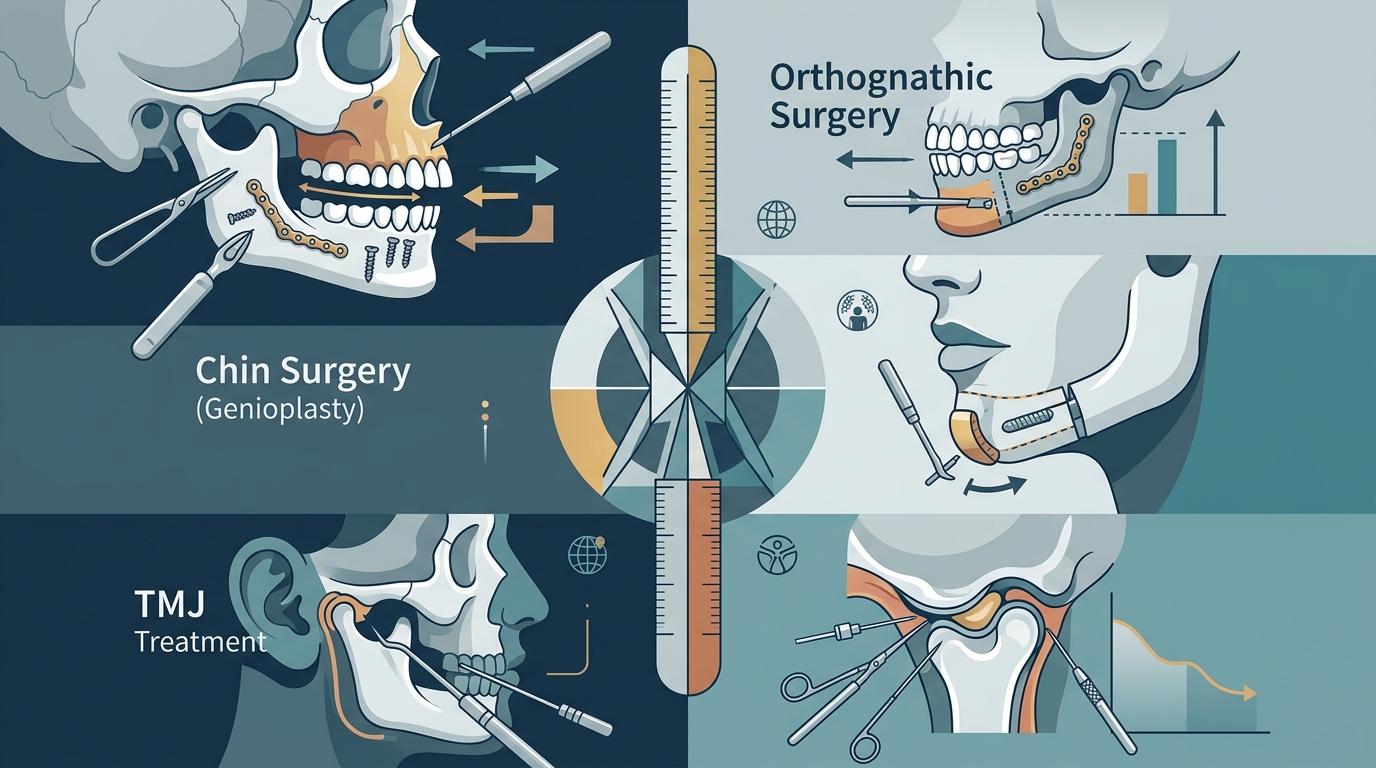
Orthognathic surgery is the primary intervention for correcting significant jaw discrepancies that cannot be resolved with orthodontics alone. This procedure involves the surgical repositioning of the upper jaw (maxilla), lower jaw (mandible), or both. The goal is to establish a stable bite, improve airway function, and enhance facial profile symmetry.
For patients suffering from severe overbites, underbites, or open bites, this surgery is often the only viable solution to restore proper chewing mechanics and speech patterns. Dr. Choi utilizes Virtual Surgical Planning (VSP) to simulate the outcome before the first incision is made. This digital precision ensures that the surgical cuts are planned to minimize trauma to surrounding tissues.
The benefits extend beyond aesthetics. Correcting the jaw alignment can significantly alleviate chronic headaches and temporomandibular joint strain. By addressing the root skeletal cause, patients often experience a dramatic improvement in their quality of life. The recovery process is streamlined through the use of Exparel Extended Pain Relief, which provides localized anesthesia to reduce postoperative discomfort.
Chin Surgery: Augmentation and Reshaping
Chin surgery, or genioplasty, focuses specifically on the mandibular symphysis. Unlike orthognathic surgery, which addresses the entire jaw joint and bite, genioplasty is designed to alter the projection and shape of the chin. This procedure is ideal for patients who have a receding chin (microgenia) or a chin that is too prominent (pogonitis).
There are two primary approaches to chin surgery. The first involves the placement of an implant to add volume. The second, and often preferred method by Dr. Choi, is a sliding genioplasty. This technique involves cutting the chin bone and repositioning it forward, backward, or vertically. This method preserves the natural bone structure and provides a more permanent and natural-looking result.
Chin surgery is frequently combined with orthognathic surgery to achieve a balanced facial profile. However, it can also be performed as a standalone procedure for aesthetic enhancement. The use of the Medtronic Piezoelectric Saw allows for precise bone cuts that spare soft tissue and nerves, leading to faster healing times. This technology is a cornerstone of our minimally invasive philosophy.
TMJ Disorder: Surgical and Non-Surgical Options
Temporomandibular joint (TMJ) disorders affect millions of people, causing pain in the jaw joint and muscles that control jaw movement. Treatment options range from conservative therapies to invasive surgery. At Park Avenue Oral, Maxillofacial & Implant Surgery, we prioritize a stepwise approach to ensure the least invasive effective treatment is used first.
Non-surgical options include the use of occlusal splints, physical therapy, and Botox injections to relax the masseter muscles. These methods are effective for many patients and can provide significant relief without the risks associated with surgery. However, for cases involving structural damage to the joint, such as arthritis or disc displacement, surgical intervention may be necessary.
Surgical options for TMJ disorders include arthrocentesis, arthroscopy, and open joint surgery. Dr. Choi’s fellowship training in minimally invasive surgery allows him to perform these procedures with minimal tissue disruption. The goal is to relieve pain and restore joint function while preserving the natural anatomy of the jaw. Patients often report a significant reduction in chronic pain and an improvement in their ability to open their mouths fully.
Procedure Comparison Matrix
Understanding the differences between these procedures is crucial for making an informed decision. The table below summarizes the key distinctions regarding indications, techniques, and recovery.
| Procedure | Primary Indication | Surgical Technique | Recovery Focus |
|---|---|---|---|
| Orthognathic Surgery | Skeletal bite discrepancies, airway issues | Bone repositioning with VSP planning | Swelling management, soft diet |
| Chin Surgery | Receding or prominent chin, profile imbalance | Sliding genioplasty or implant placement | Nerve sensation recovery, incision care |
| TMJ Treatment | Joint pain, clicking, limited movement | Arthrocentesis, Botox, or open surgery | Joint rest, physical therapy |
Key Takeaways
- Orthognathic surgery corrects skeletal bite issues and improves airway function, often requiring pre- and post-surgical orthodontics.
- Chin surgery (genioplasty) reshapes the chin bone or adds implants to improve facial profile balance and symmetry.
- TMJ treatment begins with conservative options like Botox and splints, progressing to minimally invasive surgery only when necessary.
- Virtual Surgical Planning (VSP) is used for jaw surgeries to ensure precision and reduce operative time by over 20%.
- Minimally invasive techniques, including the use of the Medtronic Piezoelectric Saw, significantly reduce postoperative pain and recovery time.
- Dr. Choi is a Fellow of the American College of Surgeons (FACS), a distinction held by less than 5% of surgeons in his field.
- Park Avenue Oral, Maxillofacial & Implant Surgery is located at 121 E 60th St, New York, NY, serving the Tri-State area.
Frequently Asked Questions
What is the difference between jaw surgery and chin surgery?
Jaw surgery (orthognathic) corrects the position of the entire upper or lower jaw to fix bite issues and airway problems. Chin surgery (genioplasty) specifically alters the shape or projection of the chin bone for aesthetic or minor functional improvements.
Is TMJ surgery always necessary?
No. Most TMJ disorders are treated successfully with non-surgical methods such as occlusal splints, physical therapy, and Botox. Surgery is reserved for cases with structural joint damage that does not respond to conservative care.
How does Virtual Surgical Planning improve outcomes?
VSP allows Dr. Choi to digitally simulate the surgery beforehand. This precision reduces operative time, minimizes tissue trauma, and ensures that the final result matches the planned aesthetic and functional goals.
What is the recovery time for orthognathic surgery?
Initial recovery typically takes two to three weeks, with significant swelling subsiding. Full bone healing can take several months. The use of Exparel pain relief helps manage discomfort during the critical first few days.
Can chin surgery be done without an implant?
Yes. A sliding genioplasty involves cutting and repositioning the patient's own chin bone. This method is often preferred because it uses natural bone, reducing the risk of implant rejection or shifting over time.
How do I know if I need jaw surgery?
If you have a severe overbite, underbite, or open bite that causes difficulty chewing, speaking, or breathing, you may be a candidate. A consultation with an oral and maxillofacial surgeon can determine if skeletal correction is needed.
What technology does Park Avenue Oral Surgery use?
We utilize advanced tools including Virtual Surgical Planning, CT-guided implant placement, the Medtronic Piezoelectric Saw for precise bone cuts, and Exparel for extended postoperative pain relief.
Schedule Your Consultation
Choosing the right surgical path is a critical decision that impacts your long-term health and confidence. Dr. Choi and the team at Park Avenue Oral, Maxillofacial & Implant Surgery are dedicated to providing compassionate, evidence-based care. We invite you to schedule a consultation to discuss your specific needs and explore your options.
Click here to book your appointment online or call our office at 212-339-3930. We are located at 121 E 60th St, 7A, New York, NY 10022. Our team is ready to guide you toward a healthier, more balanced future.