

Dental implants are widely regarded as the gold standard for tooth replacement, yet they are not immune to failure. According to recent clinical data, the overall success rate for dental implants is approximately 95% to 98%, meaning that 2% to 5% of cases may encounter complications such as implant loss, infection, or aesthetic failure. This statistic highlights a critical reality: while implants are highly reliable, they are not infallible. The difference between a lifelong restoration and a costly revision often comes down to surgical precision, patient selection, and postoperative care. Understanding these common pitfalls is the first step toward ensuring your investment in oral health yields lasting results. (Accessibility Statement Park Avenue)
Inadequate Pre-Surgical Planning
One of the most frequent causes of implant failure is insufficient pre-surgical planning. Traditional two-dimensional X-rays often fail to reveal the true three-dimensional anatomy of the jaw, including the proximity of vital nerves, sinuses, and adjacent teeth. Without a comprehensive 3D assessment, surgeons may place implants in suboptimal positions, leading to nerve damage, sinus perforation, or aesthetic discrepancies. (Oral Surgeon NYC l)
Virtual Surgical Planning (VSP) has emerged as a critical tool in preventing these errors. VSP allows surgeons to digitally map the patient's anatomy, plan the exact implant position, and even fabricate surgical guides before the procedure begins. This technology ensures that the implant is placed with millimeter-level precision, significantly reducing the risk of intraoperative complications. At Park Avenue Oral, Maxillofacial & Implant Surgery, we utilize advanced CT-guided implant placement to ensure every procedure is executed with maximum safety and accuracy. For more details on our technological approach, visit our Advanced Technology page.
Ignoring Bone Quality and Quantity
Bone density and volume are the foundational pillars of implant success. If the jawbone has resorbed due to prolonged tooth loss, periodontal disease, or trauma, there may be insufficient support to anchor an implant securely. Placing an implant in weak or thin bone can lead to early failure, as the implant cannot achieve osseointegration, the process where the bone fuses with the titanium post.
Preventing this mistake requires a thorough evaluation of bone health during the consultation phase. If bone loss is detected, bone grafting or sinus lift procedures may be necessary to rebuild the foundation. These preparatory steps, while adding time to the overall treatment timeline, are essential for long-term stability. Our Oral Surgery services include comprehensive bone grafting solutions to ensure your jaw is ready for implant placement.
Compromised Infection Control
Peri-implantitis, an inflammatory condition affecting the soft and hard tissues around dental implants, is a leading cause of late-stage implant failure. This condition is often triggered by bacterial infection, which can originate from poor surgical sterility, inadequate oral hygiene, or pre-existing periodontal disease. If left untreated, peri-implantitis can lead to bone loss and eventual implant loss.
Prevention begins with strict aseptic techniques during surgery and rigorous postoperative hygiene instructions. Patients must commit to a meticulous oral care routine, including regular brushing, flossing, and professional cleanings. Dr. Choi emphasizes the importance of Safe & Comfortable Anesthesia and sterile environments to minimize the risk of infection. By adhering to these protocols, patients can significantly reduce their risk of developing peri-implantitis.
Improper Implant Selection and Positioning
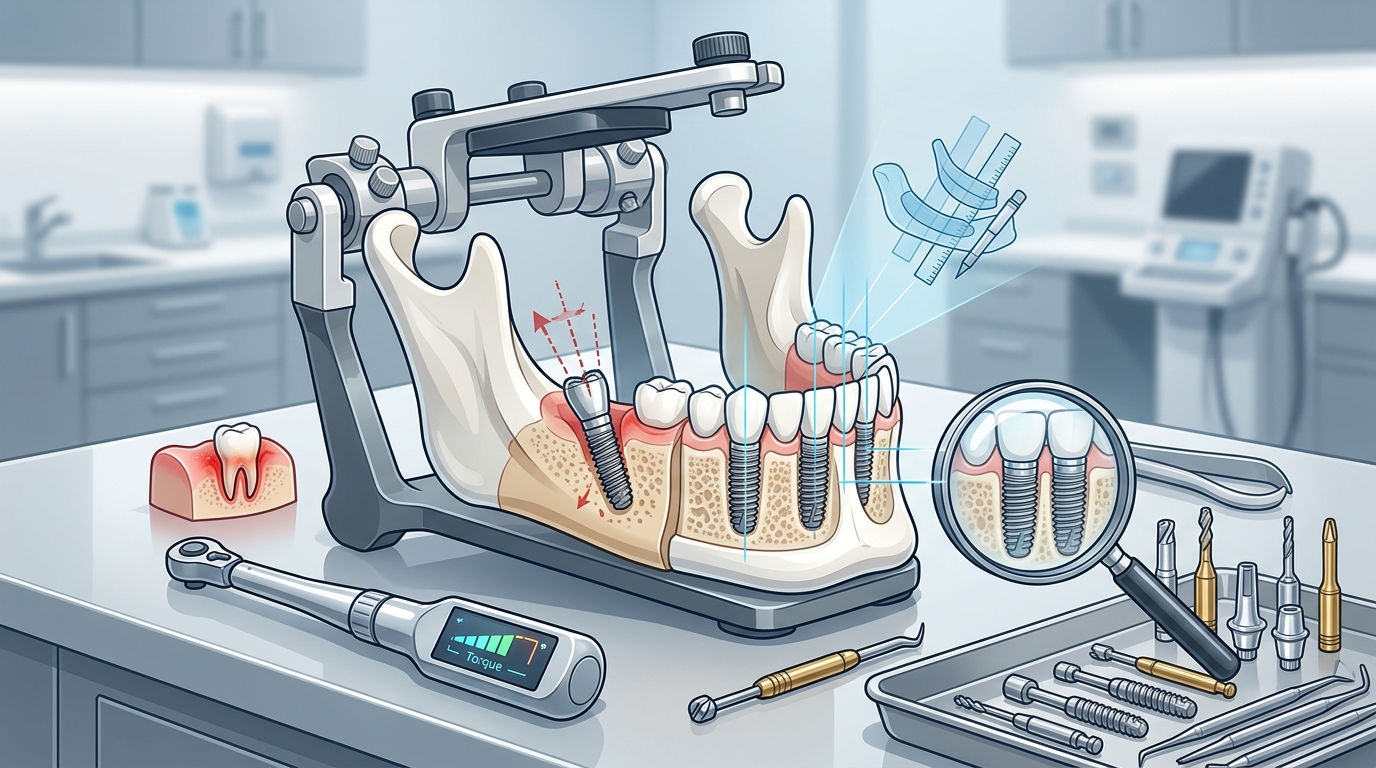
Not all implants are created equal, and not all patients are candidates for the same type of restoration. Choosing the wrong implant size, shape, or material for a specific anatomical situation can lead to mechanical failure or aesthetic issues. For example, placing a standard implant in a zone with high aesthetic demands may result in visible metal margins or gum recession.
Furthermore, improper angulation or depth can cause the final crown to look unnatural or function poorly. This is where expertise matters. Dr. Choi, a Board Certified Oral & Maxillofacial Surgeon, specializes in complex cases that require precise implant positioning. Our approach to Implant Surgery includes selecting the optimal implant system and design based on individual patient needs, ensuring both functional and aesthetic success.
Neglecting Post-Operative Care
The success of a dental implant is not determined solely by the surgery itself but also by how well the patient adheres to postoperative instructions. Neglecting these guidelines can lead to complications such as dry socket, excessive bleeding, or infection. Patients are often advised to avoid smoking, consume soft foods, and take prescribed medications as directed.
Smoking, in particular, is a major risk factor for implant failure. Nicotine constricts blood vessels, reducing blood flow to the surgical site and impairing healing. Patients who smoke are significantly more likely to experience implant loss compared to non-smokers. Our Postop Instructions provide detailed guidance on how to care for your surgical site to promote optimal healing and integration.
Key Takeaways
- Precise Planning is Critical: Utilizing Virtual Surgical Planning (VSP) and CT-guided imaging reduces surgical errors and improves implant placement accuracy.
- Bone Health Matters: Insufficient bone volume or density can lead to implant failure; bone grafting may be necessary to ensure a stable foundation.
- Infection Prevention: Strict aseptic techniques and patient hygiene are essential to prevent peri-implantitis and ensure long-term implant survival.
- Expert Selection: Choosing a board-certified oral surgeon with specialized training in complex implant cases significantly reduces the risk of complications.
- Post-Op Adherence: Following postoperative instructions, including avoiding smoking and maintaining oral hygiene, is crucial for successful osseointegration.
- Regular Maintenance: Routine dental check-ups and professional cleanings are necessary to monitor implant health and prevent late-stage failures.
Frequently Asked Questions
What is the most common cause of dental implant failure?
The most common causes of dental implant failure are poor osseointegration due to insufficient bone quality, infection (peri-implantitis), and improper surgical placement. Preventive measures include thorough pre-surgical planning and strict adherence to postoperative care instructions.
How can I prevent peri-implantitis?
Peri-implantitis can be prevented by maintaining excellent oral hygiene, including regular brushing and flossing around the implant, attending routine dental cleanings, and avoiding smoking. Early detection through regular check-ups is also crucial for managing the condition.
Is bone grafting necessary for all dental implants?
No, bone grafting is not necessary for all patients. It is only required if there is insufficient bone volume or density to support the implant. A comprehensive 3D scan during the consultation will determine if bone grafting is needed.
How long does it take for dental implants to heal?
The healing process, known as osseointegration, typically takes 3 to 6 months. During this time, the implant fuses with the jawbone. The exact duration depends on factors such as bone quality, the location of the implant, and the patient's overall health.
Can smoking affect the success of dental implants?
Yes, smoking significantly increases the risk of implant failure. Nicotine reduces blood flow to the gums and bone, impairing healing and increasing the likelihood of infection. Quitting smoking before and after surgery can improve outcomes.
What is Virtual Surgical Planning (VSP)?
Virtual Surgical Planning (VSP) is a digital process that allows surgeons to plan implant placement in 3D before the surgery. This technology enhances precision, reduces surgery time, and improves overall outcomes by ensuring the implant is placed in the optimal position.
How do I choose the right oral surgeon for implants?
Look for a board-certified oral surgeon with extensive experience in implantology. Check their credentials, read patient reviews, and ensure they use advanced technology such as CT-guided imaging and Virtual Surgical Planning for precise results.
Schedule Your Consultation
Avoiding common dental implant mistakes starts with choosing the right surgical team. Dr. Choi and the team at Park Avenue Oral, Maxillofacial & Implant Surgery are dedicated to providing evidence-based, patient-centered care. We utilize the latest technology and minimally invasive techniques to ensure your safety and comfort. Contact us today to schedule your consultation and take the first step toward a healthy, confident smile.