
Common Mistakes in Computer-Guided Implant Placement and How NYC Surgeons Prevent Them
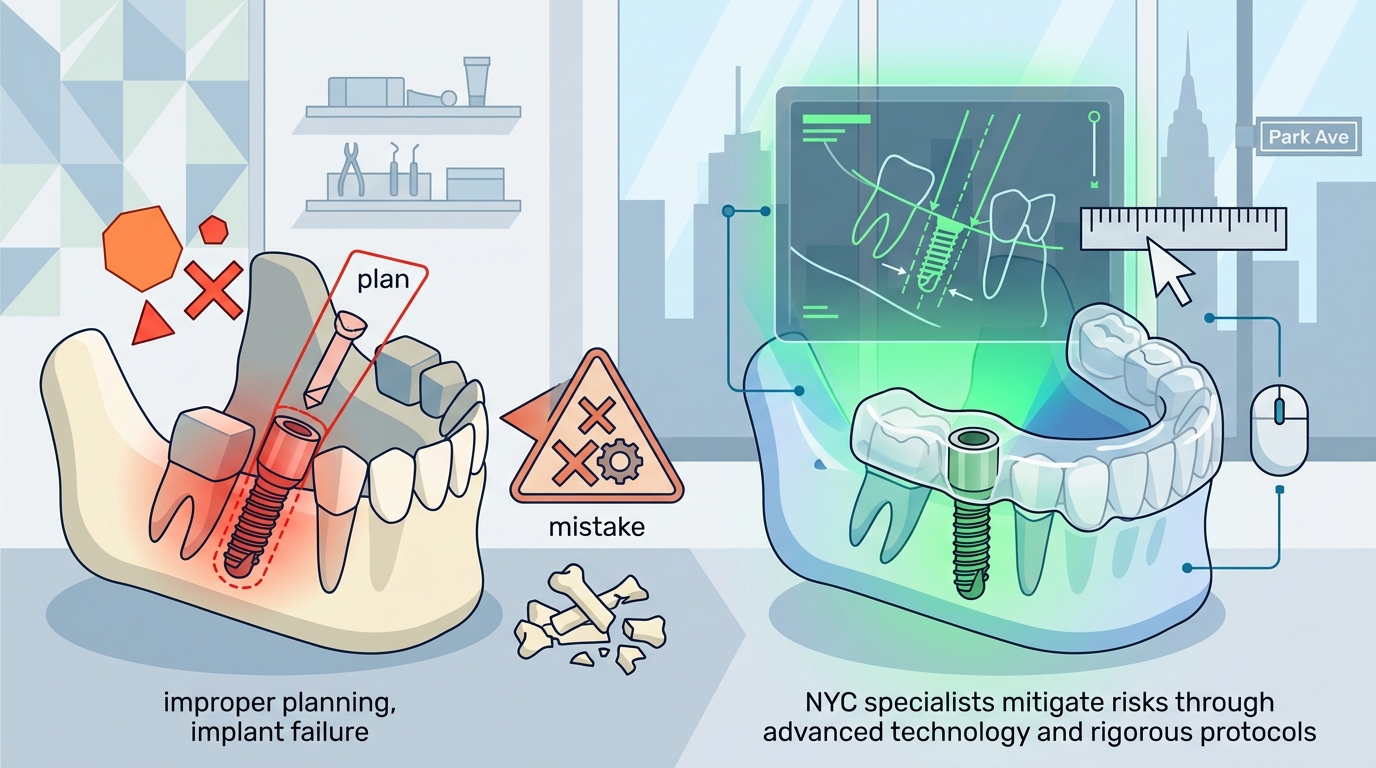
Computer-guided implant surgery has revolutionized dental restoration, yet it is not immune to human error. According to recent clinical data, improper planning remains the leading cause of implant failure in complex cases, affecting patient outcomes significantly. This guide explores the critical errors in digital planning and how top-tier specialists in New York City mitigate these risks through advanced technology and rigorous protocols. (Accessibility Statement Park Avenue)
Understanding Computer-Guided Implant Surgery
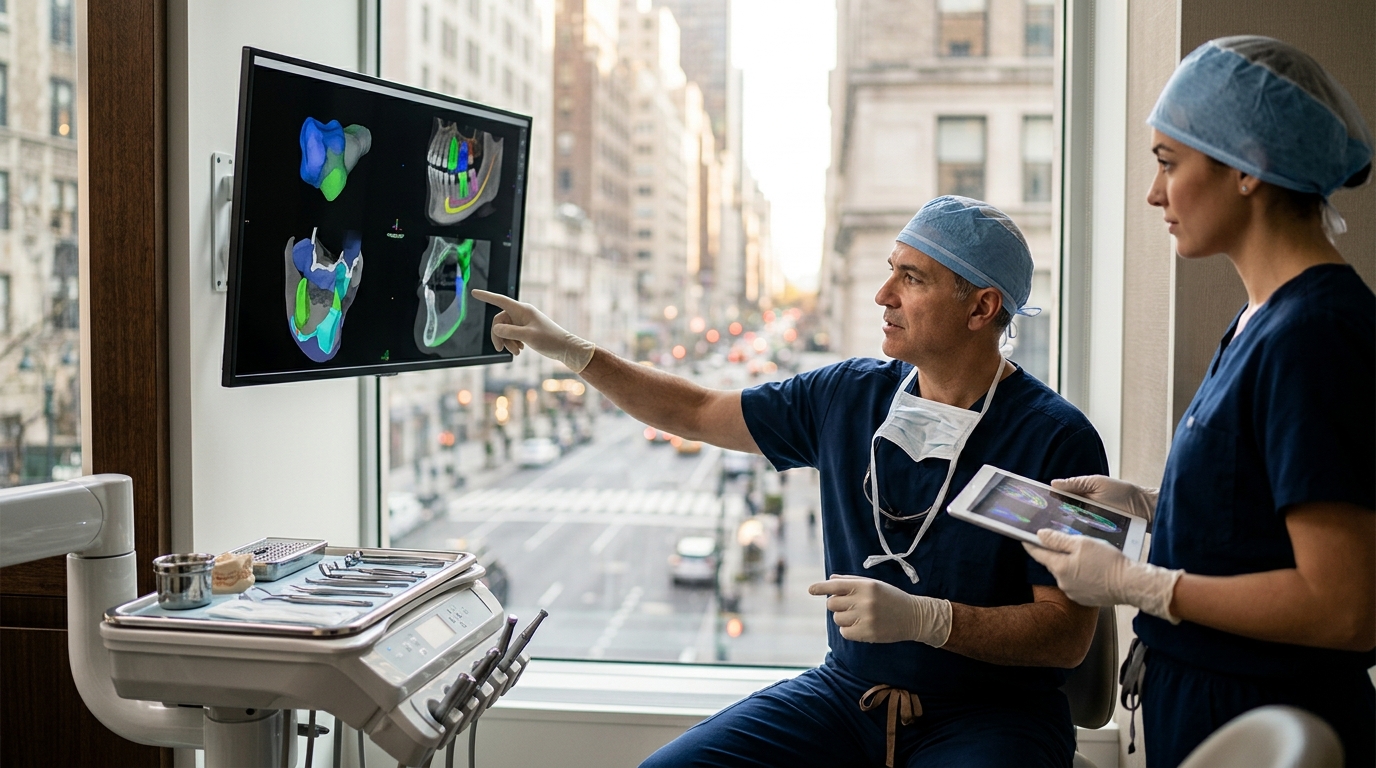
Computer-guided implant surgery, also known as CT-guided implant placement, utilizes three-dimensional imaging to plan the precise location, angle, and depth of dental implants. This technology allows surgeons to visualize the patient's anatomy before making an incision. The process integrates Cone Beam Computed Tomography (CBCT) scans with intraoral digital impressions to create a virtual surgical plan.
At Park Avenue Oral, Maxillofacial & Implant Surgery, we utilize Virtual Surgical Planning (VSP) to ensure every procedure is executed with millimeter precision. This approach minimizes tissue trauma and accelerates healing times. By leveraging advanced tools like the Medtronic Piezoelectric Saw, we can cut bone with extreme accuracy while preserving surrounding nerves and blood vessels.
Mistake 1: Poor Scanning and Data Acquisition
The foundation of any successful guided surgery is high-quality data. A common mistake is using low-resolution CBCT scans or inaccurate intraoral scans. If the digital model does not perfectly match the patient's actual anatomy, the surgical guide will be misaligned. This leads to implants placed in incorrect positions, potentially damaging the inferior alveolar nerve or sinus cavities.
To prevent this, we adhere to strict imaging protocols. We use high-resolution CBCT scanners that provide detailed views of bone density and nerve pathways. Additionally, we ensure that the digital impressions are taken with high-precision scanners to capture the exact contours of the gums and teeth. This dual-data approach ensures that the surgical guide fits perfectly and the planned implant positions are achievable.
Mistake 2: Ignoring Bone Quality and Density
Another critical error is failing to account for bone quality during the planning phase. Bone density varies significantly across the jaw, and ignoring these variations can lead to implant instability. For example, placing an implant in low-density bone without proper planning can result in primary failure, where the implant does not integrate with the bone.
Our approach involves a thorough analysis of bone density using CT data. We identify areas of insufficient bone and plan for bone grafting or sinus lifts when necessary. This proactive strategy ensures that the implant has a stable foundation. For patients requiring additional support, we offer advanced bone grafting techniques and PRF (Platelet-Rich Fibrin) to enhance healing and bone regeneration.
Mistake 3: Inadequate Soft Tissue Assessment
Many surgeons focus exclusively on bone while neglecting the soft tissue. The gum tissue plays a crucial role in the aesthetic and functional success of an implant. If the soft tissue is not properly assessed, the final restoration may look unnatural or fail to seal against bacteria, leading to peri-implantitis.
We integrate soft tissue analysis into our Virtual Surgical Planning. This allows us to predict the final gum line and ensure that the implant abutment emerges through the tissue at the correct angle. By considering the soft tissue envelope, we can achieve a natural-looking result that blends seamlessly with the surrounding teeth. This holistic approach is a key component of our Park Avenue Difference.
Mistake 4: Relying Solely on Static Guides
While static surgical guides are effective, relying on them exclusively can be a mistake in complex cases. Static guides are pre-fabricated based on the initial plan and cannot adapt to intraoperative findings. If the bone anatomy differs slightly from the scan, the guide may not fit, forcing the surgeon to deviate from the plan.
To mitigate this risk, we combine static planning with dynamic navigation capabilities. Dynamic navigation provides real-time feedback during surgery, allowing the surgeon to adjust the implant position if necessary. This hybrid approach ensures maximum safety and precision. We also utilize CT-guided implant placement techniques that allow for continuous verification of the implant trajectory throughout the procedure.
Mistake 5: Anesthesia and Safety Oversights
Computer-guided surgery often involves complex procedures that require deep sedation. A common mistake is underestimating the anesthesia requirements or failing to monitor the patient adequately. Improper anesthesia management can lead to patient discomfort, anxiety, and even medical complications.
At Park Avenue Oral, Maxillofacial & Implant Surgery, patient safety is our top priority. We offer safe and comfortable anesthesia options, including IV sedation and nitrous oxide. Our team is trained in advanced airway management and monitors vital signs continuously throughout the procedure. We also use Exparel Extended Pain Relief to minimize postoperative pain, reducing the need for narcotics and enhancing recovery.
Key Takeaways
- Precision in Planning: High-resolution CBCT scans and accurate intraoral impressions are essential for successful guided surgery.
- Bone Quality Matters: Ignoring bone density can lead to implant failure; always plan for grafting if needed.
- Soft Tissue Integration: Assessing gum tissue ensures aesthetic and functional success of the final restoration.
- Hybrid Navigation: Combining static guides with dynamic navigation provides real-time safety adjustments.
- Safety First: Advanced anesthesia monitoring and pain management protocols are critical for patient comfort.
- Expertise: Dr. Choi's fellowship training in minimally invasive surgery ensures optimal clinical outcomes.
- Technology: Utilizing tools like the Medtronic Piezoelectric Saw reduces trauma and speeds up recovery.
Frequently Asked Questions
What is computer-guided implant surgery?
Computer-guided implant surgery is a technique that uses 3D imaging and digital planning to precisely place dental implants. It allows surgeons to visualize the anatomy and plan the procedure before surgery.
How does Virtual Surgical Planning (VSP) help?
VSP creates a digital model of the patient's mouth, allowing the surgeon to simulate the implant placement. This ensures optimal positioning and avoids critical structures like nerves and sinuses.
Is computer-guided surgery safer than traditional methods?
Yes, computer-guided surgery is generally safer because it minimizes tissue trauma and reduces the risk of damaging nerves or blood vessels. It also allows for more predictable outcomes.
What is the role of bone grafting in guided surgery?
Bone grafting is often necessary when there is insufficient bone density. It provides a stable foundation for the implant and is planned using CT data to ensure proper integration.
How long is the recovery time for guided implant surgery?
Recovery time varies by patient, but guided surgery typically results in faster healing due to its minimally invasive nature. Most patients experience minimal pain and return to normal activities within a few days.
What anesthesia options are available?
We offer IV sedation and nitrous oxide to ensure patient comfort. Our team monitors vital signs continuously to ensure safety throughout the procedure.
Can I get dental implants if I have bone loss?
Yes, even with bone loss, dental implants are possible. We use advanced techniques like zygomatic implants or bone grafting to restore function and aesthetics.
Schedule Your Consultation
If you are considering dental implants, it is crucial to choose a surgeon with expertise in computer-guided surgery. Dr. James Choi, MD, DMD, FACS, is a board-certified Oral & Maxillofacial Surgeon with extensive experience in advanced implant placement. He combines cutting-edge technology with compassionate care to deliver exceptional results.
Visit our Meet Dr. Choi page to learn more about his qualifications and philosophy. Contact Park Avenue Oral, Maxillofacial & Implant Surgery today to schedule your consultation and take the first step toward a healthier smile.