
Common Mistakes in Jaw Injury Reconstruction and How to Avoid Them
Jaw injuries, ranging from complex fractures to severe trauma, demand precise surgical intervention to restore function and aesthetics. According to recent clinical data, improper reconstruction can lead to long-term complications in over 15 percent of cases, affecting everything from bite alignment to facial symmetry. At Park Avenue Oral, Maxillofacial & Implant Surgery, we understand that the margin for error in maxillofacial surgery is virtually nonexistent. This guide explores the most frequent errors in jaw injury reconstruction and the advanced protocols used to ensure optimal patient outcomes. (Accessibility Statement Park Avenue)
The Critical Role of Advanced Imaging
One of the most devastating mistakes in jaw injury reconstruction is relying on insufficient diagnostic imaging. Traditional two-dimensional X-rays often fail to capture the complex three-dimensional anatomy of the maxillofacial region. Surgeons must utilize CT guided Implant Placement and volumetric CT scans to map fracture lines accurately.
Without precise 3D mapping, surgeons risk misidentifying the position of the inferior alveolar nerve or the extent of bone displacement. This lack of clarity can lead to unnecessary nerve damage or improper plate placement. At Park Avenue Oral, Maxillofacial & Implant Surgery, we leverage Virtual Surgical Planning (VSP) to simulate the reconstruction before the first incision is made. This technology allows for the creation of patient-specific surgical guides, ensuring that every screw and plate is placed with millimeter-level precision. Research indicates that VSP significantly reduces operative time and improves the accuracy of occlusal restoration.
Risks of Delayed Surgical Intervention
Timing is a critical variable in maxillofacial trauma. A common error is delaying surgical fixation beyond the optimal window, which can lead to malunion or nonunion of the fracture sites. Early intervention, typically within 72 hours of injury, allows for easier reduction of the bone fragments before significant swelling and muscle spasm set in.
Delayed treatment often results in the need for more invasive procedures, such as bone grafting or osteotomies, to correct the healed bone. This not only extends the recovery period but also increases the risk of infection and scarring. Dr. Choi, a board-certified Oral & Maxillofacial Surgeon with over 10 years of experience, emphasizes the importance of immediate assessment for any suspected jaw fracture. Our team is equipped to handle emergency consultations at our New York office to ensure timely and effective treatment.
Mistakes in Rigid Internal Fixation
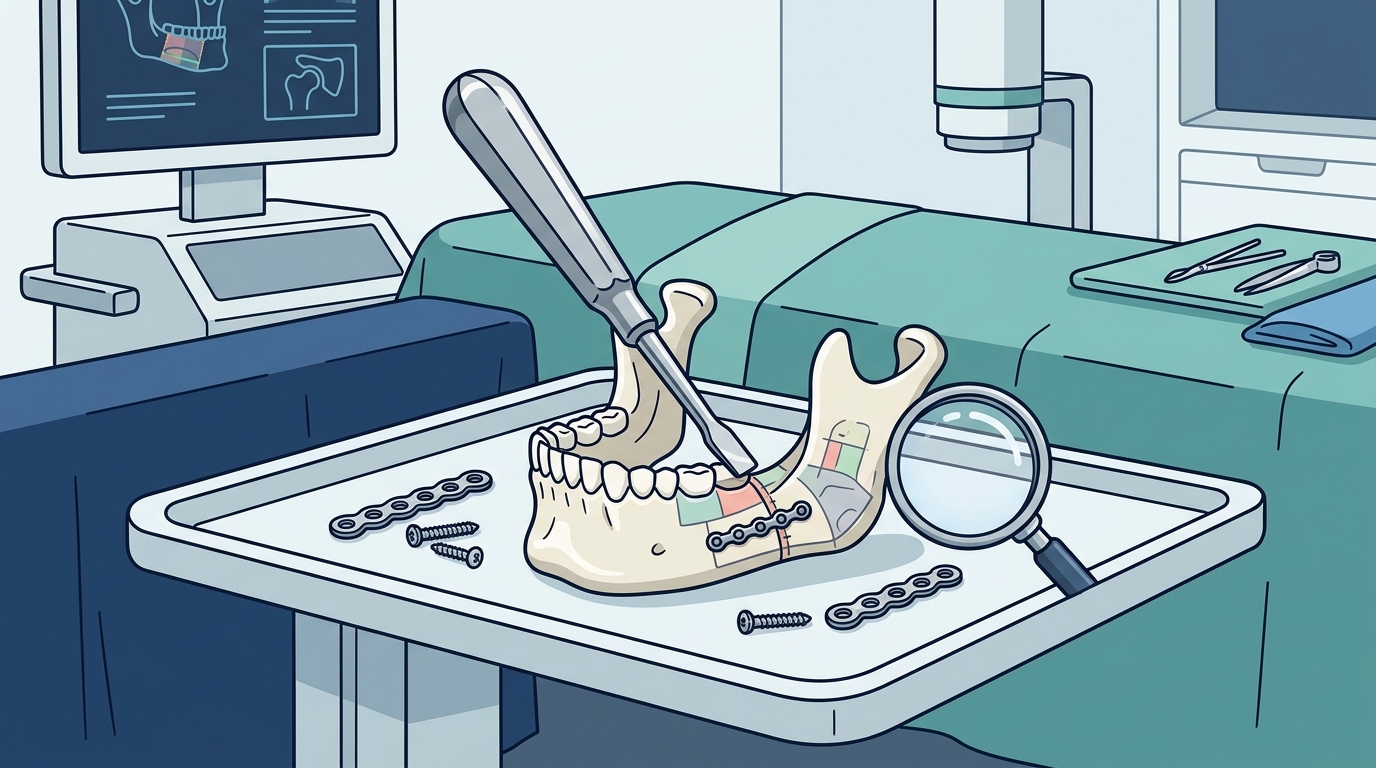
Rigid Internal Fixation (RIF) is the gold standard for stabilizing jaw fractures. However, improper plate selection or placement is a frequent source of post-operative complications. Using plates that are too thin or placing them in areas of high tensile stress can lead to hardware failure or loosening.
Another critical error is inadequate bicortical screw placement. Bicortical screws engage both the inner and outer layers of the bone, providing superior stability compared to monocortical screws in high-load areas. At Park Avenue Oral, Maxillofacial & Implant Surgery, we utilize high-grade titanium plates and screws designed specifically for maxillofacial applications. Our approach ensures that the fixation is robust enough to withstand the forces of chewing while promoting optimal bone healing. For more details on our surgical techniques, visit our Procedures page.
Overlooking Soft Tissue Management
While bone fixation receives the most attention, the management of soft tissue is equally vital. Poor closure techniques can lead to wound dehiscence, infection, and visible scarring. Surgeons must meticulously approximate the mucosal layers to ensure a watertight seal.
Additionally, neglecting the vascular supply of the tissue flaps can result in necrosis. Proper dissection techniques that preserve blood vessels are essential for healing. Our philosophy at Park Avenue Oral, Maxillofacial & Implant Surgery is built on four pillars: Minimally-Invasive Surgery, Minimal Pain, Faster Recovery, and Safe & Comfortable Anesthesia. By prioritizing gentle tissue handling, we minimize trauma and promote faster healing. Learn more about our Park Avenue Difference and our commitment to patient comfort.
Anesthesia and Pain Management Errors
Effective pain management is crucial for patient recovery and satisfaction. A common mistake is underestimating the pain associated with jaw surgery or relying solely on oral medications. This can lead to poor compliance with post-operative instructions and delayed healing.
At Park Avenue Oral, Maxillofacial & Implant Surgery, we utilize Exparel Extended Pain Relief, a long-acting local anesthetic that provides pain relief for up to 72 hours. This technology significantly reduces the need for narcotics and improves the initial recovery experience. Our Safe Anesthesia protocols ensure that every patient receives personalized care tailored to their medical history and surgical needs. We also offer IV sedation and nitrous oxide options for added comfort.
Neglecting Post-Operative Rehabilitation
The final mistake in jaw injury reconstruction is the neglect of post-operative rehabilitation. Patients must adhere to strict dietary restrictions and oral hygiene protocols to prevent infection and ensure proper bone healing. Failure to follow these guidelines can lead to complications such as osteomyelitis or hardware exposure.
Physical therapy may also be required to restore jaw mobility and muscle function. Our team provides comprehensive Post-Op Instructions to guide patients through every step of the recovery process. Regular follow-up appointments are essential to monitor healing and address any concerns promptly. For financial planning, please review our Financial Information page.
Comparison of Reconstruction Approaches
| Approach | Pros | Cons | Best For |
|---|---|---|---|
| Rigid Internal Fixation (RIF) | Stable fixation, early function | Requires surgical access | Complex fractures |
| Maxillomandibular Fixation (MMF) | Non-invasive, cost-effective | Prolonged recovery, dietary limits | Simple fractures |
| Virtual Surgical Planning (VSP) | High precision, reduced OR time | Higher upfront cost | Complex reconstructions |
Key Takeaways
- Advanced 3D imaging and Virtual Surgical Planning are essential for accurate fracture mapping and surgical simulation.
- Early surgical intervention, ideally within 72 hours, prevents malunion and reduces the complexity of reconstruction.
- Proper rigid internal fixation using bicortical screws ensures stability and promotes bone healing.
- Meticulous soft tissue management minimizes scarring and prevents wound dehiscence.
- Utilizing Exparel Extended Pain Relief significantly reduces post-operative pain and narcotic use.
- Comprehensive post-operative rehabilitation and patient education are critical for long-term success.
- Dr. Choi’s fellowship training in minimally invasive surgery allows for precise, less traumatic procedures.
Frequently Asked Questions
What is the best imaging technique for jaw fractures?
Computed Tomography (CT) scans with 3D reconstruction are the gold standard for evaluating jaw fractures. They provide detailed views of bone displacement and nerve proximity, which are critical for surgical planning.
How long does jaw injury reconstruction take?
The duration varies based on the complexity of the injury. Simple fractures may take 1-2 hours, while complex reconstructions using Virtual Surgical Planning can take longer. Dr. Choi’s minimally invasive techniques help reduce overall surgery time.
What is Virtual Surgical Planning (VSP)?
Virtual Surgical Planning is a digital workflow that allows surgeons to simulate the surgery on a 3D model of the patient’s anatomy. This ensures precise placement of plates and screws, leading to better outcomes and faster recovery.
How is pain managed after jaw surgery?
Pain management typically involves a combination of local anesthetics like Exparel, oral medications, and sometimes IV sedation. Our goal is to minimize pain while reducing the need for narcotics.
What is the recovery time for jaw fracture repair?
Initial healing takes about 6-8 weeks, but full recovery can take several months. Patients are advised to follow a soft diet and avoid strenuous activity during the initial healing phase.
Can jaw fractures be treated without surgery?
Some simple fractures can be treated with Maxillomandibular Fixation (MMF), where the jaws are wired together. However, most complex fractures require surgical fixation for optimal function and aesthetics.
What are the risks of delayed treatment?
Delayed treatment can lead to malunion, nonunion, infection, and chronic pain. It may also require more invasive corrective surgeries later on.
Take the Next Step in Your Recovery
Avoiding common mistakes in jaw injury reconstruction requires expertise, advanced technology, and a patient-centered approach. At Park Avenue Oral, Maxillofacial & Implant Surgery, we are dedicated to providing the highest standard of care for your maxillofacial needs. If you or a loved one has suffered a jaw injury, do not wait. Contact our office today to schedule a consultation with Dr. Choi and take the first step toward a full recovery.