

Choosing the right jaw surgery in New York City requires balancing surgical expertise, advanced planning technology, and coordinated orthodontic care. The best options combine board-certified surgeons with digital surgical planning and hospital-grade safety. This guide covers orthognathic techniques, academic medical centers, 3D surgical planning, and orthodontist coordination to help you make an informed decision.
Orthognathic Surgery Techniques
Orthognathic surgery is the surgical repositioning of the upper jaw (maxilla), lower jaw (mandible), or both to correct skeletal and dental irregularities. In New York City, patients have access to a wide range of techniques tailored to their specific anatomical needs. The choice of technique depends on the severity of the malocclusion, the presence of breathing issues, and aesthetic goals.
Maxillary and Mandibular Osteotomies
Maxillary osteotomy involves cutting the bone above the teeth so the entire upper jaw, including the roof of the mouth, can be moved forward, backward, up, or down. Mandibular osteotomy involves cuts behind the molars and down the jawbone to reposition the lower jaw. These procedures are often performed together in bimaxillary surgery to achieve optimal bite alignment and facial balance.
Functional and Aesthetic Corrections
Surgeons in NYC frequently address functional issues such as obstructive sleep apnea, TMJ pain, and difficulty chewing. Maxillomandibular advancement is a specific technique used to improve airway space for sleep apnea patients. Aesthetic corrections, including genioplasty (chin surgery), are often combined with jaw surgery to enhance facial proportions and symmetry.
Academic Medical Centers
Many patients in New York City seek care at academic medical centers due to their research focus and multidisciplinary teams. These institutions often house specialized cleft and craniofacial teams, such as the NYU Langone LI Cleft Team, which treats complex jaw deformities. Academic centers provide access to the latest research and teaching opportunities for the next generation of surgeons.
3D Surgical Planning
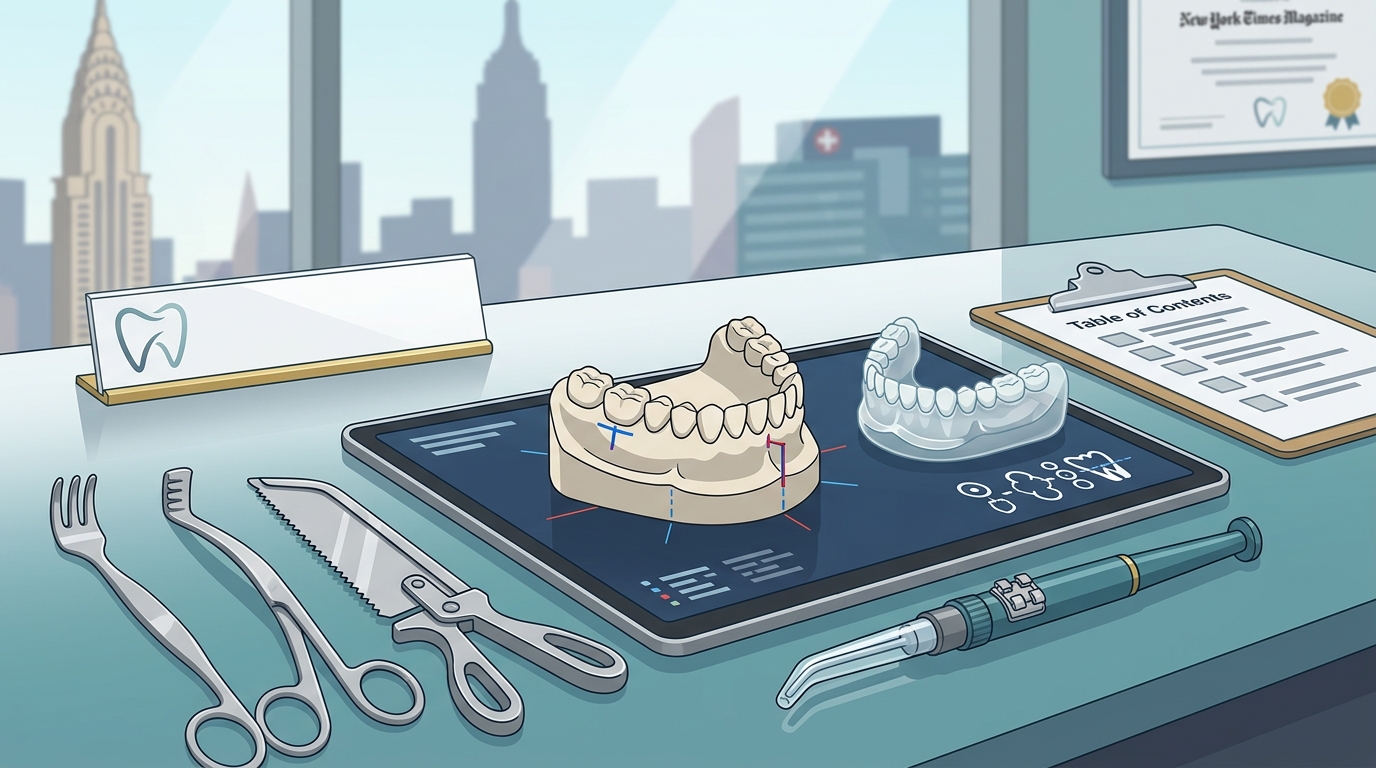
Virtual Surgical Planning (VSP) is an advanced operation design tool that makes jaw surgery more precise, predictable, and efficient. Using detailed 3D images from CT scans, surgeons create a virtual model of the patient's jaw and surrounding structures. This allows the surgical team to simulate the surgery on a computer before it happens, adjusting jaw position, bite, and facial balance until the ideal result is achieved.
Custom Hardware and Guides
From the virtual plan, surgeons create custom surgical guides and splints using 3D printing. These tools ensure the surgery follows the exact movements planned during the simulation. This level of precision shortens surgery time, reduces exposure to anesthesia, and improves accuracy. At Park Avenue Oral, Maxillofacial & Implant Surgery, patient-specific hardware is designed to fit the unique anatomy of each patient, ensuring a consistent and predictable outcome.
Technology Integration
Advanced technology extends beyond planning to the surgical instruments used. Piezoelectric surgery uses ultrasonic vibrations to cut bone while sparing soft tissues, resulting in less bleeding and faster healing. CT-guided implant placement ensures that any dental implants placed during or after jaw surgery are positioned with millimeter-level accuracy. These technologies are standard in top-tier NYC practices and are critical for complex cases.
Orthodontist Coordination
Successful jaw surgery requires close coordination between the oral surgeon and the orthodontist. The orthodontist typically places braces on the teeth 6 to 18 months before surgery to level and align them. This pre-surgical orthodontics, known as decompensation, allows the surgeon to move the jaws into their correct skeletal position without being constrained by dental irregularities.
After surgery, the orthodontist continues to fine-tune the bite and align the teeth. This collaborative approach ensures that the final result is both functional and aesthetic. Patients in New York City benefit from a dense network of orthodontists who work closely with oral surgeons to manage the entire treatment timeline. Clear communication between these specialists is essential for achieving the best possible outcome.
Key Takeaways
- Orthognathic surgery corrects skeletal irregularities in the upper and lower jaws, improving both function and aesthetics.
- Academic medical centers offer specialized teams and research-driven care, but private practices with hospital affiliations provide similar safety nets.
- Virtual Surgical Planning (VSP) uses 3D imaging to simulate surgery, creating custom guides that enhance precision and reduce operative time.
- Piezoelectric instruments and CT-guided techniques minimize trauma to soft tissues, leading to faster recovery and less pain.
- Pre-surgical orthodontics is critical for aligning teeth before jaw repositioning, ensuring a stable and functional bite.
- Post-surgical orthodontic care fine-tunes the bite and completes the treatment process.
- Choosing a surgeon with hospital privileges ensures access to emergency care and advanced resources in New York City.
- Personalized hardware and digital planning are key differentiators in high-quality jaw surgery practices.
Frequently Asked Questions
What is the difference between SARPE and DOME?
SARPE (Surgically Assisted Rapid Palatal Expansion) is used for orthodontic purposes, such as correcting dental arch width. DOME (Distraction Osteogenesis for Maxillary Expansion) is used for airway purposes, such as treating obstructive sleep apnea. The main difference is that SARPE uses a tooth-borne expander, while DOME uses a bone-borne expander.
How long does recovery from jaw surgery take?
Most patients follow a recovery plan for 1 to 3 weeks. This includes keeping the mouth clean, avoiding strenuous activity, and transitioning from a liquid to a soft diet. Full healing and bone integration can take several months, but most patients return to normal activities within a few weeks.
Is jaw surgery painful?
Surgery is performed under general anesthesia, so patients feel no pain during the procedure. Post-operative discomfort is managed with a combination of non-opioid pain relief options, such as Exparel, and standard medications. Early Recovery After Surgery (ERAS) protocols are used to minimize swelling and pain.
Can jaw surgery help with sleep apnea?
Yes, Maxillomandibular Advancement (MMA) is a specific type of jaw surgery used to treat obstructive sleep apnea. By moving the upper and lower jaws forward, the airway space is enlarged, reducing the risk of airway collapse during sleep. A sleep study is typically required to diagnose the severity of the condition.
Do I need braces before jaw surgery?
In most cases, yes. Pre-surgical orthodontics is used to align the teeth and prepare them for jaw repositioning. This process can take 6 to 18 months, depending on the complexity of the case. Some cases may not require braces if the teeth are already well-aligned.
What is the role of Virtual Surgical Planning?
Virtual Surgical Planning allows surgeons to simulate the surgery on a computer using 3D CT scans. This helps in designing custom surgical guides and hardware, ensuring that the surgery follows the planned movements precisely. It improves accuracy, reduces surgery time, and helps patients visualize their expected outcome.
Is Park Avenue Oral, Maxillofacial & Implant Surgery affiliated with a hospital?
Yes, Dr. James Choi maintains privileges at Lenox Hill Hospital and NYU Langone Hospital as an Attending Surgeon. This affiliation provides patients with access to hospital-grade care and 24/7 emergency support, ensuring safety and continuity of care.
What are the risks of jaw surgery?
Like any major surgery, jaw surgery carries risks such as infection, bleeding, and nerve damage. However, the use of advanced technology, such as piezoelectric instruments and 3D planning, significantly reduces these risks. Choosing a board-certified surgeon with extensive experience and hospital affiliations further minimizes potential complications.
Conclusion
Selecting the best jaw surgery option in New York City involves evaluating surgical techniques, the surgeon's credentials, and the level of technological support. Patients should look for board-certified surgeons who utilize 3D surgical planning and have strong affiliations with major hospitals. Park Avenue Oral, Maxillofacial & Implant Surgery offers a comprehensive approach to jaw surgery, combining advanced technology with personalized care. To discuss your specific case and explore your options, schedule a consultation with our team today.