

What Does Orthognathic Surgery Actually Involve and How Does It Change Your Face?
Orthognathic surgery is a specialized procedure that repositions the upper and lower jaws to correct skeletal misalignments. At Park Avenue Oral, Maxillofacial & Implant Surgery, this treatment addresses severe overbites, underbites, and facial asymmetry. The surgery fundamentally alters facial balance by aligning the jaw bones with the teeth, resulting in improved chewing, breathing, and aesthetic harmony. This process is a life-changing event for many patients seeking functional and cosmetic relief.
The Surgical Procedures Involved
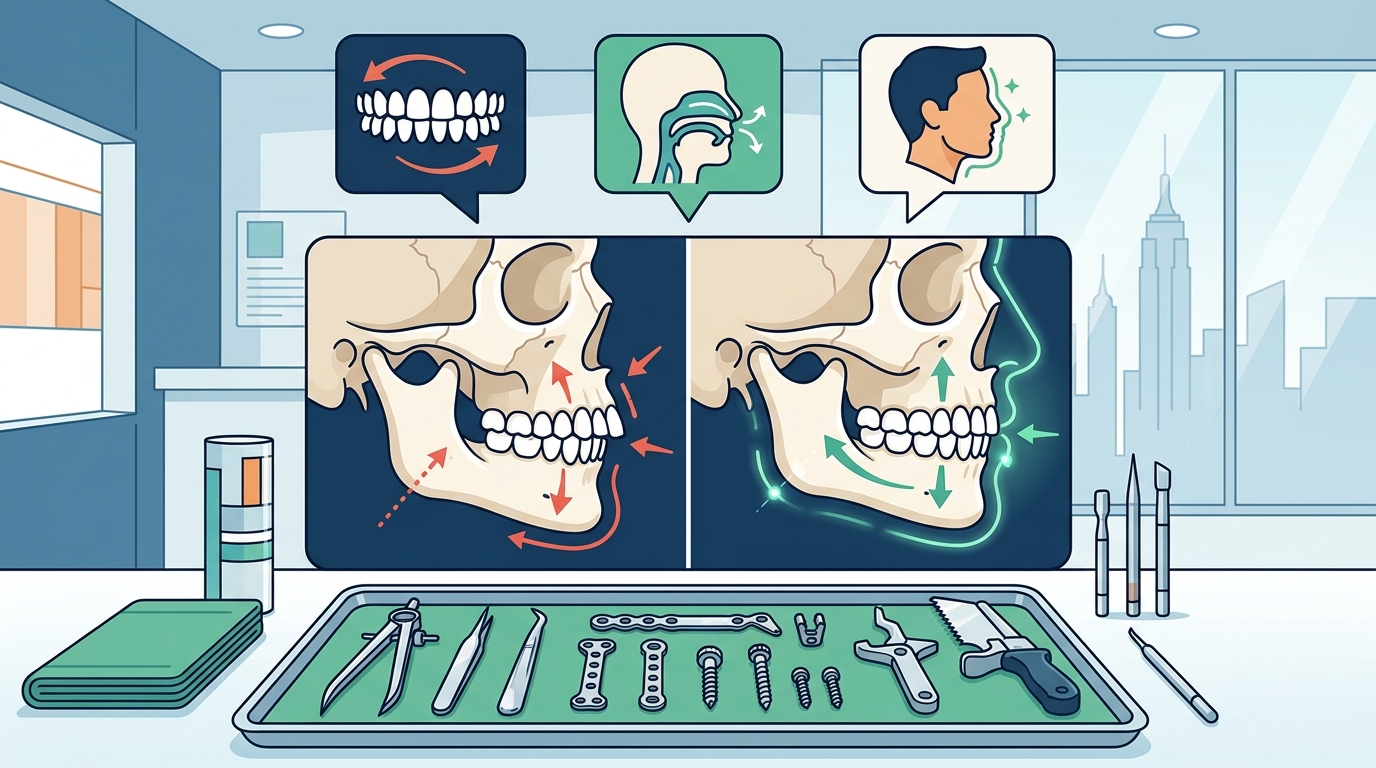
Orthognathic surgery is a surgical repositioning of the upper jaw (maxilla), lower jaw (mandible), or both to correct skeletal and dental irregularities. The specific technique depends on the patient's unique anatomy and treatment goals. At Park Avenue Oral, Maxillofacial & Implant Surgery, we utilize advanced planning to ensure precision during these complex procedures.
Maxillary and Mandibular Osteotomies
For upper jaw surgery, the bone above the teeth is cut so the entire maxilla moves as a unit. This allows the surgeon to shift the jaw forward, backward, or vertically. For lower jaw surgery, cuts are made behind the molars and down the jawbone to allow the front of the jaw to be repositioned. These movements are secured with small plates and screws that hold the bones in their new positions while they heal.
Bimaxillary and Chin Adjustments
Many patients require bimaxillary surgery, where both jaws are moved simultaneously to achieve proper bite alignment. This approach is often combined with a genioplasty, or chin surgery, to refine the facial profile. By adjusting the chin bone, surgeons can correct a weak or receding chin, further enhancing the overall facial balance achieved by the jaw repositioning.
Virtual Surgical Planning and Precision
Modern orthognathic surgery relies heavily on computer-guided planning to predict outcomes accurately. Virtual Surgical Planning (VSP) is an advanced operation design tool that makes jaw surgery more precise, predictable, and efficient. This technology allows the surgical team to simulate the procedure before it happens, ensuring the final result meets both functional and aesthetic standards.
3D Simulation and Custom Hardware
Using detailed 3D images from a CT scan, our surgical team creates a virtual model of the patient's jaw and surrounding structures. This allows us to adjust the jaw position, bite, and facial balance on a computer until the ideal result is reached. From this plan, we create custom surgical guides and splints using 3D printing, which ensure the surgery follows the exact movements planned.
Personalized Medicine in Surgery
Personalized medicine in oral and maxillofacial surgery means the hardware used to fixate jaw bones is customized specifically for the patient. This level of detail results in shorter surgery times, less exposure to anesthesia, and faster recovery. By doing the blueprint work ahead of time, we can improve accuracy and help patients better visualize their expected outcome.
How the Surgery Changes Your Face
Orthognathic surgery aims to restore the functional and esthetic standards of the face. The changes are not just about the teeth; they involve the entire lower third of the face. Patients often notice a more harmonious profile and improved facial symmetry after the healing process is complete.
Profile and Symmetry Improvements
Repositioning the jaws can significantly alter the side profile of the face. For example, moving an underdeveloped upper jaw forward can create a more balanced midface. Correcting facial asymmetry is another key benefit, as the surgery can align the jaws to the midline of the face. These changes lead to a more natural and aesthetically pleasing appearance that reflects the patient's true skeletal structure.
Functional and Aesthetic Harmony
The surgery addresses issues such as severe overbites, underbites, and crossbites that affect both function and appearance. By correcting these skeletal irregularities, the surgery improves chewing, speaking, and breathing. The aesthetic result is a face that looks balanced and proportional, with the lips and chin in their correct positions relative to the rest of the facial features.
Recovery and Post-Operative Care
Recovery from orthognathic surgery requires careful attention to diet and wound care. Most patients are able to return to a normal diet one week after surgery, though the initial days involve a liquid or soft diet. Proper post-operative care is just as important as the surgery itself in ensuring a smooth recovery.
Diet and Hydration
Eating after oral surgery can be an adjustment, so patients start with a liquid diet and advance as they can tolerate. Soft, cool foods like ice cream, yogurt, and pudding are recommended on the day of surgery. Patients should keep themselves well hydrated with electrolyte drinks and avoid foods with seeds or particulates that could get into the surgical sites.
Pain Management and Swelling
Staying ahead of the pain curve is essential for a comfortable recovery. Studies have shown that taking Ibuprofen and Tylenol together is more effective than narcotics for managing post-operative pain. Applying ice to the affected side for the first four days helps minimize swelling, while warm compresses can be used afterward to dissipate bruising. Bruising is normal and will descend down to the neck and chest over time.
Key Takeaways
- Orthognathic surgery is a surgical repositioning of the upper and lower jaws to correct skeletal and dental irregularities.
- Virtual Surgical Planning uses 3D CT scans to simulate the surgery and create custom guides for precise execution.
- The procedure can significantly change facial profile, symmetry, and balance by aligning the jaw bones.
- Bimaxillary surgery often includes a genioplasty to refine the chin and enhance overall facial aesthetics.
- Recovery involves a gradual return to a normal diet and strict adherence to pain management protocols.
- Advanced technology like piezoelectric saws helps minimize trauma to soft tissues during bone cutting.
- At Park Avenue Oral, Maxillofacial & Implant Surgery, we prioritize patient safety and comfort with opioid-free anesthesia options.
Frequently Asked Questions
How long does orthognathic surgery take?
The duration of orthognathic surgery varies depending on the complexity of the case. Simple single-jaw surgeries may take a few hours, while complex bimaxillary procedures can take longer. Virtual Surgical Planning helps shorten surgery time by allowing the team to prepare custom guides and hardware in advance.
Will I have scars on my face?
No, orthognathic surgery is performed inside the mouth, preventing external facial scarring. The incisions are made in the gums, and the surgeon works through these internal access points to reposition the jaw bones.
How does the surgery affect my bite?
The surgery corrects skeletal misalignments that cause bite issues like overbites or underbites. By moving the jaws into proper alignment, the teeth fit together correctly, improving chewing efficiency and reducing wear on the teeth.
Is the change in my face permanent?
Yes, the changes to your face are permanent. The jaw bones are secured with plates and screws and heal in their new positions. The facial profile and symmetry achieved through surgery are long-lasting results.
What is the role of orthodontics in this process?
Orthodontics plays a crucial role in preparing the teeth for surgery. Braces are often used for 6 to 18 months before the procedure to level and align the teeth. This ensures that when the jaws are moved, the teeth fit together perfectly.
Can the surgery help with breathing issues?
Yes, orthognathic surgery can help with breathing issues such as sleep apnea. By advancing the jaws, the surgery can open up the airway and improve airflow, which may reduce the severity of obstructive sleep apnea.
Conclusion
Orthognathic surgery is a powerful tool for correcting skeletal jaw discrepancies and enhancing facial aesthetics. By combining advanced virtual planning with precise surgical techniques, we can deliver predictable and harmonious results. If you are considering this life-changing procedure, our team is here to guide you through every step of the process. To plan your visit and discuss your options, at Park Avenue Oral, Maxillofacial & Implant Surgery.