
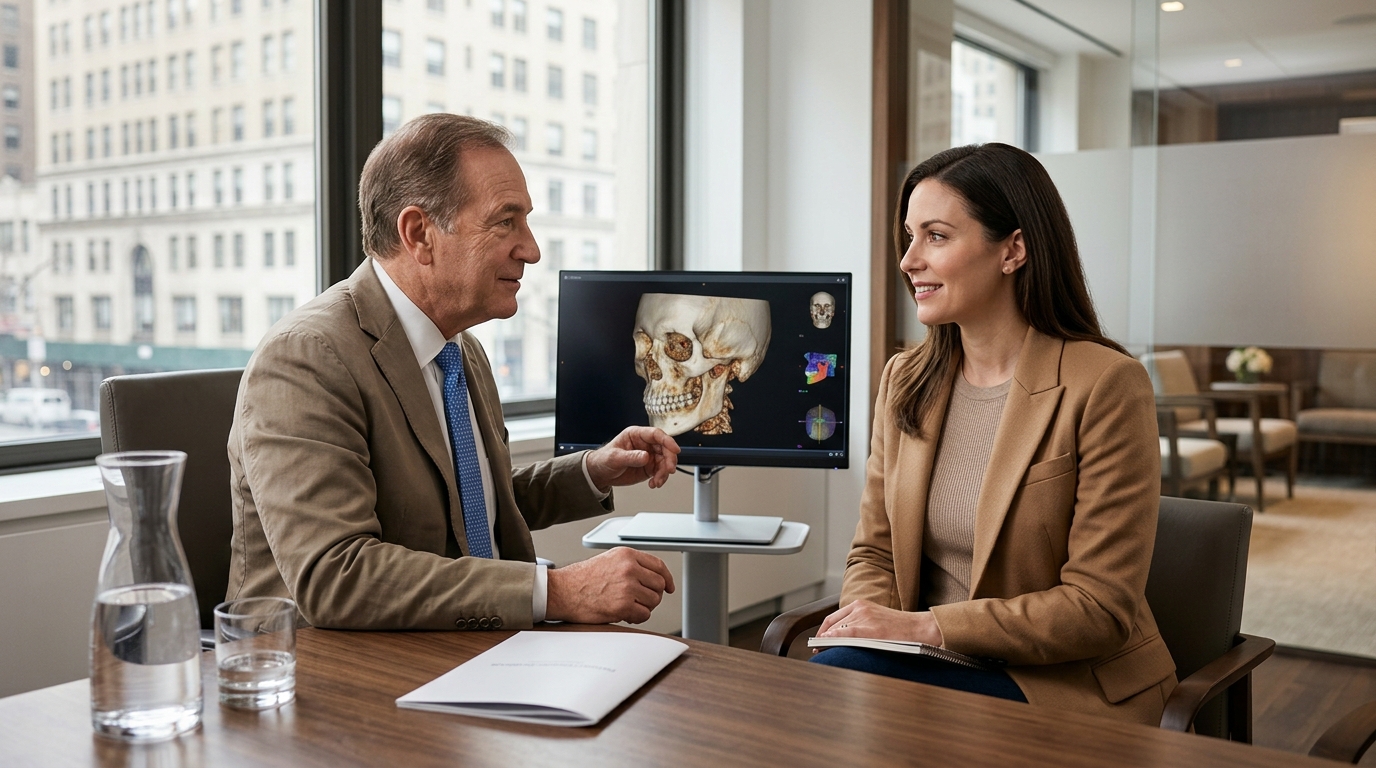
Jaw surgery, or orthognathic surgery, corrects skeletal misalignment to restore normal chewing function. By repositioning the upper and lower jaws, the procedure aligns the teeth and stabilizes the temporomandibular joint. This structural correction reduces pain and allows the jaw muscles to work efficiently. At Park Avenue Oral, Maxillofacial & Implant Surgery, we use advanced planning to ensure precise, lasting results for patients in New York City.
The Role of Skeletal Misalignment in TMJ Pain
Temporomandibular disorder is a group of conditions affecting the jaw joint and surrounding muscles. Many patients assume their pain comes from the joint itself, but the root cause is often skeletal. When the upper and lower jaws do not fit together correctly, the jaw joint is forced to compensate. This constant strain leads to inflammation, clicking, and limited movement. A jaw that is too small, too large, or crooked can cause significant problems with chewing, speaking, and breathing, according to the Veterans Health Library.
Orthognathic surgery addresses this by moving the bones into their proper anatomical positions. Instead of treating the symptoms, the surgery fixes the underlying structural issue. This allows the joint to move freely without the abnormal forces that cause pain. By correcting the skeletal foundation, the muscles can relax and function normally.
Surgical Techniques for Joint and Bone Correction
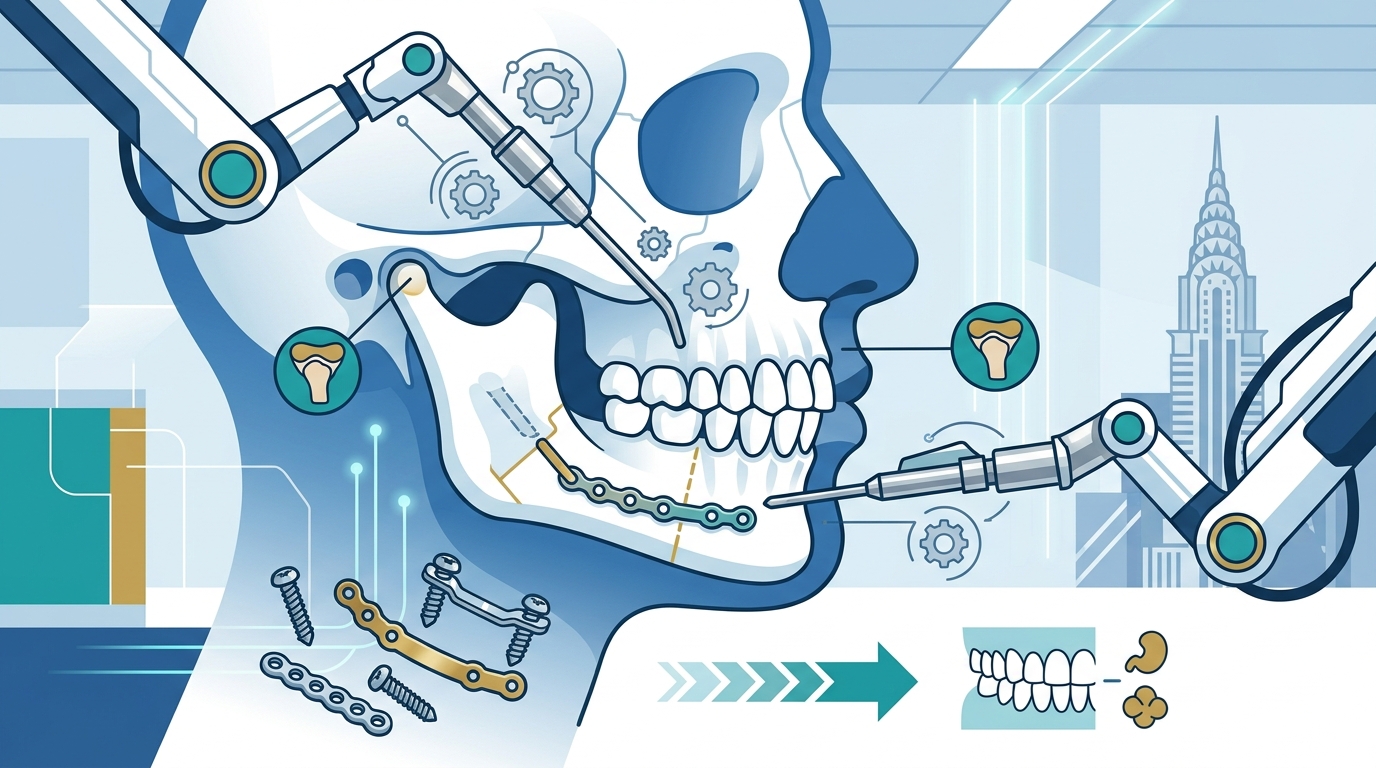
Surgeons use specific osteotomy techniques to reposition the jaw bones. For the upper jaw, the bone is cut to allow the entire maxilla to move forward, backward, or downward. For the lower jaw, cuts are made behind the molars to allow the mandible to shift into alignment. These movements are held in place with small plates and screws while the bone heals. The precision of these cuts is critical for long-term stability.
At Park Avenue Oral, Maxillofacial & Implant Surgery, we utilize Virtual Surgical Planning to design these movements digitally before the operation. This technology allows us to simulate the surgery on a computer, ensuring the final result is both functional and aesthetic. The use of 3D imaging and custom guides minimizes the time the patient spends under anesthesia. This approach reduces the risk of complications and improves the predictability of the outcome.
Restoring Efficient Chewing Mechanics
Normal chewing requires a coordinated effort between the jaw joint, muscles, and teeth. When the bite is misaligned, the muscles must work harder to grind food, leading to fatigue and pain. After jaw surgery, the teeth meet in a stable, even contact. This balanced bite allows the jaw muscles to distribute force evenly across the teeth. Patients often report that eating becomes easier and less painful after recovery.
The restoration of function is not just about moving bones; it is about retraining the muscles. Post-surgical physical therapy and jaw exercises help patients regain full range of motion. The goal is to restore the ability to chew a variety of foods without discomfort. This functional improvement significantly enhances the patient's quality of life and nutritional intake.
Advanced Technology and Minimally Invasive Approaches
Modern oral and maxillofacial surgery relies on advanced tools to ensure safety and precision. We use piezoelectric surgery, which employs ultrasonic vibrations to cut bone while sparing soft tissues. This technique reduces bleeding and trauma to the area, leading to faster healing. Additionally, we use CT-guided planning to visualize critical structures like nerves and sinuses. This ensures that the surgical cuts are made in the safest possible locations.
For patients with specific joint issues, we may also perform TMJ arthrocentesis or arthroplasty. Arthrocentesis involves flushing the joint with saline to remove inflammatory fluid and debris. This minimally invasive procedure can provide significant relief for patients with internal derangements. By combining these advanced techniques, we offer a comprehensive approach to jaw function restoration.
The Recovery Process and Long-Term Stability
Recovery from jaw surgery involves a period of dietary adjustment and monitoring. Patients typically start with a liquid diet and gradually advance to soft foods. Swelling is common in the first few days but subsides over several weeks. Our team provides detailed post-operative instructions to guide patients through this process. We also offer Exparel, a long-acting local anesthetic, to manage pain without the use of opioids. This opioid-free approach ensures a safer and more comfortable recovery.
Long-term stability is achieved through the fusion of the bone at the osteotomy sites. Follow-up appointments allow the surgeon to monitor healing and make any necessary adjustments. The results of orthognathic surgery are generally permanent, providing lasting relief from TMJ symptoms. Patients can expect a significant improvement in their ability to chew, speak, and breathe comfortably.
Key Takeaways
- Orthognathic surgery corrects skeletal misalignment, which is often the root cause of TMJ pain.
- Virtual Surgical Planning allows for precise, computer-guided jaw repositioning.
- Restoring a balanced bite reduces muscle strain and improves chewing efficiency.
- Advanced tools like piezoelectric saws minimize trauma and speed up healing.
- Non-opioid pain management options, such as Exparel, enhance post-surgical comfort.
- Long-term stability is achieved through bone fusion and proper post-operative care.
Frequently Asked Questions
Does jaw surgery permanently fix TMJ disorders?
Yes, for patients with skeletal misalignment, jaw surgery provides a permanent structural correction. By aligning the jaws, the abnormal forces on the joint are eliminated, leading to lasting relief from pain and dysfunction.
How long does it take to recover chewing function?
Most patients begin chewing soft foods within a week and return to a normal diet within four to six weeks. Full muscle strength and range of motion may take several months to develop completely.
Is jaw surgery painful?
The surgery itself is performed under general anesthesia, so you will not feel pain during the procedure. Post-operative discomfort is managed with non-opioid medications and long-acting local anesthetics to ensure comfort.
Can jaw surgery improve breathing issues?
Yes, maxillomandibular advancement, a type of jaw surgery, can widen the airway and treat sleep apnea. This procedure moves both jaws forward to create more space for airflow during sleep.
What is the role of orthodontics in jaw surgery?
Orthodontics, or braces, are often used before surgery to align the teeth. This decompensation process ensures that the teeth are in the correct position for the jaws to be moved into their new, aligned positions.