

Choosing the right oral surgeon depends on matching their specific training to your procedure. For complex cases like jaw surgery or implants, you need a board-certified surgeon with fellowship training in that exact area. At Park Avenue Oral, Maxillofacial & Implant Surgery, our dual-degree surgeons specialize in advanced techniques tailored to your unique anatomy.
Why Specialized Training Matters for Complex Procedures
Not all oral surgeons have the same level of training for every procedure. General dentists and some oral surgeons may handle simple extractions, but complex cases require advanced surgical skills. Board certification is a key indicator of a surgeon's competence. It means they have completed a rigorous residency program and passed national board examinations. For procedures like orthognathic surgery or complex implant placement, this certification is non-negotiable.
At Park Avenue Oral, Maxillofacial & Implant Surgery, our lead surgeon holds both an MD and DMD degree. This dual-degree approach ensures a deep understanding of both medical and dental anatomy. This level of training is critical for procedures that involve the airway, nerves, and complex bone structures.
Wisdom Teeth and Complex Extractions
Wisdom tooth removal is one of the most common oral surgery procedures, but it can be complicated by impaction or proximity to nerves. A surgeon with specific experience in complex surgical extractions can better manage these risks. They are trained to use advanced imaging to visualize the nerve path and use minimally invasive techniques to reduce trauma.
For example, a surgeon trained in piezoelectric surgery can use ultrasonic vibrations to cut bone while sparing soft tissue. This technique, available at our practice, results in less swelling and faster recovery compared to traditional drills. If you are facing impacted wisdom teeth, look for a surgeon who explicitly lists this technique in their services.
Dental Implants and Bone Grafting
Dental implant placement requires precision to ensure long-term success. The surgeon must be able to assess bone density and volume accurately. CT-guided implant placement is a standard of care for many complex implant cases. It allows the surgeon to plan the exact position, angle, and depth of the implant before surgery. This reduces the risk of complications and ensures the implant integrates properly with the bone.
Additionally, many patients need bone grafting to support implants. A surgeon experienced in bone grafting and sinus lifts can restore the necessary bone structure. At Park Avenue Oral, Maxillofacial & Implant Surgery, we use advanced grafting techniques to enhance healing and promote natural bone regeneration. This specialized training is essential for patients with significant bone loss.
Jaw Surgery and Orthognathic Procedures
Orthognathic surgery, or jaw surgery, is one of the most complex procedures in oral and maxillofacial surgery. It involves repositioning the upper and/or lower jaw to correct skeletal irregularities. This procedure requires a surgeon with extensive training in virtual surgical planning (VSP). VSP allows the surgeon to simulate the surgery on a computer, adjusting the jaw position and bite until the ideal result is achieved.
This level of precision is crucial for achieving both functional and aesthetic outcomes. A surgeon who uses VSP can create custom surgical guides and splints, ensuring the surgery follows the exact movements planned. This reduces operating time and improves accuracy. If you are considering jaw surgery, verify that your surgeon uses VSP and has a track record of successful orthognathic cases.
How to Verify Your Surgeon's Credentials
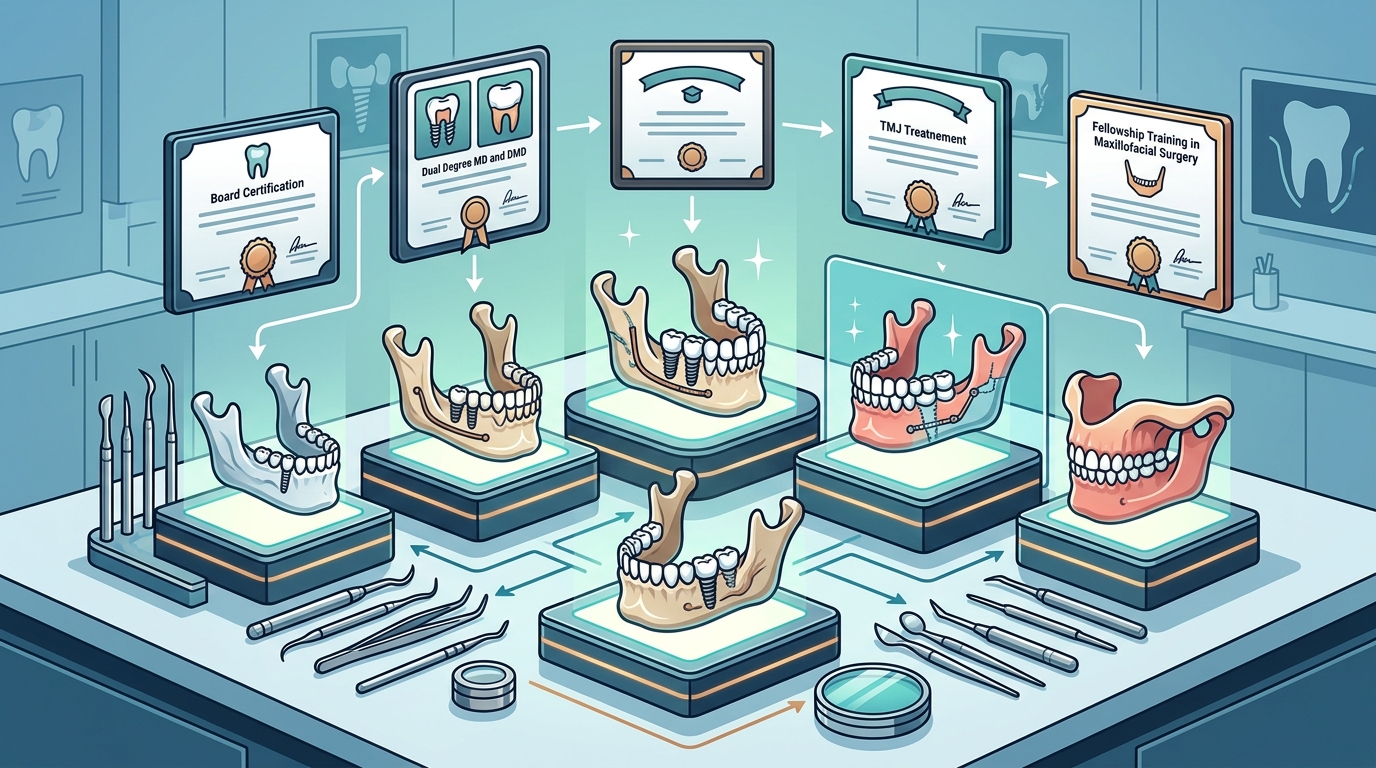
When selecting an oral surgeon, always verify their credentials. Look for board certification by the American Board of Oral and Maxillofacial Surgery. This certification ensures the surgeon has completed a minimum of four years of residency training after dental school. Additionally, check for any fellowship training in specific areas, such as implantology or orthognathic surgery.
At Park Avenue Oral, Maxillofacial & Implant Surgery, our surgeon is fellowship-trained in minimally invasive surgery. This additional training allows us to offer advanced techniques that minimize discomfort and speed up recovery. By choosing a surgeon with the right training for your specific procedure, you can ensure the best possible outcome.
Key Takeaways
- Board certification is essential for complex oral surgery procedures.
- Dual-degree surgeons (MD/DMD) offer a deeper understanding of medical and dental anatomy.
- CT-guided implant placement improves accuracy and reduces complications.
- Virtual Surgical Planning (VSP) is critical for precise jaw surgery outcomes.
- Piezoelectric surgery minimizes soft tissue damage during extractions.
- Fellowship training in specific areas, like implantology, indicates advanced expertise.
Frequently Asked Questions
What is board certification in oral and maxillofacial surgery?
Board certification is a credential awarded by the American Board of Oral and Maxillofacial Surgery to surgeons who have completed a rigorous residency and passed national board examinations.
Why is dual-degree training important for oral surgeons?
Dual-degree training (MD/DMD) provides surgeons with a comprehensive understanding of both medical and dental anatomy, which is crucial for complex procedures involving the airway and nerves.
What is CT-guided implant placement?
CT-guided implant placement is a technique that uses 3D CT scans to plan the exact position, angle, and depth of dental implants before surgery, improving accuracy and safety.
How does Virtual Surgical Planning (VSP) benefit jaw surgery?
VSP allows surgeons to simulate jaw surgery on a computer, adjusting the jaw position and bite to achieve the ideal result, which reduces operating time and improves accuracy.
What is piezoelectric surgery?
Piezoelectric surgery is a technique that uses ultrasonic vibrations to cut bone while sparing soft tissue, resulting in less swelling and faster recovery.
How can I verify my oral surgeon's credentials?
You can verify your oral surgeon's credentials by checking their board certification with the American Board of Oral and Maxillofacial Surgery and reviewing their fellowship training history.
Find the Right Surgeon for Your Procedure
Choosing the right oral surgeon is a critical step in achieving your desired outcome. At Park Avenue Oral, Maxillofacial & Implant Surgery, we combine advanced technology with expert training to deliver safe and effective care. Our team is dedicated to providing personalized treatment plans that address your specific needs. To schedule a consultation, contact our office today.