

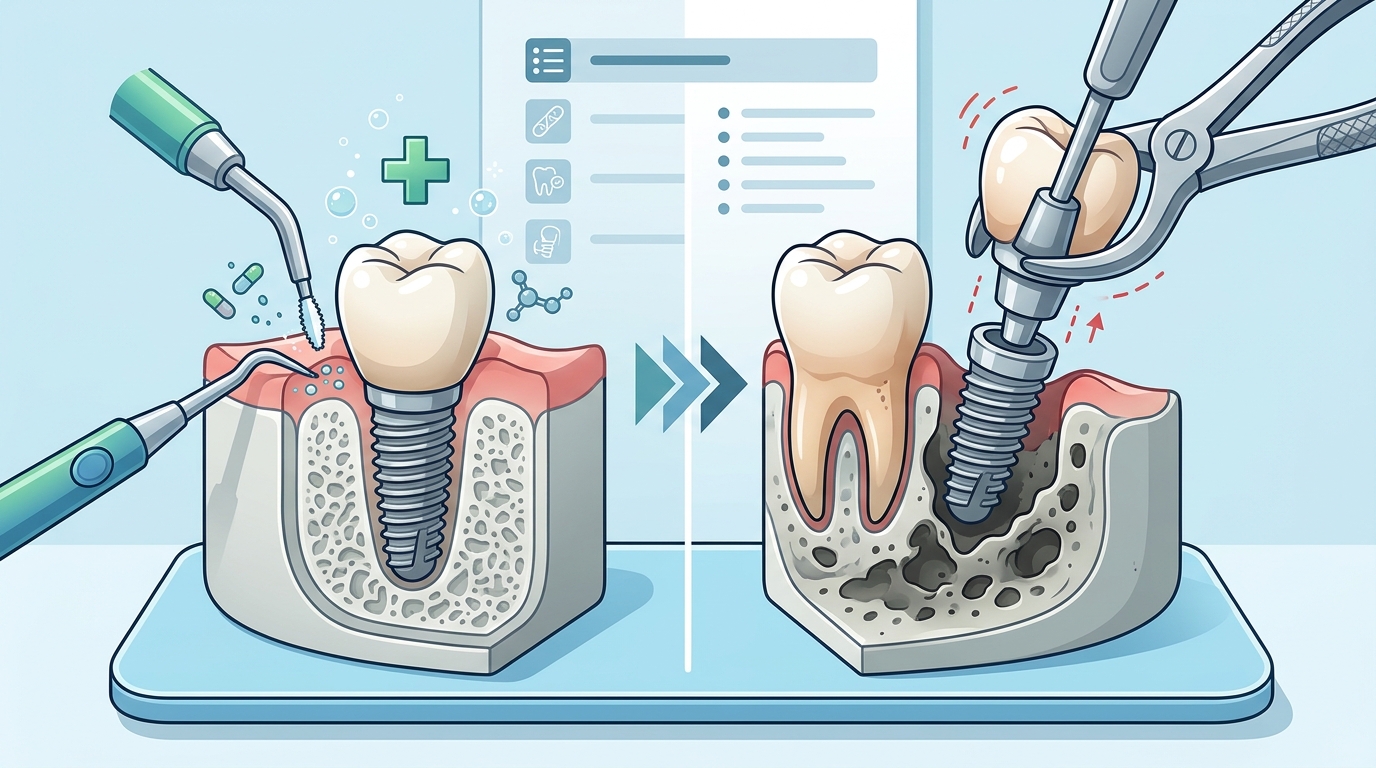
Whether a dental implant infection requires removal depends on the severity of the bone loss and the stability of the implant. In early stages, infections can often be treated with deep cleaning and antibiotics to preserve the implant. However, advanced infections causing significant bone loss or implant mobility typically require removal to prevent further damage to the jawbone.
Understanding Implant Infections
Implant infections are broadly categorized into two types: peri-implant mucositis and peri-implantitis. Peri-implant mucositis is a reversible inflammation of the soft tissue surrounding the implant, similar to gingivitis in natural teeth. It is characterized by redness, swelling, and bleeding upon probing but does not involve bone loss. This condition is the most common complication and is highly treatable.
Peri-implantitis is a more severe condition that involves the progressive loss of supporting bone around the implant. It is defined by the presence of inflammation in the peri-implant mucosa, radiographic bone loss, and bleeding on probing. Unlike mucositis, peri-implantitis is not reversible. The bone that is lost does not regenerate on its own, making early detection and intervention critical for long-term success.
When Can Infections Be Treated Without Removal?
Many patients can retain their implants if the infection is caught early. At Park Avenue Oral, Maxillofacial & Implant Surgery, we prioritize conservative treatments that aim to save the implant whenever clinically viable. The primary goal is to eliminate the bacterial biofilm and reduce inflammation to halt the progression of bone loss.
When Is Implant Removal Necessary?
Despite aggressive treatment, some implants cannot be saved. Removal is indicated when the implant exhibits significant mobility, indicating a loss of osseointegration. If the bone loss is extensive, leaving the implant in place can act as a reservoir for bacteria, potentially spreading the infection to adjacent healthy bone and natural teeth.
Another critical factor is the patient's overall health and ability to maintain hygiene. If a patient cannot effectively clean around the implant, the risk of recurrent infection is high. In such cases, removal is the safest option to prevent systemic health issues. After removal, the site is often treated with bone grafting to prepare for a future replacement, ensuring the jawbone remains healthy and functional.
Advanced Techniques for Managing Failing Implants
Modern oral surgery offers advanced tools to manage complex implant cases. At Park Avenue Oral, Maxillofacial & Implant Surgery, we utilize advanced diagnostics and personalized treatment plans to evaluate failing implants. This includes detailed imaging to assess the extent of bone loss and the condition of the implant.
For patients with severe bone loss, we may use techniques such as Platelet-Rich Fibrin (PRF) to enhance healing. PRF is a natural healing concentrate derived from the patient's own blood. It contains growth factors that promote tissue regeneration and reduce inflammation. When used in conjunction with bone grafts or during implant removal, PRF can improve the biological environment, potentially increasing the success rate of future treatments.
Preventing Infections and Ensuring Long-Term Success
Prevention is the most effective strategy for avoiding implant infections. Regular professional cleanings and diligent home care are essential. Patients should brush twice daily and use interdental brushes or water flossers to clean around the implant. Unlike natural teeth, implants do not have a periodontal ligament, making them more susceptible to plaque accumulation if not cleaned thoroughly.
Smoking is a significant risk factor for implant failure. Nicotine constricts blood vessels, reducing blood flow to the gums and impairing the healing process. Patients who smoke are at a higher risk of developing peri-implantitis. Quitting smoking or reducing tobacco use can significantly improve the prognosis for implant survival. Regular check-ups allow for early detection of any signs of infection, enabling timely intervention.
Key Takeaways
- Peri-implant mucositis is reversible and can be treated without removing the implant.
- Peri-implantitis involves bone loss and is not reversible, requiring aggressive management.
- Early detection through regular dental visits is crucial for saving failing implants.
- Non-surgical debridement and antimicrobial therapy are first-line treatments for mild infections.
- Implant removal is necessary when there is significant mobility or extensive bone loss.
- Advanced techniques like PRF can enhance healing and support future implant placement.
- Smoking and poor oral hygiene are major risk factors for implant infection.
Frequently Asked Questions
Can antibiotics alone cure a dental implant infection?
Antibiotics can help reduce the bacterial load and manage acute symptoms, but they are rarely a standalone cure for peri-implantitis. Mechanical debridement to remove the biofilm from the implant surface is essential for long-term resolution. Antibiotics are typically used as an adjunct to mechanical cleaning.
How long does it take to heal after implant removal?
Healing after implant removal typically takes several months. The soft tissue heals within a few weeks, but the bone requires 3 to 6 months to fill in the space. During this time, the site may be monitored, and bone grafting may be performed to prepare for a new implant.
Is it safe to leave a failing implant in place?
Leaving a failing implant in place can be risky. If the implant is mobile or has extensive bone loss, it can harbor bacteria that spread to surrounding tissues. This can lead to further bone loss and compromise adjacent teeth. Removal is often recommended in these cases to protect overall oral health.
What are the signs of a dental implant infection?
Common signs include redness, swelling, and bleeding of the gums around the implant. Patients may also experience pain, pus discharge, or a bad taste in the mouth. In advanced cases, the implant may become loose or mobile. Any of these symptoms should prompt an immediate visit to an oral surgeon.
Can I get a new implant after one fails?
Yes, most patients can receive a new implant after a failed one is removed. The site must be allowed to heal, and the bone may need to be grafted to ensure sufficient volume for the new implant. With proper planning and treatment, the success rate for replacement implants is high.
Conclusion
Dental implant infections are a serious concern, but they are not always a death sentence for the implant. With early detection and appropriate treatment, many implants can be saved. However, advanced cases may require removal to protect the health of the jawbone. At Park Avenue Oral, Maxillofacial & Implant Surgery, we provide expert care for failing implants, utilizing advanced techniques to ensure the best possible outcomes. If you are experiencing signs of an implant infection, for a comprehensive evaluation and personalized treatment plan.