

Understanding the Different Types of Dental Implants: A Comprehensive Guide
Dental implants are a popular solution for replacing missing teeth, offering numerous benefits such as improved speech, enhanced appearance, and better oral health. However, with various types of dental implants available, it's essential to understand their differences to make an informed decision. In this ultimate guide, we'll explore the most common types of dental implants and their unique features. (Accessibility Statement Park Avenue)
Conventional Implants
Conventional dental implants, also known as endosseous implants, are the most widely used type. They are surgically placed directly into the jawbone and require a healing period of several months to integrate with the bone. Conventional implants are made of titanium and can support one or more replacement teeth. They are suitable for individuals with good oral health and sufficient jawbone density. (Oral Surgeon NYC l)
Advantages of Conventional Implants
- Long-lasting
- Highly durable
- Can support multiple replacement teeth
Disadvantages of Conventional Implants
- Long healing process
- Requires sufficient jawbone density
All-on-X Implants
All-on-X implants, also known as implant-supported bridges or bar-retained dentures, are an alternative solution for individuals with multiple missing teeth. Instead of replacing each tooth individually, an entire arch of replacement teeth is supported by a few implants. All-on-X implants can be placed in a single visit using advanced technology such as computer-guided surgery. (MEET DR CHOI Park)
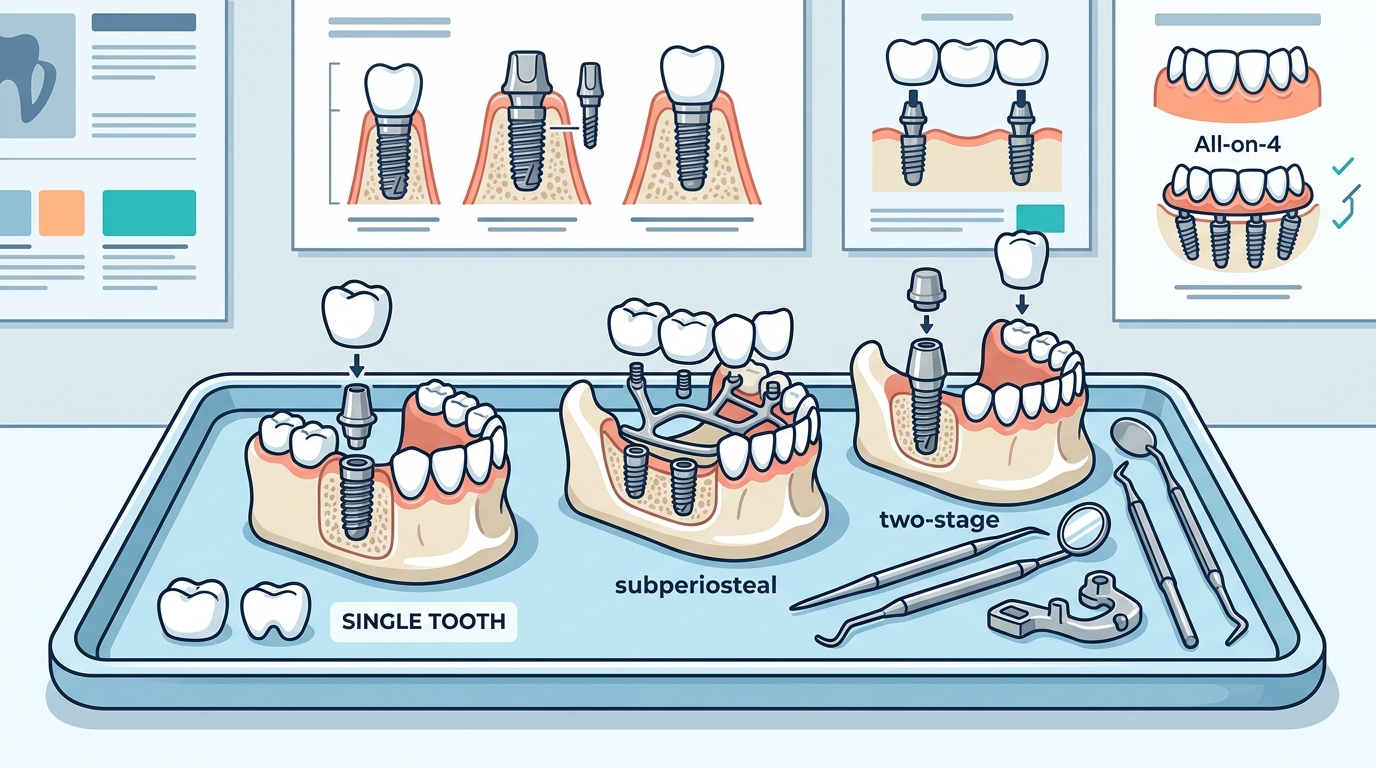
Advantages of All-on-X Implants
- Faster placement
- Improved stability and function
- Reduced number of surgical procedures
Disadvantages of All-on-X Implants
- Higher initial cost
- Requires maintenance
Zygoma and Pterygoid Implants
Zygoma and pterygoid implants are used for supporting full-arch restorations in the posterior maxilla, where bone density is often insufficient for conventional implants. These implants are placed in the cheekbone (zygoma) and the pterygoid bone, providing a stable foundation for the replacement teeth. (IMPLANT SURGERY Park Avenue)
Advantages of Zygoma and Pterygoid Implants
- Effective for individuals with insufficient bone density
- Provides a stable foundation for replacement teeth
Disadvantages of Zygoma and Pterygoid Implants
- Complex surgical procedure
- Higher risk of complications
Failing Implants
Failing implants can be replaced with new ones using various techniques, such as implant removal and bone grafting. The new implant is placed in a stable bone area and allowed to heal before attaching the replacement tooth or teeth.
Advantages of Replacing Failing Implants
- Improved oral health and function
- Enhanced appearance
Disadvantages of Replacing Failing Implants
- Additional cost
- Requires a healing period
Key Takeaways
- Conventional implants are the most widely used type, requiring a healing period and sufficient jawbone density.
- All-on-X implants offer faster placement and improved stability for individuals with multiple missing teeth.
- Zygoma and pterygoid implants are used for supporting full-arch restorations in areas with insufficient bone density.
- Failing implants can be replaced with new ones, improving oral health and function.
Frequently Asked Questions
What are the benefits of dental implants?
Dental implants offer numerous benefits, including improved speech, enhanced appearance, and better oral health. They also help prevent bone loss and maintain facial structure.
How long does it take to get dental implants?
The process of getting dental implants can take several months, including the initial consultation, implant placement, and healing period.
What are the risks of dental implants?
The risks of dental implants include infection, inflammation, and implant failure. Proper oral hygiene and regular dental check-ups can help minimize these risks.
Can dental implants be removed?
Once dental implants are integrated with the jawbone, they cannot be removed like natural teeth. However, they can be replaced if they fail or become damaged.
Choose the Right Dental Implant for Your Needs
At Park Avenue Oral, Maxillofacial & Implant Surgery, we offer various types of dental implants to suit your unique needs. Contact us today to schedule a consultation and discover which implant solution is right for you. Contact Us