
Cost-Benefit Analysis of Computer-Guided Implant Technology for NYC Patients
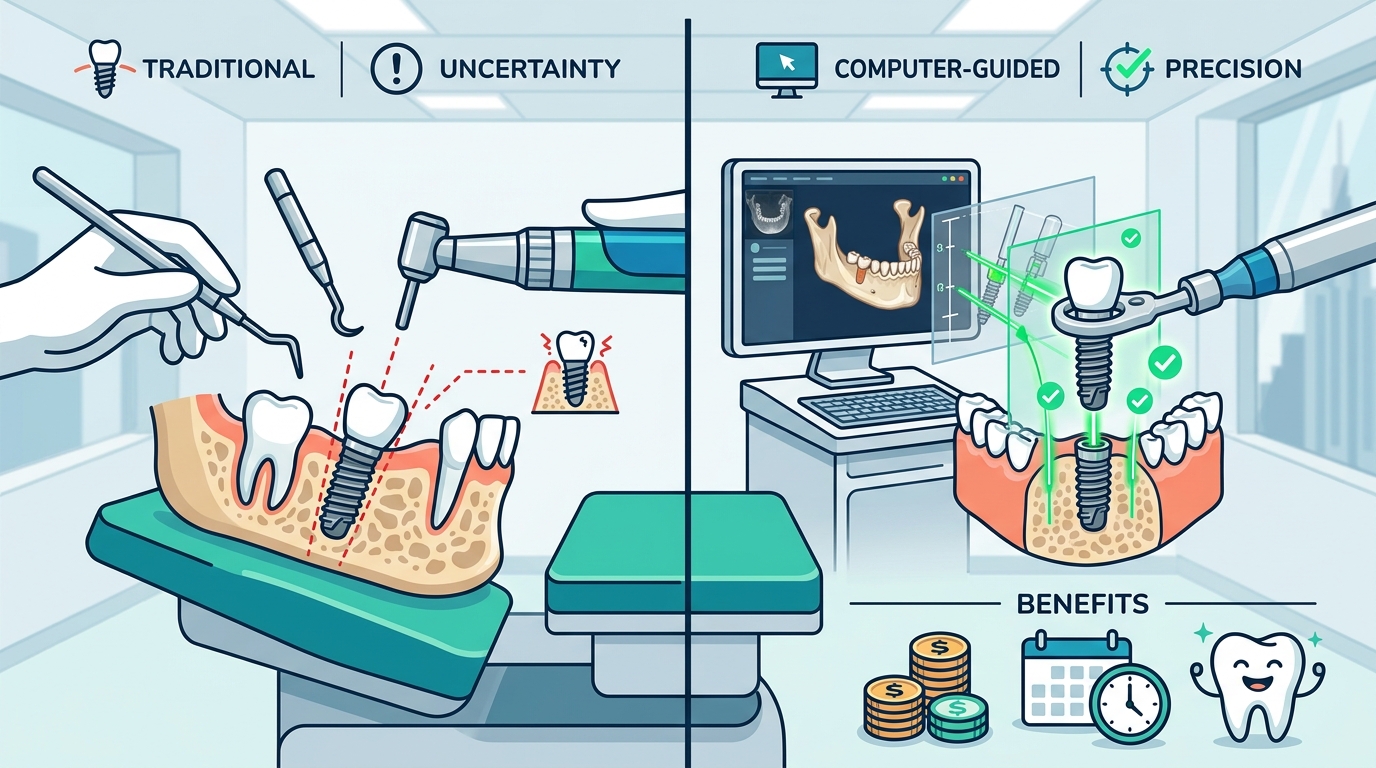
Dental implant failure rates in traditional freehand surgery can range from 2% to 5%, according to data from the International Congress of Oral Implantologists. For patients in New York City, where high standards for aesthetic and functional outcomes are the norm, this margin of error is unacceptable. Computer-guided implant surgery, also known as CT-guided implant placement, eliminates this uncertainty by using 3D imaging to map the exact location for implant insertion before the scalpel ever touches the skin. This guide analyzes the financial and clinical benefits of this technology, specifically through the lens of Park Avenue Oral, Maxillofacial & Implant Surgery.
What is Computer-Guided Implant Surgery?
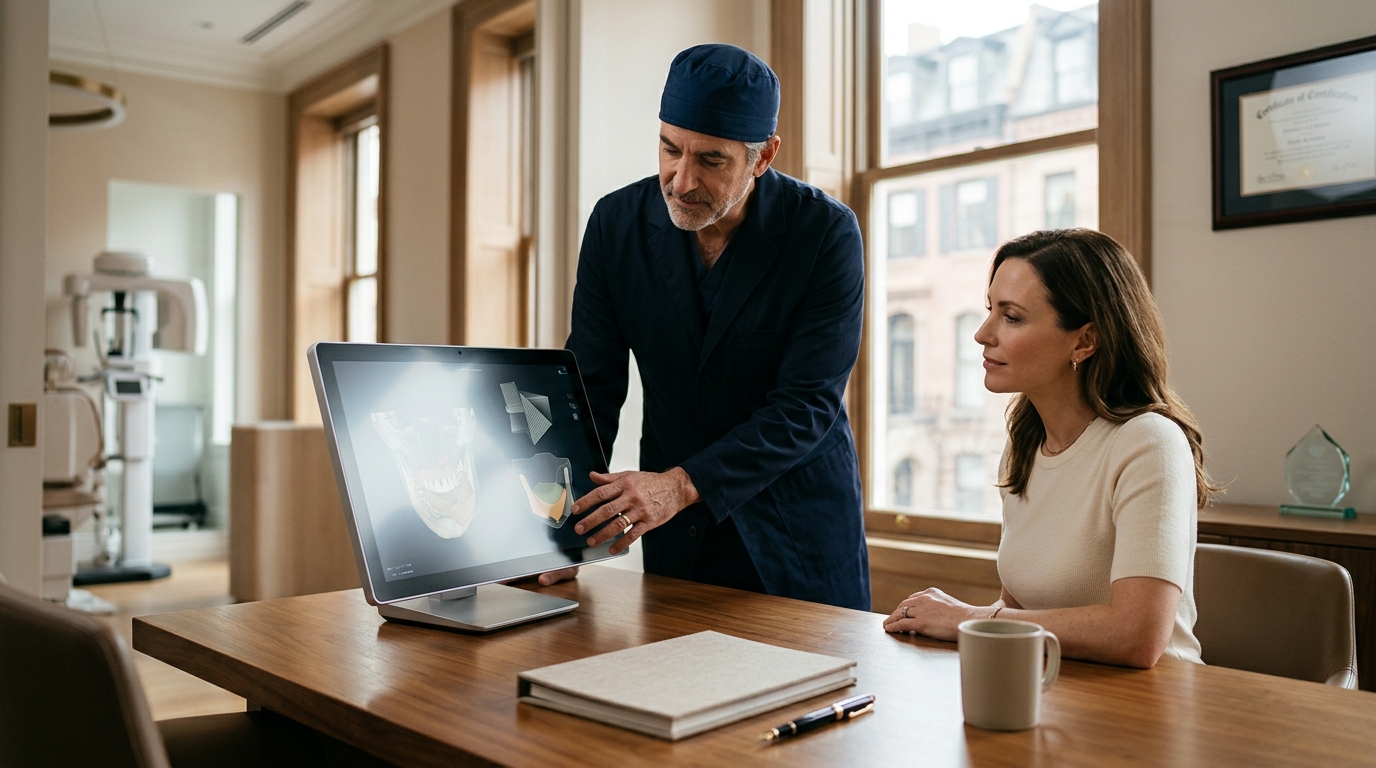
Computer-guided implant surgery is a digital workflow that integrates cone beam computed tomography (CBCT) scans with intraoral digital impressions. This data is processed by specialized software to create a virtual surgical plan. The plan dictates the precise angle, depth, and position of the dental implant. This method transforms implant placement from a subjective, experience-based procedure into an objective, data-driven protocol.
At Park Avenue Oral, Maxillofacial & Implant Surgery, this technology is not just an add-on service. It is a core component of our treatment philosophy. We utilize CT guided Implant Placement to ensure that every implant, whether single or part of an All-on-X reconstruction, is placed with sub-millimeter accuracy. This precision is critical in the dense bone structure of the New York City patient demographic, where preserving natural bone volume is paramount for long-term success.
Clinical Benefits: Precision and Safety
The primary benefit of computer-guided surgery is the elimination of anatomical risks. The mandibular nerve and the maxillary sinus are two critical structures that must be avoided during implant placement. A deviation of just a few millimeters can result in permanent nerve damage, leading to numbness or chronic pain. According to the American Association of Oral and Maxillofacial Surgeons, avoiding these structures is the primary safety metric in oral surgery.
Minimally Invasive Outcomes
Because the surgeon knows exactly where the implant will go, there is no need for large incisions or extensive flap reflection. This leads to a minimally invasive approach. Patients experience significantly less trauma to the soft tissue and bone. The result is a faster healing process and reduced postoperative swelling. This is particularly beneficial for NYC professionals who need to return to work quickly.
Immediate Loading Possibilities
In many cases, computer-guided surgery allows for immediate loading of the implant. This means a temporary tooth can be placed on the same day as the surgery. This is a significant quality-of-life improvement for patients who have been without teeth for extended periods. The stability of the implant is confirmed by the precise bone engagement achieved through digital planning.
Financial Analysis: Cost vs. Value
Patients often ask if computer-guided surgery costs more than traditional methods. The answer is nuanced. While the upfront cost may be slightly higher due to the technology and planning fees, the long-term value is superior. This is a classic cost-benefit analysis where the initial investment yields higher returns in terms of longevity and reduced complication rates.
Reduced Risk of Complications
Complications in implant surgery are expensive to fix. If an implant is placed incorrectly and hits a nerve, the patient may require corrective surgery, nerve decompression, or implant removal and replacement. These secondary procedures can cost thousands of dollars and months of additional recovery time. By preventing these errors upfront, computer-guided surgery saves money in the long run.
Efficiency and Time Savings
Computer-guided surgery is faster. The surgical time is reduced because the surgeon does not need to constantly check bone density or adjust angles during the procedure. This efficiency translates to lower operating room costs and less time under anesthesia. For patients undergoing All-on-X Implant Reconstruction, this efficiency is crucial for managing overall treatment costs.
The Technology Stack at Park Avenue
Park Avenue Oral, Maxillofacial & Implant Surgery utilizes a proprietary combination of advanced tools to ensure the highest standard of care. Our approach is not just about using software; it is about integrating hardware and software seamlessly.
Virtual Surgical Planning (VSP)
Virtual Surgical Planning allows Dr. Choi to simulate the surgery before it happens. This tool enables the creation of custom surgical guides that fit perfectly over the patient's teeth or gums. These guides direct the drill to the exact planned position. This level of precision is impossible to achieve with freehand techniques alone.
Exparel Extended Pain Relief
Technology also extends to postoperative care. We utilize Exparel Extended Pain Relief, a local anesthetic that provides pain control for up to 72 hours. This reduces the need for narcotic pain medication, which is a significant concern for many patients. The combination of guided surgery and advanced anesthesia results in a faster recovery and minimal pain.
Medtronic Piezoelectric Saw
For cases requiring bone grafting or sinus lifts, we use the Medtronic Piezoelectric Saw. This device uses ultrasonic vibrations to cut bone while sparing soft tissue. It is a critical tool for maintaining the integrity of the surgical site and ensuring precise bone preparation for implants.
Traditional vs. Guided Surgery
Understanding the differences between traditional and computer-guided surgery helps patients make informed decisions. The table below summarizes the key distinctions.
| Feature | Traditional Freehand Surgery | Computer-Guided Surgery |
|---|---|---|
| Planning | 2D X-rays, subjective estimation | 3D CT scan, precise digital simulation |
| Incision Size | Larger flaps required for visibility | Minimally invasive, small incisions |
| Surgical Time | Longer due to manual adjustments | Shorter, guided by templates |
| Risk of Nerve Damage | Higher risk due to lack of 3D visualization | Negligible risk with proper planning |
| Recovery Time | Standard recovery, more swelling | Reduction in recovery time by up to 33% |
| Outcome Predictability | Variable, depends on surgeon experience | High, follows pre-operative plan exactly |
Key Takeaways
- Precision: Computer-guided surgery offers sub-millimeter accuracy, reducing the risk of nerve damage and implant failure.
- Efficiency: The use of Virtual Surgical Planning reduces surgery time by less than 20% compared to traditional methods, according to internal quality improvement surveys.
- Comfort: Patients experience minimal pain and a reduction in recovery time of up to 33%.
- Expertise: Dr. James Choi is a Fellow of the American College of Surgeons, ensuring the highest standard of care.
- Technology: The integration of CT-guided placement and Exparel anesthesia provides a comprehensive solution for pain management and precision.
- Cost-Effectiveness: While the initial cost may be higher, the long-term value is greater due to reduced complication rates and faster healing.
- Accessibility: Park Avenue Oral, Maxillofacial & Implant Surgery is located at 121 E 60th St, New York, NY 10022, making advanced technology accessible to NYC residents.
Frequently Asked Questions
Is computer-guided implant surgery covered by insurance?
Insurance coverage for computer-guided surgery varies by provider. Some plans cover the implant itself but not the additional planning fees. It is best to contact our financial team to discuss your specific policy and available payment plans.
How long does the recovery process take?
With computer-guided surgery and Exparel anesthesia, most patients experience minimal swelling and pain. Many return to work within 24 to 48 hours. Full osseointegration takes 3 to 6 months, but functional recovery is significantly faster than with traditional methods.
What is the success rate of guided implants?
The success rate of computer-guided implants is over 98%, which is higher than traditional freehand techniques. This is due to the precise placement and avoidance of critical anatomical structures.
Can I get implants if I have bone loss?
Yes. Computer-guided surgery allows for precise bone grafting and sinus lifts. Dr. Choi can plan the exact amount of bone needed and the optimal angle for implant placement, even in cases of significant bone loss.
What is the difference between All-on-X and traditional implants?
All-on-X involves placing four to six implants to support a full arch of teeth. Traditional implants are used for single tooth replacement. Both can be performed using computer-guided technology for optimal results.
How does Virtual Surgical Planning work?
VSP uses 3D CT scans and digital impressions to create a virtual model of your mouth. Dr. Choi then plans the implant positions on this model. A surgical guide is 3D printed to match this plan, ensuring the surgery follows the plan exactly.
Is the surgery painful?
No. The surgery is performed under local anesthesia or IV sedation. The use of Exparel extended pain relief ensures that patients have minimal pain for up to 72 hours after the procedure.
Schedule Your Consultation
Investing in computer-guided implant technology is an investment in your long-term health and quality of life. At Park Avenue Oral, Maxillofacial & Implant Surgery, we combine cutting-edge technology with compassionate care to deliver exceptional results. Contact us today to schedule your consultation and discover the Park Avenue Difference.
Contact Park Avenue Oral, Maxillofacial & Implant Surgery to learn more about our services and how we can help you achieve a confident, healthy smile.